
UPSC Current Affairs 8th September 2026 covering EOS-05 and India’s jute sector

Relevance: UPSC GS Paper III Space Technology, Earth Observation, Disaster Management and National Security

Important Keywords for Prelims and Mains

Prelims: EOS-05 | GSLV-F17 | SDSC-SHAR | Sub-GTO | LEO | VLEO | SSO | MEO | GSO | GEO | Cryogenic Upper Stage | Station-Keeping


Mains: Persistent Earth Observation | Disaster Early Warning | Agricultural Monitoring | Geospatial Intelligence | Maritime Domain Awareness | Space-Based Governance

Why in News?

  • ISRO successfully launched EOS-05 aboard GSLV-F17 on 4 September 2026.
  • It is India’s first imaging satellite from geosynchronous orbit.
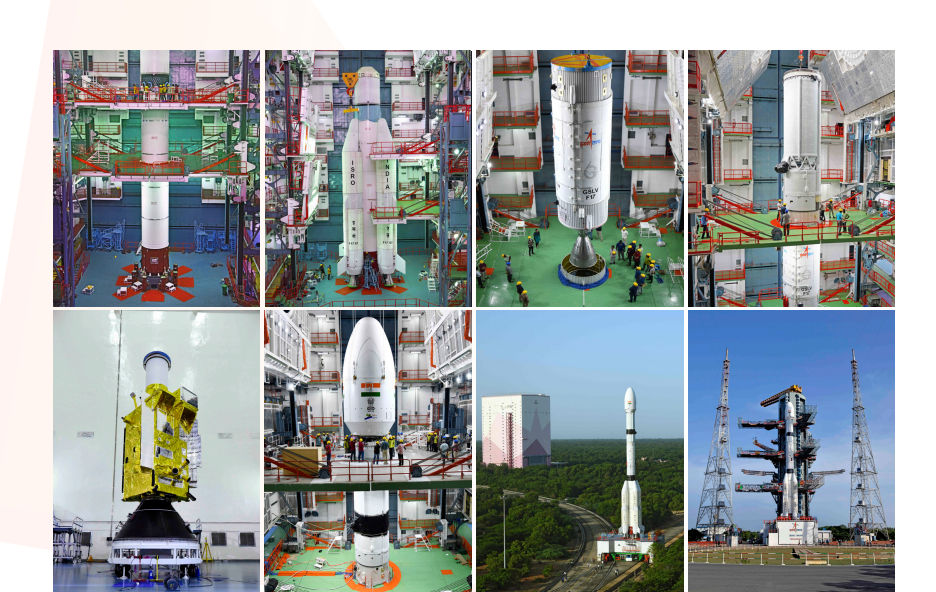
  • GSLV-F17 placed the satellite in the intended Sub-Geosynchronous Transfer Orbit, from where it will reach its operational orbit using onboard propulsion.

About EOS-05

EOS-05 is a state-of-the-art Earth-observation spacecraft designed to provide persistent and high-frequency imaging of large geographical regions.

FeatureDetails
Satellite typeEarth Observation
Payload massApproximately 2,367 kg
Launch vehicleGSLV-F17
Launch padSecond Launch Pad
Launch centreSatish Dhawan Space Centre-SHAR, Sriharikota
Initial orbitSub-Geosynchronous Transfer Orbit
Distinct featureIndia’s first imaging satellite from geosynchronous orbit
Official Sub-GTO Parameters


  • Nominal perigee: 170 km
  • Nominal apogee: 28,934 km
  • Inclination: 19.28°
  • Launch azimuth: 104°

These parameters were specified in ISRO’s official mission brochure.

About GSLV-F17

GSLV-F17 was the 19th flight of India’s Geosynchronous Satellite Launch Vehicle.

Important Specifications

  • Height: 51.7 metres
  • Lift-off mass: 420.5 tonnes
  • Number of stages: Three
  • Payload fairing: Four-metre-diameter ogive composite version

Three Stages of GSLV-F17

  • First stage—GS1: S139 solid core with four L40H liquid strap-ons
  • Second stage—GS2: GL40HT liquid stage
  • Third stage—GS3: CUS15 cryogenic upper stage

The cryogenic stage uses liquid hydrogen and liquid oxygen. Cryogenic propulsion provides the high velocity required to place heavy satellites into transfer orbits.

GSLV Mk II:

  • It is an Indian three-stage launch vehicle with four liquid strap-ons.
  • It is designed mainly to launch heavier satellites into transfer orbits.
  • Its published capacity is approximately:
    • 2,250 kg to GTO; and
    • 6,000 kg to LEO.
  • The first GSLV flight took place on 18 April 2001.
  • Its indigenously developed cryogenic stage was inducted from the GSLV-D5 mission in January 2014.

Because EOS-05 weighs about 2,367 kg, it was placed in a lower-energy Sub-GTO, instead of a standard GTO. This allowed the GSLV to carry the heavier spacecraft, which subsequently uses its own propulsion to reach the final orbit.
What is a Satellite Orbit?

An orbit is the curved path followed by a satellite around Earth under the influence of gravity.

The choice of orbit determines:

  • geographical coverage;
  • image resolution;
  • revisit time;
  • communication delay;
  • fuel requirement; and
  • mission application.

Major Types of Satellite Orbits

OrbitApproximate altitudeMajor advantageMajor application
LEO160–2,000 kmHigh resolution and low latencyEarth observation and communication
MEO2,000–35,786 kmWider coverage with moderate latencyNavigation
GSO/GEOAround 35,786 kmPersistent regional coverageCommunication, weather and imaging

Low Earth Orbit

  • Located approximately 160–2,000 km above Earth.
  • Satellites generally complete an orbit in 90–120 minutes.
  • Proximity to Earth allows high-resolution imaging and low communication delay.
  • However, a satellite observes a particular location only briefly during each pass.
  • The International Space Station is located in LEO.

As of September 4, 2026, approximately 15,562 active payload satellites were reported in LEO. An April 2026 ISRO report placed India’s operational LEO satellites at 22.

Very Low Earth Orbit

VLEO is the lower part of LEO.

  • It permits sharper imaging because satellites are closer to Earth.
  • Greater atmospheric drag increases fuel use and can reduce mission life.

Sun-Synchronous Orbit

Sun-Synchronous Orbit is usually a near-polar LEO in which a satellite crosses a location at nearly the same local solar time.

Similar lighting conditions make it useful for:

  • mapping;
  • agriculture;
  • forest monitoring;
  • environmental observation; and
  • comparison of images over time.

Medium Earth Orbit

  • Extends from approximately 2,000 km to below 35,786 km.
  • Provides wider coverage than LEO with less signal delay than GEO.
  • Mainly used for global navigation systems.
  • Galileo, the European navigation system, comprises a constellation of 30 satellites.

Geosynchronous Orbit

A geosynchronous satellite has an orbital period equal to Earth’s rotation period—approximately 23 hours and 56 minutes.

  • It returns to the same position in the sky at the same time every day.
  • Its orbit may be circular or elliptical.
  • It may also be inclined.
  • Therefore, it does not necessarily appear permanently stationary.

Geostationary Orbit

A geostationary orbit is a special type of geosynchronous orbit.

It must be:

  • circular;
  • directly above the equator;
  • moving from west to east;
  • at zero-degree inclination; and
  • matched with Earth’s rotation.

Therefore, the satellite appears fixed over one location. India was reported to have 31 operational satellites in geostationary orbit.

Geosynchronous and Geostationary Orbits

Geosynchronous OrbitGeostationary Orbit
May be circular or ellipticalMust be circular
May be inclinedMust have zero inclination
Satellite may appear to moveSatellite appears stationary
Broad orbital categorySpecial subset of geosynchronous orbit

What is a Geosynchronous Transfer Orbit?

Geosynchronous Transfer Orbit is a temporary, highly elliptical orbit used to move a satellite towards its final geosynchronous or geostationary orbit.

Orbital-Raising Process

  1. The rocket places the satellite in GTO or Sub-GTO.
  2. The satellite separates from the launch vehicle.
  3. Its onboard propulsion raises the lower point of the orbit.
  4. The orbit is gradually circularised.
  5. The inclination is corrected to reach the operational orbit.

This method reduces the fuel and energy required from the launch vehicle.

Why is EOS-05 Significant?

  • Persistent observation: Provides frequent imaging of large regions, unlike the periodic passes of a single LEO satellite.
  • Disaster management: Supports real-time monitoring of cyclones, floods, landslides and forest fires.
  • Agriculture: Helps assess crop health, drought, irrigation and agricultural stress.
  • Natural resources: Monitors forests, water bodies, coasts and land-use changes.
  • Maritime security: Strengthens observation of India’s coastal and maritime regions.
  • Strategic awareness: Supports monitoring of borders and critical infrastructure.
  • Geospatial economy: Provides high-frequency data for mapping, insurance, logistics and private geospatial services.
  • Technological capability: Demonstrates ISRO’s ability to place a spacecraft heavier than the standard GSLV GTO capacity into a carefully selected Sub-GTO.

What are the Limitations?

  • High altitude generally produces lower spatial resolution than LEO imaging.
  • Orbit raising and station-keeping consume onboard fuel.
  • The orbit is disturbed by the gravity of the Sun and Moon, Earth’s uneven gravitational field and solar-radiation pressure.
  • High-frequency observation produces large data volumes requiring rapid processing.
  • High-altitude missions involve greater launch and operational costs.

Conclusion

EOS-05 strengthens India’s Earth-observation architecture through persistent imaging of large regions. When combined with high-resolution LEO satellites, it can improve disaster response, agriculture, environmental governance and strategic awareness. The mission also demonstrates India’s growing capability in launch-vehicle optimisation, cryogenic technology and space-based governance.


CARE MCQ

Q. Consider the following statements regarding the GSLV-F17/EOS-05 mission:

  1. EOS-05 is India’s first imaging satellite from geosynchronous orbit.
  2. GSLV-F17 placed EOS-05 directly into a circular geostationary orbit.
  3. GSLV-F17 was the 19th flight of India’s GSLV.
  4. The third stage of GSLV-F17 uses cryogenic propulsion.

Which of the statements given above are correct?

(a) 1 and 2 only
(b) 1, 3 and 4 only
(c) 2, 3 and 4 only
(d) 1, 2, 3 and 4

Answer: (b) 1, 3 and 4 only

Statement-wise Explanation

  • Statement 1 is correct: ISRO describes EOS-05 as India’s first imaging satellite from geosynchronous orbit.
  • Statement 2 is incorrect: The launch vehicle placed EOS-05 in a Sub-Geosynchronous Transfer Orbit, not directly into its final circular orbit.
  • Statement 3 is correct: GSLV-F17 was the 19th flight of the GSLV.
  • Statement 4 is correct: Its third stage is the CUS15 cryogenic upper stage using liquid hydrogen and liquid oxygen.

FAQs

1. What is EOS-05?

EOS-05 is a state-of-the-art Earth-observation spacecraft and India’s first imaging satellite from geosynchronous orbit.

2. Which launch vehicle carried EOS-05?

ISRO launched EOS-05 aboard the three-stage GSLV-F17.

3. Where was EOS-05 initially placed?

It was placed in a Sub-Geosynchronous Transfer Orbit with a nominal perigee of 170 km and apogee of 28,934 km.

4. What is the difference between GSO and GEO?

A geosynchronous satellite matches Earth’s rotation period, while a geostationary satellite is a circular, equatorial geosynchronous satellite that appears fixed.

5. Why is EOS-05 important for India?

It enables frequent monitoring of disasters, agriculture, natural resources, maritime areas and strategically important regions.

Relevance: UPSC GS Paper III: Agriculture, Agro-based Industries and Environment

Important Keywords for Prelims and Mains

Prelims: Jute | Mesta | Golden Fibre | Jute Geotextile | JCI | NJB | NJDP | JUTE-ICARE | JUTE-SMART | BHUVAN JUMP | PATSAN | Jute Packaging Act, 1987 | Jute Mark India


Mains: Green Economy | Sustainable Textiles | Rural Livelihoods | Agro-based Industry | Product Diversification | Circular Economy | Digital Agriculture | Export Competitiveness

Why in News?

  • India produced 76 lakh bales of raw jute and 12.80 lakh MT of jute goods during FY 2025-26.
  • India exported 22,700 MT of raw jute worth ₹225.11 crore and 1.71 lakh MT of jute goods worth ₹3,155.27 crore.
  • Government interventions are promoting farmer incomes, modernisation, digital monitoring, product diversification and global competitiveness.

What is Jute?

Jute is a natural bast fibre, obtained from the stem of the jute plant. Its golden colour and silky lustre have earned it the name “Golden Fibre.”

In trade and industry, jute and mesta are collectively classified as raw jute because they have similar uses.

  • Jute: Mainly cultivated in hot, humid and high-rainfall regions.
  • Mesta: A cost-effective bast-fibre crop suitable for relatively drier agro-climatic regions.

Status of India’s Jute Sector

  • India is the world’s largest producer of raw jute.
  • Combined production of jute and mesta increased from 88.02 lakh bales in 2024-25 to 94.03 lakh bales in 2025-26, according to the Third Advance Estimates.
  • India produces nearly 75% of the world’s jute goods.
  • The industry provides direct employment to approximately 3.70 lakh workers.
  • Nearly 40 lakh farm families depend on jute cultivation.
  • India had 120 composite jute mills as of December 2025.
  • West Bengal alone had 89 mills, the highest among the States.
  • Domestic consumption stood at 12.05 lakh MT, or about 94% of total jute-goods production, in FY 2025-26.
  • India is self-reliant in jute-goods production, with domestic output meeting national requirements.

Major Jute-Producing States

West Bengal → Bihar → Assam → Odisha → Jharkhand

The industry’s cultivation and processing base is concentrated mainly in eastern and northeastern India.

History of Jute Production in India

  • Jute use in India can be traced to approximately the third century BCE.
  • It became an important commercial commodity during British rule, partly because of its military and packaging applications.
  • The East India Company established jute mills in Bengal, making the region a major cultivation and processing centre.
  • Following Partition in 1947, nearly 80% of jute-growing areas became part of East Pakistan, now Bangladesh, while most mills remained in India.
  • To overcome the resulting raw-material shortage, the government launched the Grow More Jute Campaign in September 1949.
  • Raw jute production increased from 6.7 lakh tonnes in 1951-52 to 14.56 lakh tonnes in 1961-62.
  • The Jute Packaging Materials (Compulsory Use in Packing Commodities) Act, 1987 created assured demand for jute packaging.

Conditions Required for Jute Cultivation

  • Climate: Hot and humid
  • Rainfall: Approximately 700–1,500 mm during the growing period
  • Sowing season: March–April
  • Harvesting period: Within 100–110 days
  • Nature of cultivation: Predominantly rainfed
  • Farm structure: Mainly cultivated by small and marginal farmers

Importance and Uses of Jute

Environmental Properties

Jute is:

  • biodegradable;
  • recyclable;
  • rapidly renewable;
  • cost-effective; and
  • an eco-friendly alternative to synthetic materials and plastics.

Physical Properties

Jute fibre is:

  • strong and durable;
  • breathable;
  • highly moisture-absorbent;
  • suitable for thermal and acoustic insulation;
  • low in static generation; and
  • capable of blending with natural and synthetic fibres.

Major Applications

  • packaging bags and sacks;
  • handicrafts and home furnishings;
  • ropes and industrial textiles;
  • construction materials;
  • agricultural products;
  • apparel and blended fabrics; and
  • soil conservation and road construction.

Jute Leaves as Food

Jute leaves are consumed as vegetables in parts of:

  • Africa;
  • the Middle East;
  • Southeast Asia; and
  • Japan, where they are recognised as a health food.

They contain vitamins, carotenoids, calcium, potassium and dietary fibre. Technologies have also been developed for antioxidant herbal drinks and healthcare products from jute leaves.

Jute Apparel at Commonwealth Games 2026

Indian athletes and team members wore jute-viscose-blended apparel at the 2026 Commonwealth Games.

  • The fabric was developed by the National Jute Board.
  • The apparel was designed by NIFT, New Delhi.
  • The initiative showcased biodegradable jute-based fabric and provided global visibility to Indian manufacturers.

Jute Geotextiles

Jute Geotextile (JGT) is a specially treated and woven jute product belonging to the category of technical textiles.

It is biodegradable and helps stabilise soil while improving soil structure and fertility.

Major Applications

  • Slope protection: Used in embankments, hill cuttings, canals and riverbanks.
  • Erosion control: Surface roughness holds soil and reduces its removal by water.
  • Road construction: Improves load distribution and controls settlement.
  • Railway tracks: Helps stabilise track formations.
  • Drainage: Regulates water flow while preventing soil migration.
  • Soft-soil treatment: Accelerates consolidation and improves bearing capacity.
  • Ecological restoration: Maintains lower soil temperature and supports seed germination.

The National Jute Board provides technical assistance on design, testing, procurement and installation of JGT.

Government Interventions for the Jute Industry

Minimum Support Price

  • The MSP for raw jute was fixed at ₹5,925 per quintal for FY 2026-27.
  • It provides a return of 61.8% over the all-India weighted average cost of production.
  • It represents an increase of approximately 147% over the ₹2,400 MSP in 2014-15.
  • MSP payments increased from ₹441 crore during 2004-05 to 2013-14 to ₹1,342 crore during 2014-15 to 2025-26.

Mandatory Jute Packaging

Under the Jute Packaging Materials Act, 1987, the government mandated jute packaging for:

  • 100% of foodgrains; and
  • 20% of sugar.

This creates assured demand for jute bags and supports farmers and mill workers.

Jute Corporation of India

The Jute Corporation of India (JCI) is the sole nodal agency for implementing the MSP policy for raw jute.

  • It procures directly from farmers when market prices fall below MSP.
  • It operates around 110 Departmental Purchase Centres.
  • These centres are located in West Bengal, Assam, Bihar, Andhra Pradesh, Odisha and Tripura.

National Jute Development Programme

The National Jute Development Programme (NJDP) is the umbrella scheme for developing and promoting the jute sector.

  • Implementing agency: National Jute Board
  • Outlay: ₹485.58 crore
  • Period: FY 2021-22 to FY 2025-26
  • Focus: Productivity, farmer incomes, diversification and market promotion

Its two major components are:

  • JUTE-ICARE; and
  • Jute Diversification Scheme.

National Jute Board

The National Jute Board (NJB) is the nodal agency for development, promotion and diversification across the jute value chain.

Its functions include:

  • improving cultivation and fibre quality;
  • enhancing productivity and standardisation;
  • promoting domestic and export markets;
  • supporting research and diversified products; and
  • strengthening artisans, women’s groups and MSMEs.

JUTE-ICARE

The Jute Improved Cultivation and Advanced Retting Exercise, launched in FY 2015-16, improves productivity and fibre quality through:

  • certified seeds;
  • scientific cultivation;
  • field demonstrations;
  • mechanisation; and
  • improved retting techniques.

It is implemented with the Central Research Institute for Jute and Allied Fibres and JCI. Retting ponds are supported through convergence with PMKSY and RKVY.

Jute Diversification Scheme

The scheme promotes processing, value addition, modernisation and marketing.

  • Jute Raw Material Banks: Supply raw materials to artisans, women’s groups, MSMEs and small producers at mill-gate price plus transportation cost.
  • Capital subsidy: Provides a 30% subsidy for machinery purchased by eligible mills and MSMEs producing diversified products.
  • Resource-cum-Production Centres: Offer cluster-based training and production support.
  • Retail outlets: Provide 25% sales assistance, up to ₹9 lakh per unit.
  • Export incentives: Link assistance to raw-material use and export value realisation.

Jute Mark India

The Jute Mark India logo certifies:

  • authenticity;
  • compliance with quality standards; and
  • jute content in blended products.

It improves consumer confidence and brand recognition.

Market Promotion

During FY 2025-26, the government organised more than 57 regional jute fairs, including participation in:

  • India International Trade Fair;
  • Surajkund Mela; and
  • Bharat Tex.

Organisations from Uttarakhand, West Bengal, Uttar Pradesh and Odisha used NJB training and exhibitions to enter organised production and secure domestic and export orders.

Workers’ Welfare Scheme

Under the National Jute Board Act, 2008, scholarship and incentive support is provided to girl children of workers in jute mills and jute-product MSMEs after passing Secondary and Higher Secondary examinations.

Digital and Technological Interventions

JUTE-SMART

JUTE-SMART is an end-to-end e-governance portal developed by the Office of the Jute Commissioner in November 2016.

It manages procurement and supply of B.Twill jute bags for foodgrain packaging.

By August 2026:

  • 303 lakh bales of B.Twill bags had been procured;
  • each bale contained approximately 500 bags;
  • procurement value exceeded ₹1 lakh crore; and
  • more than 20 State procurement agencies, including Telangana and Andhra Pradesh, and the FCI used the portal.

The portal was upgraded in 2026 to digitally onboard transporters, raw-jute traders, importers and mills and enable online filing of returns.

Jute Crop Information System

The National Remote Sensing Centre of ISRO, in collaboration with JCI and NJB, developed the Jute Crop Information System.

It combines remote sensing and field data to monitor jute cultivation.

Its two major tools are:

  • BHUVAN JUMP: Mobile application for field-level jute monitoring.
  • PATSAN: Web-based platform providing near-real-time crop surveillance and analytics.

Significance of the Jute Sector

  • Supports nearly 40 lakh farm families and 3.70 lakh industrial workers.
  • Promotes rural employment, women’s groups, artisans and MSMEs.
  • Provides an environmentally sustainable alternative to plastic packaging.
  • Strengthens India’s biodegradable and technical-textile industries.
  • Supports soil conservation and sustainable infrastructure through JGT.
  • Generates export earnings and promotes self-reliance.
  • Links traditional agriculture with digital monitoring and product innovation.

Future Priorities

  • Expand diversified products beyond traditional packaging.
  • Modernise mills and improve fibre-processing technology.
  • Strengthen branding and export-market access.
  • Promote JGT in roads, railways and erosion-control projects.
  • Expand scientific retting and quality certification.
  • Increase digital crop monitoring and market intelligence.
  • Strengthen farmer, artisan and women’s-group participation.

Conclusion

Jute connects agricultural livelihoods, industrial development and environmental sustainability. Government support through MSP, mandatory packaging, diversification, technology and market promotion has strengthened the sector. Greater innovation and value addition can establish the Golden Fibre as a major component of India’s green economy and contribute to inclusive development and Viksit Bharat 2047.

CARE MCQ

Q. Consider the following statements regarding India’s jute sector:

  1. The Jute Corporation of India is the nodal agency for implementing the MSP policy for raw jute.
  2. JUTE-ICARE focuses on scientific cultivation and improved retting techniques.
  3. PATSAN is a web-based platform for near-real-time monitoring of jute cultivation.
  4. The Jute Packaging Materials Act mandates jute packaging for all sugar produced in India.

Which of the statements given above are correct?

(a) 1 and 2 only
(b) 1, 2 and 3 only
(c) 2, 3 and 4 only
(d) 1, 2, 3 and 4

Answer: (b) 1, 2 and 3 only

Statement-wise Explanation

  • Statement 1 is correct: JCI procures raw jute from farmers when market prices fall below the MSP.
  • Statement 2 is correct: JUTE-ICARE promotes scientific farming, certified seeds, mechanisation and improved retting.
  • Statement 3 is correct: PATSAN provides near-real-time surveillance and analytics using field observations.
  • Statement 4 is incorrect: Mandatory jute packaging applies to 20% of sugar, not all sugar. It applies to 100% of foodgrains.

FAQs

1. Why is jute called the Golden Fibre?

It is called the Golden Fibre because of its golden colour, silky lustre and economic importance.

2. Which State has the largest jute industry in India?

West Bengal is the leading jute-producing State and contains the highest number of composite jute mills.

3. Which institution implements the MSP policy for raw jute?

The Jute Corporation of India is the sole nodal agency for implementing the MSP policy.

4. What is Jute Geotextile?

It is a biodegradable technical textile used in soil stabilisation, erosion control, roads, railway tracks and riverbank protection.

5. What are BHUVAN JUMP and PATSAN?

BHUVAN JUMP is a field-monitoring mobile application, while PATSAN is a web-based platform for near-real-time jute-crop surveillance.

UPSC Current Affairs September 9th 2026
UPSC Current Affairs September 7th 2026

Enroll Now for Unlimited UPSC Utsav

Start Date

20/09/2026

Timings

08 AM – 4 PM

    Courses

    Scroll to Top