
Relevance: TGPSC Telangana History and Culture
Prelims: Hasmathpet | Megalithic Site | Cairn Burial | Second Century BCE | Nizam Period Excavations | Birla Archaeological and Cultural Research Institute | Birla Museum | HYDRAA
Mains: Heritage Conservation | Archaeological Preservation | Urban Encroachment | Community Awareness | Site Museum | Cultural Tourism | Institutional Coordination
Why in News?
- The approximately 2,300-year-old megalithic cairn site at Hasmathpet in Hyderabad has reportedly become a garbage-dumping ground despite being a protected monument.
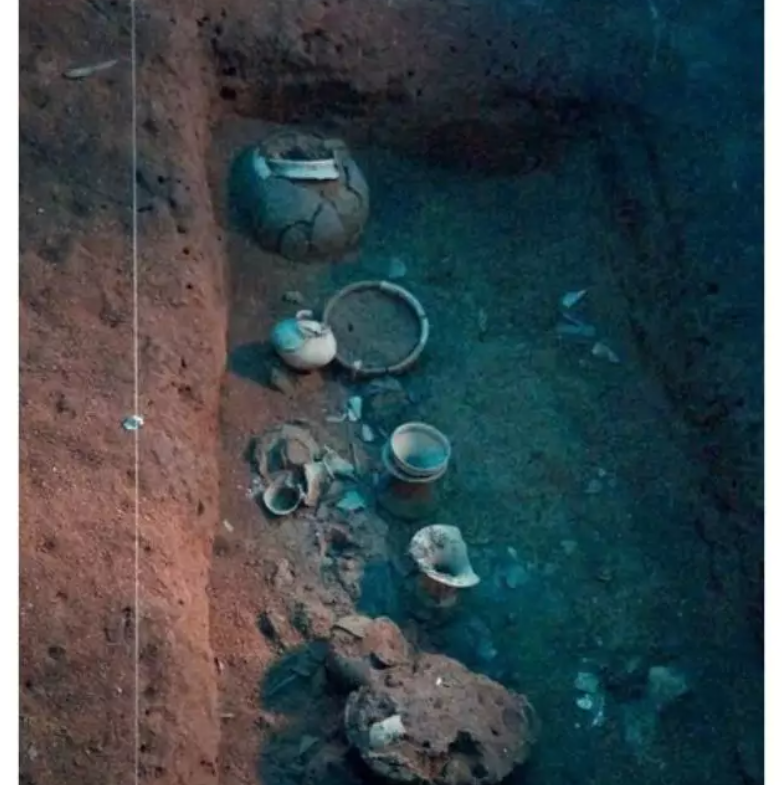
What is the Hasmathpet Megalithic Site?
- Location: Hasmathpet, Hyderabad, Telangana.
- Period: The site has been dated to approximately the second century BCE.
- Nature: It is an ancient megalithic cairn site associated with the burial practices of early communities.
- Protected status: It has been recognised as a protected monument.
- Historical value: The site provides archaeological evidence that the history of the Hyderabad region extends back approximately 2,300 years.
What is a Cairn Burial?
A cairn is a burial structure in which stones are arranged or piled over a grave. Such burials are commonly associated with the megalithic period.
The Hasmathpet site preserves evidence of the:
- burial customs of ancient communities;
- use of iron and stone implements;
- agricultural activities of early settlements;
- and pottery traditions of the period.
What is the Historical Background of the Site?
Discovery
- The megalithic remains at Hasmathpet were first discovered during the early 1900s.
Nizam-Period Excavations
- Archaeological excavations were conducted during the Nizam’s rule in 1934–35.
- These excavations helped establish the historical and archaeological importance of the site.
Excavations in 1971
- The Birla Archaeological and Cultural Research Institute conducted further excavations in 1971.
- The objects recovered from the site provided information about the tools, occupations and material culture of the ancient population.
What was Discovered During the Excavations?
Important archaeological objects recovered from Hasmathpet include:
- agricultural implements;
- iron implements;
- stone axes;
- and pottery.
These artefacts are preserved in the Birla Museum.
The discoveries indicate that the communities associated with the site:
- practised agriculture;
- possessed knowledge of iron technology;
- used stone tools;
- produced pottery;
- and followed organised burial practices.
What is the Present Condition of the Site?
Garbage Dumping
- Heaps of garbage have reportedly accumulated at the protected site.
- The absence of proper maintenance has made the archaeological remains vulnerable to damage.
Damaged Protective Infrastructure
The monument’s protective arrangements are in poor condition, including:
- the tin shed covering the site;
- fencing around the monument;
- and information signage.
Difficulty in Locating the Monument
- The site is situated within a residential area.
- It lacks clear directional and explanatory boards.
- Visitors may find it difficult to identify and reach the monument.
Limited Public Awareness
- Many local residents are reportedly unaware of the site’s archaeological value.
- Inadequate awareness has contributed to garbage dumping and prolonged neglect.
Encroachment Concerns
- HYDRAA has recently protected the site from encroachments.
- However, physical protection must be supported by regular maintenance and public monitoring.
What Conservation Measures Have Been Proposed?
Cleaning and Restoration
- Remove garbage and restore the archaeological site without damaging its original remains.
- Establish a regular maintenance mechanism to prevent renewed dumping.
Stronger Physical Protection
- Replace the damaged tin shed.
- Install proper fencing to restrict unauthorised entry and waste disposal.
- Ensure protection of the burial remains from weather and human interference.
Informative Signage
- Replace damaged boards with clear and durable signage.
- Explain the site’s historical period, excavation history and major findings.
- Install directional boards to help visitors locate the monument.
Community Awareness
- Inform residents about the archaeological importance of Hasmathpet.
- Encourage local participation in monitoring and protecting the monument.
- Promote heritage awareness among students and neighbourhood associations.
Development of a Site Museum
Heritage activists have proposed developing the location as a site museum to:
- preserve archaeological remains;
- display information about recovered artefacts;
- explain megalithic burial practices;
- and improve public understanding of Hyderabad’s ancient past.
Heritage-Tourism Promotion
- The site could be promoted as a megalithic heritage and tourism destination.
- Conservation must remain the primary objective while developing visitor facilities.
Conclusion
The Hasmathpet megalithic site is an important archaeological link to Hyderabad’s ancient past. Its neglect demonstrates the need for regular maintenance, effective institutional responsibility and community participation in heritage protection. Scientific restoration, informative signage and responsible development as a site museum can preserve the monument while making Telangana’s early history accessible to the public.
CARE MCQ
Q. Consider the following statements regarding the Hasmathpet megalithic site:
- It is located in Hyderabad and dates back approximately to the second century BCE.
- Excavations were conducted during the Nizam’s period in 1934–35.
- Artefacts recovered from the site are preserved in the Birla Museum.
- The site is primarily associated with medieval temple architecture.
Which of the statements given above are correct?
(a) 1 and 2 only
(b) 2, 3 and 4 only
(c) 1, 2 and 3 only
(d) 1, 2, 3 and 4
Answer: (c) 1, 2 and 3 only
Explanation
- Statement 1 is correct: The megalithic cairn site is located at Hasmathpet in Hyderabad and has been dated to around the second century BCE.
- Statement 2 is correct: Excavations were undertaken during the Nizam’s period in 1934–35.
- Statement 3 is correct: Agricultural and iron implements, stone axes and pottery recovered from the site are preserved in the Birla Museum.
- Statement 4 is incorrect: Hasmathpet is a megalithic cairn burial site, not a monument of medieval temple architecture.
FAQs
Q. Where is the Hasmathpet megalithic site located?
It is located in a residential area of Hasmathpet in Hyderabad.
Q. To which period does the site belong?
It dates approximately to the second century BCE.
Q. When was the site excavated?
Excavations were conducted in 1934–35 and again in 1971.
Q. What objects were found at the site?
Agricultural and iron implements, stone axes and pottery were discovered.
Q. What has been proposed for its conservation?
Cleaning, restoration, proper fencing, informative signage, public awareness and development as a site museum have been proposed.
Relevance: UPSC GS Paper II: Education, social justice, government policies and human-resource development
Prelims: Full Literacy | PLFS 2025 | UDISE+ 2025-26 | ASER Rural | RTE Act 2009 | NEP 2020 | ULLAS | FLNAT | NIPUN Bharat | Samagra Shiksha | PM SHRI | DIKSHA | PM e-VIDYA | PM POSHAN | PM Vidyalaxmi | SDG 4
Mains: Foundational Literacy and Numeracy | Adult Education | Lifelong Learning | Gender Gap | Learning Outcomes | Digital Divide | Human Capital | Inclusive Education | Future-ready Workforce | Viksit Bharat 2047
Why in News?
- India’s overall literacy rate reached 81.1%, according to the Periodic Labour Force Survey 2025.Ten States and Union Territories declared themselves fully literate between 2024 and 2026.Programmes such as ULLAS, NIPUN Bharat and Samagra Shiksha are expanding literacy beyond reading and writing to include numeracy, digital literacy, financial awareness and lifelong learning.
What is Literacy?
Government Definition
The Department of School Education and Literacy, Ministry of Education, defines literacy as the ability to:
- read, write and compute with comprehension;
- identify, understand, interpret and create information;
- and apply critical life skills such as digital and financial literacy.
A State or Union Territory achieving a literacy rate of 95% is considered fully literate.
UNESCO Definition
UNESCO defines literacy as the ability to read, write and use numbers, along with the ability to use digital material to solve problems in an information- and technology-rich environment.
Literacy is:
- a fundamental human right;
- an essential component of the right to education;
- a foundation for equality, justice and inclusion;
- and a prerequisite for exercising other human rights.
Changing Meaning of Literacy
Modern literacy includes:
Reading with comprehension | Numeracy | Digital literacy | Financial literacy | Critical thinking | Problem-solving | Lifelong learning
Literacy must enable individuals to understand information and apply it in daily life rather than merely read simple words or sign their names.
How has India Progressed in Literacy?
Progress Since Independence
- 1947: Overall literacy was approximately 14%, while female literacy was about 8%.
- 1951–2011: Overall literacy increased from 18.32% to 74.04%.
- Male Literacy: Increased from 27.15% to 82.14%.
- Female Literacy: Increased from 8.86% to 65.46%.
Rural–Urban Progress
- Urban Literacy: Increased from 34.59% in 1951 to 84.1% in 2011.
- Rural Literacy: Increased from 12.10% to 67.8%.
- Rural Female Literacy: Between 2001 and 2011, it grew by 26%, compared with 10% for rural males.
These improvements reflect greater school access and social awareness, though geographical and gender inequalities persist.
What Does PLFS 2025 Reveal?
According to the Periodic Labour Force Survey 2025:
- Overall Literacy Rate: 81.1%.
- Urban Literacy—Seven Years and Above: 89%.
- Urban Literacy—Five Years and Above: 88%.
- Rural Literacy—Seven Years and Above: 77.4%.
- Rural Literacy—Five Years and Above: 76.4%.
Gender-wise Literacy Among Persons Aged Seven Years and Above
- Urban Males: 93.1%
- Urban Females: 84.8%
- Rural Males: 84.8%
- Rural Females: 70.3%
Major Findings
- Rural–Urban Divide: Rural literacy remains considerably lower than urban literacy.
- Gender Gap: Female literacy, particularly in rural areas, remains below male literacy.
- Need for Targeting: National averages must be supported by interventions for rural women and disadvantaged communities.
What is the Status of School Education?
According to the UDISE+ Report 2025-26, more than 24.72 crore students were enrolled in Indian schools.
Gross Enrolment Ratio
Gross Enrolment Ratio is total enrolment at an educational stage expressed as a percentage of the population in the corresponding official age group.
- Foundational Stage: 42.8%
- Preparatory Stage: 91.7%
- Middle Stage: 89.6%
- Secondary Stage: 71.7%
The fall at the secondary stage indicates that many students do not continue education beyond the middle level.
Dropout Rates
- Preparatory Stage: 1.8%
- Middle Stage: 3.6%
- Secondary Stage: 7%
Poverty, child labour, early marriage, distance from schools and inadequate infrastructure can contribute to dropout.
Retention Rates
- Foundational Stage: 98.5%
- Preparatory Stage: 91.1%
- Middle Stage: 83.7%
- Secondary Stage: 51.9%
The sharp decline at the secondary level shows that initial enrolment does not necessarily lead to school completion.
Transition Rates
Transition rate is the percentage of students successfully moving from one stage to the next.
- Foundational to Preparatory: 99.2%
- Preparatory to Middle: 93.8%
- Middle to Secondary: 88.3%
What Does ASER Reveal About Learning Outcomes?
The Annual Status of Education Report–Rural is a nationwide rural household survey conducted by the NGO Pratham.
Coverage
The survey examines:
- pre-primary children aged three to five years;
- elementary-level children aged six to 14 years;
- and older children aged 15 to 16 years.
It assesses:
- school enrolment;
- attendance;
- basic reading;
- arithmetic ability;
- and early-childhood education.
ASER 2024 Findings
- Government-School Reading Levels: The reading performance of Class III children was the highest since the survey began 20 years ago.
- Class III Reading Ability: The share of Class III government-school students able to read a Class II text increased from 16.3% in 2022 to 23.4% in 2024.
- Pre-pandemic Comparison: The corresponding figure was 20.9% in 2018.
- Overall Class III Reading: Across government and private schools, the proportion increased from 20.5% in 2022 to 27.1% in 2024, close to the 27.3% recorded in 2018.
- Class V Reading: The proportion of Class V students able to read a Class II text increased from 42.8% in 2022 to 48.7% in 2024.
- Arithmetic Improvement: Basic arithmetic performance also improved across government and private schools.
- Pre-school Enrolment: The proportion of children aged three to five enrolled in some form of pre-school increased in 2024 compared with 2018 and 2022.
What is the Status of Higher Education?
Enrolment
Higher-education enrolment increased from:
- 3.42 crore in 2014-15 to
- 4.50 crore in 2023-24.
Gross Enrolment Ratio
Higher-education GER increased from:
- 23.7% in 2014-15 to
- 30% in 2023-24.
NEP 2020 aims to increase higher-education GER to 50% by 2035.
Higher-Education Out-turn
Higher-education out-turn refers to the number of students passing out of higher-education institutions in an academic year.
It increased from:
- 88.28 lakh in 2014-15 to
- more than 1.09 crore in 2023-24.
Inclusive Access
The rising participation of:
Women | Scheduled Castes | Scheduled Tribes | Other disadvantaged groups
reflects an expansion of educational access and equity.
What are the Major Government Policies and Initiatives?
Right to Education Act, 2009
The Right of Children to Free and Compulsory Education Act, 2009 made education a fundamental right for children aged six to 14 years.
Key Provisions
- free and compulsory elementary education;
- minimum standards for schools;
- equitable access to education;
- prohibition of discrimination;
- and protection against corporal punishment.
The Act shifted elementary education from a welfare objective to an enforceable right.
National Education Policy 2020
NEP 2020 provides a comprehensive framework for education reform.
Key Priorities
- foundational literacy and numeracy;
- multilingualism;
- holistic development;
- vocational education;
- technology-enabled learning;
- teacher training;
- professional development;
- and twenty-first-century skills.
It seeks to create a skilled, adaptable and future-ready workforce.
ULLAS
ULLAS—Understanding of Lifelong Learning for All in Society, also called the New India Literacy Programme, is a Centrally Sponsored Scheme aligned with NEP 2020.
Target Group
- Adults aged 15 years and above;
- especially those who missed formal schooling.
Components
- foundational literacy and numeracy;
- critical life skills;
- digital and financial literacy;
- vocational skills;
- basic education;
- continuing education;
- and lifelong learning.
Vision
- Jan Jan Saakshar: Literacy for every person.
- Kartavya Bodh: Literacy promotion as a social duty.
- Janbhagidari: Community participation and volunteerism.
Implementation
- District- and block-level surveyors conduct door-to-door surveys.
- Non-literate adults and potential volunteer teachers are identified.
- Volunteers may include teachers, civil-society workers, ASHA workers and Anganwadi workers.
- Learners are connected with voluntary teachers and registered on the ULLAS platform.
- Instruction is provided through face-to-face and online modes.
- Learners appear for the Foundational Literacy and Numeracy Assessment Test, followed by certification.
ULLAS App
- Available on Android and iOS;
- provides teaching material in 27 languages.
Fully Literate States and Union Territories
Ten States and Union Territories declared themselves fully literate between 2024 and 2026:
Ladakh | Mizoram | Goa | Tripura | Himachal Pradesh | Chandigarh | Andaman and Nicobar Islands | Sikkim | Uttarakhand | Jammu and Kashmir
NIPUN Bharat
National Initiative for Proficiency in Reading with Understanding and Numeracy was launched in July 2021 under Samagra Shiksha.
- Objective: Universal foundational literacy and numeracy by 2026-27.
- Learning Goal: Every child should acquire foundational skills by Grade 2.
- Age Group: Children aged three to eight years.
Samagra Shiksha
Samagra Shiksha is an integrated school-education programme aligned with SDG 4.
It subsumed:
- Sarva Shiksha Abhiyan;
- Rashtriya Madhyamik Shiksha Abhiyan;
- Teacher Education Scheme.
Focus Areas
- inclusive and equitable education;
- learning outcomes;
- foundational education;
- teacher development;
- vocational integration;
- and school effectiveness.
PM SHRI
Pradhan Mantri Schools for Rising India seeks to strengthen more than 14,500 exemplar schools.
It focuses on:
- implementation of NEP 2020;
- holistic development;
- inclusive and joyful learning;
- multilingual requirements;
- and diverse academic abilities.
The scheme covers existing elementary, secondary and senior-secondary schools run by Union, State and local governments.
Digital India and DIKSHA
DIKSHA—Digital Infrastructure for Knowledge Sharing provides digital content and educational resources to teachers and students.
It supports:
- digital classrooms;
- teacher resources;
- remote access;
- technology-enabled education;
- and reduction of geographical barriers.
PM e-VIDYA
PM e-VIDYA combines digital, online and on-air education.
It uses:
- online platforms;
- digital resources;
- television;
- radio;
- and multimodal learning.
It is expected to benefit nearly 25 crore school-going children.
PM POSHAN
Pradhan Mantri Poshan Shakti Nirman provides one hot cooked meal to:
- The scheme supports nutrition, 11.20 crore students;
- in Bal Vatikas and Classes I to VIII;
- across 10.36 lakh government and government-aided schools;
- on all school days.
attendance, enrolment, concentration and retention.
Beti Bachao, Beti Padhao
The initiative promotes girls’ education and seeks to address gender disparities by:
- raising awareness about the value of girls;
- encouraging school participation;
- and promoting an inclusive educational environment.
PM Vidyalaxmi
PM Vidyalaxmi is a Central Sector Scheme that provides financial support for higher education.
Major Provisions
- Students admitted to Quality Higher Education Institutions are eligible for collateral-free and guarantor-free education loans.
- The Union Government provides a 75% credit guarantee for loans up to ₹7.5 lakh.
- Students with annual family income up to ₹8 lakh, who are not covered by another scholarship or interest-subvention scheme, receive 3% interest subvention.
- The interest benefit applies to loans up to ₹10 lakh during the moratorium period.
The scheme seeks to ensure that financial constraints do not prevent deserving students from pursuing higher education.
Significance of Literacy for Viksit Bharat
- Human-Capital Formation: Literacy creates a skilled, productive and adaptable workforce.
- Economic Growth: It improves employability, innovation, entrepreneurship, GDP and per-capita income.
- Women’s Empowerment: Female literacy strengthens health, financial independence, decision-making and political participation.
- Social Inclusion: Literacy improves access to welfare, banking, health services, legal remedies and public institutions.
- Digital Inclusion: It enables citizens to access online learning, digital payments and e-governance services.
- Democratic Participation: Literate citizens can make informed electoral choices and understand their rights and duties.
- Environmental Sustainability: Education supports green jobs, circular-economy practices and responsible consumption.
- SDG Linkages: Literacy directly advances SDG 4 and creates multiplier effects across poverty reduction, gender equality, health and decent work.
Challenges
- Equity and Inclusion: Socio-economic, gender, caste and regional disparities continue to limit equal access.
- Quality Disparities: Learning opportunities vary between rural and urban areas, States, and government and private schools.
- Learning-Outcome Gap: Enrolment does not always ensure reading comprehension or numerical ability.
- Secondary Dropout: Poverty, child labour, early marriage and inadequate infrastructure contribute to attrition.
- Teacher Constraints: Shortages, uneven qualifications, limited training and low motivation affect educational quality.
- Digital Divide: Unequal access to devices, electricity, internet and digital skills limits e-learning.
- Adult-Learner Barriers: Work responsibilities, migration, poverty and lack of confidence reduce participation.
- Administrative Delays: Bureaucratic procedures may slow implementation and reduce scheme effectiveness.
- Volunteer Dependence: ULLAS requires continuous recruitment, training and motivation of voluntary teachers.
- Language Diversity: Educational material must remain available in regional and tribal languages.
- Data Differences: Surveys may use different definitions, age categories and measurement methods.
Way Forward
- Targeted Support: Focus on rural women, tribal groups, migrants, persons with disabilities and low-literacy districts.
- Foundational Learning: Identify and address reading and numeracy gaps during the early years.
- Teacher Development: Improve recruitment, continuous training, motivation and classroom support.
- Secondary Retention: Expand scholarships, transport, hostels, counselling and safe infrastructure.
- Learning-Based Evaluation: Measure comprehension, arithmetic and practical skills rather than enrolment alone.
- Digital Inclusion: Expand affordable connectivity, devices and community digital-learning centres.
- Adult-Friendly Learning: Provide flexible schedules, local learning centres and livelihood-linked content.
- Volunteer Support: Train, mentor and recognise ULLAS voluntary teachers.
- Local-Language Material: Expand educational resources in regional and tribal languages.
- Life-Skill Integration: Combine literacy with financial awareness, health, digital safety and vocational education.
- Administrative Reform: Simplify procedures and improve Centre–State and inter-departmental coordination.
- Reliable Monitoring: Use PLFS, UDISE+, FLNAT, ASER and local surveys to identify and address educational gaps.
Conclusion
India’s literacy journey represents major progress in nation-building, but universal literacy requires more than higher enrolment or formal certification. Literacy must enable individuals to comprehend information, use technology, manage finances, acquire employable skills and participate meaningfully in society. Effective implementation of RTE, NEP 2020, ULLAS, NIPUN Bharat and related programmes can make a literate, skilled and empowered population the foundation of an inclusive and sustainable Viksit Bharat 2047.
CARE MCQ
Q.Consider the following statements:
- ULLAS primarily targets adults aged 15 years and above who missed formal schooling.
- NIPUN Bharat seeks universal foundational literacy and numeracy by 2026-27.
- PM Vidyalaxmi provides a 75% government credit guarantee for eligible education loans up to ₹7.5 lakh.
- PM SHRI is exclusively meant for constructing new privately managed schools.
Which of the statements given above are correct?
(a) 1 and 2 only
(b) 1, 2 and 3 only
(c) 2, 3 and 4 only
(d) 1, 2, 3 and 4
Answer: (b) 1, 2 and 3 only
Explanation
- Statement 1 is correct: ULLAS covers adults aged 15 years and above who missed formal education.
- Statement 2 is correct: NIPUN Bharat aims to achieve universal foundational literacy and numeracy by 2026-27.
- Statement 3 is correct: PM Vidyalaxmi provides a 75% credit guarantee for eligible loans up to ₹7.5 lakh.
- Statement 4 is incorrect: PM SHRI strengthens existing government-run elementary, secondary and senior-secondary schools as exemplar institutions.
FAQs
Q.1 ) When is a State considered fully literate?
A State or Union Territory attaining at least 95% literacy is considered fully literate.
Q.2) What is ULLAS?
It is a Centrally Sponsored adult-literacy programme for people aged 15 years and above who missed formal schooling.
Q.3) What does ASER measure?
ASER evaluates rural school enrolment, attendance, basic reading, arithmetic and early-childhood education.
Q.4) What is the objective of NIPUN Bharat?
It seeks universal foundational literacy and numeracy by 2026-27.
Q.5) How does literacy support Viksit Bharat?
It strengthens human capital, employability, inclusion, productivity and informed democratic participation.
Relevance: UPSC GS Paper III: Cybersecurity, internal security, digital economy and cybercrime
Prelims: NCRB | Cybercrime | Financial Fraud | Social Engineering | Data Theft | Device Hacking | Cyberbullying | Online Sexual Harassment | Digital Footprint | Lokniti-CSDS | Common Cause
Mains: Digital Vulnerability | Cybersecurity Awareness | Trust-based Manipulation | Digital Inclusion | Institutional Impersonation | Under-reporting | Victim Protection | Cyber Resilience | Digital Privacy
Why in News?
- NCRB data show that cybercrime cases increased by 17.9%, from 86,420 in 2023 to 1,01,928 in 2024.Cybercrime increased even as overall registered crime declined by 6% during the same period.A Lokniti-CSDS and Common Cause study of 8,306 citizens across 16 States found that greater internet usage was associated with higher scam exposure.
What Does the Data Reveal?
Cybercrime Moving Against the National Trend
- Rapid Increase: Registered cybercrime cases rose by 17.9% nationally in 2024.
- Overall Crime Decline: Total registered crime declined by 6% during the same period.
- Distinct Crime Pattern: Cybercrime is increasing despite the broader decline in recorded crime.
Recorded Cases Do Not Show the Complete Picture
- Under-reporting: Many victims do not formally report cyber fraud because of embarrassment, limited awareness, small financial losses or uncertainty about the complaint process.
- Invisible Layer: Official crime statistics capture only registered cases and may not reflect the true scale of attempted fraud.
- Survey Evidence: The Lokniti-CSDS and Common Cause study examined both scam exposure and actual victimisation.
Study Coverage
The study surveyed:
- 8,306 citizens;
- across 16 States;
- and examined citizens’ exposure to scam calls and messages, actual victimisation and the social profile of those affected.
The analysis formed part of the Status of Policing in India Report 2026.
What is the Scale of Scam Exposure?
Fraudsters approach citizens through messages and calls based on common digital activities, personal relationships and fear of institutions.
Common Types of Scam Calls
- Fake Delivery Calls: 33% frequently received calls about deliveries they had never ordered.
- Investment Scams: 31% frequently encountered calls promising high investment returns.
- Bank Impersonation: 27% frequently received calls from persons claiming to be bank officials and seeking account details.
- Illegal-Activity Claims: 23% received calls claiming that their phones were linked to illegal activities.
- Friend-in-Distress Scams: 23% received calls from unknown numbers claiming to be friends urgently requiring money.
- Police or Authority Impersonation: About one-fifth frequently received calls claiming that a friend or relative was in danger or involved in a crime.
However, the survey also found that roughly half to six in ten respondents had never received such calls. Scam exposure is therefore widespread but not uniform.
How Does Internet Usage Affect Vulnerability?
High Internet Usage
Among respondents with high online usage:
- 18% fell in the high scam-exposure category;
- 28% fell in the moderate-exposure category;
- together, more than 46% reported moderate or high scam exposure.
Non-Internet Users
Among respondents who did not use the internet:
- only 5% reported high exposure;
- 14% reported moderate exposure.
Main Inference
- Greater Digital Footprint: People spending more time online create more digital interactions, accounts and transaction records.
- Higher Visibility: Greater online activity provides fraudsters with more opportunities to identify and contact potential victims.
- Connectivity-related Risk: Digital participation creates benefits but also increases the number of points through which fraudsters can approach individuals.
Thus, scam exposure is closely connected with the extent of an individual’s participation in the digital ecosystem.
How Do Fraudsters Exploit Digital Footprints?
Modern cyber fraud does not depend only on sophisticated hacking. Fraudsters increasingly use social engineering, which involves manipulating human emotions and trust.
Aspiration
- Investment Scams: Promises of unusually high returns exploit the desire for quick wealth.
- Victims may be pressured to act quickly before verifying the investment.
Familiarity
- Delivery Scams: Fraudsters use the widespread practice of online shopping to make fake delivery calls appear genuine.
- Frequent e-commerce users may consider such calls routine.
Institutional Trust
- Bank Impersonation: Fraudsters pretend to be bank officials to obtain personal and account information.
- The credibility of the banking institution is used to make the demand appear legitimate.
Fear of Authority
- Fake Police Calls: Victims may be told that their phone, bank account or family member is connected with a crime.
- Fear and urgency reduce the victim’s ability to independently verify the claim.
Personal Relationships
- Friend or Relative Scams: Fraudsters pretend to be known persons requiring emergency financial assistance.
- Emotional concern is used to bypass normal caution.
Deception Through Familiar Situations
The effectiveness of such fraud lies in making an unfamiliar criminal demand appear connected to a familiar:
Person | Institution | Transaction | Emergency | Social relationship
How Many Scam Encounters Cause Actual Harm?
The study found that 13% of respondents had been direct victims of cybercrime during the previous two to three years.
Nature of Cybercrime Experienced
Among cybercrime victims:
- Financial Fraud: 54%
- Device Hacking: 13%
- Personal Data Theft: 11%
- Cyberbullying or Social-Media Abuse: 7%
- Online Sexual Harassment: 4%
Dominance of Financial Fraud
Financial fraud formed the largest category of cyber victimisation. This reflects the growing use of digital platforms for:
- banking;
- payments;
- investment;
- online shopping;
- and person-to-person transfers.
However, cybercrime also extends beyond financial loss to privacy violations, social abuse and sexual harassment.
Who is Most Vulnerable to Financial Fraud?
Vulnerability to financial fraud is not restricted to individuals with low education or limited digital awareness.
Economic Status
Among surveyed cybercrime victims:
- Wealthiest Respondents: 57% experienced financial fraud.
- Economically Disadvantaged Respondents: 47% experienced financial fraud.
Educational Status
- Respondents Without Formal Education: 40% experienced financial fraud.
- College Graduates: 59% experienced financial fraud.
Why Are Wealthier and Educated Users More Exposed?
- Greater Digital Participation: They may use online banking, investment, shopping and payment applications more frequently.
- Higher Transaction Value: Fraudsters may target individuals believed to possess greater financial resources.
- Larger Digital Footprint: Multiple accounts and platforms create additional opportunities for contact and deception.
- Reporting Differences: Better-educated respondents may also be more likely to recognise and report fraud.
Vulnerability is Multidimensional
The data do not suggest that economically disadvantaged or less-educated citizens are safe.
Instead:
- high online users face greater scam exposure;
- wealthier and educated users may be targeted for larger financial gains;
- disadvantaged victims may suffer greater hardship even from smaller losses;
- and different groups may be vulnerable to different forms of cybercrime.
Cyber fraud has therefore become less a consequence of individual carelessness and more a risk associated with deep digital connectivity.
What is the Extent of Financial Loss?
More than eight in ten cybercrime victims reported some financial loss.
Distribution of Losses
- Up to ₹1,000: 8%
- ₹1,001–₹5,000: 25%
- ₹5,000–₹20,000: About 29%
- Above ₹20,000: 23%
Impact of Losses
- High-value Losses: Nearly one-fourth of victims lost more than ₹20,000.
- Household Impact: Even smaller losses can significantly affect low-income households.
- Cumulative Harm: Repeated fraud, recovery delays and emotional distress can increase the actual cost beyond the amount stolen.
Significance
- Digital-Economy Risk: Increasing cyber fraud can weaken public trust in digital banking, e-commerce and online public services.
- Social-Engineering Threat: The data show that fraud prevention cannot depend only on technical cybersecurity.
- Targeted Criminality: Fraudsters select victims based on online activity, social position and perceived financial resources.
- Inclusive Cybersecurity: Awareness programmes must cover digitally active, educated and wealthy users as well as disadvantaged groups.
- Data-Protection Concern: Hacking and personal-data theft can enable repeated fraud and identity misuse.
- Governance Challenge: The increase in cybercrime despite declining overall crime requires specialised prevention, investigation and victim-support systems.
Challenges
- Under-reporting: Official statistics may underestimate the true scale of cyber fraud.
- Rapidly Changing Methods: Fraudsters regularly modify calls, messages and impersonation techniques.
- Social Engineering: Fear, trust, urgency and aspiration are difficult to address through technical measures alone.
- Expanding Digital Footprint: Greater online participation creates more opportunities for profiling and targeting.
- Institutional Impersonation: Fraudsters misuse the credibility of banks, police and delivery companies.
- Unequal Impact: The same financial loss may have more serious consequences for low-income households.
- Low Awareness: Citizens may not verify unsolicited calls or understand how personal information can be misused.
- Data Vulnerability: Personal-data theft can support identity fraud and repeated targeting.
- Psychological Harm: Cyberbullying, abuse and sexual harassment can cause lasting emotional damage.
- Victim Blaming: Treating fraud as mere carelessness may discourage victims from reporting incidents.
Way Forward
- Targeted Awareness: Cybersecurity campaigns should address frequent internet users, investors, online shoppers, senior citizens and low-income households.
- Recognise Social Engineering: Training should explain how fraudsters exploit fear, urgency, trust and personal relationships.
- Verification Culture: Citizens should independently verify delivery, bank, police and emergency claims through official channels.
- Digital Hygiene: Users should avoid sharing account details, passwords, PINs and verification codes through unsolicited calls or messages.
- Strengthen Reporting: Complaint systems should be simple, accessible and sensitive to victims.
- Rapid Financial Response: Banks and digital-payment providers should strengthen real-time fraud detection, transaction alerts and quick account-freezing mechanisms.
- Platform Accountability: Digital platforms should detect fraudulent advertisements, fake profiles and impersonation attempts.
- Data Minimisation: Institutions should collect and retain only necessary personal data and strengthen protection against breaches.
- Specialised Capacity: Investigators require training in digital evidence, financial trails, social-media abuse and device forensics.
- Victim-Centred Approach: Cybercrime responses should provide financial guidance, privacy protection and psychological support.
- Evidence-Based Policy: NCRB data and large-scale citizen surveys should be used together to understand both reported and unreported cybercrime.
Conclusion
India’s expanding digital ecosystem has improved access to finance, commerce and public services, but it has also created new opportunities for fraud. The evidence shows that vulnerability is shaped by the level of online participation, socio-economic position and the ability of fraudsters to manipulate trust and fear. Building cyber resilience therefore requires technical safeguards, citizen awareness, responsible data practices, rapid victim support and stronger institutional coordination.
CARE MCQ
Q. Consider the following statements regarding cyber-fraud vulnerability in India:
- Respondents with higher online usage reported greater scam exposure than non-internet users.
- Financial fraud was the largest category among surveyed cybercrime victims.
- The study found that financial fraud was confined mainly to respondents without formal education.
- Cyber fraudsters frequently use institutional credibility and personal relationships to make deception appear genuine.
Which of the statements given above are correct?
(a) 1 and 2 only
(b) 1, 2 and 4 only
(c) 2, 3 and 4 only
(d) 1, 2, 3 and 4
Answer: (b) 1, 2 and 4 only
Explanation
- Statement 1 is correct: More than 46% of high-internet users reported moderate or high scam exposure, compared with 19% of non-internet users.
- Statement 2 is correct: Financial fraud accounted for 54% of cybercrime victimisation in the survey.
- Statement 3 is incorrect: College graduates reported higher financial-fraud victimisation than respondents without formal education.
- Statement 4 is correct: Fraudsters impersonate banks, police, friends and delivery services to exploit trust, fear and urgency.
FAQs
Q.1) How much did cybercrime increase in 2024?
Registered cases rose by 17.9%, from 86,420 in 2023 to 1,01,928 in 2024.
Q.2) Who faces greater scam exposure?
Respondents with high levels of internet usage face greater exposure than non-internet users.
Q.3) What was the most common cybercrime among surveyed victims?
Financial fraud was the largest category, affecting 54% of victims.
Q.4) Why are educated and wealthier users targeted?
Their greater digital participation and financial resources create more opportunities for fraudsters.
Q.5) What is social engineering?
It is the manipulation of trust, fear, urgency or relationships to deceive people into sharing information or transferring money.