Relevance: TGPSC: Health and Wellness Initiatives.
For Prelims:
International Day of Yoga, Yoga Sutras, Maharishi Patanjali, UNESCO Intangible Cultural Heritage, Common Yoga Protocol
For Mains:
- Preventive Healthcare, Healthy Ageing, Mental Resilience, Cultural Diplomacy, Inclusive Wellness
Why in News?
The International Day of Yoga 2026 was observed across Telangana through programmes at Lok Bhavan, the Intelligence Security Wing at Yousufguda and AIIMS Bibinagar.
Governor Shiv Pratap Shukla described yoga as India’s timeless gift to humanity and highlighted its role in promoting physical strength, mental resilience, inner balance and spiritual well-being.

How Did Yoga Become a Global Wellness Movement?
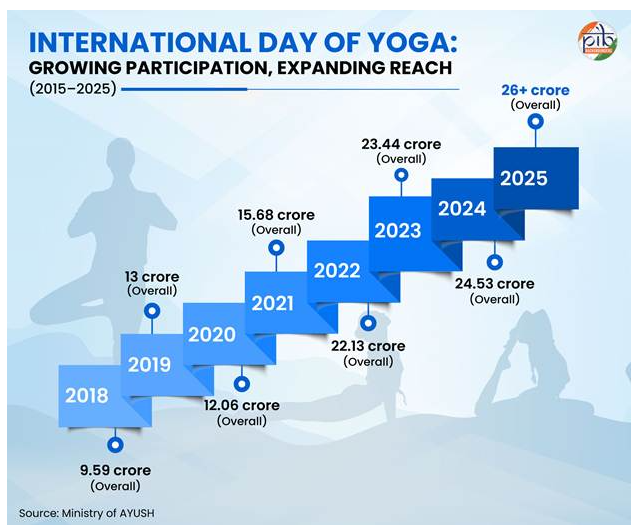
India and yoga share a relationship extending over several millennia. Rooted in India’s ancient spiritual and philosophical traditions, yoga has developed into a global movement for physical, mental and emotional well-being.
Recognising its universal appeal, the United Nations proclaimed June 21 as the International Day of Yoga in 2014.
- The proposal was introduced by Prime Minister Narendra Modi during the 69th session of the UN General Assembly.
- It received the support of 175 member countries.
- The first International Day of Yoga was observed on June 21, 2015.
- Yoga was inscribed on UNESCO’s Representative List of the Intangible Cultural Heritage of Humanity in 2016.
The global recognition of yoga highlights India’s contribution to international wellness and strengthens yoga’s role as a bridge promoting health, harmony and sustainable lifestyles.
What is the Historical and Civilisational Legacy of Yoga?
- Ancient Origins: Yoga is among the world’s oldest knowledge traditions, with its roots traced to the Indus–Saraswati civilisation around 2700 BCE.
- Meaning of Yoga: The term “yoga” comes from Sanskrit and means to join or unite, symbolising the integration of body and consciousness.
- Scriptural References: Yogic practices and ideas appear in the Vedas, Upanishads, Buddhist and Jain traditions, the Mahabharata and the Ramayana.
- Patanjali’s Contribution: Maharishi Patanjali systematised the yogic tradition through the Yoga Sutras, providing a philosophical and practical framework.
- Living Tradition: Successive sages and yoga practitioners preserved and enriched yoga, allowing it to spread across India and the world.
Why is Yoga Considered India’s Timeless Gift?
- Holistic Health: Yoga combines physical postures, breathing techniques and meditation to promote physical, mental and spiritual wellness.
- Inner Balance: It supports self-discipline, emotional stability, positive energy and inner peace.
- Universal Adaptability: Yoga can be practised by different age groups and adapted according to individual health needs.
- Preventive Value: Regular yoga practice encourages active lifestyles, physical flexibility and improved stress management.
- Civilisational Contribution: Its global acceptance reflects the continuing relevance of India’s ancient knowledge traditions.
What Was the Theme at AIIMS Bibinagar?
AIIMS Bibinagar celebrated Yoga Day under the theme:
“Yoga for Healthy Ageing”
The theme emphasised yoga’s contribution to physical mobility, emotional wellness and quality of life across different stages of life.
What Special Programmes Were Conducted?
AIIMS Bibinagar organised a week-long series of activities for different population groups.
Garbhsanskar
- Focused on the physical and mental well-being of pregnant women through appropriate wellness practices.
Bala Yoga
- Introduced schoolchildren to age-appropriate yoga for physical fitness, concentration and discipline.
Vriddha Yoga
- Promoted gentle yoga for elderly persons to support mobility, balance and healthy ageing.
Chakra Meditation
- Focused on mindfulness, relaxation and emotional well-being.
Adolescent Yoga
- Addressed the physical, psychological and emotional needs of adolescents.
- Radio talks were also conducted on these themes, along with sessions on the history of yoga.
How Does Yoga Support Healthy Ageing?
- Mobility and Balance: Appropriate postures can support flexibility, muscular strength and physical balance.
- Mental Wellness: Meditation and controlled breathing encourage calmness and emotional stability.
- Active Ageing: Regular practice can help elderly persons remain physically active and socially engaged.
- Adaptable Practice: Yoga can be modified according to age, health condition and physical capacity.
- Quality of Life: It provides an accessible and low-cost wellness practice for older persons.
Why is Inclusive Yoga Programming Important?
Different population groups have distinct health and wellness needs.
- Pregnant women require safe and supervised practices.
- Children benefit from exercises supporting concentration and discipline.
- Adolescents need support for emotional and psychological stress.
- Elderly persons require gentle practices for balance and mobility.
- Security personnel benefit from stress reduction and alertness.
Significance
- Preventive Healthcare: Yoga promotes healthy habits and may reduce lifestyle-related health risks.
- Mental Well-Being: Pranayama and meditation support stress management and emotional balance.
- Healthy Ageing: Age-appropriate yoga helps support mobility, independence and active ageing.
- Cultural Diplomacy: International Yoga Day strengthens India’s soft power and civilisational influence.
- Community Participation: The involvement of officials, students, healthcare institutions and local communities promotes collective wellness.
- Sustainable Lifestyle: Yoga encourages disciplined, balanced and health-conscious living.
Conclusion
International Day of Yoga 2026 highlighted yoga as both an ancient Indian knowledge tradition and a modern global wellness movement. Its journey from India’s civilisational heritage to international recognition demonstrates its universal relevance.
The celebrations in Telangana showed that yoga can contribute to preventive healthcare, mental resilience, healthy ageing and inclusive well-being when adapted for pregnant women, children, adolescents, elderly persons and security personnel.
CARE MCQ
Q. Consider the following statements regarding the International Day of Yoga:
- The United Nations proclaimed 21 June as the International Day of Yoga in 2014.
- The first International Day of Yoga was observed in 2015.
- Yoga was inscribed on UNESCO’s Representative List of the Intangible Cultural Heritage of Humanity in 2016.
Which of the statements given above are correct?
A. 1 and 2 only
B. 2 and 3 only
C. 1 and 3 only
D. 1, 2 and 3
Answer: D
Explanation
- Statement 1 is correct: The United Nations General Assembly (UNGA) adopted Resolution 69/131 on 11 December 2014, proclaiming 21 June as the International Day of Yoga.
- Statement 2 is correct: The first International Day of Yoga was celebrated worldwide on 21 June 2015.
- Statement 3 is correct: Yoga was inscribed on UNESCO’s Representative List of the Intangible Cultural Heritage of Humanity on 1 December 2016.
FAQs
1. When was International Day of Yoga proclaimed?
The United Nations proclaimed it in 2014.
2. When was the first International Day of Yoga observed?
It was first observed on June 21, 2015.
3. How many countries supported India’s UN proposal?
The proposal received support from 175 member countries.
4. When did UNESCO recognise yoga?
Yoga was inscribed on UNESCO’s Representative List of the Intangible Cultural Heritage of Humanity in 2016.
5. Who systematised yoga through the Yoga Sutras?
Maharishi Patanjali systematised the yogic tradition.
6. What was the theme at AIIMS Bibinagar?
The theme was “Yoga for Healthy Ageing.”
Relevance: UPSC GS Paper III: Science & Technology, Artificial Intelligence, Emerging Technologies, Cybersecurity and Innovation.
For Prelims:
- Global Dialogue on AI, International Scientific Panel on AI, Trusted AI Commons, Data Sovereignty, IndiaAI Mission
For Mains:
- Responsible AI, Global AI Governance, Digital Colonialism, Regulatory Fragmentation, Equitable Technology Access
Why in News?
Professor B. Ravindran, head of the Centre for Responsible AI at IIT Madras, has been appointed as the lone Indian among 40 members of the Independent International Scientific Panel on AI for a three-year term.
The Panel will periodically assess scientific developments in artificial intelligence and provide evidence-based inputs to the Global Dialogue on AI, a United Nations-backed platform in which every country has been invited to participate.
What is the Independent International Scientific Panel on AI?
The Independent International Scientific Panel on AI is the first global scientific body established specifically to assess developments in artificial intelligence.
Major Functions
- Periodically review the state of AI science.
- Assess emerging capabilities and risks.
- Prepare reports on the scientific aspects of AI.
- Provide scientific inputs to the Global Dialogue on AI.
- Support evidence-based international discussions.
The Panel will not directly decide political or regulatory questions. Its role is limited to scientific assessment, while governments participating in the Global Dialogue will address policy and governance issues.
What is the Global Dialogue on AI?
The United Nations General Assembly established the Global Dialogue on AI as an inclusive international platform for discussing the development, deployment and governance of artificial intelligence.
It seeks to:
- Include all countries in AI-governance discussions.
- Connect scientific assessments with policymaking.
- Protect the interests of developing countries.
- Encourage international cooperation.
- Ensure that AI benefits humanity as a whole.
The Scientific Panel and Global Dialogue together represent an emerging two-level governance framework: scientific assessment by experts and policy deliberation by governments.
Why is Global AI Governance Necessary?
Artificial intelligence is a transformative general-purpose technology capable of reshaping economies, industries, labour markets, governance and everyday life.
Its impact has been compared to that of the steam engine. Therefore, fragmented national approaches alone may be insufficient to govern a technology whose development and deployment cross national borders.
A global framework can help establish minimum standards relating to:
- Safety
- Accountability
- Transparency
- Responsible deployment
- Data protection
- Risk assessment
- Equitable access
How Can Regulatory Fragmentation Affect Innovation?
At present, countries are developing different regulatory frameworks for artificial intelligence.
If each country adopts widely differing standards, AI companies may have to modify their systems separately for every jurisdiction.
Possible Consequences
- Higher Compliance Costs: Companies must satisfy multiple regulatory requirements.
- Fragmented Development: AI systems may be designed differently for separate markets.
- Slower Innovation: Resources may shift from research to regulatory compliance.
- Unequal Deployment: Companies may introduce advanced services only in countries with favourable regulations.
- Regulatory Arbitrage: Firms may relocate activities to jurisdictions with weaker safeguards.
Internationally agreed minimum regulations can reduce such fragmentation while allowing countries to adopt additional protections suited to their circumstances.
What are the Concerns Around Data Sovereignty?
Data sovereignty refers to the principle that data generated within a country should remain subject to that country’s laws and control.
It can help protect:
- National security
- Citizens’ privacy
- Domestic data resources
- Strategic economic interests
However, excessive localisation requirements may create difficulties if every country insists that:
- All data must remain within national borders.
- AI infrastructure must be domestically located.
- AI development must occur entirely within the country.
- Cross-border data access must be severely restricted.
Many countries lack the computing power, financial resources and technical expertise needed to build an independent AI ecosystem. Strict national boundaries may therefore increase dependence on the few countries that already control advanced infrastructure.
What is Digital Colonialism?
Digital colonialism refers to a situation in which technologically weaker countries become dependent on foreign platforms, AI models, data infrastructure and technical standards controlled by powerful countries or corporations.
Developing countries may become digital colonies when they:
- Provide data without receiving proportional economic benefits.
- Depend on foreign AI systems for essential services.
- Lack influence over global technical standards.
- Remain passive consumers rather than technology developers.
- Cannot effectively regulate harmful AI applications.
- Lose control over strategic digital infrastructure.
Many countries in Asia and Africa may lack the institutional capacity required to frame robust AI regulations. Global minimum standards can help protect them from exploitation and technological dependence.
Can Global Regulation Control AI-Related Risks?
Artificial intelligence can support beneficial applications in healthcare, agriculture, education and governance. However, advanced AI tools may also be misused.
Potential risks include assistance in developing:
- Biological weapons
- Chemical weapons
- Advanced cyberattacks
- Disinformation systems
- Harmful autonomous applications
International treaties already regulate biological and chemical weapons. Similar global arrangements may be required to control high-risk AI models and tools that could enable the development of such weapons.
The challenge is to regulate dangerous applications without restricting beneficial innovation.
What is the Risk of an AI Non-Proliferation Regime?
AI governance could adopt language similar to nuclear non-proliferation.
Some technologically advanced countries or companies may claim that only they possess the capacity to develop safe and responsible AI. They may then seek unrestricted development rights for themselves while limiting access for others.
Such a regime could:
- Concentrate technological power.
- Permanently exclude developing countries.
- Restrict access to advanced models and computing resources.
- Create dependence on a few AI-producing nations.
- Reproduce inequalities associated with the global nuclear order.
Therefore, international regulation must prevent dangerous uses without becoming a mechanism for preserving technological monopolies.
Why Does AI Governance Matter for Developing Countries?
Equitable Access
- Developing countries should be able to use AI in agriculture, healthcare, education, disaster management and public administration.
Protection from Harm
- Common safeguards can protect citizens from unsafe, discriminatory or unaccountable AI systems.
Participation in Rule-Making
- Countries that are not major AI developers should still participate in determining global standards.
Capacity Building
- International cooperation can help countries develop scientific, regulatory and institutional expertise.
Prevention of Digital Dependence
- Inclusive governance can reduce excessive dependence on foreign technologies and corporations.
Developmental Opportunity
- Countries should not be denied AI-driven growth merely because they lack the resources to create large AI models or computing infrastructure.
What are the Trusted AI Commons?
The Trusted AI Commons is a proposed open repository containing tools and resources required to develop and deploy artificial intelligence safely and responsibly.
It was one of the major outcomes of the New Delhi AI Impact Summit held in February 2026.
The platform will initially be hosted and managed by India. The IndiaAI Mission will identify an appropriate institutional mechanism for its operation.
What Will the Trusted AI Commons Contain?
The platform is expected to provide:
- Safety-testing tools
- Evaluation benchmarks
- Datasets
- Deployment protocols
- Responsible-AI frameworks
- Model-assessment resources
- Testing methodologies
For example, an organisation developing an agricultural AI system could use the Commons to identify:
- Relevant datasets
- Suitable evaluation tools
- Safety benchmarks
- Testing procedures
- Deployment protocols
It would function as a one-stop platform for responsible AI resources.
Why is it Called a “Commons”?
It is called a Commons because its resources are intended to be:
- Openly available
- Commonly accessible
- Shared across institutions and countries
- Offered under liberal licensing conditions
- Usable by governments, researchers, start-ups and civil society
The Commons will not immediately commission the development of every tool. It will initially bring together existing resources created by organisations such as the Centre for Responsible AI at IIT Madras and technology companies such as Google.
How Can the Trusted AI Commons Help?
Lowering Entry Barriers
- Small countries, start-ups and research institutions may not have the resources to build independent AI-safety infrastructure.
Common Evaluation Standards
- Shared benchmarks can make AI testing more consistent across countries and sectors.
Responsible Deployment
- Developers can evaluate AI systems before deploying them in sensitive sectors such as healthcare or agriculture.
Inclusive Innovation
- Open resources can allow smaller organisations and developing countries to participate in AI development.
Transparency and Trust
- Common testing tools can improve public confidence in AI systems.
Global Capacity Building
- The platform can strengthen the technical capacity of countries that currently lack advanced AI-governance institutions.
What is India’s Significance in Emerging Global AI Governance?
- Scientific Representation: Professor B. Ravindran is the lone Indian member of the 40-member international scientific panel.
- Institutional Leadership: India will initially host and manage the Trusted AI Commons.
- Developing-Country Voice: India can represent countries that use AI extensively but do not dominate AI development.
- Responsible-AI Expertise: IIT Madras’ Centre for Responsible AI is developing tools for safe and accountable AI systems.
- Global Standard-Setting: Participation allows India to influence emerging international norms.
- Inclusive Technology Diplomacy: India can promote an AI order that balances innovation, safety and equitable access.
What are the Major Challenges in Global AI Governance?
- Differing national interests and regulatory approaches
- Rapidly changing AI capabilities
- Concentration of computing infrastructure
- Dominance of large technology companies
- Unequal regulatory capacity among countries
- Tension between data sovereignty and data sharing
- Difficulty in defining high-risk AI applications
- Risk of biological, chemical and cyber misuse
- Possibility of exclusionary technology controls
- Lack of common testing and accountability standards
Way Forward
Establish Minimum Global Standards
- Countries should agree on basic principles relating to safety, transparency, accountability and responsible use.
Adopt Risk-Based Regulation
- High-risk applications should face stricter scrutiny, while low-risk innovation should not be unnecessarily restricted.
Ensure Inclusive Representation
- Developing countries must have meaningful participation in global AI institutions.
Build Regulatory Capacity
- Technical and institutional assistance should be provided to countries lacking AI-governance expertise.
Promote Open Resources
- Platforms such as the Trusted AI Commons should provide accessible datasets, benchmarks and safety tools.
Prevent Technology Monopolies
- Global frameworks should not grant a few countries or corporations permanent control over advanced AI.
Strengthen Independent Scientific Assessment
- Periodic assessments should guide regulation as AI technology evolves.
Balance Sovereignty and Cooperation
- Countries must protect data and national interests without completely fragmenting the global AI ecosystem.
Conclusion
Artificial intelligence is too transformative and globally interconnected to be governed solely through fragmented national regulations. A global framework is necessary to control dangerous uses, reduce regulatory uncertainty and protect countries that lack advanced AI-governance capacity.
However, global regulation must not become an exclusionary non-proliferation regime controlled by a few countries or technology companies. The future AI order should be based on scientific evidence, minimum global standards, inclusive representation, open resources and equitable access to innovation.
CARE MCQ
Q. Consider the following statements regarding emerging global AI-governance institutions:
- The Independent International Scientific Panel on AI will periodically assess scientific developments in artificial intelligence.
- The Global Dialogue on AI is intended to include all countries.
- The Trusted AI Commons will provide openly accessible tools and resources for responsible AI development.
Which of the statements given above are correct?
(a) 1 and 2 only
(b) 2 and 3 only
(c) 1 and 3 only
(d) 1, 2 and 3
Answer: (d)
Explanation
- Statement 1 is correct: The Panel will periodically assess the state of AI science.
- Statement 2 is correct: Every country has been invited to participate in the Global Dialogue.
- Statement 3 is correct: The Trusted AI Commons will contain shared tools, datasets, benchmarks and protocols for responsible AI.
FAQs
1. What is the Independent International Scientific Panel on AI?
It is the first global scientific body created to periodically assess developments in artificial intelligence.
2. Who represents India on the Panel?
Professor B. Ravindran of IIT Madras is the lone Indian among its 40 members.
3. What is the Global Dialogue on AI?
It is a UN-backed platform in which countries discuss international AI governance and policy.
4. What is regulatory fragmentation?
It refers to the existence of different and conflicting AI regulations across countries.
5. What is data sovereignty?
It is the principle that data generated within a country should remain subject to that country’s laws and control.
6. What is digital colonialism?
It refers to technological dependence in which developing countries supply data and markets but lack control over AI infrastructure, platforms and standards.
7. What is the Trusted AI Commons?
It is an open repository of testing tools, benchmarks, datasets and protocols for responsible AI development and deployment.
8. Who will initially host the Trusted AI Commons?
India will initially host and manage it through an institutional mechanism to be identified by the India AI Mission.
9. Why is an AI non-proliferation regime a concern?
It could allow a few technologically advanced countries or companies to monopolise advanced AI development.
10. Why are minimum global AI standards needed?
They can reduce regulatory fragmentation, control serious risks and protect countries lacking strong AI-governance institutions.
Relevance:APPSC: Andhra Pradesh Agriculture, Farmer-Welfare Schemes, Natural Farming, Irrigation Projects and Swachh Andhra–Swarna Andhra.
For Prelims:
PM-Kisan, Annadata Sukhibhava, Natural Farming, E-Crop System, Forest Rights Act
For Mains:
- Sustainable Agriculture, Soil-Health Conservation, Crop Diversification, Farm-Income Security, Residue-Free Exports
Why in News?
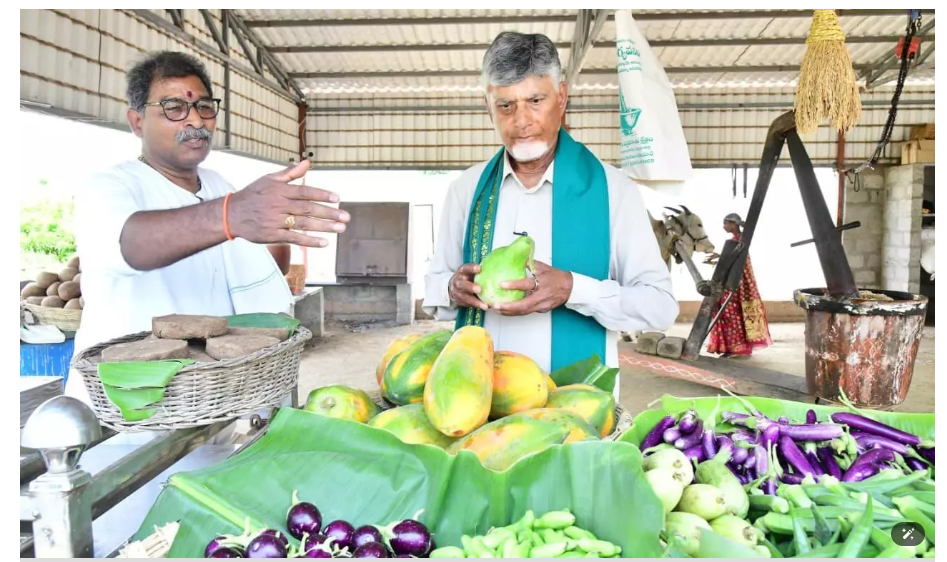
Andhra Pradesh Chief Minister N. Chandrababu Naidu released ₹3,125.47 crore under the PM-Kisan–Annadata Sukhibhava scheme, benefiting 46.86 lakh farmer families.The assistance was released during the PM-Kisan–Annadata Sukhibhava and Swachh Andhra–Swarna Andhra programmes at Linganguntla village in Palnadu district.The Chief Minister also emphasised natural farming, responsible use of agricultural chemicals, crop diversification, irrigation development and timely payments to farmers.
What is the PM-Kisan–Annadata Sukhibhava Assistance?
Each eligible farmer family received ₹7,000 in the first instalment:
- ₹5,000 from the Andhra Pradesh government
- ₹2,000 under the Union government’s PM-Kisan scheme
The State government has promised annual financial assistance of ₹20,000 per farmer family, consisting of:
- ₹14,000 from the State government
- ₹6,000 from the Union government
The present instalment covers 46,85,838 farmer families, including cultivators recognised under the Forest Rights Act.
What is Annadata Sukhibhava?
- Annadata Sukhibhava is Andhra Pradesh’s farmer-income support programme implemented along with PM-Kisan assistance.
- Its objective is to provide direct financial support to eligible farmer families and reduce their immediate cultivation-related financial burden.
- Agriculture Minister Kinjarapu Atchannaidu stated that ₹8,985.41 crore had been distributed under Annadata Sukhibhava during the previous year.
Why Did the Chief Minister Emphasise Natural Farming?
- Declining Soil Fertility: Excessive use of chemical fertilisers and pesticides can degrade soil health and reduce long-term agricultural productivity.
- Public-Health Concerns: High chemical residues in food may affect consumer health.
- Agricultural Sustainability: Input-intensive farming may undermine the ecological and economic sustainability of agriculture over time.
- Export Market Access: Agricultural products with excessive pesticide residues face rejection in international markets.
The Chief Minister urged farmers to follow scientific recommendations while applying fertilisers and pesticides and to gradually adopt natural-farming practices.
What is Andhra Pradesh’s Position in Natural Farming?
Andhra Pradesh was described as a national leader in natural farming, with nearly 20 lakh acres under natural cultivation.
Natural farming seeks to reduce dependence on external chemical inputs and promote:
- Soil-health restoration
- Local and biological inputs
- Reduced pesticide residues
- Lower cultivation costs
- Environmentally sustainable farming
Why are Pesticide Residues a Major Concern?
The Chief Minister referred to reports that China had returned three containers of chilli exported from Guntur because of pesticide-residue concerns.
This highlights two major risks:
- Export Rejection: Countries may reject farm products that do not meet residue-safety standards.
- Income Loss: Rejected consignments can reduce farmers’ earnings and damage the credibility of agricultural exports.
Therefore, farmers need to follow scientifically prescribed quantities and waiting periods while using fertilisers and pesticides.
How is the Government Supporting Farmers?
- Seed-to-Market Support: The State government stated that it was supporting farmers from seed supply to agricultural marketing.
- Timely Paddy Payments: Payments for procured paddy are being made within 48 hours.
- E-Crop System: Digital crop-registration systems help record cultivation details and support the delivery of government services.
- SMS Advisories: Farmers receive timely agricultural information and crop-related guidance through mobile messages.
- Fertiliser Availability: The government assured adequate fertiliser stocks across the State.
- Household Outreach: Public representatives will visit farmer households to understand problems and spread awareness about government schemes.
Why is Crop Diversification Important?
- Income Improvement: Cultivating a wider range of crops can create additional income opportunities.
- Risk Reduction: Dependence on a single crop exposes farmers to price, pest and climatic risks.
- Resource Efficiency: Different crops have different water and nutrient requirements, helping improve resource use.
- Market Responsiveness: Diversification allows farmers to respond to changes in consumer and export demand.
The government proposed direct engagement with farmers to promote crop diversification based on local conditions.
What Agricultural Programmes Are Being Revived?
The State government is reviving programmes related to:
- Soil-Health Conservation: Protecting soil fertility and promoting balanced nutrient application.
- Drip and Sprinkler Irrigation: Improving water-use efficiency.
- Farm Mechanisation: Reducing labour burden and improving operational efficiency.
- Drone-Based Agriculture: Using drones for agricultural monitoring and farm operations.
- Organic and Scientific Farming: Reducing excessive chemical use while improving productivity.
The agriculture minister specifically urged farmers to reduce excessive use of urea.
What is the Role of Technology in Agriculture?
- E-Crop Registration: Helps identify cultivated crops and link farmers with government services.
- SMS-Based Advisories: Provide timely information on cultivation practices and farm management.
- Drone Agriculture: Can support monitoring, spraying and precision-based farm operations.
- Micro-Irrigation: Drip and sprinkler systems deliver water efficiently and reduce wastage.
Technology can strengthen decision-making, reduce input costs and improve the delivery of agricultural support.
What is Swachh Andhra–Swarna Andhra?
As part of the Swachh Andhra–Swarna Andhra initiative, the Chief Minister laid foundation stones for two waste-to-energy plants in:
- Kadapa
- Kurnool
Key Facts
- Combined Capacity: 15 MW
- Investment: ₹330 crore
- State Plan: Establishment of eight waste-to-energy plants
The objective is to convert waste into energy and reduce the burden of accumulated garbage.
Significance
- Direct Income Support: Financial assistance reduces the immediate economic burden on farmer families.
- Sustainable Agriculture: Natural farming protects soil fertility and supports long-term productivity.
- Export Competitiveness: Lower pesticide residues can improve access to international markets.
- Water Security: Irrigation projects and micro-irrigation systems improve agricultural resilience.
- Technology Adoption: E-crop systems, SMS advisories and drones support modern farm management.
- Timely Procurement Payments: Paddy payments within 48 hours improve farmers’ cash flow.
- Inclusive Coverage: Farmers covered under the Forest Rights Act are included in the assistance programme.
Key Challenges
- Excessive use of chemical fertilisers and pesticides
- Declining soil fertility
- Pesticide residues in export produce
- Farmer dependence on a limited number of crops
- Need for scientific input use
- Timely completion of irrigation projects
- Expansion of natural farming without reducing farmer incomes
- Effective delivery of advisories and welfare benefits
Way Forward
- Scientific Input Use: Farmers should follow recommended doses of fertilisers and pesticides.
- Scale Up Natural Farming: Expansion should be supported with training, local inputs and market access.
- Residue Testing: Strong testing and traceability systems are needed for export-oriented crops.
- Crop Diversification: Crop choices should reflect soil, water availability and market demand.
- Strengthen Micro-Irrigation: Drip and sprinkler systems should be expanded in water-stressed areas.
- Improve Extension Services: E-crop records, SMS advisories and household visits should provide practical guidance.
- Ensure Market Support: Procurement, timely payments and marketing assistance should accompany production reforms.
Conclusion
Andhra Pradesh’s recent farmer-support programme combines direct income assistance, natural farming, irrigation development, digital agriculture and market support. The release of ₹3,125.47 crore provides immediate financial relief, while the focus on soil health, reduced chemical use and crop diversification addresses the long-term sustainability of agriculture.The success of this approach will depend on balancing environmental protection with productivity, income security and reliable market access for farmers.

CARE MCQ
Q. Consider the following statements regarding the National Mission on Natural Farming (NMNF):
- The National Mission on Natural Farming (NMNF) was approved by the Union Cabinet in November 2024 as a standalone Centrally Sponsored Scheme.
- The Mission aims to promote chemical-free farming and envisages the creation of a common national brand for naturally grown produce.
Which of the statements given above is/are correct?
A. 1 only
B. 2 only
C. Both 1 and 2
D. Neither 1 nor 2
Answer: C
Explanation:
- Statement 1 is correct: The Union Cabinet approved the National Mission on Natural Farming (NMNF) on 25 November 2024 as a standalone Centrally Sponsored Scheme to promote sustainable and climate-resilient agriculture.
- Statement 2 is correct: The Mission promotes chemical-free farming based on traditional knowledge and seeks to establish a single national brand for naturally grown, chemical-free produce.
Additional Information
- Financial Outlay: ₹2,481 crore up to the 15th Finance Commission period.
- Target Area: 7.5 lakh hectares across 15,000 clusters.
- Bio-Input Resource Centres: 10,000 centres to be established.
- Awareness Target: 1 crore farmers.
- Natural Farming emphasizes the integration of livestock (preferably indigenous cows) with diversified cropping systems.
- The Mission supports farmer-friendly certification and promotes location-specific natural farming practices through institutions such as ICAR, KVKs, and Agricultural Universities.
FAQs
1. How much assistance was released?
The Andhra Pradesh government released ₹3,125.47 crore.
2. How many farmer families benefited?
About 46.86 lakh farmer families benefited.
3. How much did each family receive in the first instalment?
Each eligible farmer family received ₹7,000.
4. What is the annual assistance promised?
The promised annual assistance is ₹20,000 per farmer family.
5. How much land is under natural farming in Andhra Pradesh?
Nearly 20 lakh acres are under natural cultivation.
6. When is the Polavaram project expected to be completed?
The project is proposed to be completed by April 2027.
7. What is the combined capacity of the Kadapa and Kurnool waste-to-energy plants?
Their combined capacity is 15 MW.