Table of Contents
UPSC: GS Paper III – Renewable Energy, Agriculture, Infrastructure, Environment and Climate Change
TGPSC: Paper IV – Economy and Development
For Prelims:
- PM-KUSUM, Pradhan Mantri Kisan Urja Suraksha evam Utthaan Mahabhiyan, TGRPDCL, DISCOMs, Renewable Energy, Solar Power Plants, Component-A, SGST Reimbursement, Electricity Duty Exemption, MNRE
For Mains:
- Energy Transition, Farmer Income Diversification, Decentralised Solar Power, Rural Energy Security, Climate Action, DISCOM Reforms, Sustainable Agriculture, Green Growth, Telangana Renewable Energy Model
Why in News?
Telangana Rythu Power Distribution Company Limited TGRPDCL Chairman and Managing Director Musharraf Faruqui announced that Telangana’s renewable energy capacity stood at 10,642 MW in 2025–26 and the State government is planning to increase it to 29,645 MW by 2029–30.
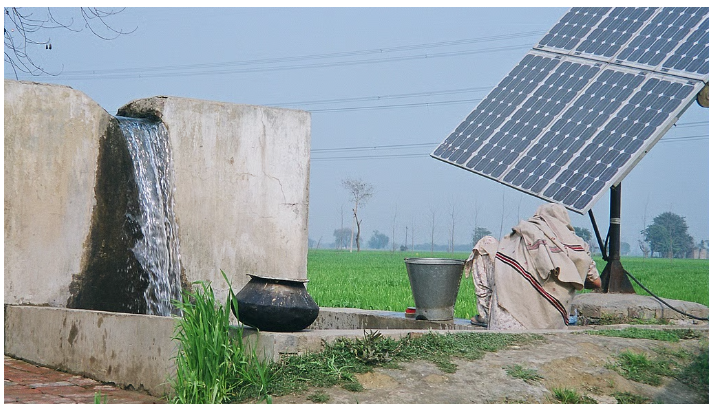
Key Highlights
- Telangana’s renewable energy generation capacity stood at 10,642 MW in 2025–26.
- The State plans to increase it to 29,645 MW by 2029–30.
- TGRPDCL Chairman and Managing Director Musharraf Faruqui highlighted the effective implementation of PM-KUSUM.
- Under PM-KUSUM-A, farmers can set up solar power plants on agricultural and barren lands.
- Farmers can sell electricity generated from solar plants to DISCOMs and earn additional income.
- Solar plants with capacities ranging from 0.5 MW to 2 MW can be established.
- Around 3.5 acres of land is required for setting up a 1 MW solar plant.
- Small and marginal farmers can form groups of two or three members to establish solar plants jointly.
Telangana Government Incentives
To encourage farmers to participate in the scheme, the Telangana government is offering:
- Exemption from NALA conversion charges
- 50% SGST reimbursement
- Exemption from Pollution Control Board NOC
- 100% exemption from electricity duty
About PM-KUSUM Scheme
- Full Form: Pradhan Mantri Kisan Urja Suraksha evam Utthaan Mahabhiyan
- Launched: 19 February 2019
- Nodal Ministry: Ministry of New and Renewable Energy
Objectives
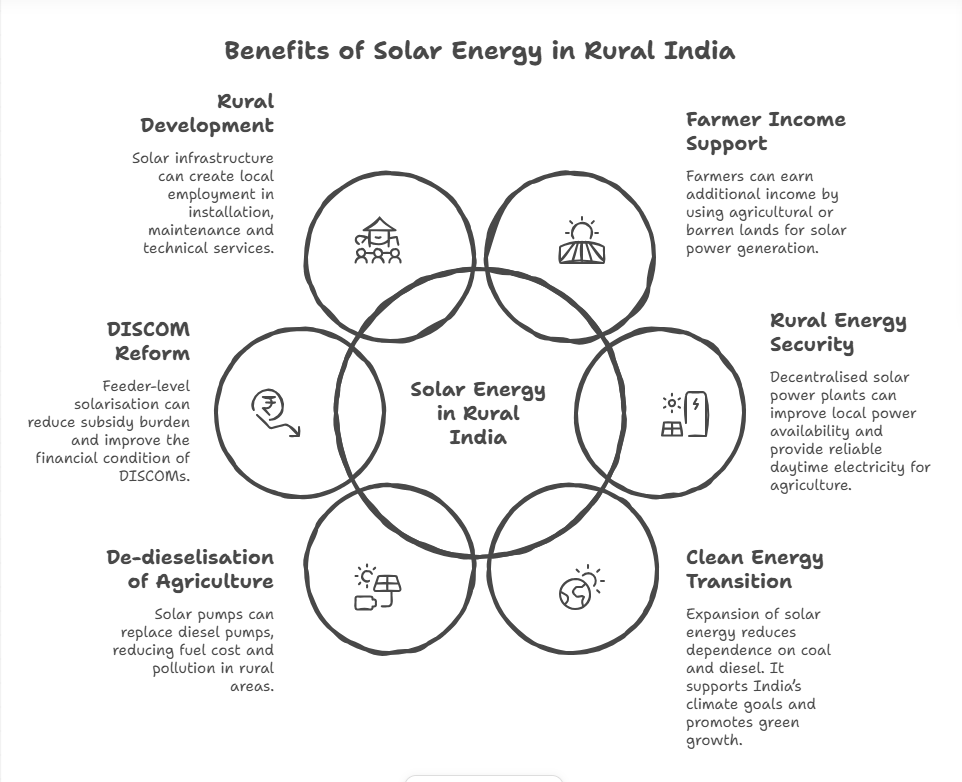
- Promote solar energy use in agriculture
- Provide energy security to farmers
- Reduce dependence on diesel pumps
- Support clean and renewable energy
- Enable farmers to earn income by selling surplus solar power
- Reduce the subsidy burden on DISCOMs
Components of PM-KUSUM
| Component | Updated Target | Main Purpose |
| Component-A | 10,000 MW | Setting up decentralised ground/stilt-mounted grid-connected solar or renewable energy-based power plants |
| Component-B | 14 lakh pumps | Installation of standalone solar agriculture pumps |
| Component-C | 35 lakh pumps | Solarisation of grid-connected agriculture pumps, including feeder-level solarisation |
Financial Assistance
| Source | Share |
| Central Government | 30% |
| State Government | At least 30% |
| Farmer | Up to 40% |
Issues and Challenges
- High initial cost: Small and marginal farmers may find it difficult to pay their share.
- Implementation delays: Progress depends on State agencies and DISCOMs.
- Groundwater concern: Easy access to solar power may increase groundwater extraction.
- Maintenance gap: Solar plants and pumps need timely repair and local service support.
- Awareness problem: Many farmers may not know the subsidy pattern and application process.
- Grid infrastructure: Large-scale renewable energy requires strong grid and storage systems.
Way Forward
- Conduct village-level awareness programmes for farmers.
- Provide easy loans and financial support to small and marginal farmers.
- Encourage farmer groups, cooperatives and Farmer Producer Organisations.
- Ensure timely payment by DISCOMs for purchased electricity.
- Strengthen grid infrastructure and energy storage systems.
- Promote responsible groundwater use along with solar irrigation.
- Train rural youth in solar installation, maintenance and repair work.
Conclusion
Telangana’s plan to increase renewable energy capacity to 29,645 MW by 2029–30 is an important step towards green growth, farmer income diversification and rural energy security. Through PM-KUSUM, farmers can become both energy users and energy producers.
CARE MCQ
PM-KUSUM scheme is implemented under which one of the following Ministries?
- Ministry of Agriculture and Farmers Welfare
- Ministry of Power
- Ministry of New and Renewable Energy
- Ministry of Rural Development
Answer: C
Explanation:
- PM-KUSUM (Pradhan Mantri Kisan Urja Suraksha evam Utthaan Mahabhiyan) is implemented by the Ministry of New and Renewable Energy (MNRE).
- The scheme promotes solar energy use in the agriculture sector.
Additional Information:
- Launched in 2019
- Focus on solar pumps and feeder solarisation
- Helps reduce dependence on diesel and conventional electricity
FAQs
1Q. What is PM-KUSUM?
Ans: PM-KUSUM stands for Pradhan Mantri Kisan Urja Suraksha evam Utthaan Mahabhiyan. It is a solar energy-based agriculture support scheme for farmers.
Q2. Which ministry implements PM-KUSUM?
Ans: PM-KUSUM is implemented by the Ministry of New and Renewable Energy (MNRE).
Q3. What is PM-KUSUM Component-A?
Ans: Component-A allows farmers to set up decentralised grid-connected solar power plants on agricultural or barren lands.
Q4. What capacity solar plants can farmers set up under PM-KUSUM-A in Telangana?
Ans: Farmers can set up solar power plants with capacities ranging from 0.5 MW to 2 MW.
Q5. How much land is required for a 1 MW solar plant?
Ans: Around 3.5 acres of land is required to set up a 1 MW solar power plant.
Q6. How can farmers earn income under PM-KUSUM?
Ans: Farmers can generate solar power on their lands and sell the electricity to DISCOMs, earning additional income.
Q7. What incentives are offered by Telangana under this scheme?
Ans: Telangana offers exemption from NALA conversion charges, 50% SGST reimbursement, exemption from Pollution Control Board NOC, and 100% exemption from electricity duty.
Q8. Why is this initiative important for farmers?
Ans: It provides farmers an additional income source, supports solarisation of agriculture, and helps use barren or less productive land productively.