Why in News?
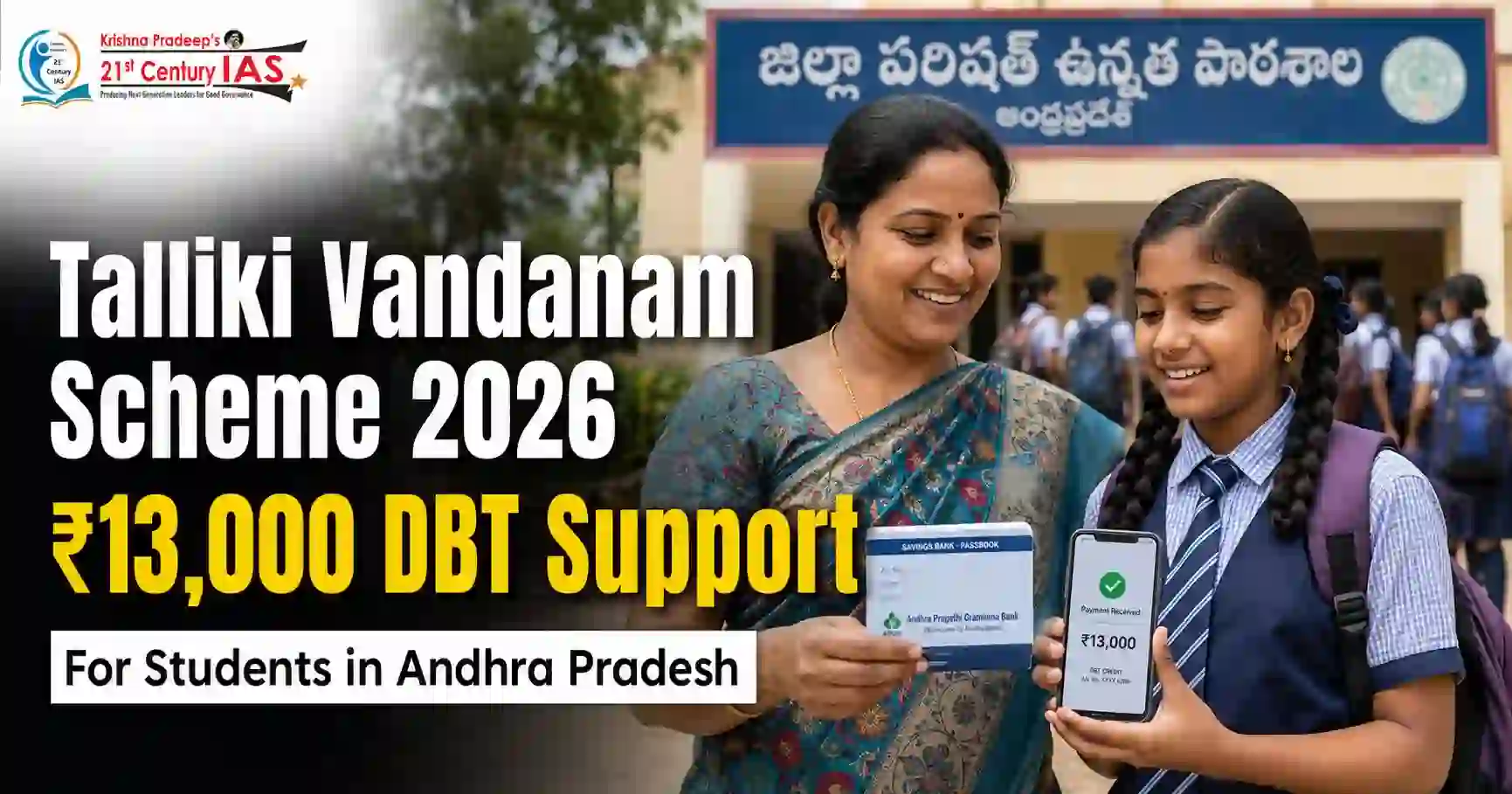
The Andhra Pradesh government has begun disbursing benefits under the Talliki Vandanam Scheme 2026 through Direct Benefit Transfer to eligible mothers or guardians. Reports state that beneficiaries have started receiving ₹13,000 in their bank accounts from 22 July 2026, after deduction of ₹2,000 from the total annual assistance of ₹15,000 per student.
What is Talliki Vandanam Scheme?
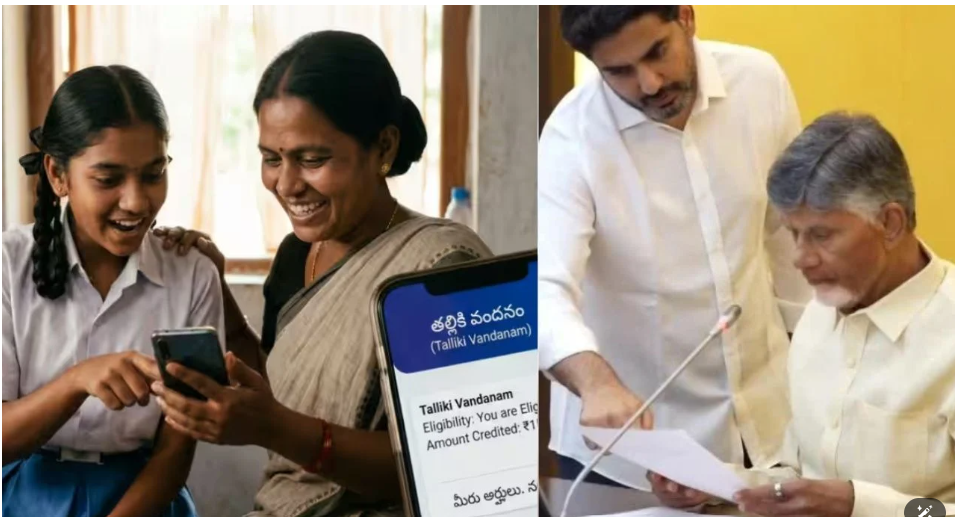
- Talliki Vandanam is an education-support welfare scheme of the Andhra Pradesh government. It provides annual financial assistance to mothers or guardians of eligible school-going children to support continuation of education and reduce dropout risks.
- The scheme covers students from Class 1 to Class 12, including Intermediate, studying in recognised institutions. It applies across government, aided, private and residential schools, subject to eligibility conditions.
- The scheme is significant because it provides support per eligible child, meaning the benefit is not restricted to only one child in a family. This makes it broader than schemes that follow a one-beneficiary-per-household model.
Amount and Disbursal Pattern
The Andhra Pradesh government has sanctioned ₹10,120.78 crore for implementation of the scheme during Academic Year 2026–27, covering 67,47,190 students and 42,70,802 eligible mothers or guardians.
| Details | Information |
| Total annual assistance | ₹15,000 per student |
| Amount credited to mother/guardian | ₹13,000 |
| Amount deducted | ₹2,000 |
| Use of deducted amount | School maintenance, hygiene, sanitation and educational ecosystem development |
| Mode of payment | Direct Benefit Transfer |
| Bank requirement | Aadhaar-seeded and NPCI-mapped account |
The ₹2,000 deduction is meant for school-level needs such as sanitation, maintenance and essential educational infrastructure.
Eligibility Criteria
Income Criteria
| Category | Income Limit |
| Rural family | Below ₹10,000 per month |
| Urban family | Below ₹12,000 per month |
Household Conditions
| Requirement | Eligibility Rule |
| Rice Card | Mandatory |
| Landholding | Wet land up to 3 acres or dry land up to 10 acres |
| Vehicle ownership | No private four-wheeler, subject to applicable exceptions |
| Electricity consumption | Below 300 units per month |
| House size | Less than 1,000 sq. ft. |
| Employment / tax status | Families with government or public sector job/income-tax status are generally excluded, subject to rules |
The mother or guardian’s bank account must be Aadhaar-seeded and NPCI-mapped for DBT release. Reports also advise beneficiaries to keep their bank or post office savings account active and properly linked to avoid payment failure.
Student Eligibility and Exclusions
Eligible Students
Students are generally eligible if they:
- study in Class 1 to Class 12, including Intermediate
- are enrolled in a recognised school or junior college
- belong to an eligible household
- maintain at least 75% attendance
- have valid records verified through school and government databases
Orphans and highly vulnerable children, including street children studying under recognised voluntary organisations, may be considered under special provisions as per reported scheme details.
Excluded Students
The scheme does not cover:
- students admitted to ITI
- students admitted to Polytechnic institutions
- students covered under specified fee reimbursement programmes, subject to scheme rules
Conclusion
The Talliki Vandanam Scheme 2026 is a major education welfare initiative of Andhra Pradesh. By providing ₹15,000 per eligible student, with ₹13,000 transferred through DBT and ₹2,000 used for school infrastructure and sanitation, the scheme attempts to combine household support with institutional improvement. Its success will depend on transparent verification, timely payment, effective grievance redressal and measurable educational outcomes.