Why in News?
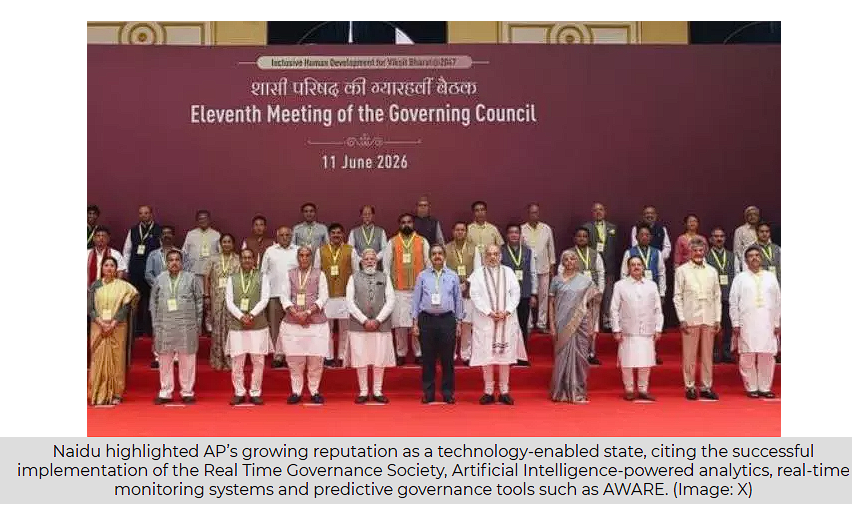
Andhra Pradesh Chief Minister N. Chandrababu Naidu presented the Swarna Andhra @2047 Vision at the NITI Aayog Governing Council meeting in New Delhi.
He said that Andhra Pradesh aims to become a prosperous, inclusive and globally competitive economy through a human capital-driven development model. The vision is linked with India’s broader goal of Viksit Bharat 2047.
What is Swarna Andhra @2047 Vision?
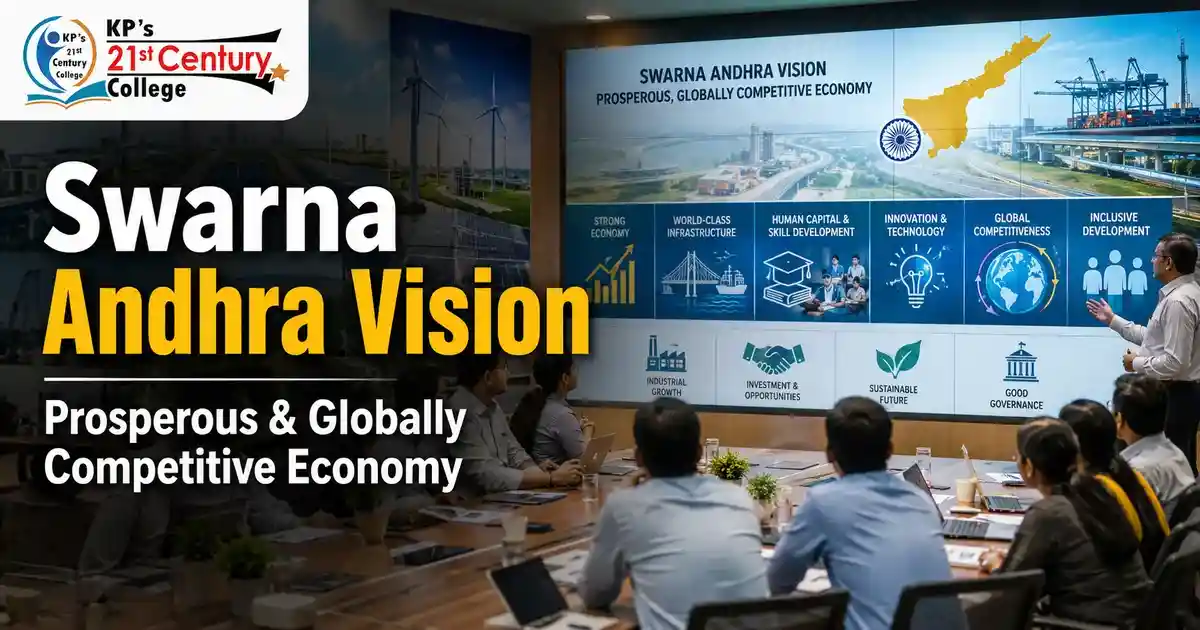
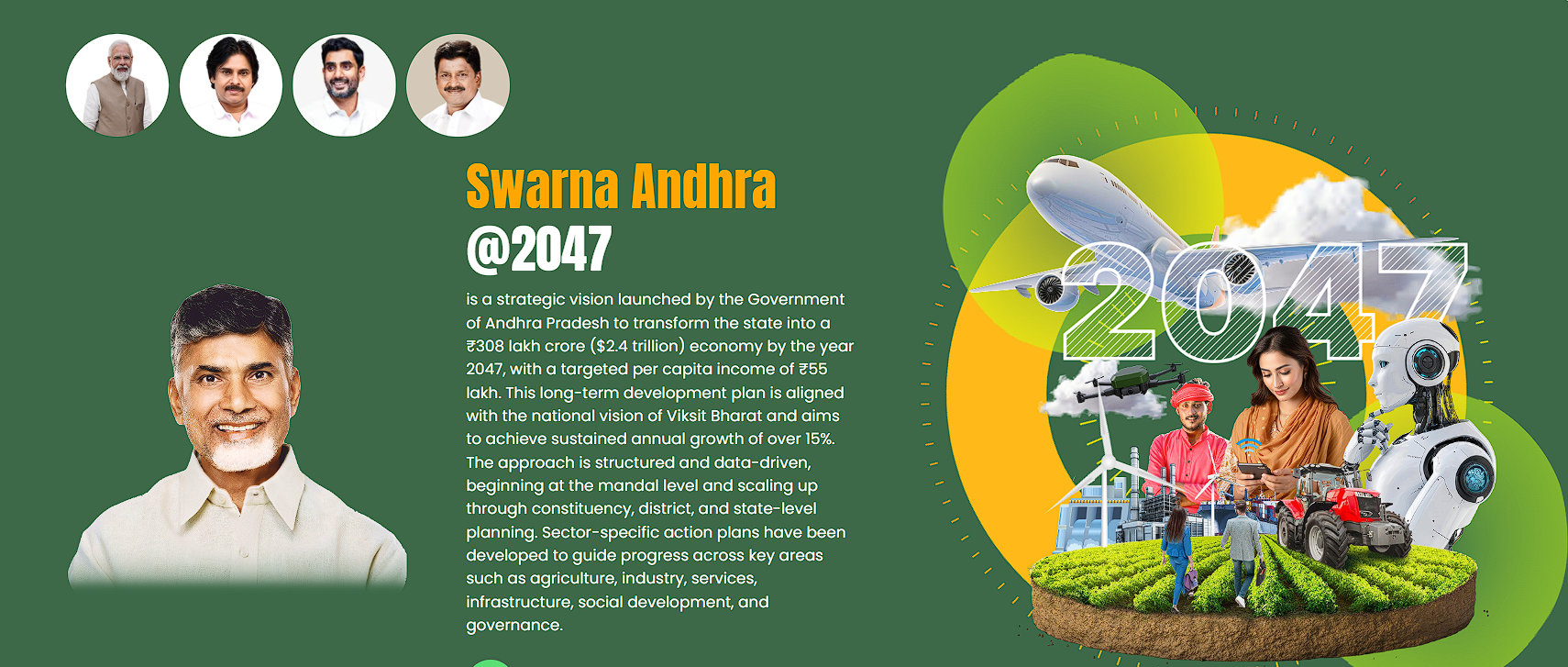
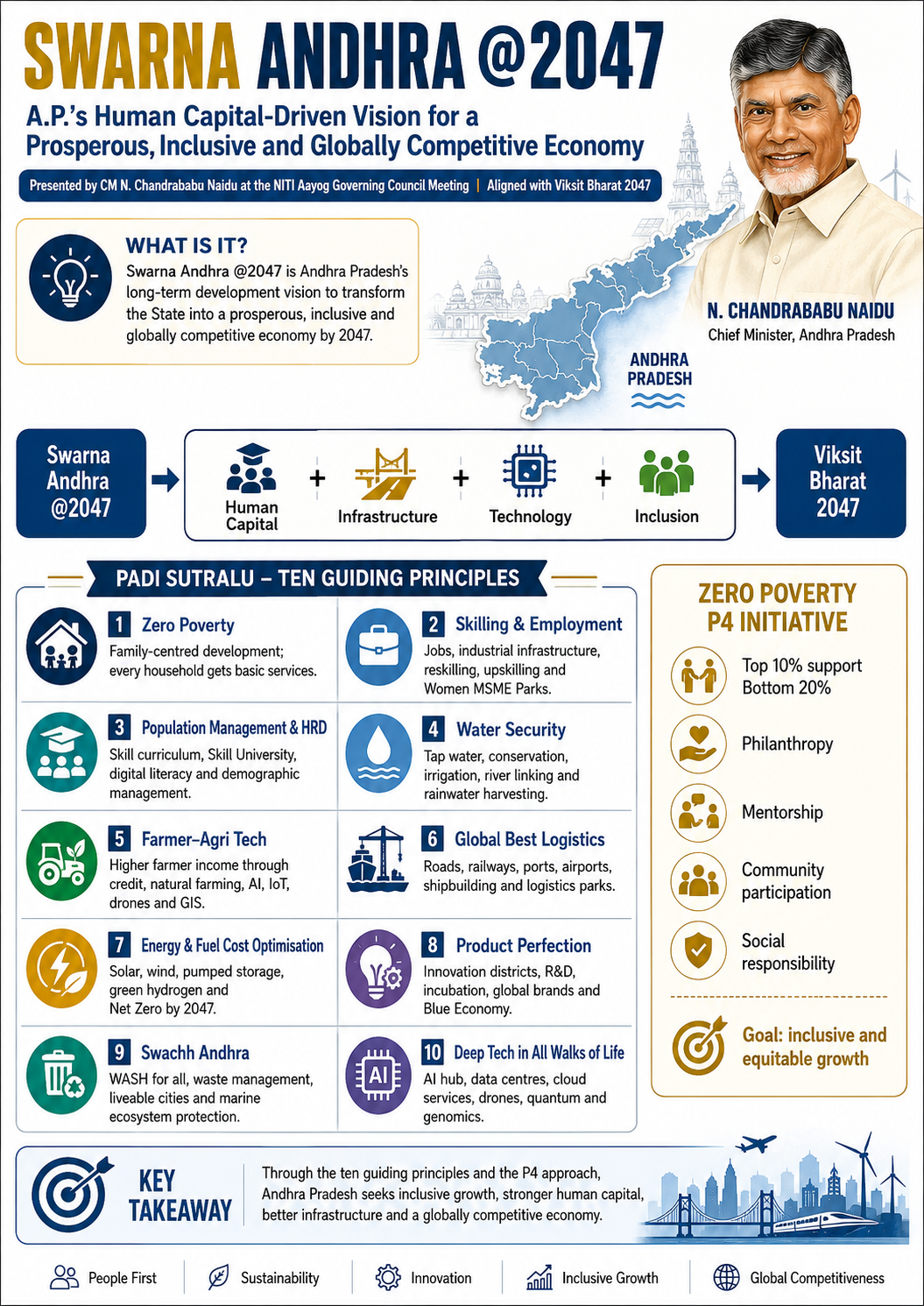
- Swarna Andhra @2047 is Andhra Pradesh’s long-term development vision.
- It aims to transform the State into a prosperous and globally competitive economy by 2047.
Padi Sutralu – Swarna Andhra @2047 (Ten Guiding Principles)
- Zero Poverty
Family as the unit of development; every household to get tap water, electricity, clean energy, sanitation, digital connectivity, social security and affordable healthcare. - Skilling and Employment
Focus on jobs, industrial infrastructure, reskilling, upskilling, simplified procedures, product quality and Women MSME Parks. - Population Management and HRD
Remote learning centres, Skill University, skill curriculum, Unique Skill Passport, skill audit, 100% digital literacy and demographic management. - Water Security
Tap water for every household, water conservation, river interlinking, irrigation for every acre, rainwater harvesting and resilient infrastructure. - Farmer–Agri Tech
Higher farmer income through credit, mentorship, natural farming, horticulture, aquaculture, AI, IoT, drones, robotics and GIS-based water management. - Global Best Logistics
Strong roads, railways, ports, airports, shipbuilding, inland waterways, coastal economic zones and multi-modal logistics parks. - Energy and Fuel Cost Optimisation
Solar, wind, pumped storage, green hydrogen, net zero by 2047, green innovation and early warning systems. - Product Perfection
Innovation districts, global investors, universities, R&D centres, incubation parks, global brands and Blue Economy potential. - Swachh Andhra
WASH for all, waste management, liveable cities, marine ecosystem protection and green financing. - Deep Tech in All Walks of Life
AI hub, data centres, cloud services, Drone Capital of India, quantum computing, genomics and technology commercialisation. - It is designed to align Andhra Pradesh’s growth strategy with Viksit Bharat 2047.
Major Goals of the Vision
- Achieve zero poverty.
- Create large-scale employment opportunities.
- Strengthen skills and human capital.
- Ensure water and energy security.
- Promote growth through:
- Agri-tech
- Logistics
- Deep-tech
- Artificial Intelligence
- Quantum technologies
- Build a globally competitive and investment-friendly economy.
- Ensure inclusive development for all citizens.
Technology-led Governance Model
Andhra Pradesh is using a technology-driven governance framework to improve administration.
Key Tools
- Real Time Governance
- Artificial Intelligence-enabled analytics
- Real-time monitoring systems
- Predictive governance tools such as AWARE
Expected Benefits
- Better administrative efficiency.
- Faster decision-making.
- Evidence-based policy implementation.
- Improved citizen service delivery.
- Early identification of governance problems.
- Better monitoring of welfare schemes and infrastructure projects.
Investment and Economic Growth
- Chief Minister Naidu stated that Andhra Pradesh has attracted investments of more than ₹23 lakh crore over the last two years.
- This has been linked to:
- Transparent policies
- Governance reforms
- Business-friendly ecosystem
- Faster approvals
- Policy stability
- He advised States to focus on:
- Strong infrastructure
- Stable policies
- Quick clearances
- Efficient approvals
- He cautioned against unsustainable incentive-based competition among States to attract investments.
Seven Basic Necessities
The State government aims to ensure that every family has access to seven basic necessities.
| Basic Necessity | Importance |
| Housing | Shelter and dignity |
| Sanitation | Health and hygiene |
| Tap Water | Safe drinking water |
| Clean Cooking Fuel | Better health and reduced indoor pollution |
| Electricity | Basic living and economic activity |
| Digital Connectivity | Access to services and opportunities |
| Direct Benefit Transfers | Transparent welfare delivery |
These seven necessities form the foundation of the State’s inclusive development agenda.
Zero Poverty P4 Initiative
- The Chief Minister highlighted the Zero Poverty P4 initiative.
- P4 encourages the top 10% of society to support the bottom 20%.
- Support may be provided through:
- Philanthropy
- Mentorship
- Community participation
- Social responsibility
- The aim is to promote inclusive and equitable growth.
- It seeks to combine government welfare with citizen participation.
Education and Skilling Reforms
Andhra Pradesh is focusing on preparing its workforce for the future.
Major Reforms
- AI-enabled learning.
- Industry-integrated higher education.
- Flexible lifelong learning pathways.
- Advanced skilling programmes.
- Training in emerging fields such as:
- Artificial Intelligence
- Quantum technologies
- Deep technology
Importance
- Improves employability.
- Helps youth adapt to future job markets.
- Connects education with industry needs.
- Supports innovation-driven economic growth.
Demographic Sustainability
- The Chief Minister pointed out that Andhra Pradesh’s fertility rate is below 1.5.
- A very low fertility rate can create future challenges such as:
- Ageing population
- Workforce shortage
- Rising dependency ratio
- Pressure on healthcare and pensions
- Slower economic growth
- Andhra Pradesh has outlined a Population Management Policy to address these concerns.
- The policy aims to ensure long-term workforce availability and economic sustainability.
Significance
- Provides a long-term roadmap for Andhra Pradesh’s development.
- Aligns State development with Viksit Bharat 2047.
- Promotes inclusive growth through basic necessities and poverty reduction.
- Encourages technology-led governance and data-based decision-making.
- Focuses on human capital, skills and future industries.
- Supports investment-led economic growth.
- Highlights the need for policy stability and infrastructure rather than excessive incentives.
- Recognises demographic sustainability as a long-term development challenge.
Challenges
- Translating vision documents into ground-level implementation.
- Ensuring benefits reach poor and vulnerable groups.
- Attracting investments across all regions, not only major urban centres.
- Creating sufficient quality jobs for youth.
- Preventing skill mismatch between education and industry needs.
- Managing low fertility and ageing-related challenges.
- Ensuring adequate water and energy security.
- Maintaining transparency and accountability in technology-led governance.
Way Forward
- Prepare clear sector-wise action plans with timelines.
- Strengthen district-level implementation and monitoring.
- Link education reforms with local industry needs.
- Expand skilling in AI, logistics, agri-tech and manufacturing.
- Ensure last-mile delivery of the seven basic necessities.
- Promote balanced regional development.
- Encourage public-private partnerships for infrastructure and skills.
- Use technology for transparency, but protect citizen data and privacy.
- Develop a long-term demographic strategy for workforce sustainability.
Conclusion
The Swarna Andhra @2047 Vision represents Andhra Pradesh’s attempt to build a prosperous, inclusive and globally competitive State by 2047. Its focus on zero poverty, human capital, technology-led governance, investment, infrastructure and demographic sustainability makes it a comprehensive development framework.
Its success will depend on effective implementation, policy continuity, inclusive delivery and strong coordination with the Union government and NITI Aayog.