Why in News?
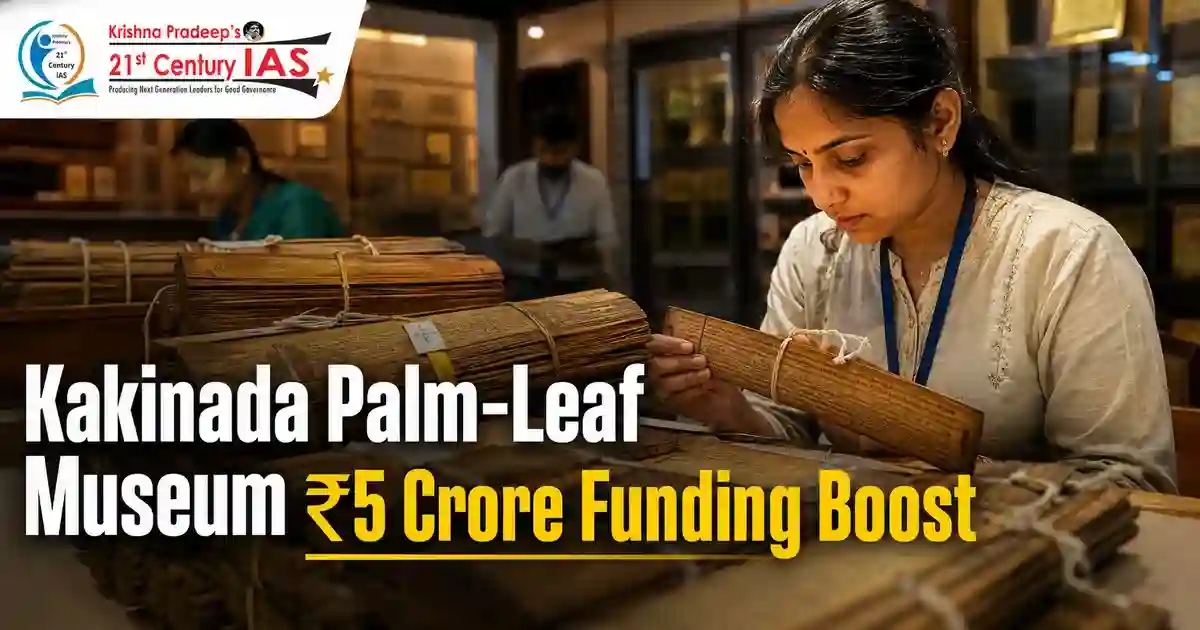
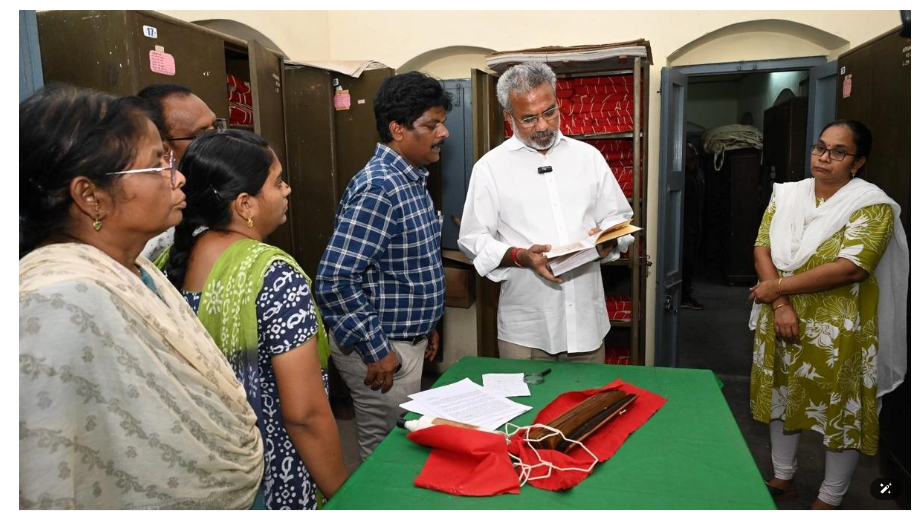
The Ministry of Culture has released ₹5 crore under the Museum Grant Scheme for the construction of a new building for the Andhra Sahitya Parishad Government Museum and Research Institute in Kakinada. The museum houses nearly 5,000 palm-leaf manuscripts dating back to the 17th, 18th and 19th centuries, making it an important centre for preserving Andhra Pradesh’s literary, scientific and cultural heritage.
About the Museum
- The Andhra Sahitya Parishad Government Museum and Research Institute is located in Kakinada, Andhra Pradesh.
- It is an important heritage institution preserving rare manuscripts and historical objects. In the 1970s, the Andhra Sahitya Parishad, a literary organisation, handed over its manuscript collection to the museum for preservation.
The museum is not limited to manuscripts. It also preserves:
- Buddhist pillars
- Sculptures
- Megalithic tools
- Copper plates
- Bronze plates
- Coins
This makes the museum significant for the study of literature, religion, archaeology, history and regional culture.
What are Palm-Leaf Manuscripts?
- Palm-leaf manuscripts are traditional written records prepared on dried and treated palm leaves. Before the widespread use of paper, palm leaves were widely used in India for recording religious, literary, scientific and administrative knowledge.
They are important because they preserve India’s older knowledge systems in fields such as:
- Medicine
- Mathematics
- Astronomy and astrology
- Literature
- Music
- Philosophy
- Ritual traditions
Since palm leaves are organic materials, they are highly vulnerable to decay, insects, humidity and improper handling.
Importance of the Collection
- The Kakinada Museum houses nearly 5,000 palm-leaf manuscripts from the 17th, 18th and 19th centuries.
These manuscripts belong to several fields:
| Field | Importance |
| Ayurveda | Preserves traditional medical knowledge |
| Mathematics | Reflects scientific and intellectual traditions |
| Astrology | Shows traditional astronomical and predictive systems |
| Telugu Literature | Helps protect regional literary heritage |
| Sanskrit Literature | Connects regional scholarship with classical Indian knowledge |
| Classical Music | Supports the study of traditional music systems |
Of the total collection, 500 manuscripts were chemically treated for preservation in 2021.
Funding and New Building Plan
The new museum building is expected to improve preservation, display and research facilities.
Key Details
| Component | Details |
| Project | New building for Andhra Sahitya Parishad Government Museum and Research Institute |
| Location | Kakinada, Andhra Pradesh |
| Central funding released | ₹5 crore |
| Scheme | Museum Grant Scheme |
| Total support proposed | ₹10 crore |
| Funding pattern | 80:20 between Ministry of Culture and State Government |
| Building plan | Ground-plus-four-floor structure |
| Expected start of work | Early August |
The authorities are yet to finalise a temporary building where the museum collection can be shifted during construction.
Significance of the Project
1. Preservation of Knowledge Traditions
The manuscripts preserve India’s intellectual traditions in medicine, mathematics, literature, astrology and music.
2. Strengthening Andhra Pradesh’s Cultural Heritage
The project will help protect rare Telugu and Sanskrit manuscripts linked to the cultural history of Andhra Pradesh.
3. Better Museum Infrastructure
A new building can provide better storage, display, research and conservation facilities.
4. Support for Researchers
The museum can become a stronger resource centre for scholars working on literature, history, Ayurveda, musicology and archaeology.
5. Heritage Tourism Potential
A modern museum building can improve visitor experience and promote heritage tourism in Kakinada.
6. Centre-State Cooperation
The funding pattern reflects cooperation between the Ministry of Culture and the State government in heritage preservation.
Conclusion
The ₹5 crore funding boost for the Andhra Sahitya Parishad Government Museum and Research Institute is an important step towards preserving Andhra Pradesh’s manuscript heritage. The museum’s collection of nearly 5,000 palm-leaf manuscripts reflects India’s rich knowledge traditions in literature, medicine, mathematics, astrology and music. A modern museum building, supported by conservation, digitisation and research facilities, can transform the institution into a major centre for cultural preservation and academic study.