Why in News?
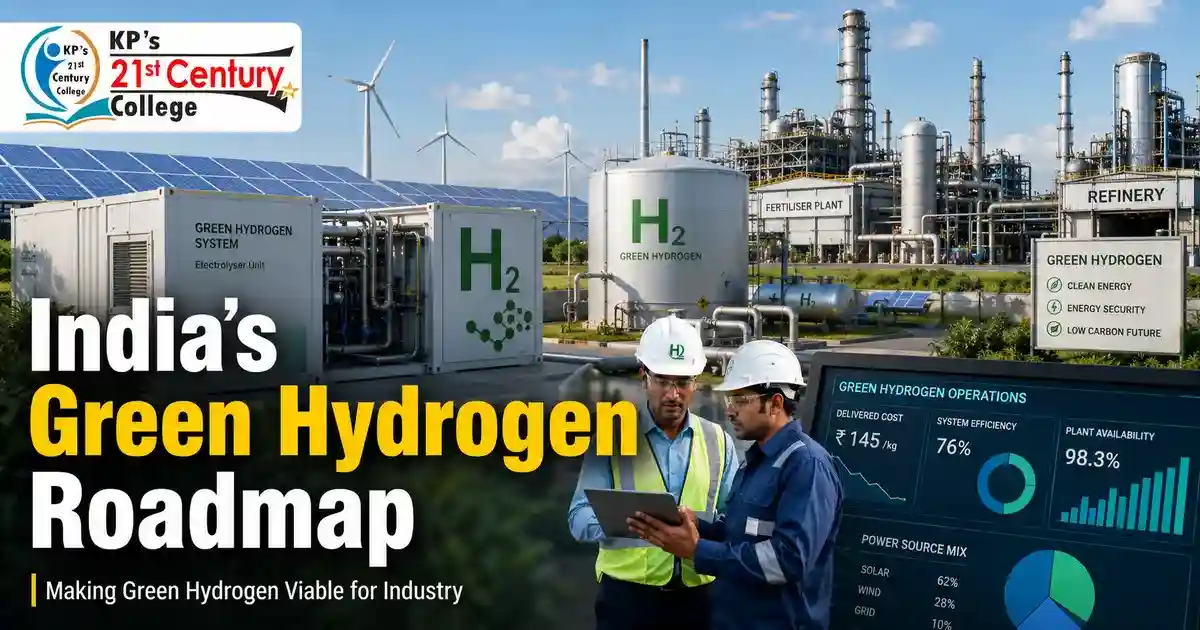
India’s dependence on imported fossil fuels has renewed focus on long-term energy security. The deeper challenge is in industries such as fertilisers, refineries, steel, ammonia and petrochemicals, where fossil fuels are part of the production process.the National Green Hydrogen Mission should not focus only on production capacity. It must also make green hydrogen commercially viable for industries by reducing its delivered cost and creating stable demand.
What is Green Hydrogen?
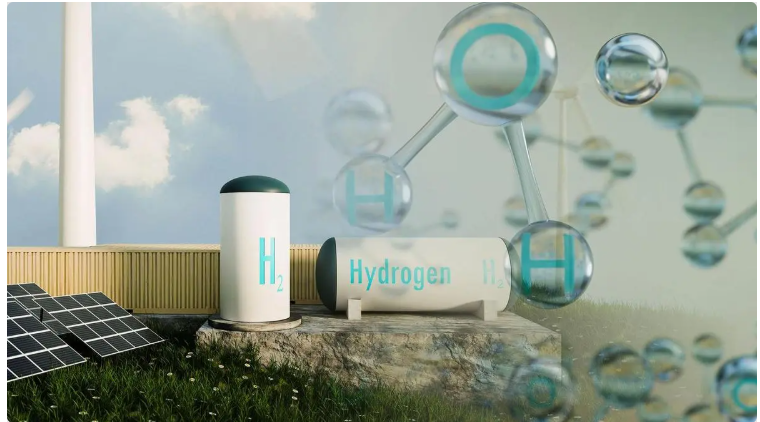
Green hydrogen is hydrogen produced by splitting water through electrolysis using renewable energy such as solar, wind or hydropower.
In this process:
- Water is split into hydrogen and oxygen.
- An electrolyser uses electricity for this process.
- If the electricity comes from renewable energy, the hydrogen is called green hydrogen.
- It produces almost no greenhouse gas emissions during production.
National Green Hydrogen Mission
Nodal Ministry
- Ministry of New and Renewable Energy
Objective
- Decarbonise energy, industry and mobility sectors
- Develop indigenous manufacturing capacity
- Create export opportunities for green hydrogen and its derivatives
Components
- Strategic Interventions for Green Hydrogen Transition Programme (SIGHT)
- Strategic Hydrogen Innovation Partnership (SHIP) for R&D
Expected Outcomes by 2030
- At least 5 MMT green hydrogen production per year
- Nearly ₹1 lakh crore fossil fuel import savings
- Around 6 lakh jobs
- About 50 MMT CO₂ emissions avoided annually
- More than ₹8 lakh crore investment
Types of Hydrogen
| Type | Production Method | Energy Source | Carbon Footprint |
| Green Hydrogen | Electrolysis | Renewable energy | Nearly zero |
| Grey Hydrogen | Steam Methane Reforming | Natural gas | High |
| Blue Hydrogen | SMR with Carbon Capture | Natural gas | Lower than grey |
| Brown Hydrogen | Gasification | Coal | Very high |
Green hydrogen is the cleanest form because it uses renewable energy.
Why Green Hydrogen is Important for India
India imports large quantities of fossil fuels. These imports affect energy security, foreign exchange reserves and industrial competitiveness.
Green hydrogen can help India:
- Reduce dependence on imported natural gas and oil.
- Decarbonise industries where direct electrification is difficult.
- Support India’s Net Zero 2070 target.
- Build a new clean energy manufacturing ecosystem.
- Create high-skilled green jobs.
- Strengthen domestic technology and energy sovereignty.
Major Applications of Green Hydrogen
1. Steel Industry
Steel is one of the most carbon-intensive sectors. Traditionally, coking coal is used to remove oxygen from iron ore.
Green hydrogen can replace coking coal in the Direct Reduced Iron process. This can reduce emissions because the main by-product is water vapour.
The Ministry of Steel has been allocated ₹455 crore for pilot projects using green hydrogen in the steel sector till FY 2029–30.
2. Fertiliser Sector
India is the second-largest consumer and third-largest producer of fertilisers globally.
Fertiliser production needs ammonia, and ammonia production depends heavily on hydrogen. At present, much of this hydrogen comes from natural gas.
Green hydrogen can be used to produce green ammonia, reducing natural gas imports. SECI has signed 10-year contracts to supply 7,24,000 tonnes of green ammonia annually to 13 fertiliser plants. This is expected to save around $2.5 billion in foreign exchange over a decade.
3. Refineries and Petrochemicals
Refineries use hydrogen for processes such as removing sulphur from fuels and upgrading crude oil.
At present, most refinery hydrogen is grey hydrogen, produced from natural gas. Replacing it with green hydrogen can reduce direct industrial emissions.
SECI is also supporting refinery-linked green hydrogen projects of around 30,000 tonnes per annum.
4. Shipping and Ports
Green hydrogen and its derivatives such as green ammonia and green methanol can be used as clean shipping fuels.
India has identified major ports such as:
- Deendayal Port, Kandla
- V.O. Chidambaranar Port, Tuticorin
- Paradip Port, Odisha
as Green Hydrogen Hubs. These hubs can support clean bunkering, storage and distribution.
5. Heavy-Duty Transport
Battery electric vehicles are suitable for small vehicles, but heavy trucks and buses need longer range and faster refuelling.
Hydrogen fuel cells can help in:
- Long-distance buses
- Heavy trucks
- Industrial transport
- Difficult terrain routes
Under NGHM, pilot projects have been sanctioned for 37 hydrogen-fuelled buses and trucks across 10 routes, supported by 9 hydrogen refuelling stations.
6. Grid Balancing and Energy Storage
Solar and wind power are intermittent. Green hydrogen can store surplus renewable electricity.
During high renewable generation, extra electricity can produce hydrogen. Later, this hydrogen can be converted back into electricity when demand rises.
NTPC is developing a major green hydrogen hub at Pudimadaka, Andhra Pradesh, which can support large-scale renewable energy storage.
Key Issue: Delivered Cost Matters More Than Production Cost
One of the most important arguments in the recent debate is that India must focus on the delivered cost of hydrogen, not only its production cost.
Even if hydrogen is produced cheaply, it may become expensive after adding:
- Transport cost
- Storage cost
- Purification cost
- Conversion losses
- Safety infrastructure cost
- Distribution cost
In advanced hydrogen markets, midstream and end-use infrastructure can account for 70–85% of the final delivered cost. Therefore, India should not depend only on large coastal hubs and long-distance supply chains.
Need for Modular Electrolysers
Many small and medium industries need hydrogen in modest quantities near their production units. For them, getting hydrogen from distant hubs may be costly.
Therefore, India should promote:
- Modular electrolysers
- On-site hydrogen production
- Near-site hydrogen production
- Small-scale hydrogen systems for MSMEs
- Application-specific hydrogen engineering
A special SME window for 10 kW to 2 MW electrolyser stacks can help small industries adopt green hydrogen without depending only on large centralised hubs.
Key Challenges
1. High Cost
Green hydrogen is still costlier than grey hydrogen. As of 2026, green hydrogen costs around ₹397–₹560 per kg, while grey hydrogen generally costs around ₹150–₹200 per kg.
2. Green Premium
Industries may not shift to green hydrogen voluntarily unless the cost gap is reduced through incentives, carbon pricing or purchase obligations.
3. High Capital Requirement
Electrolysers require advanced technology, high-precision manufacturing and costly materials.
4. Import Dependence
India still depends on imported components such as specialised membranes, catalysts and electrolyser stacks.
5. Water Requirement
Producing 1 kg of hydrogen through electrolysis needs around 9–11 litres of high-purity water. This can be a concern in water-stressed industrial regions.
6. Storage and Transport
Hydrogen is difficult to store and transport because it is highly flammable and can weaken steel pipelines.
7. Weak Safety Standards
India needs stronger safety rules for hydrogen production, storage, transport, refuelling and industrial use.
8. Global Competition
Countries such as Australia, Chile and West Asian nations are also investing heavily in green hydrogen.
9. Limited R&D
India’s low R&D spending slows down innovation in hydrogen storage, transport, electrolysers and industrial applications.
Measures Needed
1. Create Stable Industrial Demand
The government should convert existing grey hydrogen and ammonia demand into long-term green hydrogen demand. Fertilisers and refineries should be the first priority because they already use hydrogen at scale.
2. Expand SIGHT Incentives
The Strategic Interventions for Green Hydrogen Transition scheme should support both large projects and small modular electrolysers.
3. Develop Hydrogen Valleys
Hydrogen production and consumption should be located close to each other in industrial clusters. This reduces transport, storage and purification costs.
4. Introduce Green Hydrogen Purchase Obligations
Like Renewable Purchase Obligations, India can introduce Green Hydrogen Purchase Obligations for sectors such as fertilisers and refineries.
5. Improve Renewable Power Supply
Electrolysers need renewable electricity that is cheap, reliable and dispatchable. India must improve transmission, storage and open access to renewable power.
6. Promote Indigenous Manufacturing
India should support domestic production of electrolysers, PEM stacks, catalysts and other components through PLI, R&D support and public-private partnerships.
7. Build Hydrogen Infrastructure
India needs hydrogen-ready pipelines, storage facilities, refuelling stations and port infrastructure.
8. Strengthen Safety Protocols
A national hydrogen safety framework is needed for production, storage, transport and use.
9. Skill Development
India must create trained engineers, technicians and safety professionals for the hydrogen economy.
10. Link with Carbon Market
The Indian Carbon Market can make green hydrogen more attractive by increasing the cost of carbon-intensive alternatives.
Way Forward
India’s green hydrogen strategy must shift from only capacity creation to market creation.
The next phase should focus on:
- Reducing delivered cost.
- Creating bankable demand.
- Supporting modular electrolysers for MSMEs.
- Locating production near industrial demand.
- Making renewable power reliable and affordable.
- Building hydrogen safety and transport infrastructure.
- Promoting domestic R&D and manufacturing.
This will make green hydrogen usable not only in large public-sector projects but also in ordinary industrial settings.
Conclusion
Green hydrogen is not merely an energy project. It is a major industrial transformation strategy for India.
To make it viable, India must reduce delivered cost, create long-term demand, promote modular electrolysers, reform the power sector and build domestic manufacturing capacity. If implemented well, green hydrogen can reduce fossil fuel dependence, strengthen energy security, support industrial decarbonisation and help India move towards Net Zero 2070.