Why in News?
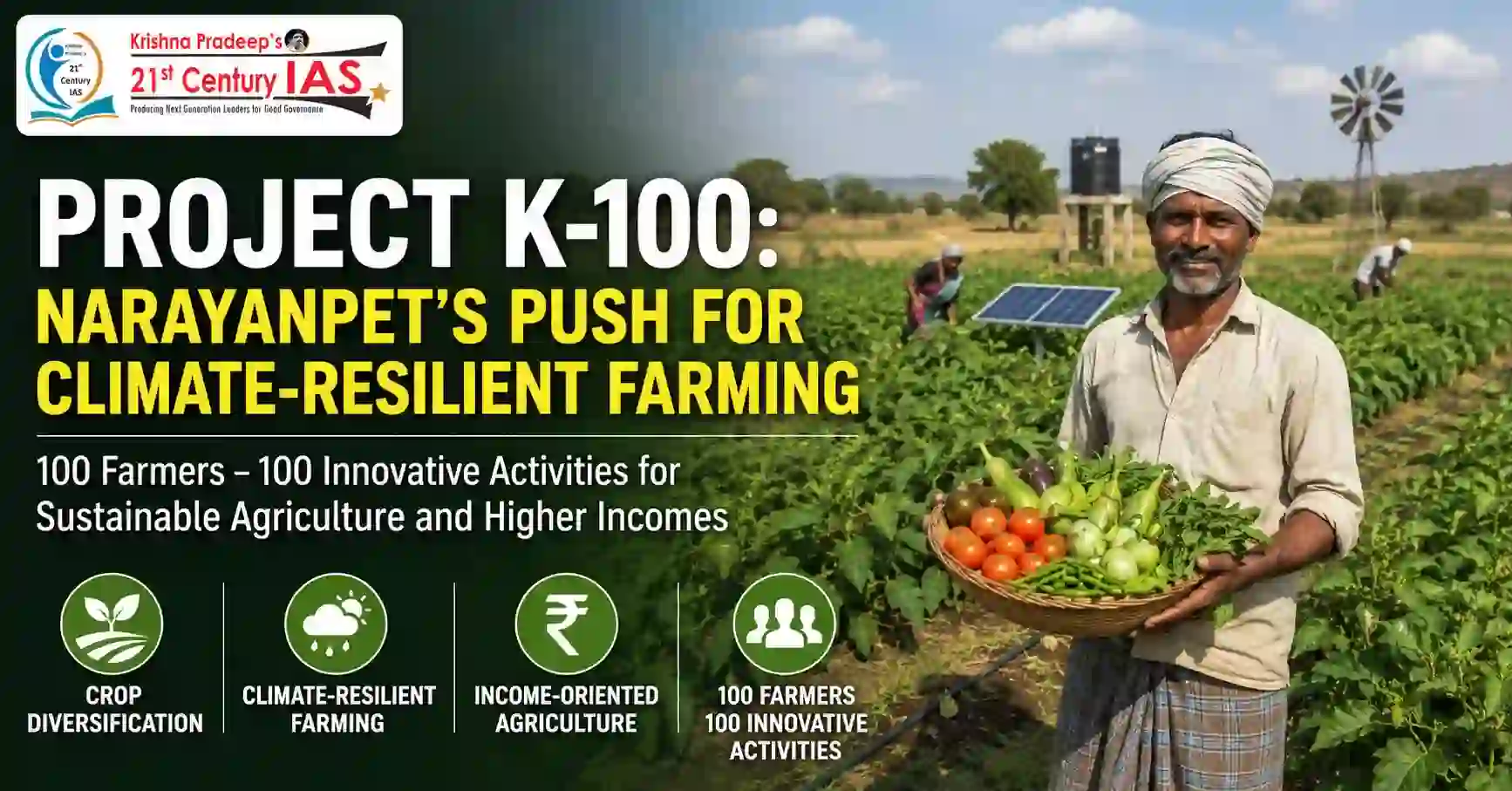
Project K-100, also called the 100 Farmers – 100 Innovative Activities Programme, was launched in Narayanpet district to promote crop diversification, climate-resilient farming and income-oriented agriculture. The initiative aims to develop Kosgi division as a model hub of innovative and sustainable farming practices.
What is Project K-100?
Project K-100 is a district-level agricultural initiative under which 100 selected farmers will adopt 100 different innovative farming activities.
These activities will create live demonstration models in:
- Agriculture
- Horticulture
- Floriculture
- Livestock and fisheries
- Natural farming
The purpose is to help farmers learn directly from field-level examples and adopt practices that improve productivity, reduce cultivation costs and enhance farm income.
Modern Practices Promoted
The initiative highlights the use of modern and practical cultivation methods.
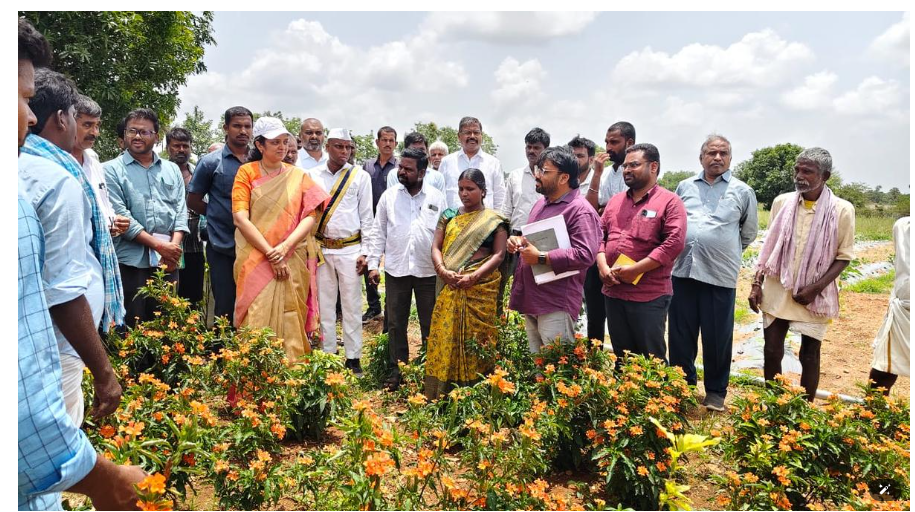
At Mallareddypally village in Kosgi mandal, the following practices were reviewed:
- Mulching in brinjal and green chilli cultivation
- Staking method in tomato cultivation
- Floriculture as an income-oriented farming activity
These methods are useful for improving crop management and encouraging farmers to move beyond traditional cropping patterns.
Crop DiversificationCrop diversification means shifting from the cultivation of a single traditional crop to growing a wider variety of crops such as pulses, oilseeds, millets, fruits, vegetables and other horticultural crops. It may also include the integration of allied activities such as dairy, poultry and fisheries. Need for Crop Diversification
Forms of Crop Diversification
Major Challenges
|
Climate-Resilient Farming Focus
The project has gained importance due to anticipated El Niño conditions, which may increase climate-related risks for agriculture.
Farmers are encouraged to adopt:
- Alternative crops
- Drought-tolerant varieties
- Short-duration crops
- Farm ponds
- Rainwater harvesting
- Water conservation practices
These measures can reduce crop loss risks during dry spells and uncertain rainfall.
Crop Diversification and Farmer Income
- Project K-100 encourages farmers to complement traditional crops with vegetables, horticultural crops, floriculture and other high-value crops.
- This can help reduce dependence on a single crop and improve income stability. Seed distribution, including vegetable and cotton seeds, was also taken up as part of the programme.
- Around 120 farmers from Kosgi, Maddur, Kothapally and Gundumal mandals participated in the launch event and awareness programme.
Significance
- Promotes climate-resilient agriculture at the district level.
- Encourages crop diversification beyond traditional crops.
- Creates live demonstration models for farmer learning.
- Supports income-oriented agriculture through high-value crops.
- Encourages water conservation through farm ponds and rainwater harvesting.
Challenges
- Climate risks linked to El Niño may affect crop productivity.
- Farmers may need technical support to shift from traditional crops.
- Farm ponds and water conservation works require timely implementation.
- Demonstration models must be scaled to more villages for wider impact.
Way Forward
Project K-100 should be supported through regular field guidance, seed support, farmer training and monitoring of demonstration models. Successful practices from the selected farmers can be replicated in other mandals to promote sustainable and remunerative agriculture across Narayanpet district.
Conclusion
Project K-100 is a practical local initiative for promoting crop diversification, climate resilience and sustainable farm income. By using 100 farmers as demonstration leaders, the project can help spread modern cultivation practices and prepare farmers for climate uncertainties such as El Niño.