Why in News?
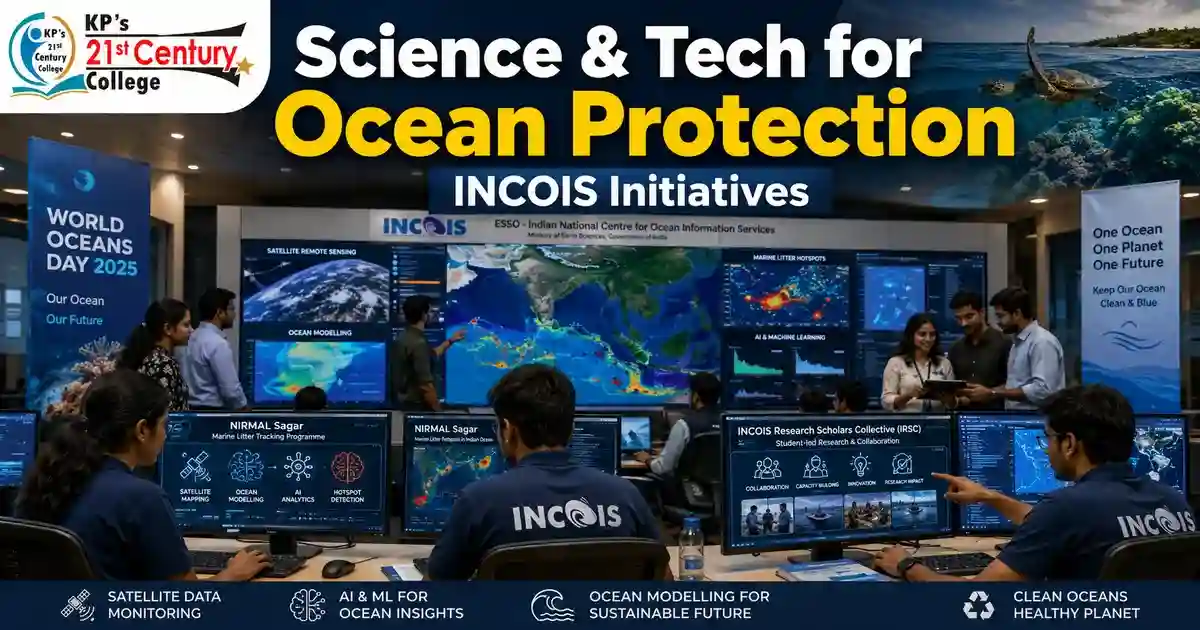
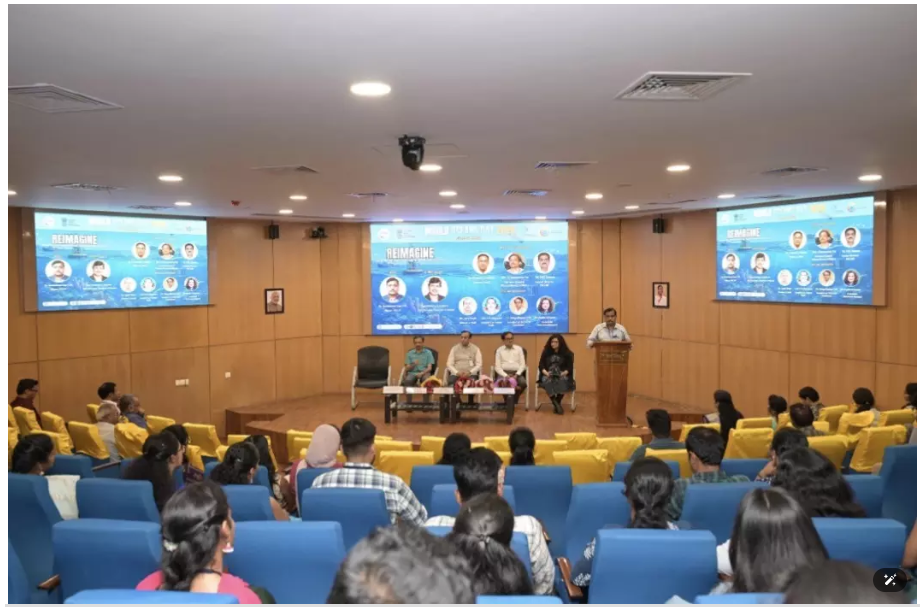
- World Oceans Day celebrations were organised by the Indian National Centre for Ocean Information Services (INCOIS) in Hyderabad.
- During the event, INCOIS launched two new initiatives: NIRMAL Sagar, a marine litter tracking programme for the Indian Ocean Region, and the INCOIS Research Scholars Collective (IRSC), a student-led platform to promote research collaboration among young scientists.
Background
- World Oceans Day is observed every year on June 8 under the United Nations framework.
- The theme for World Oceans Day 2026 was “Reimagine: Beyond the World We Know, A New Relationship with Our Ocean.”
- The theme highlights the need for new, sustainable and technology-driven approaches to address ocean-related challenges such as pollution, climate change, marine resource degradation and weak ocean governance.
About INCOIS
- The Indian National Centre for Ocean Information Services (INCOIS) is located in Hyderabad.
- It works under the Ministry of Earth Sciences and provides ocean-related information and services.
Its work is important for:
- Ocean monitoring
- Disaster warning
- Coastal safety
- Fisheries advisory
- Climate studies
- Marine resource management
- Sustainable ocean development
What is NIRMAL Sagar?
- NIRMAL Sagar is a marine litter tracking programme launched by INCOIS for the Indian Ocean Region.
- It aims to create an integrated framework to monitor and track marine litter.
Key Features
- Identifies marine litter hotspots.
- Tracks movement of marine debris.
- Uses modern scientific tools such as:
- Ocean modelling
- Satellite remote sensing
- Artificial intelligence
- Machine learning
- Supports targeted clean-up efforts.
- Helps in better marine pollution management.
- Aligns with the Swachh Sagar, Surakshit Sagar campaign.
- Supports the United Nations Sustainable Development Goals.
Role of Science and Technology in Ocean Protection
Science and technology can help in:
- Monitoring marine pollution.
- Predicting movement of marine litter.
- Understanding ocean currents.
- Tracking climate variability.
- Supporting early warning systems.
- Improving disaster resilience.
- Promoting sustainable blue economy.
- Strengthening marine resource management.
Importance of Ocean Observation Systems
These systems help collect data on:
- Sea surface temperature
- Ocean currents
- Sea-level changes
- Cyclones
- Marine pollution
- Climate variability
- Coastal hazards
Sustained ocean observations are important for climate studies, disaster preparedness and marine ecosystem conservation.
Ocean Governance and Blue Economy
During the technical session, experts discussed:
- Ocean governance
- Blue economy
- Climate change
- Marine genetic resources
- Marine resource management
This means ocean policies should be based on scientific evidence and should protect the entire marine ecosystem, not only individual resources.
Significance for India
India has a long coastline and depends heavily on oceans for trade, fisheries, climate regulation, energy and livelihoods.
Ocean protection is important for:
- Coastal communities
- Fishermen
- Marine biodiversity
- Disaster risk reduction
- Blue economy
- Maritime security
- Climate resilience
- Sustainable Development Goals
Institutions like INCOIS are important because they connect science with public policy and disaster preparedness.
Way Forward
- Strengthen ocean observation systems.
- Use AI, satellite data and machine learning for marine monitoring.
- Promote ocean literacy among students and citizens.
- Encourage interdisciplinary research.
- Improve cooperation among Indian Ocean countries.
- Link ocean governance with climate action and disaster resilience.
- Support sustainable blue economy practices.
- Promote community participation in marine conservation.
- Expand programmes like NIRMAL Sagar for long-term marine pollution monitoring.
Conclusion
The launch of NIRMAL Sagar and the INCOIS Research Scholars Collective shows India’s growing focus on science-based ocean governance. Protecting oceans requires technology, research, public awareness and international cooperation. By using tools such as satellite remote sensing, ocean modelling, artificial intelligence and machine learning, India can strengthen marine litter tracking, disaster resilience and sustainable ocean management. Oceans are central to climate stability, livelihoods and the blue economy. Therefore, ocean protection must become a key part of India’s sustainable development strategy.