Why in News?
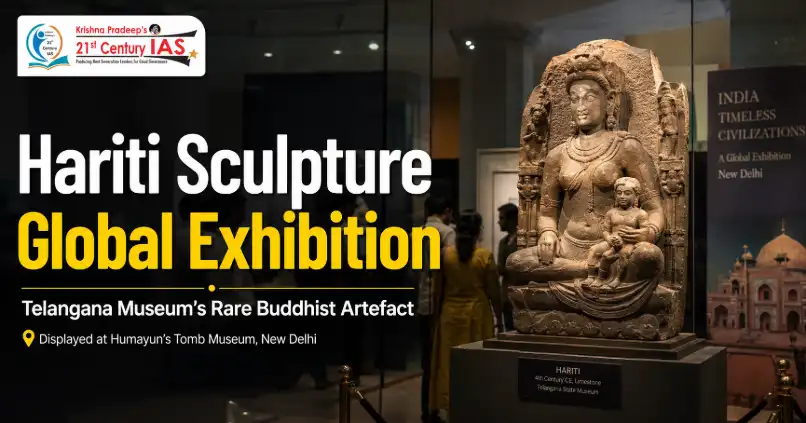
A rare fourth-century limestone sculpture of Hariti from the Telangana State Museum was displayed at the international antiquities exhibition “One Mother, Many Mother Tongues” at the Humayun’s Tomb Museum, New Delhi. The exhibit will later be showcased at the National Gallery of Modern Art, Bengaluru, from August 20 to September 20.
About the Hariti Sculpture
- The sculpture was originally discovered at Takkellapadu near Jaggayyapeta in Krishna district.
- It shows a seated female figure holding a child across her lap, making it an important example of the mother-and-child motif in ancient Indian art.
- Although found in the Krishna region, the sculpture is preserved in the Telangana State Museum, highlighting the museum’s role in conserving rare archaeological objects.
Hariti in Buddhist Tradition
In Buddhist tradition, Hariti represents a story of moral transformation. She was initially described as a child-abducting figure, but after being transformed by the Buddha, she became a protector of children.
In Buddhist art, Hariti came to symbolise:
- fertility
- maternal care
- protection of children
- well-being
- compassion
Theme of the Exhibition
- The exhibition “One Mother, Many Mother Tongues” focused on the theme of motherhood across cultures. It brought together artistic traditions from India and the Mediterranean world.
The Hariti sculpture was displayed alongside:
| Representation | Tradition |
| Hariti | Buddhist tradition |
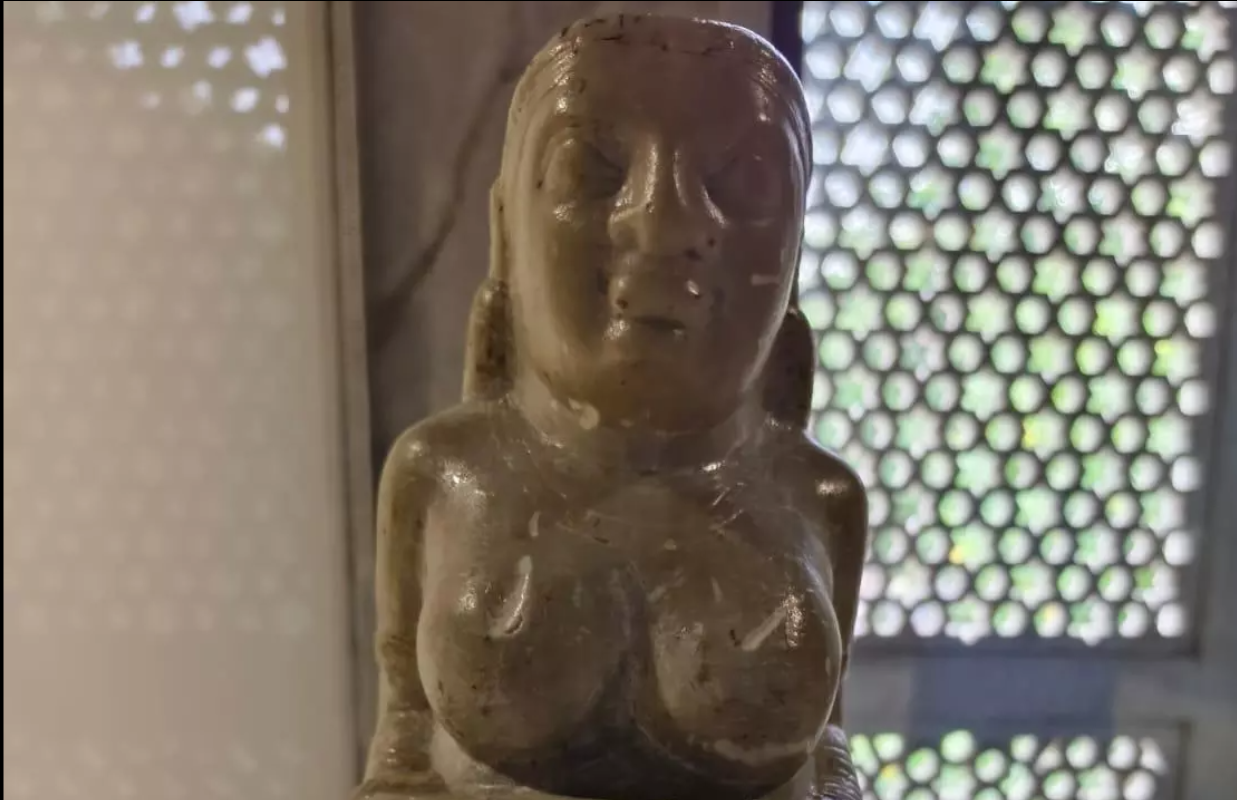
| Mater Matuta | Ancient Italian tradition |
| Madonna and Child | Italian Renaissance Christian tradition |
This comparison shows that motherhood has been a universal theme in different civilisations, expressed through different religions and artistic styles.
Significance of the Exhibit
1. Showcases Telangana’s Museum Heritage
The display gives national and international visibility to rare artefacts preserved by the Telangana State Museum.
2. Highlights Buddhist Artistic Legacy
The sculpture reflects the importance of Buddhist art in the Deccan and Krishna valley region.
3. Promotes Cultural Dialogue
By placing Hariti beside Mediterranean mother-child representations, the exhibition encourages comparison across civilisations.
4. Strengthens Cultural Diplomacy
Such exhibitions help India present its ancient artistic traditions to wider audiences.
5. Supports Heritage Education
Museum displays allow students and researchers to understand history through material evidence, not only written texts.
Conclusion
The Hariti sculpture is more than a rare museum object; it represents Buddhist belief, maternal symbolism and ancient artistic skill. Its display in an international exhibition gives visibility to Telangana’s museum heritage and shows how Indian art can be understood in a global cultural context. India must strengthen museum conservation, digitisation and public outreach so that such artefacts remain accessible, protected and meaningful for future generations.