Table of Contents
Relevance: GS Paper III – Economy | Energy | Environment | Biofuels | Sustainable Aviation
For Prelims:
Ethanol Blending Programme (EBP), Aviation Turbine Fuel (ATF), Sustainable Aviation Fuel (SAF), Essential Commodities Act, 1955, Biofuels, Ethanol, Aviation Turbine Fuel (Regulation of Marketing) Order, 2001, Flex Fuel Vehicles, 2G Ethanol, Carbon Emissions Net Zero
For Mains:
energy security, green aviation, decarbonisation, renewable fuels, import dependence, sustainable transport, carbon neutrality, biofuel economy, climate commitments, aviation sector reforms
Why in News?
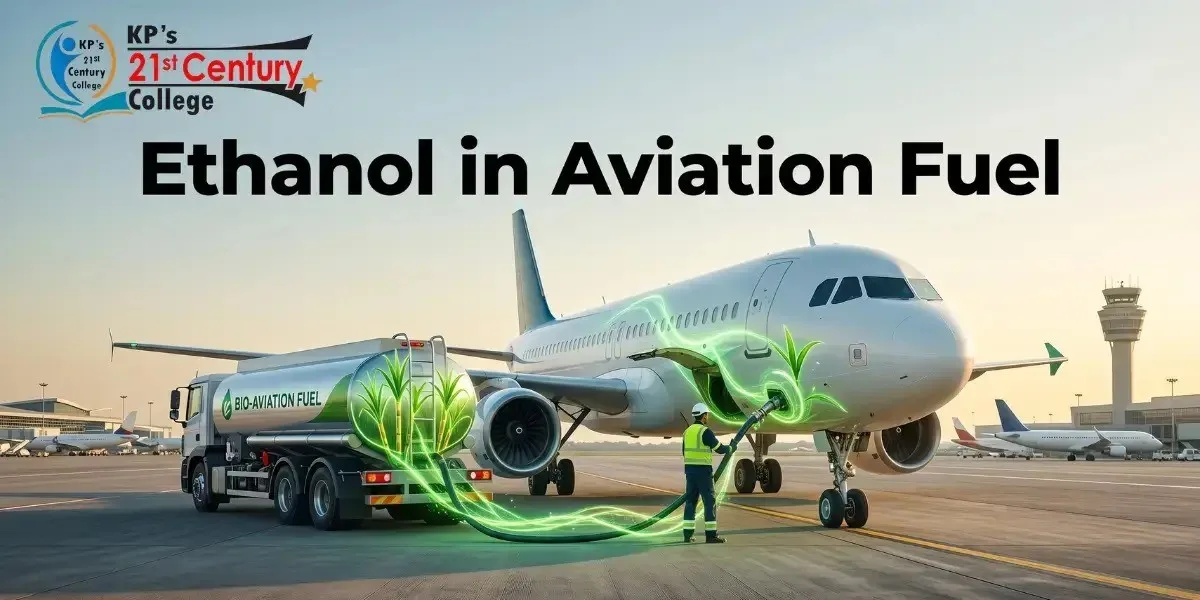
The Government of India has allowed ethanol blending in Aviation Turbine Fuel (ATF).
This decision came after amendments to the Aviation Turbine Fuel (Regulation of Marketing) Order, 2001 under the Essential Commodities Act, 1955.
The amendment broadens the definition of ATF to include blends containing synthetic hydrocarbons and ethanol-based components.
Although no mandatory blending target has been fixed immediately, this marks an important step toward cleaner aviation fuel and sustainable transport.
What is the New Decision?
- India has officially permitted the blending of ethanol and other synthetic hydrocarbons in Aviation Turbine Fuel.
- Earlier, ethanol blending was mainly limited to petrol under the Ethanol Blending Programme.
- Now, the aviation sector is also being gradually brought into the clean fuel transition.
- This decision supports India’s larger goals of reducing fossil fuel dependence, cutting aviation emissions, and promoting domestic biofuel production.
- It also aligns with India’s long-term target of achieving net-zero emissions by 2070.
What is Aviation Turbine Fuel (ATF)
- Aviation Turbine Fuel is a special type of refined petroleum product used to power aircraft engines, especially jet aircraft.
- It is a high-quality kerosene-based fuel with strict safety and performance standards because aviation operations require high reliability.
ATF is one of the most expensive fuels due to:
- high refining standards
• taxation by states
• import dependence
• volatile global crude oil prices - ATF cost significantly affects airline profitability because fuel accounts for a major share of operational expenses.
Ethanol Blending in Aviation Fuel
- Ethanol blending in aviation means mixing ethanol-derived components or synthetic hydrocarbons with conventional jet fuel to reduce carbon emissions.
- Unlike petrol blending, direct blending in aviation requires higher technical standards because aircraft engines operate under extreme safety conditions.
This is often linked with the concept of Sustainable Aviation Fuel (SAF), which includes:
- ethanol-to-jet fuel
• bio-based aviation fuels
• waste-based fuels
• synthetic hydrocarbons
Ethanol Blending Programme (EBP)
- The Ethanol Blending Programme (EBP) is a Government of India initiative aimed at blending ethanol with petrol to reduce dependence on fossil fuels and improve energy security.
- The programme is implemented under the policy framework of the Ministry of Petroleum and Natural Gas in coordination with oil marketing companies.
- The primary objective is to achieve 20% ethanol blending (E20) in petrol by 2025–26, advancing the earlier target timeline.
- Ethanol used in blending is mainly produced from sugarcane-based feedstock such as molasses, sugarcane juice, and increasingly from grains like maize and damaged food grains.
- The programme helps in reducing crude oil import dependence, thereby saving foreign exchange and improving the balance of payments.
- It contributes to lower greenhouse gas emissions, as ethanol is a cleaner-burning, renewable biofuel compared to conventional petrol.
- The EBP provides remunerative prices to farmers, particularly sugarcane growers, and helps in reducing excess sugar stocks in the country.
- The government has introduced an administered pricing mechanism for ethanol procurement to incentivize production and ensure supply stability.
- The programme promotes the concept of a circular economy, as agricultural waste and surplus crops are utilized for fuel production.
- Challenges associated with EBP include food vs fuel concerns, water-intensive crops like sugarcane, and infrastructure constraints in ethanol production and distribution.
Sources of Ethanol Production
- Ethanol in India is primarily produced from sugarcane-based feedstock, including molasses (by-product of sugar industry), sugarcane juice, and sugar syrup.
- It is also produced from grain-based feedstock, such as maize, surplus rice (including FCI stocks), and other damaged food grains not suitable for human consumption.
- Second-generation (2G) ethanol is derived from agricultural residues like rice straw, wheat straw, corn cobs, and bagasse, promoting waste-to-wealth conversion.
- Ethanol can be produced from industrial by-products, such as spent wash and other residues from distilleries.
- Sweet sorghum and other bioenergy crops are emerging alternative feedstocks due to their lower water requirements compared to sugarcane.
- Advanced technologies enable production from lignocellulosic biomass, expanding the resource base beyond food crops.
- The diversification of feedstock aims to address concerns of food security and environmental sustainability while supporting the Ethanol Blending Programme.
Essential Commodities Act, 1955
- The Essential Commodities Act, 1955 is a law enacted to ensure the supply of essential commodities and prevent hoarding, black marketing, and artificial shortages.
It empowers the Central Government to:
- regulate production
• control supply and distribution
• impose stock limits
• fix prices
• ensure fair availability
Petroleum and petroleum products fall under this framework.
The amendment allowing ethanol blending in ATF was made using powers under this Act.
Thus, the legal basis for the aviation fuel reform comes through the Essential Commodities Act.
Importance of Ethanol Blending in Aviation
- The adoption of ethanol-derived Sustainable Aviation Fuel (SAF) helps reduce lifecycle carbon emissions by up to 60–80% compared to conventional aviation turbine fuel, which is significant as aviation contributes nearly 2–3% of global CO₂ emissions and is one of the hardest sectors to decarbonise.
- The use of domestically produced ethanol strengthens energy security, as India currently imports over 85% of its crude oil requirement, and even partial substitution in aviation fuel can lead to substantial foreign exchange savings.
- The expansion of ethanol production creates a stable and remunerative demand for agricultural produce, particularly sugarcane and maize, benefiting nearly 5–6 crore farmers and helping reduce excess sugar stocks.
- The development of ethanol-based aviation fuel supports India’s commitments under the Paris Agreement and global aviation frameworks like International Civil Aviation Organization targets for carbon-neutral growth.
- The early adoption of blended aviation fuels improves airline sustainability and global competitiveness, especially as international mechanisms like CORSIA (Carbon Offsetting and Reduction Scheme for International Aviation) impose stricter emission norms.
- The promotion of ethanol-based SAF contributes to the growth of a domestic biofuel industry, generating employment, encouraging technological innovation (especially in 2G ethanol), and supporting the transition towards a low-carbon economy.
Challenges in Ethanol-Blended ATF
- Safety standards in aviation are extremely strict, making fuel certification a complex process.
- Aircraft engines require high-performance fuel under extreme conditions, so large-scale adoption cannot happen immediately.
- Ethanol has different chemical properties compared to conventional ATF, creating compatibility challenges.
- Production cost of Sustainable Aviation Fuel remains much higher than normal jet fuel.
- Dedicated infrastructure for storage, blending, transport, and airport supply systems is still limited.
- There is also concern over balancing ethanol production with food security, especially when food grains are used.
India’s Biofuel Strategy and Aviation Sector
- India’s biofuel strategy is moving from road transport to multi-sector application.
- First phase focused on petrol blending.
- Second phase includes:
- aviation fuel
• marine fuel
• heavy transport
• industrial fuel substitution
This reflects a broader transition from fossil fuel dependence to renewable fuel systems.
India is also exploring higher blends like E85 and E100 for flex-fuel vehicles.
The aviation sector now becomes the next frontier of biofuel policy.
Way Forward
India should create a dedicated Sustainable Aviation Fuel policy with clear blending targets over time. Research and development must be increased for ethanol-to-jet fuel technology and low-cost production methods.
Public-private partnerships should be encouraged for refinery upgrades and airport fuel infrastructure.Tax rationalisation on ATF can improve affordability and accelerate adoption.
Second-generation ethanol and waste-based fuels should be prioritised to avoid food-versus-fuel concerns.International cooperation with ICAO and global aviation bodies can help India adopt best practices faster.
Conclusion
Allowing ethanol blending in Aviation Turbine Fuel is an important step in India’s clean energy transition.
It moves the aviation sector toward sustainability while strengthening energy security and reducing crude oil dependence.
Although technical and economic challenges remain, this decision creates the policy foundation for Sustainable Aviation Fuel in India.
The future of green aviation will depend not only on aircraft technology but also on the fuel that powers it.
CARE MCQ
Q.With reference to ‘Ethanol Blending’, consider the following statements:
- India has only achieved a 20% blend under its Ethanol Blended Petrol (EBP) Programme.
- India does not have enough fermentation capacity required to produce ethanol.
- Ethanol has less energy content than petrol.
Which of the statements given above is/are correct?
[A] 1 and 2 only
[B] 3 only
[C] 2 and 3 only
[D] 1 only
Answer: [C] 2 and 3 only
Explanation:
Statement 1 is incorrect:
India has not yet fully achieved a 20% ethanol blend under the Ethanol Blended Petrol (EBP) Programme. For a long period, the country had achieved around 10% blending, while the target of 20% blending (E20) has been advanced for the coming years. Therefore, saying that India has only achieved a 20% blend is incorrect.
Statement 2 is correct:
India faces limitations in fermentation and distillation capacity required for large-scale ethanol production. To meet higher blending targets like E20, significant expansion of ethanol production infrastructure is necessary, including increased feedstock availability and industrial capacity.
Statement 3 is correct:
Ethanol contains lower energy compared to petrol. It has nearly 27% less energy per litre than petrol, which means vehicles may deliver slightly lower mileage when using higher ethanol blends.
Q.With reference to ethanol blending in aviation fuel in India, consider the following statements:
- India has permitted ethanol blending in Aviation Turbine Fuel (ATF) under the Essential Commodities Act, 1955.
- The amendment was made through changes in the Aviation Turbine Fuel (Regulation of Marketing) Order, 2001.
- The government has prescribed a mandatory target of 20% ethanol blending in ATF by 2026.
Which of the statements given above is/are correct?
[A] 1 and 2 only
[B] 2 and 3 only
[C] 1 and 3 only
[D] 1, 2 and 3
Answer: [A] 1 and 2 only
Explanation:
Statement 1 is correct:
India has allowed ethanol blending in Aviation Turbine Fuel (ATF) to support cleaner energy use in the aviation sector and reduce carbon emissions. This step has been taken under the provisions of the Essential Commodities Act, 1955.
Statement 2 is correct:
The provision was enabled through an amendment to the Aviation Turbine Fuel (Regulation of Marketing) Order, 2001. This provides the regulatory basis for blending ethanol with aviation fuel.
Statement 3 is incorrect:
No mandatory target of 20% ethanol blending in ATF by 2026 has been prescribed by the government. The policy currently allows blending, but specific targets may be decided later depending on feasibility and safety requirements.
Q.Consider the following statements regarding India’s Ethanol Blending Programme and energy security:
Statement 1: India’s Ethanol Blended Petrol (EBP) Programme, particularly its E20 target, helps strengthen energy security by reducing dependence on imported crude oil and limiting the impact of imported inflation caused by volatile global crude prices and rupee-dollar exchange rate fluctuations.
Statement 2: By replacing a part of imported crude oil with domestically produced ethanol, which is purchased in Indian currency, the programme reduces foreign exchange outflow on petroleum imports and protects the domestic economy from external price shocks and currency depreciation effects on fuel prices.
Which one of the following is correct in respect of the above statements?
[A] Both Statement 1 and Statement 2 are correct and Statement 2 is the correct explanation for Statement 1
[B] Both Statement 1 and Statement 2 are correct and Statement 2 is not the correct explanation for Statement 1
[C] Statement 1 is correct but Statement 2 is incorrect
[D] Statement 1 is incorrect but Statement 2 is correct
Answer: [A] Both Statement 1 and Statement 2 are correct and Statement 2 is the correct explanation for Statement 1
Explanation:
Statement 1 is correct:
India’s Ethanol Blended Petrol (EBP) Programme is not only aimed at reducing the crude oil import bill but also at improving energy security. Since India depends heavily on imported crude oil, fluctuations in international oil prices and depreciation of the rupee increase fuel costs and create imported inflation. Ethanol blending helps reduce this vulnerability.
Statement 2 is correct:
Ethanol is produced domestically from feedstocks such as sugarcane, maize, and other agricultural sources, and it is procured in Indian rupees. By substituting a portion of imported petroleum with ethanol, India reduces its demand for dollar-denominated crude imports, lowering foreign exchange outflow and exposure to exchange rate volatility.
Statement 2 is the correct explanation for Statement 1:
The direct reduction in imported crude oil dependence and foreign exchange demand explains how ethanol blending strengthens energy security and protects the economy from imported inflation.
Q.Consider the following statements regarding the environmental benefits of ethanol blending in fuel:
- Ethanol blending leads to a reduction in the emission of carbon monoxide (CO) and unburnt hydrocarbons from vehicles.
- The use of ethanol-blended fuel significantly decreases the emission of particulate matter (PM).
- Ethanol is considered a carbon-neutral fuel source because the carbon dioxide (CO₂) released during combustion is completely reabsorbed by crops during their growth cycle.
- Blending ethanol with gasoline typically results in a substantial increase in nitrogen oxide (NOx) emissions, thereby worsening smog formation.
Which of the statements given above are correct?
[A] 4 only
[B] 1 and 2 only
[C] 2 and 3 only
[D] All of the above
Answer: [B] 1 and 2 only
Explanation:
Statement 1 is correct:
Ethanol contains oxygen, which improves fuel combustion efficiency. Better combustion reduces the release of carbon monoxide (CO) and unburnt hydrocarbons, especially in conventional petrol engines, thereby improving air quality.
Statement 2 is correct:
Ethanol blending helps in lowering particulate matter (PM) emissions, particularly fine particles that are harmful to human health. This makes ethanol-blended fuel environmentally beneficial compared to pure fossil fuels.
Statement 3 is incorrect:
Although ethanol is produced from biomass such as sugarcane and maize, it cannot be considered completely carbon-neutral. The cultivation of crops, fertilizer use, transportation, fermentation, and distillation processes also generate greenhouse gas emissions. Therefore, ethanol has a lower carbon footprint than petrol, but it is not entirely carbon-neutral.
Statement 4 is incorrect:
The effect of ethanol blending on nitrogen oxide (NOx) emissions is not uniform and depends on engine design, blend ratio, and operating conditions. A substantial increase in NOx emissions is not a standard or universally accepted outcome, so this statement is incorrect.
FAQs
Q1. What is ATF?
ATF stands for Aviation Turbine Fuel, a refined petroleum fuel mainly used in jet aircraft.
Q2. What is Sustainable Aviation Fuel (SAF)?
SAF refers to cleaner aviation fuels made from ethanol, biomass, waste oils, or synthetic hydrocarbons that reduce carbon emissions.
Q3. Why is ethanol blending important in aviation?
It helps reduce emissions, improve energy security, and reduce dependence on imported crude oil.
Q4. Which law enabled ethanol blending in aviation fuel?
The amendment was made under the Essential Commodities Act, 1955.
Q5. What is 2G ethanol?
Second-generation ethanol is produced from agricultural residues like paddy straw, crop waste, and biomass instead of food crops.