Table of Contents
Relevance: GS Paper III – Energy, Infrastructure, Climate Change and Science & Technology
For Prelims:
- Energy Storage, Battery Energy Storage System, Pumped Hydro Storage, Lithium Iron Phosphate Battery, Grid Stability, Concentrating Solar-Thermal Storage, Compressed-Air Energy Storage, Flywheel Storage, Gravity Storage, Central Electricity Authority.
For Mains:
- Renewable Energy Integration, Grid Stability, Energy Security, Storage Infrastructure, Clean Energy Transition, Import Dependence, Battery Manufacturing, Round-the-Clock Renewable Power, Climate Commitments.
Why in News?
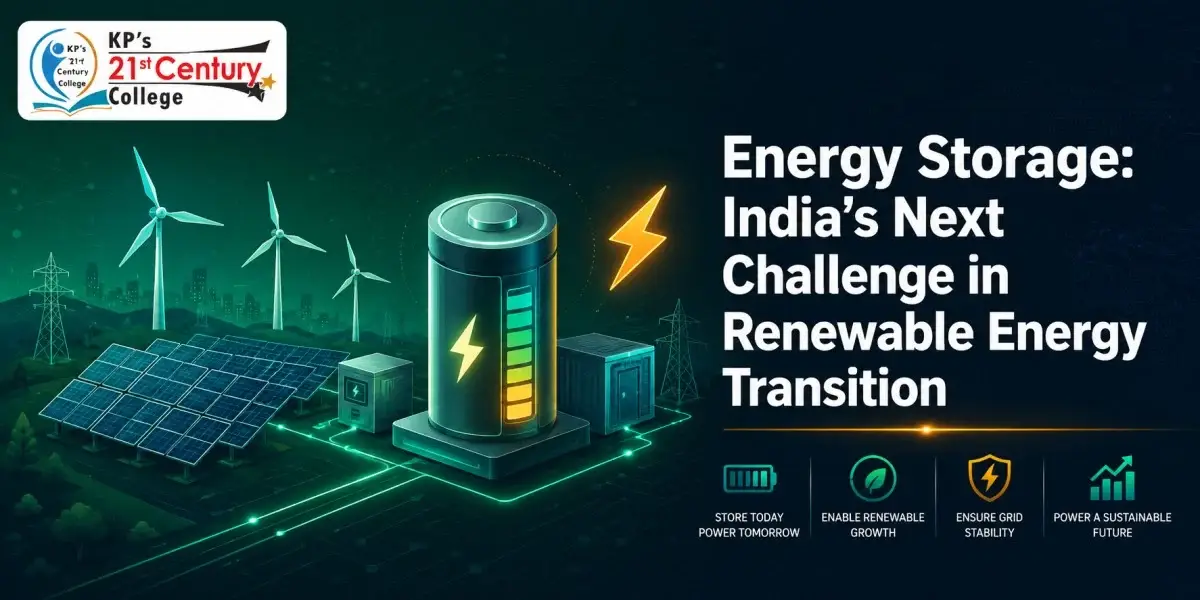
India is rapidly expanding renewable energy to meet its clean energy goals. However, solar and wind power are intermittent, as solar generation stops after sunset and wind output depends on weather.This creates a gap between power generation and demand. Hence, energy storage has become essential for grid stability, reliable electricity supply and better integration of renewable energy.
Need for Energy Storage
- Renewable power generation is not available uniformly throughout the day.
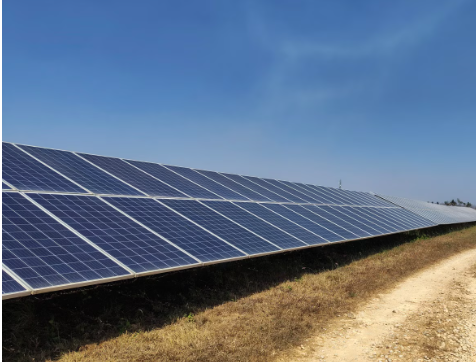
- Solar power is available mainly during daylight hours and falls to zero after sunset.
- Wind power changes according to weather and seasonal conditions.
- Electricity demand may peak during evening or night when solar generation is unavailable.
- Without storage, excess power during high-generation hours may be wasted.
- Storage helps supply electricity when renewable generation is low.
- It reduces stress on the grid and supports stable power supply.
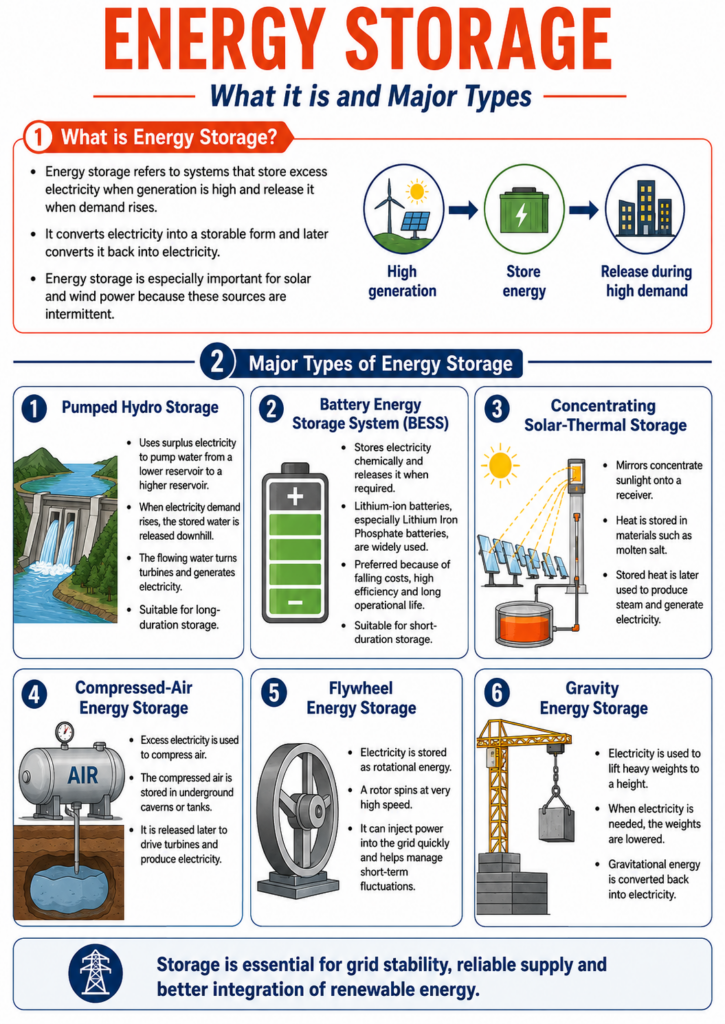
What is Energy Storage?
- Energy storage refers to systems that store excess electricity when generation is high and release it when demand rises.
- It converts electricity into a storable form and later converts it back into electricity.
- Energy storage is especially important for solar and wind power because these sources are intermittent.
Major Types of Energy Storage
1. Pumped Hydro Storage
- Pumped Hydro Storage uses surplus electricity to pump water from a lower reservoir to a higher reservoir.
- When electricity demand rises, the stored water is released downhill.
- The flowing water turns turbines and generates electricity.
- It is suitable for long-duration storage.
2. Battery Energy Storage System
- Battery Energy Storage System stores electricity chemically and releases it when required.
- Lithium-ion batteries, especially Lithium Iron Phosphate batteries, are widely used.
- They are preferred because of falling costs, high efficiency and long operational life.
- BESS is suitable for short-duration storage.
3. Concentrating Solar-Thermal Storage
- Mirrors concentrate sunlight onto a receiver.
- Heat is stored in materials such as molten salt.
- Stored heat is later used to produce steam and generate electricity.
4. Compressed-Air Energy Storage
- Excess electricity is used to compress air.
- The compressed air is stored in underground caverns or tanks.
- It is released later to drive turbines and produce electricity.
5. Flywheel Energy Storage
- Electricity is stored as rotational energy.
- A rotor spins at very high speed.
- It can inject power into the grid quickly and helps manage short-term fluctuations.
6. Gravity Energy Storage
- Electricity is used to lift heavy weights to a height.
- When electricity is needed, the weights are lowered.
- Gravitational energy is converted back into electricity.
India’s Present Energy Storage Capacity
- India has rapidly expanded renewable power generation.
- Renewable sources account for about 53% of India’s total installed power generation capacity.
- India’s total installed capacity is around 532 GW.
- Renewable capacity is around 283 GW.
- Solar power alone contributes over 150 GW.
- However, energy storage capacity remains low.
- India’s installed BESS capacity is around 0.27 GW.
- India’s Pumped Hydro Storage capacity is about 7.2 GW.
India’s Future Storage Targets
- The Central Electricity Authority has projected a major rise in energy storage needs.
- India’s total energy storage capacity is projected to reach 174 GW / 888 GWh by 2035–36.
- This includes:
- 80 GW / 321 GWh of Battery Energy Storage System
- 94 GW / 567 GWh of Pumped Hydro Storage
- Storage systems with four to six hours duration will become more important after 2030.
- India’s non-fossil fuel installed capacity is projected to rise from 283 GW to 786 GW by 2035–36.
Project Pipeline
Pumped Hydro Storage
- Around 13,120 MW / 78,720 MWh of Pumped Hydro Storage capacity is under construction.
- Another 9,580 MW / 57,480 MWh has received concurrence and is awaiting construction.
- Projects of nearly 75,000 MW are under survey and investigation.
Battery Energy Storage
- Around 10,658.94 MW / 28,739.32 MWh of BESS capacity is under construction.
- Projects of 22,347.15 MW / 69,836.70 MWh are at the tendering stage.
Import Dependence Challenge
- India depends heavily on imports for battery storage systems.
- India imports nearly 75–80% of lithium-ion cells.
- Lithium-ion cells account for around 80% of the total cost of a battery storage system.
- One Asian country dominates over 75–80% of global battery manufacturing.
- This creates risks related to:
- Geopolitical tensions
- Trade restrictions
- Price volatility
- Supply chain dependence
Global Energy Storage Scenario
- Globally, the two most widely used electricity storage technologies are:
- Pumped Hydro Storage
- Battery Energy Storage System
- Global installed Pumped Hydro Storage capacity is around 160 GW.
- Major countries include:
- China – nearly 66 GW
- Japan – 21.8 GW
- United States – 18.9 GW
- Europe – around 28 GW
- Global battery storage capacity is estimated at around 270 GW.
- Around 108 GW of new battery storage capacity was added globally in 2025.
- China accounted for nearly 60% of global battery storage additions in 2025.
Challenges
- India’s storage deployment is far behind renewable energy growth.
- Battery storage remains dependent on imported lithium-ion cells.
- Pumped Hydro Storage requires suitable geography and environmental clearances.
- Large storage projects require high capital investment.
- Battery supply chains are vulnerable to geopolitical risks.
- Grid planning must adapt to variable renewable power.
- Recycling and disposal of batteries can create environmental concerns.
- Long-duration storage technology is still developing.
Way Forward
- Scale up both BESS and Pumped Hydro Storage.
- Promote domestic battery cell manufacturing.
- Diversify battery supply chains and critical mineral sources.
- Support research in alternatives such as sodium-ion, flow batteries and gravity storage.
- Develop clear policies for grid-scale storage procurement.
- Encourage storage-linked renewable energy projects.
- Improve pumped storage project clearances with environmental safeguards.
- Promote battery recycling and circular economy.
- Use storage to provide round-the-clock renewable power to industries.
- Strengthen grid management through digital forecasting and smart dispatch systems.
Conclusion
India has made strong progress in solar and wind energy, but renewable power needs large-scale storage to ensure reliable supply. Pumped Hydro Storage and Battery Energy Storage Systems will be crucial for grid stability, reducing intermittency and providing round-the-clock clean power. India must now focus on storage infrastructure, domestic battery manufacturing, supply-chain security and grid modernisation
UPSC PYQ
Q. Consider the following statements: (2016)
- The International Solar Alliance was launched at the United Nations Climate Change Conference in 2015.
- The Alliance includes all the member countries of the United Nations.
Which of the statements given above is/are correct?
A. 1 only
B. 2 only
C. Both 1 and 2
D. Neither 1 nor 2
Answer: A
Explanation
- Statement 1 is correct: The International Solar Alliance (ISA) was launched by India and France at the UN Climate Change Conference, COP21, held in Paris in 2015.
- Statement 2 is incorrect: The ISA does not automatically include all UN member countries. It was initially focused on solar-resource-rich countries located between the Tropic of Cancer and Tropic of Capricorn. Later, membership was opened more widely, but it is still not the same as including all UN members by default.
Additional Information
The International Solar Alliance aims to promote solar energy cooperation, reduce the cost of solar power, mobilise investment and support clean energy transition, especially in developing and tropical countries.
CARE MCQ
Q. Consider the following in the context of energy storage systems:
- Pumped Hydro Storage
- Battery Energy Storage Systems
- Compressed-air energy storage systems
- Flywheel energy storage systems
Which of the above are types of energy storage systems?
A. 1 and 2 only
B. 1, 2 and 3 only
C. 2, 3 and 4 only
D. 1, 2, 3 and 4
Answer: D
Explanation:
- Pumped Hydro Storage – Correct. It stores energy by pumping water from a lower reservoir to a higher reservoir and releases it through turbines when demand rises.
- Battery Energy Storage Systems – Correct. These systems store electricity chemically and discharge it when needed.
- Compressed-air energy storage systems – Correct. These systems use excess electricity to compress air and store it for later power generation.
- Flywheel energy storage systems – Correct. They store electricity as rotational energy by spinning a rotor at very high speed.
Additional Information:
Other storage systems mentioned in the content include:
- Concentrating solar-thermal storage systems
- Gravity energy storage systems
The content also notes that Pumped Hydro Storage (PHS) and Battery Energy Storage Systems (BESS) are currently the most widely used technologies.Top of FormBottom of Form
FAQs
1. What is energy storage?
Energy storage means storing extra electricity when power generation is high and releasing it when electricity demand increases.
2. Why is energy storage important for renewable energy?
Solar and wind power are intermittent. Solar power stops after sunset and wind power changes with weather. Energy storage helps provide stable power when renewable generation is low.
3. What are the main types of energy storage?
The major types are Pumped Hydro Storage, Battery Energy Storage System, Solar-Thermal Storage, Compressed-Air Energy Storage, Flywheel Energy Storage and Gravity Energy Storage.
4. What is Pumped Hydro Storage?
Pumped Hydro Storage uses surplus electricity to pump water to a higher reservoir. When power is needed, the water flows down through turbines to generate electricity.
5. What is Battery Energy Storage System?
Battery Energy Storage System stores electricity chemically and releases it when needed. Lithium-ion batteries, especially Lithium Iron Phosphate batteries, are widely used.
6. Which storage system is suitable for long-duration storage?
Pumped Hydro Storage is generally suitable for long-duration energy storage.