Cycle Rally under ‘Operation Vajra Prahar’ in Nellore
Table of Contents
Relevance (UPSC Mains):
GS Paper III: Internal Security; Linkages between drug trafficking and organised crime; Role of security agencies.
Important Keywords
For Prelims:
- Operation Vajra Prahar, NDPS Act, 1985, PIT NDPS Act, Cordon and Search Operations, Drug Abuse Awareness Campaign
For Mains:
- Drug Trafficking & Internal Security, Community Policing, Preventive Detention, Youth Radicalisation & Substance Abuse, Whole-of-Society Approach
Why in News?
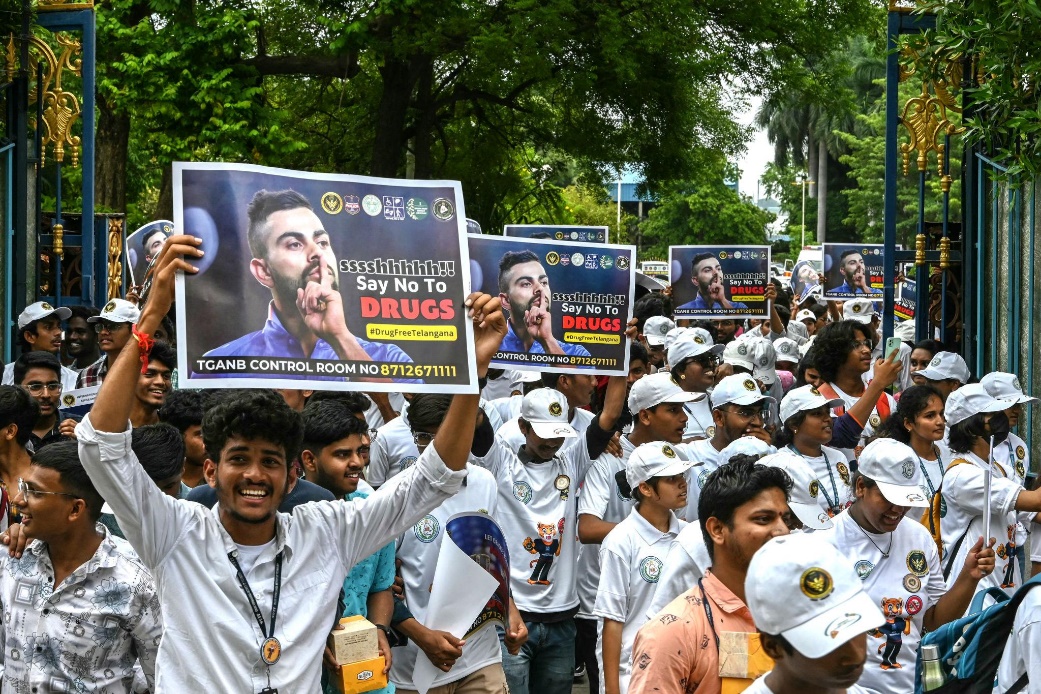
- A cycle rally was conducted in Nellore under ‘Operation Vajra Prahar’, an anti-drug campaign.
- Flagged off by the Assistant Superintendent of Police (ASP), the rally promoted awareness under the slogan:
“Say No to Drugs, Bro – Ride a Cycle, Bro.” - The initiative aims to curb drug abuse through enforcement and community mobilisation.

Background
- Drug trafficking is regulated under the Narcotic Drugs and Psychotropic Substances Act (NDPS Act, 1985).
- The Prevention of Illicit Traffic in Narcotic Drugs and Psychotropic Substances Act (PIT NDPS Act) allows preventive detention of habitual offenders.
- Increasing youth vulnerability and organised crime linkages have prompted state-level anti-drug drives.
Key Highlights
1. Awareness Campaign
- Rally from Umesh Chandra Conference Hall to Gandhi statue.
- Emphasis on drug-free youth and community responsibility.
2. Enforcement Measures in SPS Nellore District
- 69 NDPS cases registered.
- 65 arrests made.
- 12 vehicles seized (used in drug transport).
- 9 habitual offenders detained under PIT NDPS Act (lodged in Kadapa jail).
3. Preventive Policing
- Regular cordon and search operations in identified hotspots.
- Public encouraged to share information via AP Eagle toll-free number 1972 (confidentiality assured).
Significance
1. Internal Security Perspective
- Drug networks often linked with organised crime and extremist financing.
2. Youth Protection
- Campaign targets awareness among youth, preventing addiction and social breakdown.
3. Community Policing Model
- Encourages citizen participation in intelligence gathering.
4. Preventive Detention Strategy
- Use of PIT NDPS Act strengthens deterrence against habitual offenders.
Challenges
- Expanding drug supply chains.
- Online drug sales via dark web.
- Cross-border narcotics trafficking.
- Rehabilitation and reintegration of addicted youth.
Way Forward
- Strengthen coordination between State police and central agencies like NCB.
- Expand school and college-level awareness programs.
- Enhance digital monitoring of online drug trade.
- Improve rehabilitation and counselling infrastructure.
- Promote sports and wellness initiatives as preventive measures.
Conclusion
Operation Vajra Prahar reflects a dual strategy of enforcement and awareness. Combining strict legal action under NDPS laws with community mobilisation can strengthen India’s fight against drug abuse and its associated internal security threats.
CARE MCQ
Q. With reference to anti-drug enforcement in India, consider the following statements:
- The NDPS Act provides legal framework for regulating narcotic drugs and psychotropic substances.
- The PIT NDPS Act allows preventive detention of habitual drug offenders.
- Drug trafficking has no linkages with organised crime networks.
Which of the statements given above is/are correct?
A. 1 and 2 only
B. 1 only
C. 2 and 3 only
D. 1, 2 and 3
Answer: A
Explanation
Statement 1 is Correct. NDPS Act, 1985 regulates narcotic drugs and prescribes penalties.
Statement 2 is Correct. PIT NDPS Act, 1988 provides preventive detention provisions.
Statement 3 is Incorrect. Drug trafficking is often linked with organised crime and can fund extremist activities.