Why in News?
India’s search for alternative fuels has gained importance due to continuing tensions in West Asia and risks to global energy supplies. India imports nearly 85% of its crude oil needs, while around 90% of its LPG imports transit through the Strait of Hormuz. In this context, compressed biogas is being seen as a domestic, renewable and waste-based fuel that can reduce import dependence, support rural incomes and improve energy security.
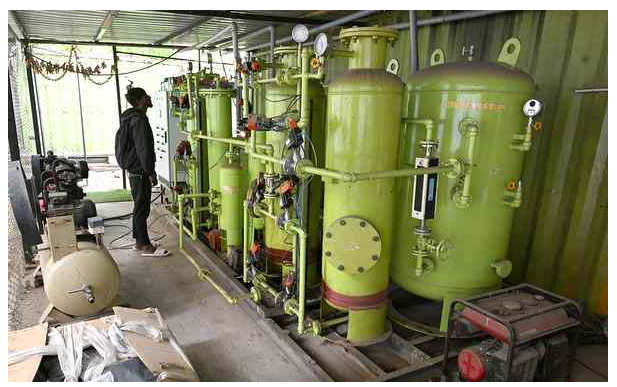
What is Biogas and Compressed Biogas?
- Biogas is a mixture of methane, carbon dioxide and small quantities of other gases. It is produced through anaerobic digestion, where organic matter is broken down in the absence of oxygen.
Sources of biogas include:
- Agricultural waste
- Cattle dung
- Municipal solid waste
- Food waste
- Sewage sludge
- Industrial organic waste
- Biogas can be processed and compressed to produce Compressed Biogas. CBG is similar to Compressed Natural Gas in use and can be used as a clean fuel for transport, cooking, heating and electricity generation.
- It is considered renewable because it is produced from organic waste. It can also support a circular economy by converting waste into energy.
Why India Needs Alternative Fuels
India remains heavily dependent on imported fossil fuels.
- India imports nearly 85% of its crude oil needs.
- Much of its crude oil supply is linked to West Asia.
- Around 90% of India’s LPG imports pass through the Strait of Hormuz.
- Any conflict or instability in the region can affect prices, supplies and domestic energy security.
- Therefore, India has been trying to promote alternative fuels such as ethanol, compressed biogas, green hydrogen and electric mobility.
- CBG is important because it can be produced domestically from waste and can partially replace imported natural gas and petroleum-based fuels.
Government Initiatives to Promote CBG
SATAT Initiative
- The Sustainable Alternative Towards Affordable Transportation initiative was launched in 2018.
- Its target was to establish 5,000 CBG plants by 2023.
- However, progress has remained limited. As of June 3, 2026, only 132 plants had been completed.
GOBARdhan Scheme
The Centre also launched the GOBARdhan scheme, or Galvanising Organic Bio-Agro Resources Dhan, to promote the waste-to-wealth model.
Under this scheme:
- Grants of up to ₹50 lakh per district were offered for community biogas plants.
- ₹564 crore was earmarked for biomass collection machinery.
- ₹994 crore was allocated to build pipelines connecting biogas plants directly to the gas grid.
These initiatives aim to increase CBG production, manage waste and provide additional income opportunities in rural areas.
Why Progress Has Been Slow
Despite policy support, India’s CBG sector has not expanded at the expected pace.
Major reasons include:
- Lack of collection and transport infrastructure for biomass
- Poor private investment
- Difficulty in accessing formal credit
- High upfront cost of technology
- Limited pipeline connectivity
- Uncertain long-term revenue for project developers
- Weak local-level waste aggregation systems
Financial support from the government can make CBG projects more viable. Incentives such as accelerated depreciation, tax holidays and assured offtake arrangements can attract private players.
Global Experience and Lessons
Biogas development has been uneven across the world. Europe, China and the United States account for around 90% of global production.
Germany’s Experience
- Germany is one of Europe’s largest biogas producers. Its growth was supported by the Renewable Energy Sources Act, 2000, which provided incentives and income support to producers.
- However, Germany’s biogas push also led to a problem. Maize became highly profitable as a feedstock, leading to a sharp rise in maize cultivation. This reduced crop diversity and replaced some food crops. Later, the government had to impose limits on the use of maize in biogas plants.
Denmark’s Experience
Denmark offers a more balanced model. It is targeting the use of only biomethane in its gas system by 2030.
Unlike Germany, Denmark discouraged the use of food crops as feedstock. Its main sources are:
- Livestock manure
- Agricultural waste
- Organic residues
This model is more suitable for India because it protects food security while promoting clean energy.
Impact on Cropping Patterns
- India must be careful that biofuel policies do not distort cropping patterns.
- The Economic Survey 2026 noted that maize cultivation in India has increased sharply. National maize yield rose from about 2.56 tonnes per hectare in FY16 to around 3.78 tonnes per hectare in FY25.
At the same time, yields of crops such as:
- Soybean
- Sunflower
- Rapeseed
- Peanuts
- Millets
have either stagnated or declined.
- One reason could be ethanol pricing. The government fixes administered ethanol prices based on feedstock. Maize-based ethanol has received higher pricing support, making maize more attractive for farmers.
- Between FY22 and FY25, the administered price of maize-based ethanol grew at a CAGR of 11.7%.
- This can create a risk. If farmers shift too much land towards maize, India may become more dependent on imports of pulses and edible oils, increasing food price vulnerability.
- Therefore, CBG policy must focus more on waste, manure and agricultural residues, rather than encouraging excessive use of food crops.
CBG Blending Obligation
In 2023, the National Biofuels Coordination Committee approved a mandatory blending obligation for CBG.
Gas distributors have been mandated to blend CBG into their supply from FY26.
The blending target will:
- Start at 1% in FY26
- Rise gradually to 5% by FY29
The blending will apply to:
- CNG for transport
- Piped Natural Gas for domestic use
This is similar in spirit to India’s ethanol blending programme. India increased ethanol blending in petrol from 1.5% in 2014 to 20% by December 2025, achieving the target five years ahead of the original 2030 deadline.
The question is whether India can replicate this success in the CBG sector.
Significance of Biogas for India
1. Energy Security
CBG can reduce India’s dependence on imported fossil fuels and improve resilience against global energy shocks.
2. Waste Management
It converts organic waste, cattle dung and agricultural residues into useful energy.
3. Rural Income
Farmers can earn additional income by supplying biomass, manure and crop residues.
4. Climate Benefits
CBG can reduce methane emissions from unmanaged organic waste and support India’s climate commitments.
5. Import Substitution
CBG can partially substitute imported natural gas, crude oil and LPG-based energy use.
6. Circular Economy
It creates value from waste and produces by-products such as fermented organic manure.
Challenges
- SATAT progress has been slow, with only 132 plants completed against a target of 5,000.
- High capital cost affects project viability.
- Biomass collection and aggregation are difficult.
- Formal credit access remains weak.
- Pipeline and grid connectivity are limited.
- Excessive use of food crops as feedstock can affect crop diversity.
- Private investors need clearer revenue assurance and long-term offtake support.
- Municipal waste segregation remains weak in many areas.
Way Forward
- Provide stronger financial support for CBG plants.
- Offer tax holidays and accelerated depreciation to attract private investment.
- Develop biomass collection and storage infrastructure.
- Prioritise feedstock from livestock manure, agricultural waste and municipal organic waste.
- Avoid excessive dependence on food crops such as maize.
- Ensure assured offtake and stable pricing for CBG producers.
- Strengthen pipeline connectivity between CBG plants and gas grids.
- Promote decentralised biogas plants in rural and peri-urban areas.
- Link CBG policy with waste management, farmer income and climate goals.
Conclusion
Compressed biogas can support India’s energy security by reducing import dependence, managing waste and creating rural income opportunities. However, the sector has not yet achieved its full potential due to weak infrastructure, high costs, limited credit and slow private investment. India must learn from global experiences and avoid crop-diversity risks seen in Germany. A waste-based CBG model, similar to Denmark’s approach, can help India build a cleaner, more secure and more sustainable energy future.