Why in News?
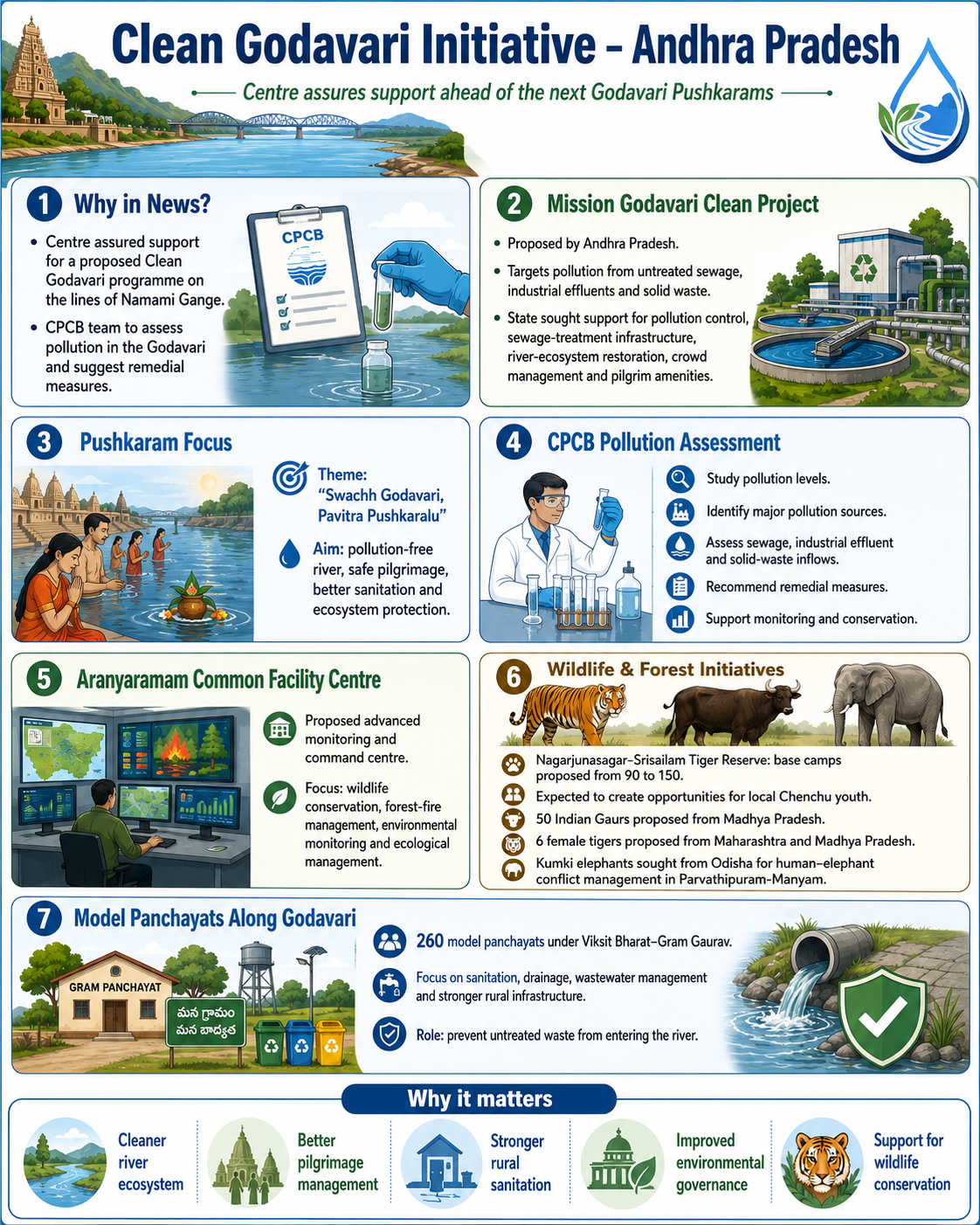
The Union government assured support to Andhra Pradesh for a proposed Clean Godavari programme on the lines of the Namami Gange Programme.
The Centre also agreed to send a Central Pollution Control Board team to assess pollution levels in the Godavari and recommend remedial measures ahead of the next Godavari Pushkarams.
Mission Godavari Clean Project
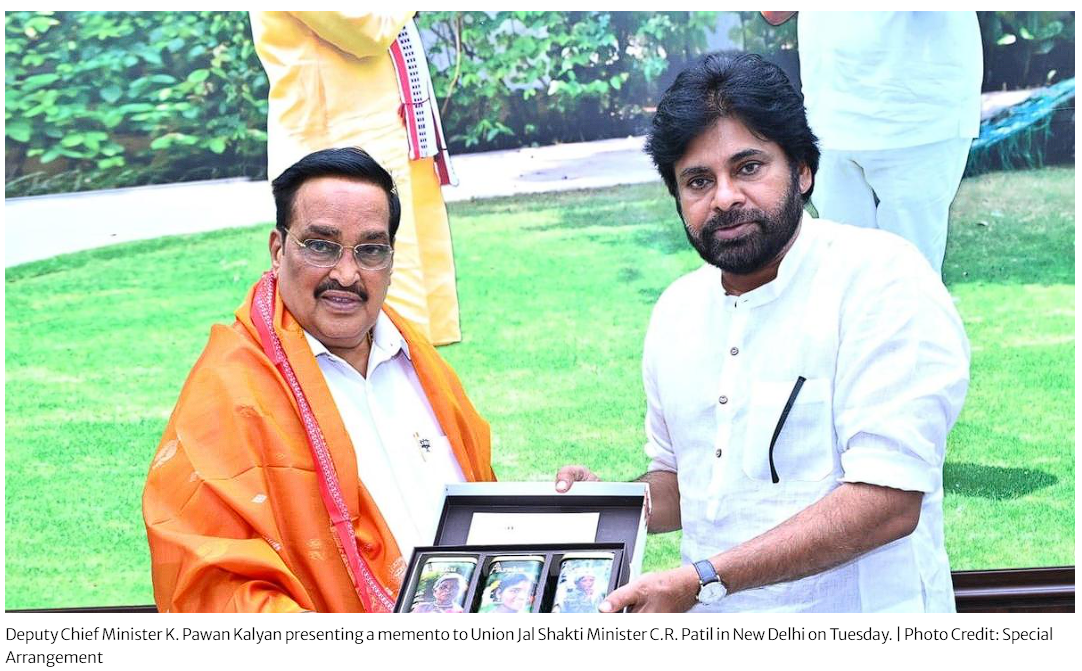
Andhra Pradesh Deputy Chief Minister K. Pawan Kalyan sought Central support for the proposed Mission Godavari Clean Project.
The programme aims to address pollution caused by:
- Untreated sewage
- Industrial effluents
- Solid waste entering the river
The State sought assistance for:
- Pollution control
- Sewage-treatment infrastructure
- River-ecosystem restoration
- Crowd management
- Pilgrim amenities
Godavari Pushkarams
The State plans to organise the next Godavari Pushkarams under the theme:
“Swachh Godavari, Pavitra Pushkaralu”
The proposed Clean Godavari initiative is intended to ensure:
- A pollution-free river
- Safe and hygienic pilgrimage conditions
- Better sanitation and drainage
- Protection of the river ecosystem
- Improved facilities for pilgrims
CPCB Pollution Assessment
The Centre agreed to send a team from the Central Pollution Control Board to:
- Study pollution levels in the Godavari
- Identify major pollution sources
- Assess sewage, industrial-effluent and solid-waste inflows
- Recommend remedial measures
- Support pollution-monitoring and conservation initiatives
The assessment can provide the scientific basis for designing river-cleaning interventions.
Aranyaramam Common Facility Centre
The State sought approval for the proposed Aranyaramam Common Facility Centre.
It will house advanced monitoring and command centres related to:
- Wildlife conservation
- Forest-fire management
- Environmental monitoring
- Ecological management
The proposed facility is intended to strengthen coordination and technology-based environmental governance.
Nagarjunasagar–Srisailam Tiger Reserve
Andhra Pradesh proposed increasing the number of base camps in the Nagarjunasagar–Srisailam Tiger Reserve from:
- Existing: 90 base camps
- Proposed: 150 base camps
The proposal is also expected to create employment opportunities for local Chenchu youth.
Wildlife-Conservation Proposals
Relocation of Indian Gaurs
The State discussed plans to bring 50 Indian Gaurs from Madhya Pradesh.
The proposal aims to:
- Strengthen biodiversity
- Address ecological imbalances
- Improve wildlife populations
Relocation of Female Tigers
Andhra Pradesh proposed bringing six female tigers from:
- Maharashtra
- Madhya Pradesh
The initiative is intended to strengthen tiger populations and ecological balance.
Kumki Elephants
The State requested trained kumki elephants from Odisha to manage human–elephant conflict in Parvathipuram-Manyam district.
Kumki elephants are trained elephants used in the management of wild elephants and conflict situations.
Model Panchayats along the Godavari
The Centre assured support for developing 260 model panchayats along the Godavari under the Viksit Bharat–Gram Gaurav programme.
The initiative will focus on:
- Sanitation
- Drainage
- Wastewater management
- Pollution-free Pushkaram celebrations
- Strengthening rural infrastructure
These panchayats can play an important role in preventing untreated waste from entering the river.
Significance
River Conservation
- The programme can reduce sewage, effluent and solid-waste pollution in the Godavari.
Scientific Pollution Management
- The CPCB assessment can help identify pollution sources and design suitable remedial measures.
Safe Pushkarams
- Improved sanitation, crowd management and pilgrim facilities can ensure safer religious gatherings.
Rural Infrastructure
- Model panchayats can strengthen drainage, wastewater treatment and sanitation along the river.
Biodiversity Conservation
- The proposals involving gaurs, tigers and reserve base camps aim to strengthen wildlife conservation.
Human–Wildlife Conflict Management
- Kumki elephants can assist in managing elephant-related conflicts in Parvathipuram-Manyam.
Local Employment
- Expansion of tiger-reserve base camps may create livelihood opportunities for Chenchu youth.
Centre–State Cooperation
- The initiative requires coordination among the Union and State governments, pollution-control institutions and local bodies.
Challenges
- Preventing untreated sewage from entering the river
- Controlling industrial effluents
- Managing solid waste during Pushkarams
- Completing sewage-treatment projects before the event
- Coordinating among different departments and local bodies
- Ensuring adequate funds and timely implementation
- Managing large pilgrim crowds
- Protecting wildlife during relocation
- Addressing human–wildlife conflicts
- Maintaining sanitation after the Pushkarams
Way Forward
- Complete the CPCB pollution assessment at the earliest.
- Identify major pollution hotspots along the Godavari.
- Establish adequate sewage-treatment facilities.
- Strengthen industrial-effluent monitoring.
- Improve solid-waste collection and disposal.
- Prepare village-level sanitation and wastewater plans.
- Ensure coordination among municipalities and panchayats.
- Establish clear timelines for Pushkaram-related works.
- Strengthen wildlife-monitoring and forest-fire response systems.
- Involve local communities, including Chenchu youth, in conservation programmes.
Conclusion
The proposed Clean Godavari programme combines river rejuvenation, rural sanitation, pilgrim management and ecological conservation.
The CPCB assessment, sewage-treatment infrastructure and development of 260 model panchayats can help reduce pollution before the Godavari Pushkarams. At the same time, the Aranyaramam centre and wildlife proposals can strengthen environmental management across Andhra Pradesh.
Effective implementation will require scientific planning, adequate funding, Centre–State coordination and active participation by local bodies and communities.