Why in News?
The developmental transformation of India’s North-Eastern Region between 2014 and 2026 has gained attention due to major improvements in connectivity, infrastructure, clean energy, agriculture and social services.
The eight States, collectively described as Ashtalakshmi, are increasingly positioned as a key pillar of India’s Act East Policy and the vision of Viksit Bharat.
Why is the North-East Called Ashtalakshmi?
In Indian tradition, Goddess Lakshmi has eight forms representing different sources of prosperity. Similarly, each of the eight Northeastern States possesses distinctive strengths.
The region’s importance arises from its:
- Strategic location
- Cultural diversity
- Rich biodiversity
- Agricultural potential
- Forest-based resources
- Hydropower potential
- Tourism assets
- Connectivity with Southeast Asia
Together, these qualities make the North-East an important source of India’s prosperity, security and regional integration.
How is the Act East Policy Integrating the Region?
The Act East Policy places the North-East at the centre of India’s economic and strategic engagement with ASEAN countries.
Cross-Border Corridors
- India–Myanmar–Thailand Trilateral Highway: Connects Moreh in Manipur with Mae Sot in Thailand through Myanmar.
- Kaladan Multi-Modal Transit Transport Project: Links Sittwe Port with Paletwa through inland waterways and strengthens access between the North-East and Myanmar.
These corridors seek to reduce travel time and logistics costs while improving the movement of people and goods.
Border Trade Infrastructure
- Integrated Check Posts: Facilities such as Moreh improve customs, immigration and cargo handling.
- Border Haats: Markets such as Kamalasagar and Bholaganj promote local trade, livelihoods and people-to-people relations.
Thus, the policy seeks to transform the region from a frontier into a bridge connecting India with Southeast Asia.
What Policy Architecture Supports Development?
PM-DevINE
The Prime Minister’s Development Initiative for North East Region is a fully centrally funded scheme supporting high-impact projects in infrastructure, livelihoods and social development.
NESIDS
The North East Special Infrastructure Development Scheme supports:
- Roads and bridges
- Remote-area connectivity
- Healthcare
- Education
- Power
- Water supply
- Strategic infrastructure
North Eastern Council
The North Eastern Council is the nodal body for the region’s economic and social development. Its focus areas include:
- Bamboo and piggery-based livelihoods
- Tourism
- Healthcare
- Higher education
- Irrigation
- Flood control
- Science and technology
Special Development Packages
Packages for Assam and Tripura focus on employment, skills, entrepreneurship, tourism, social inclusion and peace-building.
This policy framework reflects a shift from general assistance to mission-oriented and region-specific development.
How Has Connectivity Reduced Regional Isolation?
Roads and Highways
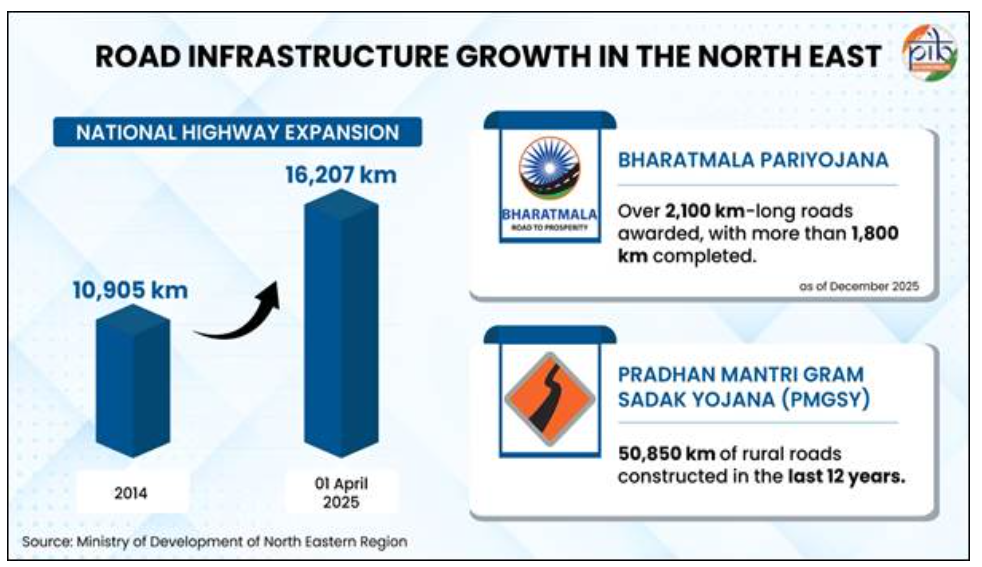
Expansion of National Highways, Bharatmala corridors and rural roads under PMGSY has improved interstate mobility and last-mile access.
Railways
Broad-gauge expansion, electrification and modern train services are integrating hill States with the national railway network.
Major Engineering Projects
- Bogibeel Bridge: Road–rail connectivity across the Brahmaputra.
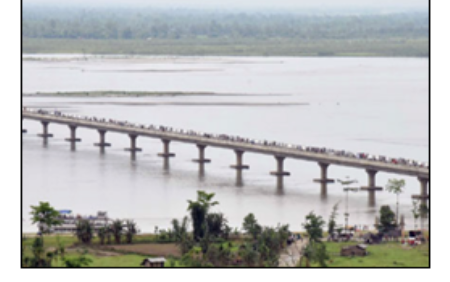
- Bhupen Hazarika Setu: Permanent road connection between northern Assam and eastern Arunachal Pradesh.
- Noney Bridge: A major railway bridge in Manipur.
- Sela Tunnel: All-weather strategic connectivity on the Tezpur–Tawang route.
Air Connectivity
The UDAN scheme has expanded airports and regional routes, reducing travel time for remote communities.
Inland Waterways
The Brahmaputra and Barak rivers are being developed for cargo movement and river tourism through National Waterways.
Digital Connectivity
BharatNet, mobile towers and high-speed internet services are improving access to digital governance, education and economic opportunities.
How is Green Energy Supporting Growth?
Hydropower
Projects such as the Dibang Multipurpose Project and Subansiri Lower Project seek to harness the region’s river systems for renewable electricity and flood management.
North-East Gas Grid
The integrated gas-pipeline network aims to connect all eight States with the national gas grid.
A major engineering milestone is the natural-gas pipeline crossing beneath the Brahmaputra through Horizontal Directional Drilling.
Solar and Decentralised Energy
The region is witnessing expansion of:
- Solar parks
- Rooftop solar
- PM-KUSUM solar pumps
- Mini-grids
- Standalone energy systems
- Green-hydrogen initiatives
These measures can improve energy reliability while reducing dependence on diesel-based power.
How Have Basic Services and Human Development Improved?
Water and Sanitation
The Jal Jeevan Mission has expanded rural tap-water coverage, while all eight States have been declared Open Defecation Free.
Swachh Bharat Mission Phase II now focuses on:
- Solid and liquid waste management
- Plastic-waste management
- Faecal-sludge treatment
- ODF Plus villages
Women’s self-help groups are also participating in village-level waste management.
Healthcare
Major improvements include:
- AIIMS Guwahati
- New medical colleges
- Ayushman Bharat coverage
- Health and Wellness Centres
- eSanjeevani telemedicine
- Jan Aushadhi Kendras
These initiatives have improved access to specialised, primary and affordable healthcare.
Education and Skills
The expansion of universities, colleges, technical institutes, Eklavya Model Residential Schools and Atal Tinkering Labs is strengthening education and innovation.
Apprenticeship and skill-development programmes are also improving employability.
Housing and Electricity
PMAY has expanded pucca housing in rural and urban areas. Beneficiaries are linked with toilets, tap water, LPG and electricity.
All eight States have achieved household electrification under Saubhagya.
How are Agriculture and Rural Livelihoods Diversifying?
Fisheries
Inland fisheries have recorded strong growth, led by Assam. Support includes Kisan Credit Cards, Fish Farmer Producer Organisations and ornamental fisheries.
Dairy and Livestock
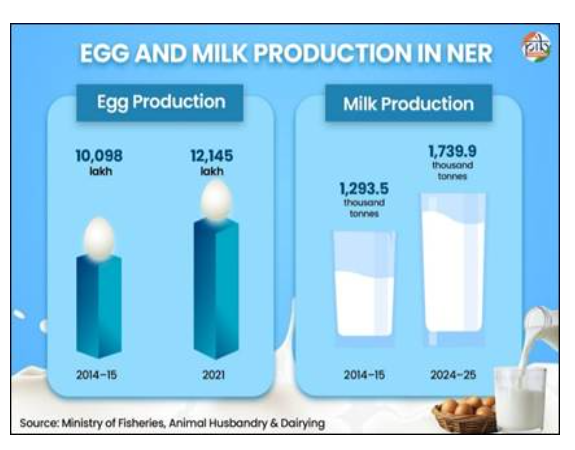
The establishment of the region’s first cattle IVF laboratory in Guwahati supports improved livestock genetics and dairy productivity.
Agarwood Economy
The North-East contains most of India’s agarwood trees. Tripura has significant potential for agarwood cultivation, processing and exports.
Organic Farming
The Mission Organic Value Chain Development for North Eastern Region promotes:
- Organic cultivation
- Farmer Producer Organisations
- Processing
- Collective marketing
- Market linkages
Forest-Based Livelihoods
The Van Dhan Vikas Yojana supports tribal gatherers and self-help groups engaged in forest produce.
GI Tags and Value Addition
Products such as:
- Queen Pineapple
- Lakadong Turmeric
- King Chilli
- Large Cardamom
reflect the region’s unique agro-biodiversity and export potential.
NERAMAC supports FPOs, product marketing, skill development and cold-storage infrastructure.
What Challenges Remain?
- Difficult terrain and high logistics costs
- Delays in cross-border projects
- Uneven development among States
- Ecological fragility and disaster vulnerability
- Limited processing and market access
- Need for maintenance of new infrastructure
- Shortage of skilled employment
- Border-security concerns
- Need to protect local communities and biodiversity
- Balancing large energy projects with environmental sustainability
Way Forward
Complete Multimodal Connectivity
Road, rail, air, waterway and digital networks should be integrated to reduce logistics costs.
Accelerate Cross-Border Projects
The Trilateral Highway, Kaladan project, Integrated Check Posts and Border Haats require timely completion.
Promote State-Specific Value Chains
Agricultural and cultural strengths should be developed through processing, branding and export-oriented marketing.
Strengthen Human Capital
Healthcare, higher education, technical training and apprenticeships must support future growth.
Ensure Ecological Balance
Infrastructure and energy projects should respect forests, river systems, biodiversity and local communities.
Empower Local Institutions
Women’s SHGs, tribal communities, FPOs and local bodies should participate in planning and implementation.
Improve Last-Mile Delivery
Infrastructure creation must be supported by reliable services, maintenance and institutional accountability.
Conclusion
The transformation of the North-East reflects a shift from geographical isolation and a security-centred approach towards connectivity, strategic integration and inclusive development.
Targeted schemes, multimodal infrastructure, clean energy and livelihood diversification have positioned Ashtalakshmi as an important growth region and India’s gateway to Southeast Asia. Sustaining this progress will require ecological sensitivity, stronger local enterprise and effective last-mile implementation.