APPSC Daily Current Affairs - 1st January 2026
Source: Deccan Chronicle
Relevance:
GS Paper II – Governance, Centre–State relations, Government policies and welfare schemes
Why in News?
- The Chairman of the 20-Point Programme Implementation (Viksit Bharat – Swarna Andhra Pradesh), Lanka Dinakar, stated that 2025 laid a strong foundation for accelerated growth in 2026, driven by a double-engine government in Andhra Pradesh.
- He highlighted progress in infrastructure, welfare delivery, investment inflows, employment generation, and water security, aligned with **N. Chandrababu Naidu’**s vision of Swarna Andhra Pradesh and **Narendra Modi’**s Viksit Bharat mission.

Key Governance and Infrastructure Achievements
1. Capital and Irrigation Projects
- Amaravati Capital Development
- Works fast-tracked with ₹15,000 crore central assistance.
- Polavaram Multipurpose Project
- Received nearly ₹18,000 crore in funding.
- Critical for irrigation, drinking water, and flood control.
- Veligonda Project (Phase-I)
- Nearing completion.
- Expected to ensure long-term water security for drought-prone regions.
2.Investment and Employment Generation
- Investments Approved in 2025
- ₹8.55 lakh crore approved.
- Expected to generate 8.23 lakh jobs.
- CII Summit, Visakhapatnam
- MoUs worth ₹13.25 lakh crore signed.
- Employment potential for 16.13 lakh youth.
- Regional Focus
- Special emphasis on:
- North Andhra
- Prakasam
- Rayalaseema
- Special emphasis on:
3.Inclusive Welfare Initiatives
1. Annadata Sukhibhava- ₹6,310 crore transferred.
- Benefited 46 lakh farmers.
- ₹10,090 crore disbursed.
- Reached 67.27 lakh beneficiaries.
- Provision of three free LPG cylinders to poor families.
- Supports clean energy access and women’s health.
- Free bus travel for women.
- Recorded 3.25 crore journeys, improving mobility and workforce participation.
Economic Context
- India has emerged as the world’s fourth-largest economy.
- Andhra Pradesh’s growth trajectory is presented as part of this broader national economic rise.
- Confidence expressed that 2026 will witness accelerated growth.
Conclusion
The Andhra Pradesh government’s 2025 performance, under the framework of a double-engine governance model, highlights a combination of infrastructure acceleration, inclusive welfare delivery, investment mobilisation, and employment generation. Aligned with the national vision of Viksit Bharat, the State’s development strategy seeks to balance growth with social equity, positioning 2026 as a year of further economic momentum.
CARE MCQ
Which of the following welfare initiatives focuses on improving women’s mobility and workforce participation in Andhra Pradesh?
- Stree Shakti provides free bus travel for women, recording 3.25 crore journeys.
- The scheme enhances mobility, access to education and employment, and supports gender-inclusive growth.
Source: Indian Express
Relevance:
GS Paper I: Physical Geography – Climatology, Mid-latitude weather systems, Extreme weather events,
GS Paper III: Disaster Management
Important Key Concepts for Prelims and Mains:
For Prelims:
- Bomb cyclone, Bombogenesis, Mid-latitude cyclone, Low-pressure system, Pressure gradient, Blizzard
For Mains:
- Rapid cyclogenesis, Winter storms and disaster risk, Transport and power infrastructure vulnerability, Climate variability and extreme events
Why in News?
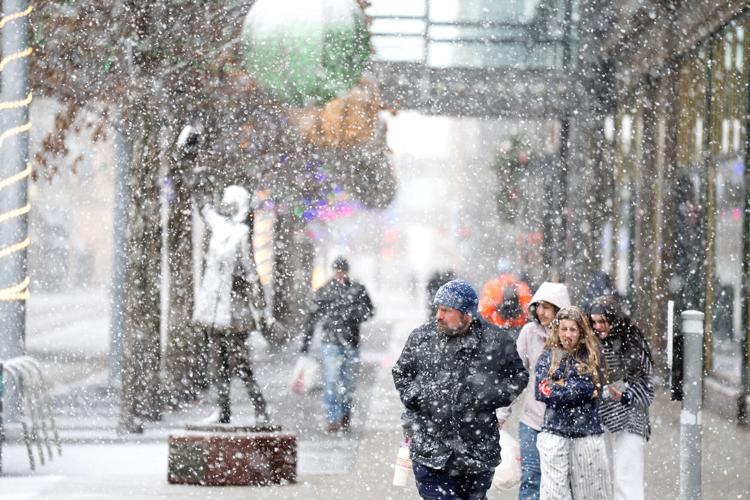
- A powerful bomb cyclone struck the northern United States on December 29, 2025, causing severe winter weather across the Midwest and East Coast.
- Reported impacts:
- 27,000+ power outages, over one-third in Michigan
- 9,000+ flight delays
- 889 flight cancellations within, into, or out of the US
- Blizzard conditions during the holiday travel season led to severe transport disruption.

What Is a Bomb Cyclone?
- A bomb cyclone is a large, intense mid-latitude (extra-tropical) storm with:
- A deep low-pressure centre
- Weather fronts
- Severe associated weather ranging from blizzards to intense precipitation
- These storms put meteorologists on high alert due to their potential for widespread damage.

Scientific Definition
- A storm qualifies as a bomb cyclone when:
- The central atmospheric pressure drops by at least 24 millibars within 24 hours
- This rapid intensification process is called bombogenesis.
- Millibar is a unit used to measure atmospheric pressure.
How Does a Bomb Cyclone Form? (Bombogenesis)
Basic Mechanism
- Storms form when low-pressure air meets high-pressure air, causing air to flow from high to low pressure, generating winds.
In Bomb Cyclones
- Cold, dense Arctic or Canadian air collides with warm, moist air (often over oceans).
- The warm air rises rapidly, deepening the low-pressure system.
- Air rushes inward at high speed to replace the rising air.
- This creates a steep pressure gradient, leading to very strong winds.
Why They Are So Violent
- According to AccuWeather:
- Rapidly ascending air near the storm centre must be replaced.
- Incoming air moves at high speed, causing:
- Property damage
- Fallen trees
- Power outages
Seasonality
- Bomb cyclones can occur in any season.
- They occur most frequently during fall and winter because:
- Cold Arctic air can move southward
- Warm air masses are still present, creating ideal contrast
Where Do Bomb Cyclones Commonly Occur?
- Most commonly originate in the western North Atlantic.
- Key reasons:
- Cold continental air from North America meets warm Atlantic air
- Additional energy supplied by the warm Gulf Stream
- Other regions:
- Northwestern Pacific
- Occasionally the Mediterranean Sea
Statistical Insight
- A 2021 study by Northern Illinois University found:
- ~7% of all non-tropical low-pressure systems near North America (1979–2019) were bomb cyclones
- On average, 18 bomb cyclones per year occurred near North America during this period
Why Are Bomb Cyclones Dangerous?
1. Extremely Strong Winds
- Wind speeds can reach up to 80 kmph or more
- Effects include:
- Uprooting trees
- Structural damage
- Large-scale power outages
2. Blizzard Conditions
- Heavy snowfall combined with strong winds
- Leads to:
- Whiteout conditions
- Dangerous travel
- Road and airport closures
3. Infrastructure & Transport Disruption
- Widespread electricity failures
- Severe impact on:
- Aviation (flight delays and cancellations)
- Road and rail networks
4. Secondary Hazards
- Lakeshore flooding
- Extremely low wind-chill temperatures
- Occasional thundersnow (snowfall with lightning)
How Is a Bomb Cyclone Different from a Hurricane?
| Aspect | Bomb Cyclone | Hurricane |
| Type | Mid-latitude (extra-tropical) storm | Tropical cyclone |
| Energy Source | Temperature contrast (cold + warm air) | Warm ocean waters |
| Typical Season | Fall and winter | Summer and early autumn |
| Formation Region | North Atlantic, North Pacific | Tropical oceans |
| Core Structure | Cold-core system | Warm-core system |
Disaster Management Perspective
- Bomb cyclones expose vulnerabilities in power grids, transport networks, and urban infrastructure.
- Highlight the importance of:
- Advanced weather forecasting
- Early warning dissemination
- Climate-resilient infrastructure
- Increasing intensity of such storms raises concerns related to climate variability and changing atmospheric circulation patterns.
Conclusion
A bomb cyclone is among the most violent non-tropical storm systems due to its rapid pressure fall and intense winds. The December 2025 storm in the northern United States demonstrates how the interaction of polar cold air and warm air masses can trigger large-scale winter disasters, causing significant disruption to daily life, transport, and power systems.
UPSC PYQ
Q. Consider the following statements: [UPSC – 2020]
- Jet streams occur in the Northern Hemisphere only.
- Only some cyclones develop an eye.
- The temperature inside the eye of a cyclone is nearly 10°C lesser than that of the surroundings.
Which of the statements given above is/are correct?
- 1 only
- 2 and 3 only
- 2 only
- 1 and 3 only
Answer: B
Explanation
- Statement 1 is incorrect.
Jet streams do not occur only in the Northern Hemisphere. They are found in both hemispheres, mainly in the upper troposphere along the mid-latitudes and subtropical regions (e.g., Polar Jet Stream and Subtropical Jet Stream). - Statement 2 is correct.
Only some cyclones develop an eye.- A well-defined eye is a feature of intense tropical cyclones.
- Weak or moderate cyclones and extra-tropical cyclones generally do not have a clear eye.
- Statement 3 is incorrect.
The temperature inside the eye of a tropical cyclone is higher (warmer) than the surrounding areas due to descending air and adiabatic warming.- It is not 10°C lower, but rather several degrees higher than the surrounding cloud walls.
CARE MCQ
Q. With reference to ‘bomb cyclones’, consider the following statements:
- A bomb cyclone is identified by a rapid drop in atmospheric pressure of at least 24 millibars within 24 hours.
- Bomb cyclones are powered primarily by warm ocean waters, similar to hurricanes.
- They commonly occur in mid-latitude regions during fall and winter.
Which of the statements given above is/are correct?
A. 1 and 3 only
B. 1 only
C. 2 and 3 only
D. 1, 2 and 3
Answer: A
Explanation
- Statement 1 is correct: The defining feature of a bomb cyclone is a pressure drop of ≥24 millibars in 24 hours, known as bombogenesis.
- Statement 2 is incorrect: Bomb cyclones are mid-latitude storms driven by temperature contrasts, not warm ocean energy like hurricanes.
- Statement 3 is correct: They occur mainly in fall and winter, when cold polar air collides with warmer air masses.
Source: PIB
Relevance:
GS Paper III: Energy security, clean energy transition, infrastructure development
Important Key Concepts for Prelims and Mains:
For Prelims:
- Pradhan Mantri Ujjwala Yojana (PMUY), Electric Vehicles (EVs), Ethanol Blending Programme,
Compressed Bio-Gas (CBG), Sustainable Aviation Fuel (SAF), Strategic Petroleum Reserves (SPR)
For Mains:
- Energy Access, Energy Sustainability, Energy Security,
Gas-based Economy, Upstream Sector Reforms, Critical Mineral Dependence
Why in News?
- The Year End Review 2025 released by the Ministry of Petroleum & Natural Gas (MoPNG) outlines the Government of India’s efforts during 2025 to strengthen energy access, affordability, infrastructure, cleaner fuels and national energy security.
- These initiatives assume importance as oil and natural gas remain central to India’s rapidly expanding economy, supporting growth across multiple sectors.
Role and Mandate of the Ministry of Petroleum & Natural Gas
The Ministry of Petroleum & Natural Gas is responsible for the entire hydrocarbon value chain in India, including:
- Exploration and production of crude oil and natural gas
- Refining, distribution and marketing of petroleum products
- Import, export and conservation of oil and gas
Oil and natural gas continue to be critical inputs for India’s rapidly growing economy, supporting industrial growth, transport, agriculture, power generation and household energy needs.
During 2025, the Ministry pursued a comprehensive and integrated approach to:
- Ensure affordable energy access
- Enhance domestic production
- Strengthen fuel and gas infrastructure
- Promote cleaner fuels
- Reinforce national energy security
All initiatives were aligned with the four national energy priorities:
Energy Access, Energy Efficiency, Energy Sustainability and Energy Security.
What are the Key Achievements of the Ministry of Petroleum & Natural Gas in 2025?
Expansion of Clean Cooking Fuel Access (PMUY)
- Pradhan Mantri Ujjwala Yojana (PMUY) beneficiaries reached about 10.35 crore as on 1 December 2025, indicating near-saturation of LPG access.
- To address residual demand, the Government approved 25 lakh additional LPG connections during FY 2025–26.
- A major reform was introduced by replacing the earlier multi-point self-declaration system with a single Deprivation Declaration, simplifying eligibility and improving inclusion.
- LPG affordability was supported through a ₹300 subsidy per 14.2 kg cylinder, applicable for up to nine refills per year for PMUY beneficiaries.
- This led to a steady rise in LPG usage:
- Around 3 refills per year in 2019–20
- 4.47 refills in FY 2024–25
- ~4.85 refills per annum (pro-rated) in FY 2025–26
- The trend indicates sustained behavioural adoption of clean cooking fuel.


Transparency and Consumer Safety in LPG Usage
- To improve subsidy targeting, biometric Aadhaar authentication was accelerated:
- Covered 71% of PMUY consumers
- Covered 62% of non-PMUY consumers (as of 1 December 2025)
- A special nationwide drive in November 2025 enabled consumers to complete authentication through simplified mobile-based processes, free of cost.
- Consumer safety was strengthened through a nationwide Basic Safety Check campaign:
- 12.12 crore free safety inspections conducted at customer premises
- 4.65 crore LPG hoses replaced at discounted rates
- These measures significantly improved domestic LPG safety awareness and reduced accident risks.
Strengthening Fuel Retail and Transport Infrastructure
- Petroleum marketing infrastructure was modernised through:
- Over 90,000 retail outlets enabled with digital payments
- Deployment of 2.71 lakh POS terminals
- Door-to-door fuel delivery expanded via commissioning of over 3,200 bowsers, improving access in remote areas.
- Under the Swachh Bharat Mission:
- Toilets were ensured at nearly all retail outlets
- Many outlets provided separate facilities for men and women, improving hygiene and traveller convenience
- Electric mobility infrastructure expanded rapidly:
- 8,932 EV charging stations installed under FAME-II
- 18,500+ additional chargers set up by Oil Marketing Companies from own resources
APNA GHAR Initiative and Integrated Energy Stations
- Under the APNA GHAR initiative, more than 500 wayside amenities were established for truck drivers.
- These facilities contributed to:
- Improved road safety
- Better working conditions for transport workers
- Additional rural employment
- Public Sector Oil Marketing Companies initiated 4,000 integrated Energy Stations during 2024–25 to 2028–29.
- These Energy Stations function as multi-fuel mobility hubs, offering:
- Petrol and diesel
- Biofuels
- CNG and LNG (where feasible)
- Electric vehicle charging
- As on 1 November 2025, 1,064 Energy Stations were operational nationwide.
Expansion of the Gas-Based Economy
- Operational natural gas pipelines expanded from:
- 15,340 km (2014) to 25,429 km (June 2025)
- An additional 10,459 km of pipelines are under execution.
- Completion will enable a fully connected national gas grid, supporting balanced regional development.
- To reduce regional tariff disparities, PNGRB implemented the Unified Pipeline Tariff regime:
- Based on the mission “One Nation, One Grid, One Tariff”
- Effective from 1 April 2023
- Covers about 90% of operational pipelines
- City Gas Distribution (CGD) expanded to 307 geographical areas:
- 1.57 crore PNG domestic connections
- Over 8,400 CNG stations (as of September 2025)
- Revised domestic gas allocation guidelines aligned supply with actual consumption and reduced price volatility.
- To improve subsidy targeting, biometric Aadhaar authentication was accelerated:

Biofuels and Cleaner Energy Transition
- Under the SATAT initiative, over 130 Compressed Bio Gas (CBG) plants were commissioned by November 2025.
- Mandatory CBG blending in CNG and PNG commenced from FY 2025–26, supported by:
- Financial assistance for pipeline connectivity
- Biomass aggregation
- Ethanol blending in petrol reached 19.24% in ESY 2024–25.
- This resulted in:
- ₹1.55 lakh crore foreign exchange savings
- Significant reduction in carbon emissions
- Under Pradhan Mantri JI-VAN Yojana, second-generation ethanol plants became operational at:
- Panipat
- Numaligarh
Sustainable Aviation Fuel (SAF) and Biodiesel
- Government announced indicative SAF blending targets for international flights:
- 1% in 2027
- 2% in 2028
- 5% in 2030
- Indian Oil Corporation Limited (IOCL) became the first Indian company to receive ISCC CORSIA certification for SAF production at its Panipat refinery.
- IOCL subsequently signed an MoU with Air India for SAF supply.
- Biodiesel blending expanded through increased procurement and diversification of feedstocks.
Upstream Sector Reforms and Strategic Energy Security
- Major reforms introduced through:
- Oilfields (Regulation and Development) Amendment Act, 2025
- Petroleum and Natural Gas Rules, 2025
- Under the Hydrocarbon Exploration Licensing Policy (HELP):
- 172 blocks awarded
- Area covered: >3.78 lakh sq km
- Committed investment: USD 4.36 billion
- Exploration activity intensified via:
- Seismic surveys
- Drilling programmes
- Mission Anveshan
- Strategic Petroleum Reserves strengthened through:
- Progress under Phase-II facilities
- Renewed international partnerships
- Overseas investments by Indian oil and gas PSUs continued to diversify supply sources and strengthen long-term energy security.
What Steps are Needed to Strengthen India’s Energy Security?
- Boost Domestic Production: Implement upstream reforms, expand Mission Anveshan, deploy AI and Enhanced Oil Recovery in mature fields.
- Diversify Energy Imports: Secure long-term contracts with new suppliers and bypass maritime chokepoints.
- Accelerate Clean Transition: Scale battery storage, green hydrogen, ethanol blending, and CBG mandates.
- Critical Mineral Self-Reliance: Operationalise the National Critical Minerals Mission, build refining capacity, and develop recycling ecosystems.
- Energy Diplomacy: Strengthen global partnerships through ISA, OSOWOG, and nuclear cooperation.
Conclusion
The Year End Review 2025 demonstrates that the Ministry of Petroleum & Natural Gas adopted a holistic, reform-oriented and future-focused approach during the year. By simultaneously expanding energy access, modernising infrastructure, promoting cleaner fuels, reforming the upstream sector and strengthening strategic preparedness, the Ministry significantly enhanced India’s energy affordability, sustainability and security, supporting the country’s transition towards a resilient and inclusive energy future.
UPSC PYQ
Q. Consider the following statements: (2019)
- Petroleum and Natural Gas Regulatory Board (PNGRB) is the first regulatory body set up by the Government of India.
- One of the tasks of PNGRB is to ensure competitive markets for gas.
- Appeals against the decisions of PNGRB go before the Appellate Tribunal for Electricity.
Which of the statements given above are correct?
- 1 and 2 only
- 2 and 3 only
- 1 and 3 only
- 1, 2 and 3
Answer: B
Explanation
- Statement 1 is incorrect:
The Petroleum and Natural Gas Regulatory Board (PNGRB) was constituted under the Petroleum and Natural Gas Regulatory Board Act, 2006. It is not the first independent regulatory body in India. The Telecom Regulatory Authority of India (TRAI), established under the TRAI Act, 1997, was the first independent regulator. Hence, Statement 1 is incorrect. - Statement 2 is correct:
One of the statutory functions of PNGRB is to protect the interests of consumers and entities engaged in petroleum, petroleum products, and natural gas, and to promote competitive markets in these sectors. - Statement 3 is correct:
As per Section 110 of the Electricity Act, 2003, the Appellate Tribunal for Electricity (APTEL) acts as the appellate authority for appeals against decisions of the PNGRB.
CARE MCQ
Q. Consider the following statements regarding Pradhan Mantri Ujjwala Yojana (PMUY):
- PMUY was launched in 2016 to provide LPG connections to rural and deprived households.
- The scheme was launched at Ballia in Uttar Pradesh.
Which of the statements given above is/are correct?
- 1 only
- 2 only
- Both 1 and 2
- Neither 1 nor 2
Answer: C
Explanation:
- Statement 1 is correct:
- The Pradhan Mantri Ujjwala Yojana (PMUY) was introduced in May 2016 by the Ministry of Petroleum and Natural Gas (MoPNG) to provide LPG connections to rural and economically deprived households that relied on traditional fuels like firewood, coal, and cow-dung cakes.
- Statement 2 is correct:
- The scheme was launched on 1st May 2016 at Ballia, Uttar Pradesh, by the Prime Minister of India.
- Its objective includes reducing indoor air pollution, improving women’s health, and protecting the environment.