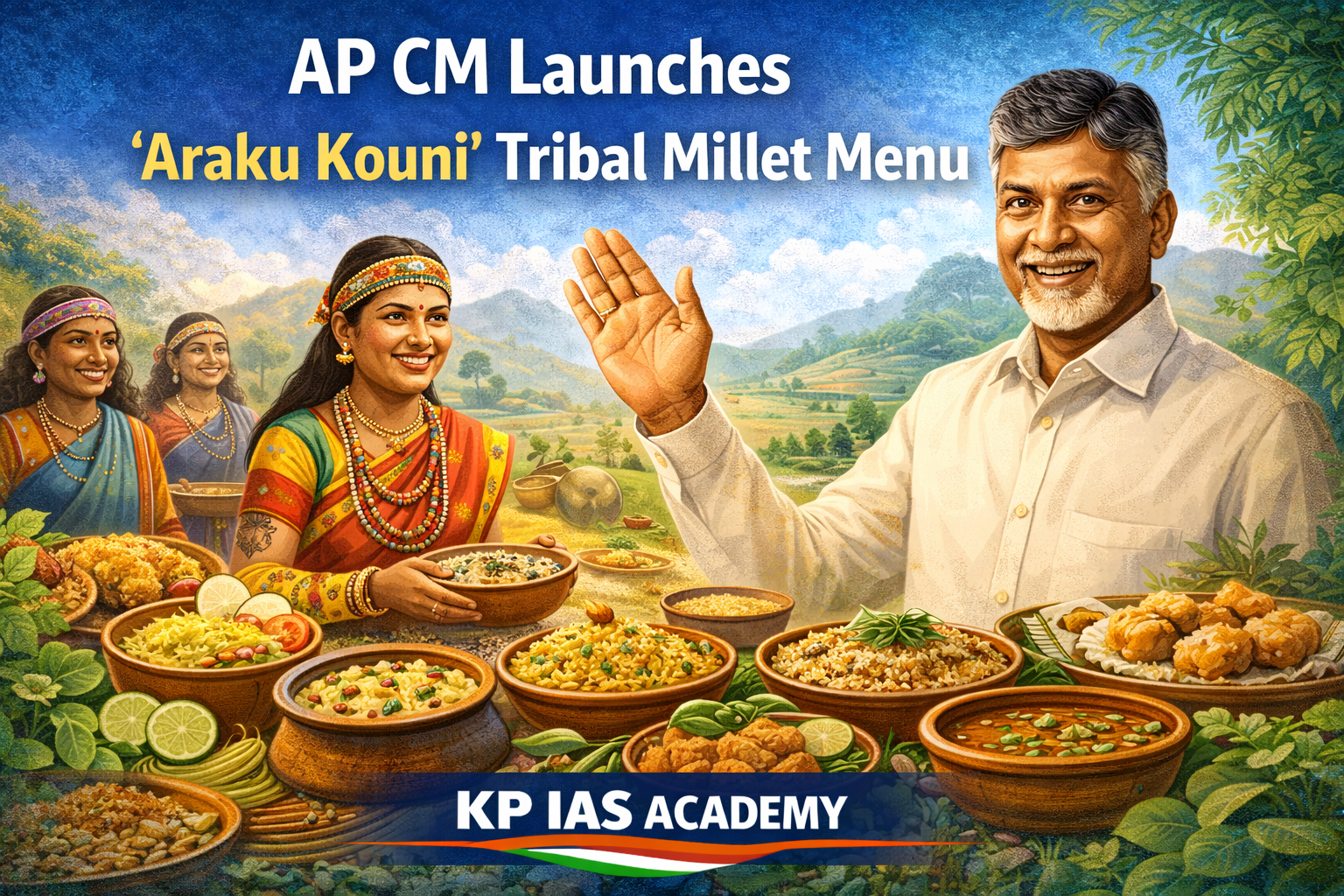
AP CM Launches ‘Araku Kouni’ Tribal Millet Menu
Table of Contents
Relevance: GS Paper III – Agriculture, Food Security & Inclusive Development (Millet’s promotion, tribal livelihoods, sustainable agriculture) GS Paper I – Indian Culture (Traditional food systems and tribal culture)
For Prelims:
- Araku Kouni, Tribal Millet Menu, Alluri Sitarama Raju (ASR) District, Andhra Pradesh Tourism Development Corporation (APTDC), Haritha Restaurants, Indian Culinary Institute Tirupati, Millets (Korra, Ragi, Samalu).
For Mains:
- Millets promotion, tribal livelihoods, sustainable agriculture, nutritional security, culinary tourism, indigenous food systems.
Why in News?
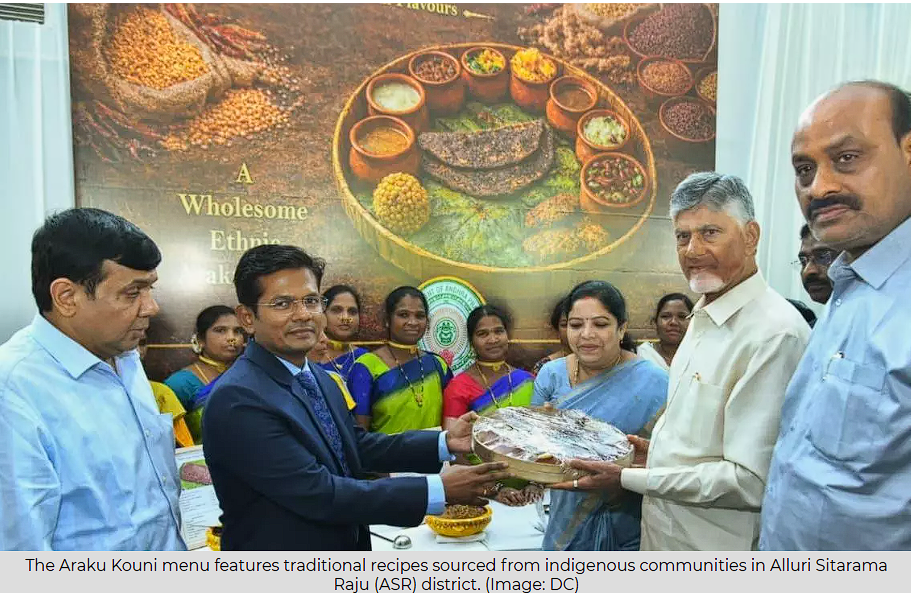
The Chief Minister of Andhra Pradesh, N. Chandrababu Naidu, launched ‘Araku Kouni’, the state’s first tribal millet-based food menu, during the Collectors’ Conference at the State Secretariat.
The initiative aims to promote traditional millet-based diets and highlight the culinary heritage of tribal communities in Andhra Pradesh.
About the ‘Araku Kouni’ Initiative
‘Araku Kouni’ is a tribal millet-based food menu inspired by traditional recipes of indigenous communities living in Alluri Sitarama Raju (ASR) district.
The initiative focuses on:
- Promoting traditional tribal food culture
- Encouraging healthy and nutritious millet consumption
- Supporting tribal farmers and local livelihoods
- Developing culinary tourism in the Araku region
The menu will initially be introduced in Haritha restaurants across ASR district and later expanded to other tourism centres across the state.
Key Features of the Tribal Millet Menu
The Araku Kouni menu includes traditional millet-based dishes such as:
- Korra Payasam
- Ragi Chapati
- Samala Pulihora
- Kantla Ambali
- Corn Vada
- Toor Dal Curry
Important Characteristics
- Recipes sourced from tribal communities of the Araku region.
- Ingredients grown in natural environments without chemical fertilisers or pesticides.
- Focus on nutritional value and traditional cooking methods.
Institutions Involved
Several institutions collaborated in developing the initiative.
Key Contributors
Alluri Sitarama Raju District Administration
- Led the initiative and coordinated implementation.
Indian Culinary Institute, Tirupati
- Documented recipes, nutritional value, and calorific index.
Tribal Anganwadi Workers
- Helped identify traditional recipes and local food practices.
Department of Tourism & APTDC
- Responsible for introducing the menu in Haritha tourism restaurants.
Significance of the Initiative
Promotion of Millets
- Millets such as Korra, Ragi and Samalu are highly nutritious and climate-resilient crops.
Tribal Livelihood Support
- Encourages cultivation of traditional crops by tribal farmers, improving rural incomes.
Nutritional Security
Millets provide high fibre, minerals, and essential nutrients, supporting healthy diets.
Cultural Preservation
Promotes indigenous food traditions and tribal culinary heritage.
Tourism Development
The initiative supports culinary tourism, attracting visitors interested in authentic tribal cuisine.
Conclusion
The Araku Kouni millet menu represents an innovative initiative to integrate tribal food traditions, nutrition, sustainable agriculture, and tourism promotion. By mainstreaming millet-based diets and supporting tribal communities, the programme contributes to inclusive development and preservation of indigenous cultural heritage.
CARE MCQ
Q. With reference to the ‘Araku Kouni’ initiative, consider the following statements:
- It is a tribal millet-based food menu launched in Andhra Pradesh.
- The recipes are derived from indigenous communities of Alluri Sitarama Raju district.
- The initiative aims to promote chemical-intensive agriculture in tribal regions.
How many of the above statements are correct?
(a) Only one
(b) Only two
(c) All three
(d) None
Answer: (b) Only two
Explanation
Statement 1 – Correct: ‘Araku Kouni’ is Andhra Pradesh’s first tribal millet-based food menu.
Statement 2 – Correct: Recipes were sourced from tribal communities in Alluri Sitarama Raju district.
Statement 3 – Incorrect: The initiative promotes naturally grown millet crops without chemical fertilisers or pesticides, not chemical-intensive farming.