Zimbabwe rolls out Lenacapavir; Science confirms HIV capsid is a strong drug target despite resistance
Table of Contents
Relevance (UPSC)
Health, Social sector; Role of international organisations (WHO, UNAIDS, Global Fund)
For Prelims:
- Lenacapavir, PrEP, PEP, ART, HIV capsid, Reverse transcriptase, Protease, Integrase, FDA (June 18, 2025), WHO early access, Global Fund, UNAIDS 95-95-95, Combination prevention
For Mains:
- Long-acting injectables, Adherence & stigma, Combination prevention strategy, Structural biology drug targets, Resistance “fitness cost”, Sub-Saharan Africa HIV burden, 2030 AIDS-free target
Why in News?
- Zimbabwe began rolling out Lenacapavir, the first twice-yearly injectable PrEP for HIV, making it an early adopter globally (launch on Feb 19, 2026).
- A new study shows that to escape lenacapavir, HIV must mutate the capsid in ways that damage its own fitness, reaffirming capsid as a strong drug target.

Background
- HIV drug history shows monotherapy fails due to rapid mutation and resistance.
- 1987 (4 years after HIV identified as the cause of AIDS): zidovudine (AZT) targeted reverse transcriptase, but HIV quickly evolved resistance due to copying “mistakes” during RNA→DNA conversion.
- This led to combination antiretroviral therapy targeting multiple viral proteins (reverse transcriptase, protease, integrase) — focusing on viral regions that are “must keep” for survival.
What is Lenacapavir?
What it is
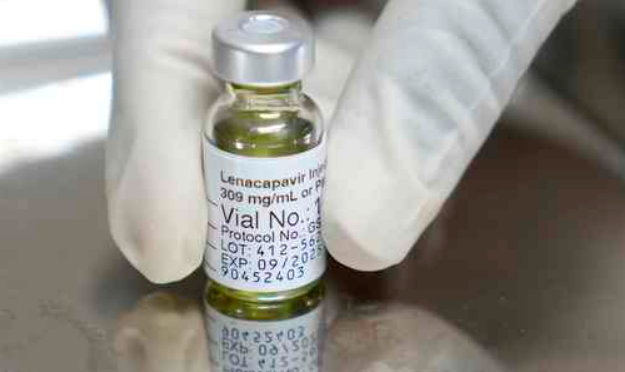
- First twice-yearly injectable PrEP: two doses per year for HIV prevention.
- A long-acting alternative to daily pills, useful for people facing:
- adherence difficulties
- stigma
- limited access to healthcare
- Developed by scientists at Gilead Sciences.
How it works as a long-acting drug (science detail)
- FDA approved (June 18, 2025) the world’s first capsid-based HIV inhibitor.
- Injected under the skin of the abdomen once every six months, forming a slow-release reservoir that steadily releases drug into bloodstream.
- In trials, it showed 100% effectiveness in preventing HIV infection in high-risk individuals (not a cure; described as “next best thing to a vaccine” in popular science coverage).
What it is NOT
- Not a vaccine
- Not for HIV-positive persons (PrEP is strictly for those who test HIV-negative)
- Does not replace: condoms, oral PrEP, other injectables, abstinence, faithfulness, etc.
- Does not replace ART for people living with HIV
Zimbabwe Rollout:
Where & when
- Rollout began Feb 19, 2026 in Epworth, a shanty settlement ~20 km south of Harare.
Scale
- Started with 46,000 doses.
- Targets 46,000+ high-risk people across 24 sites nationwide.
Funding
- Funded by the U.S. government and the Global Fund.
WHO early access
- Zimbabwe is among nine countries selected by WHO for early receipt of this next-generation prevention injection.
Priority groups
- Adolescent girls and young women
- Sex workers
- Homosexual communities
- Pregnant and breastfeeding women
- Others facing high social/economic vulnerability
Combination Prevention Strategy (Zimbabwe’s model)
Zimbabwe emphasised lenacapavir complements, not replaces, existing tools.
Principle
- No “magic bullet” can end HIV. A combination of proven interventions is needed.
Behavioural interventions (explicit list)
- Abstinence
- Monogamy / being faithful
- Reducing concurrent sexual partnerships
Biomedical interventions (explicit list)
- HIV testing and counselling
- Treatment (ART)
- Proper and consistent condom use
- Management of STIs
- PEP
- PrEP
Zimbabwe’s PrEP toolkit (WHO-recommended options adopted)
- Oral PrEP (2016)
- Dapivirine vaginal ring (2021)
- Long-acting injectable cabotegravir (2024)
- Lenacapavir (2026)
Zimbabwe notes it has progressively adopted all four WHO-recommended PrEP options.
Community messaging & misconception risk
- Bernard Madzima (National AIDS Council CEO): important for young women, who may lack power to negotiate condom use.
- Rev. Maxwell Kapachawo (activist pastor, openly HIV+ since 2005): warned misconceptions could make some people on ART wrongly default, thinking lenacapavir replaces daily treatment.
HIV Science Link: Why the Capsid Target Matters (Despite Resistance)
Why capsid became a target
- 1999 Science paper explained capsid folding into a unique protective 3D shape.
- Later, most capsid mutations were found to make HIV non-infectious → capsid is essential and fragile.
Resistance finding
- In treatment settings, resistance mutations appeared mainly when lenacapavir was effectively acting alone (without other fully active drugs).
- In proper combination therapy, suppression largely held.
- Lab-engineered resistant viruses often replicated at only 20–30% of normal levels even without drug → escaping lenacapavir damages the capsid and weakens HIV.
Implication
- Capsid is a high-constraint target: HIV cannot afford to change it too much.
- Opens door to:
- new capsid-focused drugs
- exploring protective shells of other viruses as drug targets
- Also highlights: breakthroughs often come from persistence, not sudden inspiration (solubility issue turned into long-acting advantage).
Broader Sub-Saharan Context
- HIV/AIDS has killed 44+ million since early 1980s.
- Of ~41 million people living with HIV globally, ~27 million are in Sub-Saharan Africa (~67%), despite the region having ~12% of global population.
- Global new infections declined 33%+ since 2005, but the region still faces:
- ~700,000 new infections annually
- ~300,000 AIDS-related deaths annually
- Young women (15–24) bear disproportionate burden.
Significance
- Adherence revolution: Two injections/year reduces pill fatigue and missed doses.
- Stigma reduction: More private than daily pills.
- Choice-based prevention: Expands PrEP options within combination prevention.
- Targets high-risk groups effectively: especially adolescent girls/young women.
- Science reassurance: capsid targeting remains strong because resistance weakens HIV.
- 2030 goal support: strengthens path to ending AIDS as public health threat.
Challenges/Concerns
- Misconceptions: PrEP vs ART confusion may cause ART default (needs communication).
- Testing requirement: PrEP must be given only to HIV-negative persons → strong screening + follow-up essential.
- Funding sustainability: reliance on external support (U.S. + Global Fund).
- Delivery capacity: scale-up beyond 24 sites, supply chain, trained workforce.
- Resistance risk in treatment misuse: “acting solo” lesson underscores need for correct regimens.
Conclusion
Zimbabwe’s early roll-out of lenacapavir shows how long-acting prevention can align with real-life barriers like adherence and stigma. Simultaneously, scientific evidence confirms that the HIV capsid is an excellent drug target: even when resistance emerges, it comes at a heavy cost to the virus. Together, these developments strengthen the case for long-acting, capsid-targeted strategies within a combination prevention framework to accelerate progress toward an AIDS-free future.
UPSC PYQ
Q. Which of the following diseases can be transmitted from one person to another through tattooing?
- Chikungunya
- Hepatitis B
- HIV-AIDS
-
- 1 only
- 2 and 3 only
- 1 and 3 only
- 1, 2 and 3
- Chikungunya is caused by a virus transmitted primarily by Aedes mosquitoes.
- It is not a blood-borne infection transmitted through contaminated needles.
- There is no standard evidence that it spreads through tattooing.
- Hepatitis B is a blood-borne viral infection (HBV).
- It can spread through:
- Contaminated needles
- Blood-to-blood contact
- Tattooing involves repeated skin piercing, creating a pathway for infected blood if equipment is not sterilised.
- HBV has a high transmission rate via needle exposure.
- HIV is also a blood-borne virus.
- It spreads through:
- Infected blood
- Contaminated needles
- Unsafe tattooing practices can transmit HIV if sterilisation is inadequate.
CARE MCQ
Q. With reference to Lenacapavir and HIV prevention, consider the following statements:
- Lenacapavir is the first twice-yearly injectable PrEP for HIV prevention.
- PrEP is meant for people living with HIV as a substitute for ART.
- Zimbabwe’s rollout began in Epworth, about 20 km south of Harare, with 46,000 doses across 24 sites.
- Resistance to lenacapavir can occur, but strong resistance mutations can reduce viral replication to about 20–30% of normal levels.
Which of the statements given above is/are correct?
- 1, 3 and 4 only
- 1 and 2 only
- 2 and 3 only
- 1, 2, 3 and 4
Answer: A
Explanation:
Statement 1 – Correct.
Lenacapavir is the first twice-yearly injectable PrEP for HIV prevention.
Statement 2 – Incorrect.
PrEP is for HIV-negative individuals. It does not replace ART, which is used for people living with HIV.
Statement 3 – Correct.
Zimbabwe’s rollout began in Epworth (20 km south of Harare) with 46,000 doses across 24 sites.
Statement 4 – Correct.
Resistance can occur, but strong mutations reduce viral replication to about 20–30%, showing a fitness cost.