Why in News?
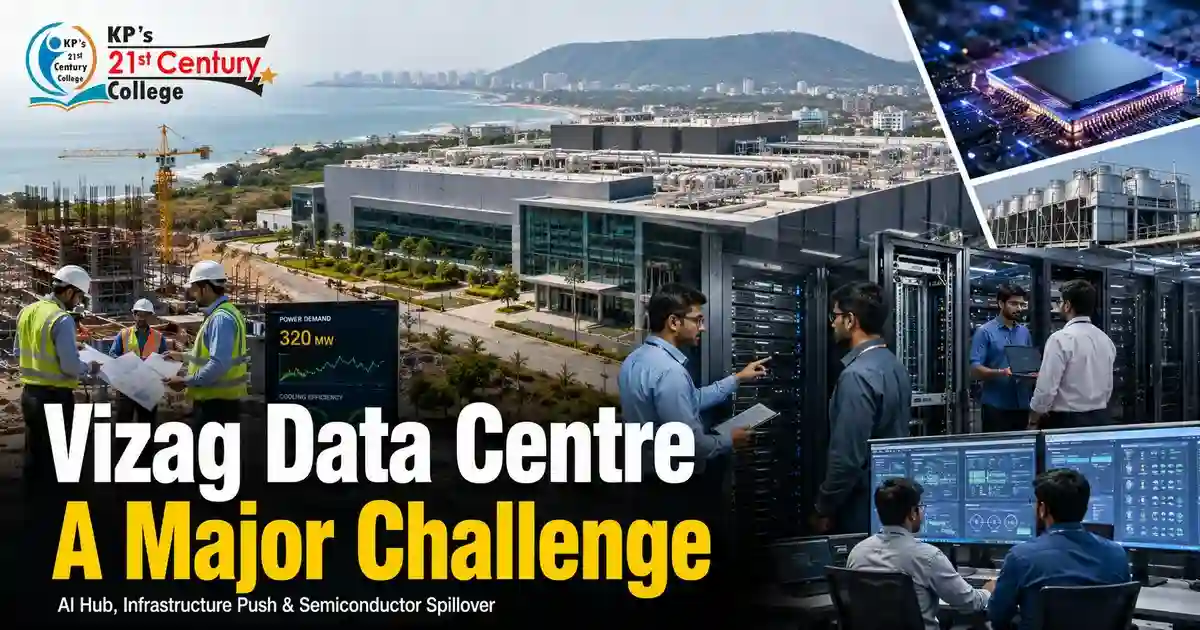
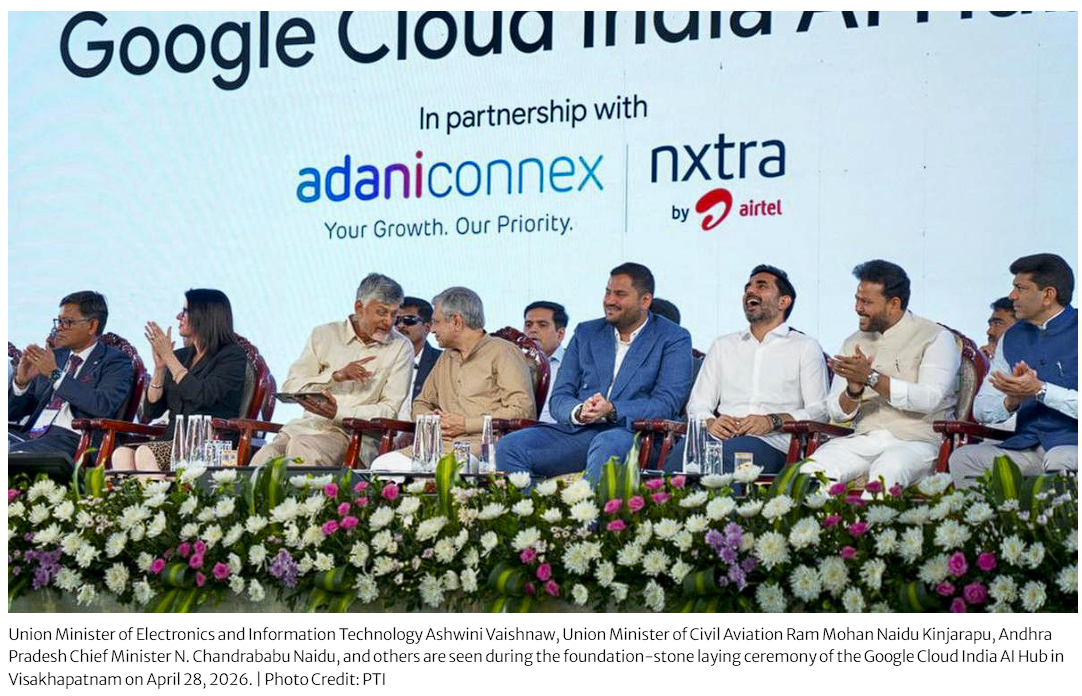
- Google and the Andhra Pradesh government recently broke ground for the Google Cloud India AI Hub in Visakhapatnam.
- The project is expected to involve a massive investment and includes a 1 GW hyperscale AI data centre, high-capacity digital connectivity and international subsea cable landing infrastructure. The project is being developed with partners such as AdaniConneX and Airtel Nxtra.
- The project is seen as a major step in India’s digital infrastructure growth. However, it has also raised concerns about power demand, water use, environmental safeguards, data sovereignty and dependence on foreign technology providers.
What is the Google Cloud India AI Hub?
The Google Cloud India AI Hub is a large digital infrastructure project proposed in Visakhapatnam, Andhra Pradesh.
It includes:
- A 1 GW hyperscale AI data centre
- High-performance computing infrastructure
- International subsea cable connectivity
- Cloud and AI services
- Digital ecosystem development around Visakhapatnam
A hyperscale data centre is a very large facility that stores, processes and manages huge amounts of data. It is used for cloud computing, artificial intelligence, machine learning, digital services and large-scale internet applications.
What is America-India Connect?
America-India Connect is Google’s international digital connectivity initiative.
It aims to develop new subsea cable routes linking India with other major regions. Google has stated that the initiative will develop a direct fibre-optic path between Vizag and Chennai on India’s east coast and connect it with routes towards South Africa and the United States.
This can make Visakhapatnam an important digital gateway on India’s eastern coast.
Strategic Significance of the Project
1. Moves India from IT Services to Digital Infrastructure
- India has long been known for software services and coding.
- The Vizag AI Hub represents a shift towards ownership of high-end digital infrastructure such as data centres, cloud systems and AI computing capacity.
- This is important for India’s ambition to become a global digital power.
2. Supports AI and Cloud Economy
Artificial intelligence requires large computing power.
A hyperscale AI hub can support:
- AI model training
- Cloud computing
- Data storage
- Digital public infrastructure
- Start-ups and enterprises
- High-performance computing services
This can strengthen India’s AI ecosystem.
3. Boosts Visakhapatnam as a Digital Gateway
- The project can make Visakhapatnam India’s second major gateway on the eastern seaboard.
- Subsea cable landing can improve global data connectivity and reduce dependence on existing routes.
- It can also reduce excessive dependence on older routes through Mumbai, Chennai or foreign-controlled cable paths.
4. Reduces Geopolitical Cable Risk
- Many data cables from India’s western coast pass through sensitive geopolitical zones such as the Red Sea.
- An eastern gateway through Visakhapatnam can provide alternative routes.
- This can improve digital resilience and reduce risk from geopolitical disruptions.
5. Supports Semiconductor and Hardware Demand
- Large AI data centres require servers, chips, GPUs, cooling systems and power equipment.
- This can indirectly create demand for high-end electronics and computing hardware.
- It may support India’s broader push for semiconductor and electronics manufacturing.
6. Promotes Regional Development
The project can move high-value technology activity beyond traditional metropolitan centres.
Visakhapatnam may attract:
- Cloud companies
- AI start-ups
- Technical manpower
- Data infrastructure firms
- Cable and network companies
- Renewable energy investments
This can help Andhra Pradesh build a new technology-driven growth corridor.
Major Challenges
1. Huge Power Demand
- The proposed hub may require around 1 GW of power.
- This is a very large electricity requirement for a single digital infrastructure facility.
- Such demand can strain the local grid and affect power availability for residents, small industries and other users.
2. Renewable Energy Challenge
- Google has pledged to use renewable energy.
- However, data centres need continuous power supply throughout the day.
- Since solar and wind power are intermittent, the project may still require backup systems, grid balancing and storage solutions.
- Backup diesel generators can affect local air quality.
3. High Water Requirement
- AI data centres generate large amounts of heat.
- In humid coastal conditions such as Visakhapatnam, efficient cooling can become difficult.
- If evaporative cooling is used, it may require large quantities of water.
- The article estimates that similar facilities may consume more than 2 million litres per day per 100 MW. For a 1 GW facility, this may mean nearly 20 million litres per day.
- This raises concerns because Visakhapatnam district periodically faces water stress, especially in summer.
4. Environmental Impact
Large data centres require land, power infrastructure, cooling systems, water supply and backup generators.
Possible environmental impacts include:
- Groundwater stress
- Increased water extraction
- Local air pollution from diesel backup
- Heat generation
- Pressure on land resources
- Carbon emissions if renewable supply is not truly additional
Therefore, environmental safeguards are essential.
5. Data Sovereignty Concerns
- The project can help Indian firms store and process data within India.
- However, dependence on a single foreign cloud provider may create risks.
- India may become a location for “sovereign AI” only in physical terms, while the technology stack, algorithms, cloud architecture and decision-making remain controlled by a foreign company.
6. Vendor Lock-in
- If Indian firms and public institutions depend heavily on one proprietary cloud system, they may face vendor lock-in.
- Vendor lock-in means users become dependent on one company’s technology and find it difficult or costly to shift to another provider.
- This can affect competition, digital autonomy and long-term bargaining power.
7. Public Consultation and EIA Concerns
- Rights groups have raised concerns that the project may have avoided a full environmental impact assessment and public hearings.
- For large infrastructure projects, public consultation is important because local communities may be affected by land use, water use, power infrastructure and environmental impacts.
Governance Issues
1. Need for Strong Environmental Benchmarks
State governments often offer tax holidays, land incentives and power subsidies to attract large investors.
However, these incentives should be linked with environmental conditions.
For data centres, benchmarks should include:
- Renewable energy targets
- Water-use limits
- Waste heat management
- Diesel generator restrictions
- Rainwater harvesting
- Wastewater recycling
- Local environmental monitoring
2. Need for Resource Accounting
Before approving such projects, governments should calculate their expected demand for:
- Power
- Water
- Land
- Backup fuel
- Cooling infrastructure
- Transmission systems
- Local ecological capacity
Without resource accounting, digital growth may create hidden environmental costs.
3. Need for Public Hearings
- Local communities should be informed about the project’s benefits and risks.
- Public hearings help identify local concerns related to land, water, employment and pollution.
- They also make the project more transparent and democratic.
4. Need for Data Governance Framework
India needs strong rules on:
- Data localisation
- Cross-border data flows
- Cybersecurity
- Cloud procurement
- Algorithmic accountability
- Critical digital infrastructure
- Competition in cloud services
This will ensure that digital infrastructure supports national interest.
Significance for Andhra Pradesh
The Vizag AI Hub can be a major opportunity for Andhra Pradesh.
It can help the state develop as:
- A digital infrastructure hub
- An AI and cloud services centre
- A subsea cable gateway
- A technology investment destination
- A new employment and skill development centre
However, Andhra Pradesh must balance this growth with environmental sustainability and local resource security.
Challenges for Andhra Pradesh
The state will need to manage:
- Power supply for the data centre and citizens
- Water availability in summer months
- Environmental clearances
- Land-related concerns
- Public consultation
- Local employment expectations
- Urban pressure on Visakhapatnam
- Long-term ecological impact
A project of this size can become a growth engine only if it is supported by transparent and sustainable planning.
Way Forward
1. Mandatory Environmental Assessment
Large hyperscale data centres should undergo full environmental assessment.
This should include power, water, land, emissions, cooling systems and local ecological impact.
2. Water-Neutral Data Centre Model
The project should use:
- Recycled wastewater
- Rainwater harvesting
- Zero liquid discharge systems
- Dry cooling where feasible
- Water replenishment projects
- Real-time water-use monitoring
Freshwater use should be strictly limited.
3. 24×7 Renewable Energy Matching
The company should not only buy renewable energy certificates.
It should ensure real-time clean energy supply through solar, wind, storage and grid balancing.
4. Strong Public Consultation
Local communities should be consulted before and during the project.
The government should publish clear information on land use, water demand, employment generation and environmental safeguards.
5. Avoid Vendor Lock-in
India should promote multi-cloud systems, open standards and domestic cloud capacity.
Public institutions should avoid complete dependence on a single foreign provider.
6. Data Sovereignty Safeguards
India must ensure that data storage in India is matched with Indian regulatory control, cybersecurity standards and accountability.
Sovereign AI should mean not only local data storage but also meaningful control over infrastructure, models and governance.
7. Central Guidelines for Data Centres
India needs national standards for large data centres.
These should cover:
- Energy efficiency
- Power usage effectiveness
- Water usage effectiveness
- Renewable energy use
- Public hearings
- Local resource accounting
- Disaster resilience
- Cybersecurity
Conclusion
The Google Cloud India AI Hub in Visakhapatnam is a major step in India’s digital infrastructure journey.
It can strengthen India’s AI ecosystem, improve global connectivity and make Andhra Pradesh a major digital gateway.
However, the project also shows that AI is not only a software issue. It is also an infrastructure issue involving power, water, land, environment and governance.
India must ensure that its rise in the digital economy does not weaken environmental protection or democratic accountability. The future of digital infrastructure should be technologically advanced, environmentally sustainable and socially responsible.