Why in News?
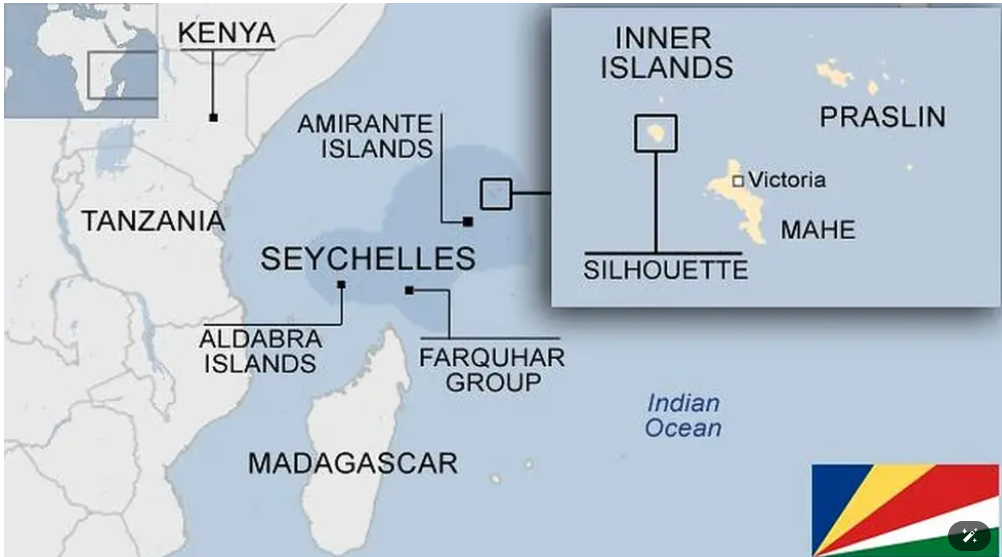
Prime Minister Narendra Modi visited Seychelles from June 27–29, 2026 and attended the country’s 50th National Day celebrations as the Guest of Honour.During talks with Seychelles President Patrick Herminie, both sides unveiled 19 outcomes covering defence, maritime security, digital payments, space, healthcare, agriculture, education and infrastructure.The Prime Minister described the Indian Ocean as a shared home, whose security, sustainability and prosperity are the common responsibility of regional countries.
Why is Seychelles Important for India?
Strategic Location
Seychelles lies close to important maritime trade routes connecting Asia, Africa and the wider Indian Ocean region.
Maritime Security
It is an important partner in addressing:
- Piracy
- Illegal fishing
- Drug trafficking
- Maritime crime
- Search-and-rescue operations
SAGAR Vision
Seychelles occupies a significant place in India’s SAGAR—Security and Growth for All in the Region—vision.
Link with East Africa
Greater connectivity with Seychelles can strengthen India’s trade and strategic engagement with East Africa and other Indian Ocean countries.
| Seychelles:
Defence Cooperation:
Historical and Migration Links
Indian Diaspora
Diplomatic Relations
Cultural Relations
Development Partnership India supports Seychelles through:
More than 1% of Seychelles’ population has received professional training in India. In 2026, India announced a $175 million Special Economic Package for Seychelles. Health Cooperation
Strategic Importance
|
What Were the Major Outcomes?
Defence Assistance
India announced:
- Gifting of a fast patrol vessel
- Ten utility vehicles
- Five Laser Radial-class boats
- Refit of Coast Guard vessel PS Zoroaster
- Upgradation of a Dornier aircraft with a glass cockpit
These measures strengthen Seychelles’ maritime surveillance and coastal-security capabilities.
Humanitarian and Development Support
India handed over:
- Six ambulances
- 500 tonnes of rice
- 8,500 tonnes of cement
A virtual ground-breaking ceremony was also held for a Professional and Technical Education Centre.
Digital and Financial Cooperation
An agreement between NPCI International Payments Limited and the Central Bank of Seychelles will facilitate the introduction of UPI-based digital payments.
Its significance includes:
- Faster digital transactions
- Improved payment connectivity
- Financial inclusion
- Greater use of Indian digital public infrastructure abroad
Health and Agriculture Cooperation
Healthcare
India and Seychelles agreed to:
- Prepare for a new Seychelles National Hospital
- Supply affordable generic medicines and medical products under the Jan Aushadhi Scheme
Agriculture
ICAR and the Seychelles Agriculture Department signed a cooperation framework for:
- Joint research
- Training
- Agricultural education
- Technical studies during 2026–31

Space, Shipping and Legal Cooperation
Space
The two countries signed an agreement on the peaceful uses of outer space, covering:
- Satellite applications
- Space technology
- Capacity building
Shipping
Seychelles agreed to recognise Indian seafarers’ training and certification for employment on Seychelles-flagged vessels.
Extradition Treaty
A new extradition treaty will strengthen cooperation against fugitives and transnational crime.
Development Finance
An umbrella Line of Credit agreement worth ₹1,250 crore was concluded between Seychelles and the Export-Import Bank of India.
It will support priority projects under the Special Economic Package, particularly in infrastructure and social development.
Climate Action and Blue Economy
Prime Minister Modi highlighted that small island nations face severe consequences of climate change despite contributing little to global emissions.
He called for climate action based on:
- Fairness
- Responsibility
- Equity
- Climate justice
India and Seychelles also agreed to deepen cooperation in:
- Renewable energy
- Green hydrogen
- Marine conservation
- Sustainable fisheries
- Blue Economy
Seychelles also announced its decision to join the Coalition for Disaster Resilient Infrastructure.
Diplomatic and Cultural Significance
- The visit marked 50 years of diplomatic relations between India and Seychelles.
- Prime Minister Modi became the first Indian Prime Minister to address an extraordinary sitting of the Seychelles National Assembly.
- He was also conferred the “Guardian of the Blue Horizon” honour for his green leadership, support for developing countries and promotion of the Blue Economy.
- India’s participation through Army and Navy contingents in the National Day celebrations reflected close defence ties and military cooperation.
Significance for India
- Strengthens India’s presence in the western Indian Ocean.
- Supports maritime-domain awareness and anti-piracy efforts.
- Expands India’s digital public infrastructure abroad.
- Counters the influence of external powers in the Indian Ocean.
- Deepens engagement with African and island nations.
- Promotes India as a reliable development and security partner.
- Advances the SAGAR vision and Global South cooperation.
Way Forward
- Strengthen joint maritime surveillance and information sharing.
- Complete development projects within agreed timelines.
- Expand UPI and digital-public-infrastructure cooperation.
- Promote renewable energy and climate-resilient infrastructure.
- Support marine conservation and sustainable fisheries.
- Increase defence training and capacity building.
- Improve connectivity between India, Seychelles and East Africa.
- Expand youth, education, tourism and cultural exchanges.
Conclusion
India–Seychelles relations combine maritime security, development cooperation, climate action and people-to-people ties. Seychelles’ strategic location makes it central to India’s vision for a secure and prosperous Indian Ocean.The 2026 visit expanded cooperation from traditional defence and development assistance to digital payments, space, healthcare and renewable energy. Sustained partnership based on mutual trust and respect can transform the Indian Ocean into an ocean of opportunity.
Why in News?
The launch of Bharat-VISTAAR, an AI-enabled farm advisory platform, has renewed focus on India’s digital agriculture push. While the ₹2,817-crore Digital Agriculture Mission promotes AgriStack, AI tools and digital crop surveys, poor rural broadband, unequal smartphone access and low digital literacy may exclude many farmers and deepen existing inequalities.
What is Digital Agriculture?
Digital agriculture refers to the use of data, digital platforms and advanced technologies across the agricultural value chain.
It includes:
- Artificial Intelligence-based farm advisories
- Satellite and geospatial monitoring
- Internet of Things-based sensors
- Smart irrigation systems
- Drones and agricultural robots
- Digital crop and land records
- Online agricultural markets
- Automated pest surveillance
- Digital credit and insurance systems
- Seed and input traceability
Its purpose is to improve productivity, reduce input costs, conserve resources, enhance market access and make agricultural services more transparent.
Key Benefits of Digital Agriculture
1. Universal Farmer Identity and Easier Credit
The AgriStack framework seeks to create an integrated agricultural Digital Public Infrastructure.
Its principal components include:
- Farmers’ Registry
- Geo-referenced village maps
- Crop Sown Registry
The Farmer ID can serve as a common digital credential for accessing:
- PM-KISAN benefits
- Kisan Credit Cards
- Minimum Support Price procurement
- Crop insurance
- Disaster compensation
By linking land, crop and beneficiary records, digital platforms can reduce paperwork, leakages and dependence on intermediaries.
However, such systems must recognise actual cultivators and not merely legal landowners.
2. AI-Based Precision Farming
AI platforms can combine:
- Satellite images
- Weather forecasts
- Soil data
- Field sensors
- Historical crop information
These platforms can provide plot-specific recommendations on:
- Crop selection
- Sowing time
- Irrigation schedule
- Fertiliser use
- Pest control
- Harvest planning
Such advisories can reduce resource wastage and increase productivity. Localised AI-based farming systems have demonstrated the potential to improve yields while conserving water.
3. Real-Time Pest Surveillance
- Digital image recognition enables farmers and extension workers to upload photographs of affected crops and obtain rapid pest diagnosis.
- The National Pest Surveillance System uses machine-learning models to support more than 65 crops and over 400 pest categories.
Real-time warnings can:
- Prevent large-scale crop losses
- Reduce indiscriminate pesticide use
- Improve the timing of interventions
- Support localised pest management
4. Scientific Use of Fertilisers
- Digital soil maps and automated soil analysis can help farmers apply nutrients according to the specific needs of a field.
- The government’s Soil Fertility Maps provide spatial information on soil nutrient status.
This supports:
- Balanced fertiliser use
- Reduced chemical overuse
- Lower production costs
- Improved soil health
- Better long-term productivity
5. Democratisation of Farm Mechanisation
- Small and marginal farmers often cannot purchase drones, sensors or advanced machinery.
- Digital platforms linked with Custom Hiring Centres can enable farmers to rent equipment on a pay-per-use basis.
- The Namo Drone Didi Scheme seeks to provide drones to selected women self-help groups for offering agricultural rental services.
This can:
- Extend precision spraying to small farms
- Reduce labour costs
- Generate rural service employment
- Promote women-led agricultural enterprises
6. Transparent Agricultural Markets
The National Agriculture Market, or e-NAM, connects physical agricultural markets through an electronic trading platform.
Digital markets can improve:
- Price discovery
- Inter-mandi bidding
- Online settlements
- Market information
- Competition among buyers
Farmers can compare prices across markets and reduce dependence on local cartels and commission agents.However, benefits depend on access to storage, assaying, logistics and digital skills.
7. Seed Traceability and Quality Control
The SATHI portal—Seed Authentication, Traceability and Holistic Inventory—seeks to create a unified seed traceability system.
Through QR-based verification, farmers can check:
- Seed origin
- Certification
- Quality standards
- Production and distribution chain
This reduces the risk of purchasing counterfeit or poor-quality seeds.
8. Faster Disaster Relief and Insurance
Digital Crop Surveys, satellite imagery and geo-tagged crop-cutting experiments can improve damage assessment.
The Digital General Crop Estimation Survey digitises crop-cutting experiments and provides more reliable yield information.
Digital systems can help governments and insurers:
- Assess crop losses quickly
- Reduce field-level delays
- Transfer compensation directly
- Improve insurance settlement accuracy
- Strengthen climate-risk protection
Major Government Initiatives
Digital Agriculture Mission
The Digital Agriculture Mission serves as the umbrella framework for technology-based agricultural services.
AgriStack
It includes three core registries:
- Farmers’ Registry: Provides a unique digital identity to farmers.
- Geo-referenced Village Maps: Digitally map agricultural land parcels.
- Crop Sown Registry: Records seasonal crop cultivation through Digital Crop Surveys.
Krishi Decision Support System
Krishi-DSS integrates:
- Satellite data
- Weather information
- Reservoir levels
- Soil conditions
- Groundwater trends
- Crop information
It provides a common geospatial platform for agricultural planning and policy decisions.
AI-Based Advisory Platforms
Bharat-VISTAAR
- It is an AI-powered agricultural helpdesk intended to provide farm-related information in multiple Indian languages.
Agri Param
- It is a domain-specific agricultural language model designed to convert complex agricultural data into localised advice.
Kisan e-Mitra
- It is a voice-based AI chatbot that answers questions regarding agricultural schemes in regional languages.
- These platforms can improve last-mile advisory delivery, particularly when designed for voice-based use.
Production and Market Platforms
Other major initiatives include:
- National Pest Surveillance System: AI-based pest detection and warning.
- e-NAM: National electronic agricultural market.
- DGCES: Digital crop-yield estimation.
- SATHI: Seed traceability.
- SMAM: Support for agricultural mechanisation and Custom Hiring Centres.
- Namo Drone Didi: Drone-based agricultural services through women SHGs.
Barriers to Digital Agriculture
1. Fragmented Landholdings
- Around 86% of Indian cultivators are small and marginal farmers.
- Small, scattered plots make high-cost technologies such as drones, GPS-guided tractors and sensor networks difficult to use independently.
- Digital agriculture must therefore rely on shared-service and cooperative models.
2. Exclusion of Tenant Farmers
Many digital systems depend on land titles for identifying beneficiaries.
Tenant farmers and sharecroppers often lack:
- Registered leases
- Formal tenancy documents
- Land ownership records
- As a result, they may be excluded from Farmer IDs, institutional credit, insurance and agricultural subsidies.A landowner-centric digital system can reproduce and deepen existing inequalities.
3. High Cost of Technology
- Drones, soil sensors, automated irrigation systems and weather stations require significant capital. Returns from these investments may take several crop seasons to materialise.Private investment also tends to concentrate in digital marketplaces rather than in affordable farm-level hardware.
4. Rural Infrastructure Deficit
- Precision agriculture requires reliable electricity, broadband connectivity and uninterrupted data transmission.Yet only about 8% of rural households reportedly have broadband connections, with most relying on mobile internet.Connectivity gaps are especially serious in remote and rain-fed agricultural regions.
5. Digital Literacy Gap
Digital access does not necessarily mean digital capability.
Survey findings indicate that:
- Around 39% of rural adults cannot use the internet for meaningful informational activities.
- Only 40% of smartphone-owning rural adults can undertake online transactions.
- Smartphone and internet access is lower among rural women, Scheduled Castes and Scheduled Tribes.
Without digital literacy, farmers may remain dependent on intermediaries even within supposedly direct digital systems.
6. Language and Accessibility Barriers
Many applications are initially developed in English or standard Hindi.
Farmers require:
- Regional-language interfaces
- Voice-based platforms
- Simple navigation
- Assisted access
- Offline functionality
Technology designed without local linguistic and cultural contexts may remain unused.
7. Fragmented Agricultural Data
Agricultural data is spread across multiple institutions:
- Weather data with the IMD
- Soil information with specialised and State agencies
- Insurance data under PMFBY
- Market data in APMC systems
- Land records with State governments
Lack of standardisation and interoperability weakens AI-based prediction and advisory systems.
8. Data Privacy and Federal Concerns
AgriStack involves collection of detailed information on farmers, land, crops and transactions.
Major concerns include:
- Unclear ownership of agricultural data
- Sharing of farmer data with private companies
- Inadequate informed consent
- Algorithmic profiling
- Predatory pricing
- Centre–State disagreements over data governance
Farmer data should not become a commercial asset without consent, accountability and benefit-sharing.
How Can Digital Agriculture Be Made Inclusive?
Strengthen Rural Connectivity
- Unused resources under Digital Bharat Nidhi should be deployed to expand broadband and fibre connectivity in remote agricultural areas.Rural internet must be treated as essential infrastructure, similar to roads, irrigation and electricity.
Recognise Actual Cultivators
Digital registries should include:
- Tenant farmers
- Sharecroppers
- Women cultivators
- Forest-dependent communities
- Oral lessees
Alternative verification methods should supplement formal land ownership records.
Convert KVKs into Digital Demonstration Centres
Krishi Vigyan Kendras can function as practical agri-technology hubs where farmers can directly experience:
- Drones
- Soil sensors
- Smart irrigation
- Digital marketplaces
- AI advisory systems
- Variable-rate fertiliser application
Demonstration and assisted use can build confidence and trust.
Promote Shared Technology Models
- Farmer Producer Organisations and Custom Hiring Centres should provide costly technologies through rental and pay-per-use arrangements.This can make advanced equipment accessible to smallholders without requiring individual ownership.
Train Digital Krishi Entrepreneurs
Rural youth can be trained as local technology service providers.
They can offer:
- Digital registration support
- Soil testing
- Drone spraying
- Crop imaging
- Advisory interpretation
- Cybersecurity assistance
This can create rural employment while solving last-mile implementation problems.
Establish Farmer Data Cooperatives
Farmer Producer Organisations can manage agricultural data collectively.
Data cooperatives can:
- Anonymise farm data
- Negotiate with agritech firms
- Protect farmer privacy
- Ensure benefit-sharing
- Generate community income
Farmers should have control over how their data is used.
Improve Interoperability and Data Governance
India needs common standards for agricultural databases and secure data exchange.
Digital systems should follow principles of:
- Informed consent
- Purpose limitation
- Data minimisation
- Transparency
- Accountability
- Farmer control
Combine Digital and Human Extension
Digital tools should supplement rather than replace agricultural extension workers.
The most effective model is likely to be phygital—combining digital platforms with local human assistance.
Conclusion
Digital agriculture can improve farm productivity, resource efficiency, market access, credit delivery and climate resilience.However, a technology-led transformation that depends on land ownership, expensive devices and advanced digital skills may exclude tenant farmers, women, smallholders and disadvantaged social groups.India must therefore move beyond merely creating platforms. It must build reliable rural connectivity, improve digital literacy, recognise actual cultivators, protect farmer data and promote shared access to technology.Digital agriculture will succeed only when it becomes farmer-centric, inclusive, multilingual, affordable and accountable.