
Relevance: TGPSC: Telangana history, Sarvai Papanna, Khillashapur Fort, Goud community, Bahujan leaders
For Prelims:
- Sarvai Papanna | Papadu | Khillashapur Fort | Bahadur Shah | Goud Community
For Mains:
- Subaltern history | Folk memory | Bahujan assertion | Regional resistance | Social banditry
Why in News
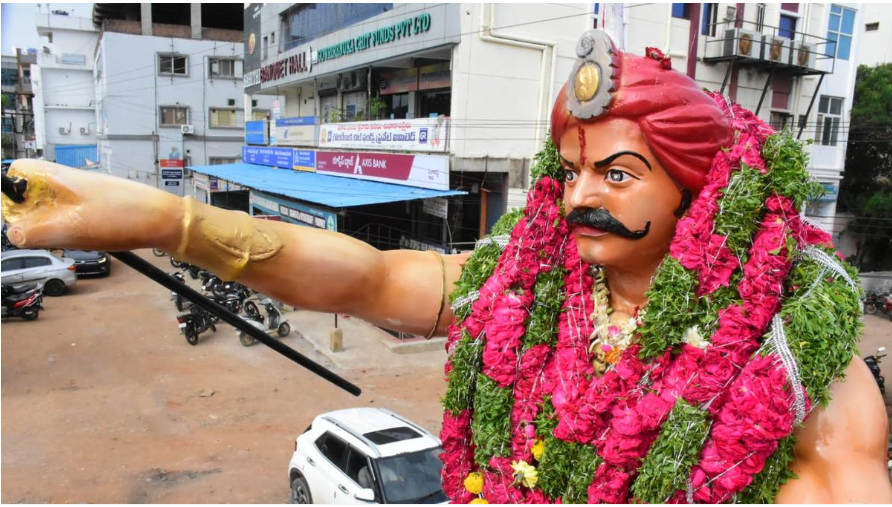
- A statue of Sarvai Papanna, also known as Papadu, is being unveiled near Hussainsagar Lake, Hyderabad.
- The statue is named Sri Sardar Sarvai Papanna.
- The event has renewed attention on his role as a Telangana folk hero, regional warrior and symbol of Bahujan assertion.
About Sarvai Papanna
- Sarvai Papanna was a regional warrior from Telangana.
- He was known as Papadu in his time.
- He belonged to the toddy-tapper Goud community.
- He rose to prominence in the first decade of the 18th century.
- He is remembered as a warrior who challenged Mughal authority in the Hyderabad-Telangana region.
Resistance Against Mughal Authority
- Papanna reportedly assembled an army of around 12,000 soldiers.
- His forces carried out attacks on:
- passing caravans
- houses of wealthy people
- fortified towns
- centres of local nobility
- Mughal historian Khafi Khan described his activities from the viewpoint of ruling authority.
- Folk memory, however, presents Papanna as a Robin Hood-like figure who redistributed wealth among the poor.
- The contrast shows two images of Papanna:
- elite records: rebel and threat
- popular memory: protector and people’s hero
Recognition by Bahadur Shah
- A major event in Papanna’s life was his recognition by Mughal emperor Bahadur Shah.
- He was reportedly given a ceremonial robe.
- This followed his contribution of ₹14,00,000 and provisions for the imperial army.
- This shows that Papanna had gained significant military, financial and political influence in the region.
Papanna in Folklore
- Telugu folklore preserved Papanna’s memory as a fearless warrior.
- Folk songs describe the terror created by Papanna among enemies.
- One folk stanza says that even animals and children trembled when they heard Papanna was coming.
- Folklore remembers him as:
- brave
- rebellious
- generous to the poor
- fearless before imperial power
- His story shows how oral traditions preserve people’s history beyond official records.
Association with Toddy-Tapper Community
- Papanna belonged to the Goud / toddy-tapper community.
- His image is commonly seen on toddy compounds in Telangana.
- He is often painted in a heroic pose with:
- ornaments
- a hawk on his hand
- a confident warrior appearance
- A popular line associated with him says:
“Papadu tagedi kallu, Ye tati, ye tati kalla!” - It reflects his association with toddy culture and community identity.
- His taste for special toddy is also linked in folklore to his eventual capture and death.
Khillashapur Fort and Regional Base
- Khillashapur Fort, about 100 km from Hyderabad, is closely associated with Papanna.
- It is a mud and granite fort connected with his activities.
- Papanna is believed to have used the fort as a stronghold.
- Hostages from raids on Warangal and Bhongir were reportedly kept there for ransom.
- The fort remains an important symbol of Telangana’s regional resistance history.
Papanna as a Social Bandit
- Historian Richard M. Eaton describes Papanna as a social bandit.
- A social bandit is:
- treated as an outlaw by ruling elites
- remembered as a hero by ordinary people
- Papanna fits this image because:
- he came from a marginalised community
- he challenged powerful elites
- he operated from difficult hill terrain
- he was celebrated in folk memory
- Areas linked to his activities include:
- Khillashapur
- Hasanabad
- Bhongir
- Warangal
- Tarikonda
Bahujan and BC Assertion
- Papanna’s identity as a Goud community leader has made him an important figure for the Backward Classes.
- His army reportedly included members of different social groups, including:
- Muslims
- washermen
- barbers
- potters
- basket-weavers
- other marginalised communities
- He is remembered as a warrior who fought for people-centred rule.
- His memory has become part of Bahujan political and cultural assertion in Telangana.
Conclusion
- Sarvai Papanna is an important figure in Telangana’s regional history.He challenged Mughal authority and became a powerful hero in folk memory.His rise from the Goud community highlights the role of marginalised communities in history.His life reflects regional resistance, social assertion and Bahujan identity.His story reminds us that Indian history must include voices from folk traditions, local struggles and subaltern communities.
CARE MCQ
Q.Which Mughal emperor bestowed a ceremonial robe on Sarvai Papanna?
(a) Aurangzeb
(b) Jahangir
(c) Bahadur Shah
(d) Shah Jahan
Answer: (c) Bahadur Shah
Explanation
Sarvai Papanna, also known as Papadu, was a prominent local warrior and folk hero of Telangana in the early 18th century. He challenged Mughal authority by organising a large armed force and carrying out attacks on wealthy groups, caravans and fortified towns.
However, at one stage, he gained formal recognition from the Mughal emperor Bahadur Shah. According to the passage, Bahadur Shah bestowed a ceremonial robe on Sarvai Papanna after he provided ₹14,00,000 and provisions for the imperial army.
FAQs
1. Who was Sarvai Papanna?
A regional warrior and folk hero from Telangana.
2. What was his popular name?
Papadu.
3. Which community did he belong to?
The toddy-tapper Goud community.
4. Why is he in news?
His statue is being unveiled near Hussainsagar Lake, Hyderabad.
5. Which fort is associated with him?
Khillashapur Fort.
6. Which Mughal emperor honoured him?
Bahadur Shah.
Relevance: GS Paper III: Agriculture, food processing, exports and farmers’ income
For Prelims:
- Coconut Development Board, milling copra, ball copra, NAFED, NCCF, PICCS, Neera, TMOC
For Mains:
- Multi-tier farming, plantation rejuvenation, value addition, farmer collectivisation, export diversification
Why in News?
India ranks first globally in coconut production. In 2025–26:
- Coconut-product exports reached ₹7,038.35 crore, registering a 62% annual increase.
- Around 2,175 hectares were added under cultivation.
- Nearly 1,672 hectares were covered under rejuvenation.
The Union Budget 2026–27 also announced the Coconut Promotion Scheme to address diseases, aging plantations, low productivity and limited processing.
Importance of Coconut
- Coconut is known as Kalpavriksha, the “Tree of Life” or the “Tree of a Thousand Uses.” It provides food, oil, beverages, medicine, fibre, coir, timber, fuel, handicraft material and industrial raw materials.
- Coconut cultivation in India has a history of nearly 3,000 years. The sector supports around 30 million people, including approximately 10 million farmers, most of whom are small and marginal cultivators.
India in the Global Coconut Economy
| Indicator | India’s Position |
| Global rank in production | 1st |
| Global rank in cultivation area | 3rd |
| Share in global production | 31.24% |
| Share in global area | 17.90% |
| Production in 2024–25 | 20,301.22 million nuts |
| Cultivated area | 2.19 million hectares |
| Average productivity | 9,249 nuts per hectare |
Leading States
- Kerala: Largest cultivated area—about 7.54 lakh hectares
- Tamil Nadu: Highest production
- Andhra Pradesh: Highest productivity
- West Bengal and Tamil Nadu follow Andhra Pradesh in productivity.
Kerala produces approximately 5,149.87 million nuts. Cultivation is also expanding into Odisha, Gujarat, Assam, Arunachal Pradesh and Chhattisgarh.
Coconut-Based Multi-Tier Farming
Multi-tier farming involves growing compatible fruits, vegetables, spices and plantation crops between coconut palms.
Benefits
- Provides income before palms begin yielding
- Improves land, water and sunlight utilisation
- Creates year-round employment
- Diversifies farmers’ income
- Reduces dependence on a single crop
Bastar Example
A farmer in Chhattisgarh planted around 2,500 coconut palms and integrated them with pineapple, dragon fruit, mango, citrus, banana, coffee and vegetables. The farm generated about ₹5–6 lakh annually from coconut and nearly ₹10 lakh from intercrops, showing the potential of coconut-based diversified farming.
Growth of Coconut Exports
- India’s coconut exports increased from only ₹25.3 crore in 2001–02 to ₹7,038.35 crore in 2025–26.
- During 2021–22 to 2025–26, export turnover rose from ₹3,236.83 crore to ₹7,038.35 crore.
Major Export Products
- Activated carbon
- Coconut oil and virgin coconut oil
- Coconut milk and water
- Fresh, frozen and grated coconut
- Copra
- Desiccated coconut
- Activated carbon accounts for the largest export volume.
- The market has expanded from the Middle East to Europe, the Americas and Australia. Major partners include the USA, UAE, Sri Lanka, Germany, Russia, Turkey, Belgium, the UK and the Netherlands.
Coconut Development Board
- The Coconut Development Board (CDB) was established on 12 January 1981. It functions under the Ministry of Agriculture and Farmers Welfare and is headquartered in Kochi.
- It works across 22 States and Union Territories and received ₹147.21 crore in 2025–26.
Major Functions
- Production of quality seedlings
- Expansion of coconut cultivation
- Productivity improvement
- Pest and disease management
- Replanting and rejuvenation
- Processing and product diversification
- Skill and enterprise development
- Market and export promotion
- Recommendations on MSP and trade policies
The CDB is the Export Promotion Council for coconut products other than husk and fibre products.
Minimum Support Price for Copra
Copra is the dried kernel of a mature coconut.
| Milling Copra | Ball Copra |
| Kernel is removed and dried | Whole coconut is dried with kernel inside the shell |
| Mainly used for oil extraction | Used as edible dry fruit and for religious purposes |
NAFED and NCCF are the Central Nodal Agencies for copra procurement under the Price Support Scheme.
MSP for the 2026 Season
| Type | MSP | Increase over 2025 |
| Milling copra | ₹12,027 per quintal | ₹445 |
| Ball copra | ₹12,500 per quintal | ₹400 |
Coconut
About Coconut
Global Distribution Coconut is widely grown in:
Distribution in India Major coconut-growing States include:
Uses Coconut is used as:
Climatic Conditions
|
Major Government Initiatives
1. Quality Planting Material
The programme supports seed farms, seed gardens, nurseries, accreditation and certification.
Demonstration-cum-Seed Production Farms
- ₹30 lakh for establishing a farm during the first two years
- Up to ₹1 lakh per hectare annually from the third year until yield stabilisation
- 2.41 lakh seedlings produced through 11 farms in 2025–26
Other achievements included:
- Twelve new nurseries with a capacity of 1.06 lakh seedlings
- Maintenance support to six nurseries
- ₹239.35 lakh for public-sector nurseries
- Production of 11.97 lakh planting materials, sufficient for about 6,850–7,500 hectares
2. Expansion of Cultivated Area
Assistance of ₹56,000 per hectare is released in two annual instalments.
- Maximum: Two hectares per beneficiary
- Minimum: 0.08 hectare or 20 cents
In 2024–25, 2,979 hectares were added, benefiting 13,068 farmers. In 2025–26, ₹632.77 lakh supported new plantations in Kerala, Tamil Nadu, Karnataka, Andhra Pradesh, Odisha, West Bengal, Gujarat, Assam and Arunachal Pradesh.
3. Productivity Improvement Through Coconut-Based Cropping System
PICCS is implemented through State departments and the CDB on a cluster basis.
Assistance
- 100% of eligible cost
- ₹42,000 per hectare
- Maximum two hectares per beneficiary
- Released in two annual instalments
Performance in 2025–26
- 18,800 hectares covered
- 48,696 farmers benefited
- 266 clusters formed
- ₹3,943 lakh provided
- State convergence covered another 5,935 hectares
The broader programme also supports farm ponds, community tanks, organic farming, mechanisation and post-harvest equipment.
4. Replanting and Rejuvenation
The programme replaces disease-affected, old and unproductive palms and improves the remaining gardens.
- Assistance: Up to ₹54,000 per hectare over two years
- Coverage during the previous five years: 25,517 hectares
- Expenditure: ₹130.46 crore
Technology, Processing and Marketing
Technology Mission on Coconut
The Technology Mission on Coconut supports:
- Pest and disease-management technologies
- Processing technologies
- Product diversification
- Commercial adoption of innovations
The CDB also provides quality testing, incubation, training and consultancy services.
Market Development
Up to 2025–26, the Board registered 8,299 exporters, increasing to around 8,700 by 31 July 2026.
During the previous five years, it facilitated:
- 72 entrepreneurs in 20 domestic trade fairs
- 224 exporters in international trade fairs
- 392 domestic buyer-seller meetings for 215 entrepreneurs
- Brand promotion for nine units
- Establishment of 15 retail kiosks
Procurement and primary processing centres help FPOs and cooperatives aggregate produce, reduce intermediaries and process milling copra, ball copra and tender coconuts.
Skill Development and Enterprise Creation
Friends of Coconut Tree
The programme trains unemployed youth in mechanical palm climbing, plant protection and entrepreneurship. It trained 378 climbers in 2024–25.
Cocomitra
It organises trained climbers into registered units of 6–10 members and provides climbing devices, tools and mobility support.
Kera Kaushal Kendra
It creates registered 15-member handicraft groups producing items from coconut shell, wood and fibre. Each approved centre is eligible for ₹2.67 lakh from 2026–27.
Neera Technician Training
Neera is the fresh, unfermented and zero-alcohol sap collected from coconut inflorescences. seven-day programme trains workers in scientific tapping and processing through licensed FPOs.
Kera Suraksha Insurance Scheme
It provides accident insurance to coconut climbers, Neera technicians, hybridisation workers and coconut labourers.
Coconut Promotion Scheme
Announced in the Union Budget 2026–27, the scheme addresses root wilt disease, pest outbreaks and aging plantations.
Key Components
- Large-scale production of quality seedlings
- Expansion into suitable areas
- Phased replanting and rejuvenation
- Holistic crop-health management
- Integrated processing units
- Value addition and export promotion
The scheme is part of a broader ₹350 crore allocation for high-value agriculture, including coconut, cashew and cocoa. It aims to improve farmers’ incomes and position India as a global leader in coconut and coir exports by the 2030s.
Significance
- Secures the livelihoods of small and marginal farmers.
- Generates employment in harvesting, processing and handicrafts.
- Promotes crop and income diversification.
- Expands exports of high-value products.
- Encourages rural enterprises and FPOs.
- Enables complete use of shells, husks, wood and fibre.
Challenges
- Aging and unproductive plantations
- Root wilt and pest outbreaks
- Droughts, cyclones and water stress
- Small and fragmented holdings
- Shortage of trained climbers
- Limited farm-level processing
- Price fluctuations
- Weak market access
- Strict export quality requirements
Way Forward
- Replace senile palms with high-yielding, climate-resilient varieties.
- Strengthen pest surveillance and crop-health services.
- Expand multi-tier farming and micro-irrigation.
- Develop processing clusters near production centres.
- Increase mechanical harvesting services.
- Strengthen FPO-led aggregation and marketing.
- Improve testing, traceability, packaging and certification.
- Promote complete utilisation of coconut by-products.
Conclusion
India’s coconut sector is moving from traditional cultivation to a diversified and export-oriented value chain. Higher productivity, plantation rejuvenation, value addition and organised marketing will be essential to make coconut farming more resilient, remunerative and globally competitive.
CARE MCQ
1. Consider the following statements regarding India’s coconut sector:
- India ranks first in global coconut production.
- Tamil Nadu has the largest area under coconut cultivation in India.
- Andhra Pradesh records the highest coconut productivity in India.
Which of the statements given above are correct?
(a) 1 and 2 only
(b) 1 and 3 only
(c) 2 and 3 only
(d) 1, 2 and 3
Answer: (b) 1 and 3 only
Explanation: India ranks first globally in coconut production. Kerala, not Tamil Nadu, has the largest area under cultivation. Tamil Nadu leads in total production, while Andhra Pradesh records the highest productivity.
FAQs
1. Why is coconut called Kalpavriksha?
Almost every part of the tree provides food, oil, fibre, fuel, timber or industrial raw material.
2. What is the Coconut Development Board?
It is a statutory body established in 1981 under the Ministry of Agriculture and Farmers Welfare to develop India’s coconut sector.
3. What are the main types of copra?
- Milling copra: Mainly used for oil extraction.
- Ball copra: Used as edible dry fruit and for religious purposes.
4. What is multi-tier coconut farming?
It involves growing fruits, vegetables and spices between coconut palms to increase land productivity and farm income.
5. What is PICCS?
It is a cluster-based programme that promotes productivity improvement through coconut-based cropping systems.
6. What is Neera?
Neera is the fresh, unfermented and zero-alcohol sap collected from coconut inflorescences.
Relevance: UPSC GS Paper III: Space Technology, ISRO, Lunar Exploration, Emerging Technologies
For Prelims:
- NASA Moon Base | Artemis Accords | Moon’s South Pole | Chandrayaan-4 | ILRS
For Mains:
- Space diplomacy | Lunar exploration | India-U.S. cooperation | Strategic technology partnership | Space Vision 2047
Why in News?
At the ninth meeting of the India-U.S. Civil Space Joint Working Group, held in Bengaluru on August 5 and 6, 2026, NASA formally invited ISRO to join its ambitious Moon Base programme under the framework of the Artemis Accords.
The invitation is important because India is already a member of the Artemis Accords since 2023, and ISRO is preparing for future lunar missions, including Chandrayaan-4 and a planned Indian crewed lunar mission by 2040.
What is NASA’s Moon Base Programme?
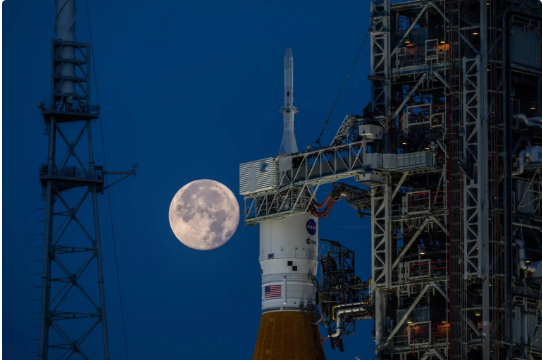
- NASA’s Moon Base programme is an ambitious lunar outpost plan.
- It aims to establish a long-term human presence on the Moon’s south pole.
- Astronauts are expected to live, work and conduct scientific activities from this lunar base over the next decade and beyond.
- The programme will involve both crewed and uncrewed missions.
- NASA and its international partners will execute the mission in a phased manner.
- The programme was announced on March 24, 2026, during NASA’s Ignition event.
- The project is expected to cost more than $20 billion.
The Moon Base programme is being projected as one of the most ambitious human space exploration programmes after the Apollo era.
Phases of the Moon Base Programme
NASA plans to execute the Moon Base programme in three phases.
1. Phase One: Access and Understanding — till 2029
- The first phase has already commenced.
- It will continue till 2029.
- The focus will be on gaining reliable access to the lunar surface.
- NASA will also try to build a deeper understanding of the Moon’s south polar environment.
- This phase is crucial for mapping risks, testing technologies and preparing for longer missions.
2. Phase Two: Infrastructure Deployment — till 2032
- The second phase will continue till 2032.
- NASA and its international partners will build on the lessons from Phase One.
- The aim will be to deploy the necessary infrastructure for continued lunar operations.
- This may include systems related to landing, mobility, communication, energy, scientific work and habitat support.
3. Phase Three: Long-Term Human Presence — from 2032 onwards
- The third phase is the most ambitious stage.
- It is expected to begin from 2032 onwards.
- NASA plans to populate the lunar south polar region with astronauts who can live and work there for extended periods.
- This phase will mark a shift from short-duration lunar visits to an enduring human presence on the Moon.
Why the Moon’s South Pole?
The Moon’s south pole is scientifically and strategically important.
- It has a highly volatile environment.
- Temperatures can range from around -203°C to 54°C.
- Some regions near the south pole never receive sunlight.
- These permanently shadowed regions may hold clues about the Moon’s origin and the evolution of the solar system.
- The hostile environment provides a testing ground for future exploration of Mars and Venus.
NASA sees the Moon as a stepping stone for deeper space exploration. Establishing a base at the south pole can help scientists study lunar geology, test survival technologies and develop systems needed for future planetary missions.
Global Lunar Race: U.S. and China-Russia Initiatives
- NASA’s Moon Base programme is not the only major lunar base plan.
- Russia and China are also working on a lunar base project called the International Lunar Research Station.
International Lunar Research Station
- It is being planned by Roscosmos of Russia and the China National Space Administration.
- The base is expected to be established in the next decade.
- It is planned as a permanent lunar base with a lunar satellite constellation.
- China aims to land humans on the Moon by 2030.
- Several countries have already shown interest in the ILRS framework.
- Russia has earlier indicated that it is open to India’s participation in the ILRS.
This shows that lunar exploration is becoming a major arena of international space competition and cooperation.
What are Artemis Accords?
- The Artemis Accords are a framework for international cooperation in lunar and deep-space exploration.
- They are linked with NASA’s Artemis programme.
- India signed the Artemis Accords in 2023.
- India became the 27th country to sign the Accords.
- The Accords provide a platform for collaboration in peaceful, transparent and responsible space exploration.
NASA’s invitation to ISRO is being made within this larger Artemis cooperation framework.
Why NASA Wants India’s Participation
NASA’s invitation to ISRO is significant because India has emerged as a major space power.
1. India’s Lunar Experience
India has gained important experience through the Chandrayaan missions. The upcoming Chandrayaan-4 mission is expected to collect lunar samples and bring them back to Earth.
2. Strategic Space Partnership
India and the United States have been expanding cooperation in space through the Civil Space Joint Working Group and the Artemis Accords.
3. Human Spaceflight Linkages
After signing the Artemis Accords, two Indian astronauts trained in the U.S. for the Axiom-4 mission to the International Space Station. Group Captain Shubhanshu Shukla eventually travelled to the ISS.
4. India’s Long-Term Space Vision
India’s Space Vision 2047 includes setting up the Bharatiya Antariksha Station by 2035 and carrying out an Indian crewed lunar mission by 2040.
5. Scientific and Technological Value
ISRO’s participation can strengthen lunar science, mission planning, space robotics, sample-return technologies and human spaceflight experience.
Possible Role of ISRO
ISRO’s exact role will depend on future discussions between India and the United States. However, based on India’s capabilities and planned missions, ISRO may contribute in several areas.
- lunar science and surface studies
- data sharing from Chandrayaan missions
- robotic exploration technologies
- communication and navigation support
- sample-return mission experience through Chandrayaan-4
- astronaut training and human spaceflight cooperation
- research related to lunar resources and south polar conditions
- long-term experience-building for India’s own crewed lunar mission
Participation in such a programme can give ISRO exposure to long-duration lunar habitation planning, international mission architecture and future space diplomacy.
Significance for India
1. Strengthens India-U.S. Space Cooperation
The invitation marks another step in India-U.S. cooperation in advanced space technologies.
2. Supports India’s Lunar Ambitions
The programme aligns with India’s plans for Chandrayaan-4, the Bharatiya Antariksha Station and a crewed lunar mission by 2040.
3. Enhances Scientific Capability
Working with NASA can help Indian scientists gain experience in lunar geology, polar exploration, space habitats and human survival technologies.
4. Boosts Space Diplomacy
India can use space cooperation to strengthen its role in global technology partnerships.
5. Helps Future Mars and Deep-Space Missions
The Moon can act as a testing platform for missions to Mars, Venus and other planetary bodies.
6. Expands Private Space Opportunities
Long-term lunar programmes can create opportunities for Indian start-ups, space manufacturers and technology companies.
Challenges
1. Strategic Balancing
India has to balance cooperation with NASA under the Artemis framework and possible engagement with other international lunar initiatives.
2. Cost and Technology Burden
Lunar base participation involves advanced technologies, high expenditure and long-duration mission planning.
3. Human Spaceflight Readiness
India is still building its human spaceflight ecosystem through missions such as Gaganyaan and future space station plans.
4. Technology Sharing Limits
Sensitive technologies may be subject to restrictions, making the depth of cooperation dependent on policy and trust.
5. Long-Term Commitment
A lunar base programme will require sustained funding, institutional focus and scientific continuity.
6. Legal and Governance Questions
Long-term lunar presence raises questions related to resource use, safety zones, scientific access and responsible space behaviour.
Way Forward
1. Define India’s Role Clearly
India should identify specific areas where ISRO can contribute without overextending resources.
2. Link with Chandrayaan-4
Experience from Chandrayaan-4 should be used to strengthen India’s lunar sample-return and surface-science capabilities.
3. Strengthen Human Spaceflight Capacity
Gaganyaan, astronaut training and life-support technologies should be aligned with long-term lunar goals.
4. Build Indigenous Capabilities
India should develop its own technologies in robotics, habitats, space medicine, energy systems and lunar surface mobility.
5. Encourage Private Sector Participation
Indian private space companies should be integrated into lunar technology supply chains.
6. Maintain Strategic Autonomy
India should cooperate internationally while preserving freedom to pursue its own space goals under Space Vision 2047.
Conclusion
NASA’s invitation to ISRO to join the Moon Base programme marks a significant moment in India’s space diplomacy. The programme aims to establish a long-term human presence at the Moon’s south pole and may shape the next phase of global lunar exploration. For India, participation can strengthen lunar science, human spaceflight capability and international technological cooperation. However, India must align such cooperation with its own priorities — Chandrayaan-4, the Bharatiya Antariksha Station, and a crewed lunar mission by 2040. A balanced approach can help India emerge as a major player in the new lunar era.

UPSC PYQ
Q. Which United States Moon mission failed to land on the Moon but safely returned its crew to Earth?
(a) Apollo-12
(b) Apollo-13
(c) Apollo-15
(d) Apollo-17
Answer: (b) Apollo-13
Explanation
Apollo-13 was a crewed Moon mission of the United States that was intended to land on the Moon. However, an oxygen tank explosion occurred during the mission, damaging the spacecraft’s power and life-support systems.
Due to this emergency, the crew abandoned the lunar landing attempt and returned safely to Earth. Apollo-13 is often remembered as a “successful failure” because the mission failed to land on the Moon, but all astronauts were brought back safely.
CARE MCQ
Q. With reference to NASA’s Moon Base Programme, consider the following statements:
- It aims to create a permanent research station on the Moon.
- It is expected to support astronauts and robots for prolonged lunar missions.
- It is designed only for short-term symbolic Moon landings.
Which of the statements given above are correct?
(a) 1 and 2 only
(b) 2 and 3 only
(c) 1 and 3 only
(d) 1, 2 and 3
Answer: (a) 1 and 2 only
Explanation
- Statement 1 is correct: The Moon Base Programme aims to establish a permanent research station on the Moon.
- Statement 2 is correct: It is planned for long-duration stay and work by astronauts and robots.
- Statement 3 is incorrect: It is not merely a short-term landing mission like Apollo; it is a long-term lunar settlement and research initiative.
FAQs
1. What is NASA’s Moon Base programme?
It is a plan to establish a long-term human outpost near the Moon’s south pole.
2. Why is it in news for India?
NASA has invited ISRO to join the programme under the Artemis Accords.
3. When did India join the Artemis Accords?
India joined in 2023.
4. Which country’s space agency is NASA?
The United States.
5. Where will the Moon Base be located?
Near the Moon’s south pole.
6. Why is the Moon’s south pole important?
It has extreme conditions and regions that may help scientists study the Moon and solar system.
7. What is Chandrayaan-4?
It is India’s planned lunar sample-return mission.
8. What is ILRS?
The International Lunar Research Station, planned by Russia and China.
9. What is India’s Space Vision 2047?
It includes the Bharatiya Antariksha Station by 2035 and an Indian crewed lunar mission by 2040.