Why in News?
Telangana has emerged as one of India’s strongest service-led economies, with over 62% GSVA share and 34.8% workforce employed in the services sector, as highlighted by recent NITI Aayog reports.
Introduction
- Over the past decade, Telangana has emerged as one of India’s strongest performers in the services sector, reflecting the State’s sustained policy focus on digital infrastructure, innovation, and IT-led economic transformation.
- According to the latest NITI Aayog reports, Telangana’s growth trajectory has been shaped by a consistent and strategic policy drive under the previous BRS government led by K. Chandrashekhar Rao.
A Decade of Transformation
- The twin NITI Aayog reports — “India’s Service Sector: Insights from Employment Trends and State-Level Dynamics” and “India’s Service Sector: Insights from GVA Trends and State-Level Dynamics” — highlight Telangana’s remarkable journey from 2011–12 to 2023–24.
- The share of the services sector in Telangana’s Gross State Value Added (GSVA) surged from 52.8% in 2011–12 to 62.4% in 2023–24, averaging 60.3% over the decade.
- 34.8% of the State’s workforce—around 6.2 million people—is employed in the services sector, well above the national average of 29.7%.
- This reflects Telangana’s transformation into a service-led economy, powered by rapid expansion in information technology, professional services, finance, real estate, and trade.
Digital and Innovation Ecosystem
- Hyderabad’s vibrant innovation ecosystem has been the driving force behind this growth. The creation of T-Hub, T-Works, WE-Hub, and the IMAGE Tower has positioned Telangana as a national leader in digital infrastructure and innovation. These institutions fostered collaboration between startups, industries, and academia, enabling the rise of new-age entrepreneurship.
- The State’s IT and ITES sectors saw a five-fold rise in startups—from about 400 in 2016 to nearly 2,000 by 2022. Hyderabad now hosts 1,500 IT/ITES companies employing over nine lakh people, including global giants like Google, Microsoft, Amazon, Infosys, TCS, Accenture, Wipro, and Tech Mahindra, which have expanded their operations during the BRS regime.

(Image Source: Telangana today)
Sectoral Composition and Urban Growth
The services sector in Telangana reflects a balanced and diversified structure:
- Real estate, professional, and urban services contributed 34.1% of GSVA, showcasing sustainable urban expansion.
- Trade and repair services accounted for 21.5%, while education, healthcare, and community services contributed 12.9%.
- This composition highlights both economic dynamism and social development through investments in human capital.
- The urban concentration of services is particularly strong — 66.6% of urban workers are engaged in the sector, compared to 18.9% in rural areas, underscoring the centrality of Hyderabad in the State’s growth model.
- However, this also reflects a rural–urban disparity, as most high-value service jobs are clustered in metropolitan areas.
Employment Trends and Gender Gaps
- While the sector has become a major engine of economic growth, employment patterns reveal significant structural nuances:
- 41.5% of men and 23.9% of women in Telangana are employed in the services sector, showing a persistent gender gap in workforce participation.
- The agriculture sector still remains the largest employer, especially in rural areas, with 42.5% of the population engaged in it.
- Within the services sector, key sub-segments dominate employment:
- Wholesale and retail trade – 28.2%
- Transportation and storage – 16.1%
- Information and communication – 12%
- Education – 9.3%
- Public administration – 5.9%
- These figures indicate that Telangana’s growth has not only been technology-driven but also employment-generating across a range of service domains.
Policy Drivers Behind the Success
Key contributing factors include:
- Massive investments in digital infrastructure enabling a globally connected IT ecosystem.
- Startup incubation and entrepreneurship promotion through flagship hubs like T-Hub and WE-Hub.
- Investor-friendly industrial and IT policies, which attracted both domestic and global companies.
- Proactive global outreach and branding of Hyderabad as a world-class investment destination.
- Skill development programs under TASK (Telangana Academy for Skill and Knowledge), bridging the gap between education and employability.
- These policies collectively promoted economic diversification and created quality employment opportunities across urban and peri-urban areas.
Challenges and the Road Ahead
Despite its success, the NITI Aayog reports identify key challenges:
- Urban Concentration: With 66.6% of service workers in cities, rural Telangana remains under-integrated into the service economy.
- Gender Disparity: Women’s participation (23.9%) remains significantly below men’s (41.5%).
- Skilling Gaps in Tier-2 Cities: Towns like Warangal and Karimnagar require targeted ICT expansion and skill training to attract service industries.
- To address these issues, NITI Aayog recommends:
- Expanding ICT infrastructure and startup incubation in Tier-2 cities such as Warangal and Karimnagar.
- Leveraging the Hyderabad–Warangal Industrial Corridor and logistics parks to boost transport-linked services.
- Encouraging female workforce participation through flexible employment models and digital skilling.
Conclusion
- Telangana’s experience over the past decade stands as a model of service-led development in India.
- The State’s ability to combine digital innovation, urban growth, and economic diversification has propelled it among the top-performing states in NITI Aayog’s services sector rankings, alongside Delhi, Chandigarh, Karnataka, Kerala, Bihar, and Maharashtra.
CARE MCQ
Q1. According to the recent NITI Aayog reports on India’s services sector, Telangana’s growth trajectory over the past decade is primarily attributed to which of the following factors?
- Development of a digitally driven, IT-centric economic model
- Establishment of innovation hubs like T-Hub, WE-Hub, and T-Works
- Expansion of the Hyderabad–Warangal Industrial Corridor and logistics parks
- Focus on agricultural mechanization and rural employment schemes
Select the correct answer using the code below:
a) 1 and 2 only
b) 1, 2, and 3 only
c) 2 and 4 only
d) 1, 3, and 4 only
Answer 1- B
Explanation
- Statement 1 is correct: Telangana’s sustained growth in the services sector was driven by a digitally driven, IT-centric economic model, which significantly boosted its Gross State Value Added (GSVA) from 52.8% in 2011–12 to 62.4% in 2023–24. This model prioritized IT, finance, professional services, and innovation-led growth.
- Statement 2 is correct: The establishment of innovation and startup hubs such as T-Hub, WE-Hub, and T-Works created a robust digital ecosystem that fostered entrepreneurship and attracted global technology investments, positioning Hyderabad as a national leader in innovation.
- Statement 3 is correct: The Hyderabad–Warangal Industrial Corridor and the development of logistics parks were recommended by NITI Aayog to strengthen transport-linked services and expand economic opportunities beyond Hyderabad into Tier-2 cities like Warangal and Karimnagar.
- Statement 4 is incorrect: The focus on agricultural mechanization and rural employment schemes relates to the primary sector, not to the services-led transformation highlighted in Telangana’s growth story.
- Therefore, option B is the correct answer.
Why in News?
Hyderabad has emerged as a Global Command Centre for multinational corporations, with Global Capability Centres (GCCs) like McDonald’s driving innovation, decision-making, and global operations from the city.
Introduction
- Hyderabad, long known for its IT prowess, has now firmly positioned itself as the epicentre of Global Capability Centres (GCCs) — facilities that are driving global innovation, strategy, and customer experience across continents.
- At the inauguration of the McDonald’s Corporation Global Office in Hyderabad, Telangana Deputy Chief Minister Mallu Bhatti Vikramarka described the city as a “global command centre,” where decisions made within its offices are shaping markets from Chicago to Charminar, Boston to Banjara Hills, and London to Lingampally.
McDonald’s Global Office: A Symbol of Trust and Transformation
- The newly inaugurated McDonald’s Corporation GCC marks another milestone in Hyderabad’s transformation into a hub of global corporate operations. Deputy CM Vikramarka emphasized that these centres reflect trust in local talent, faith in governance, and confidence in a shared future.
- McDonald’s, an American fast-food giant, has set up this centre as part of its global business services network, underscoring Hyderabad’s strategic importance in its worldwide operations.
- Facility Details:
- Spread across four floors, covering 156,496 sq. ft.
- Capacity: 1,200–1,500 employees
- Functions: Enterprise data and analytics, technology, human resources, and finance
- Objective: To support over 65 million customers worldwide each day

(Image Source: The Hindu)
Why Hyderabad?
- Industries and IT Minister D. Sridhar Babu highlighted the reasons behind Hyderabad’s growing dominance in the GCC landscape:
- Strong Talent Pool: Hyderabad’s universities and technical institutions produce a steady stream of skilled professionals in IT, analytics, and business services.
- World-Class Infrastructure: The city offers high-quality office spaces, robust digital connectivity, and a supportive business ecosystem.
- Proactive Governance: Consistent policy support and industry-friendly reforms have strengthened investor confidence. The government’s focus on skill development and employment generation further enhances its appeal.
- The Minister added that the arrival of McDonald’s adds to a growing list of global firms who have chosen Hyderabad — including giants from the technology, finance, healthcare, and manufacturing sectors. The hospitality sector is also joining this wave, with Marriott set to open its first GCC in the city soon.
GCCs: Beyond Back Offices
- Deputy CM Vikramarka stressed that Hyderabad’s GCCs are not mere back offices, but nerve centres of global innovation. These centres are where critical functions — from data-driven decision-making to digital transformation — are executed for multinational corporations.
- This evolution signals Hyderabad’s transformation from an IT outsourcing hub to a strategic global innovation powerhouse.
- He noted that just as McDonald’s has reinvented its supply chains, sustainability, and digital customer experiences, Hyderabad too is redefining itself as a city where technology and humanity go hand in hand.
Commitment to Social Responsibility: Ronald McDonald House
- Alongside the global office, McDonald’s Corporation announced plans to establish a Ronald McDonald House programme in Hyderabad.
- This global non-profit initiative provides support and essential resources for families whose children are battling serious illnesses or injuries.
- The initiative demonstrates McDonald’s broader commitment to community welfare alongside business growth.
Broader Significance: Hyderabad and the Global Economy
The inauguration of McDonald’s GCC is symbolic of a larger economic transformation:
- Integration into Global Supply Chains: Hyderabad is now directly connected to corporate headquarters and markets across continents.
- Rise of GCCs in India: India hosts over 1,600 GCCs, employing nearly 1.7 million professionals, contributing to innovation in sectors like AI, fintech, retail, and healthcare.
- Telangana’s Vision: The state government aims to leverage this momentum to make Hyderabad the “GCC capital of the world,” with an emphasis on sustainability, skill enhancement, and inclusive growth.
Conclusion
- The launch of McDonald’s Global Capability Centre in Hyderabad not only reflects the confidence of global corporations in Telangana’s governance and workforce but also cements the city’s place as a nerve centre of global business innovation.
- As Deputy CM Mallu Bhatti Vikramarka aptly stated, these GCCs are shaping global markets and customer experiences, positioning Hyderabad as a bridge between the world’s largest economies — from Chicago to Charminar.
CARE MCQ
Q2. With reference to the term “Global Command Centre”, often used in the context of Hyderabad’s Global Capability Centres (GCCs), consider the following statements:
- A Global Command Centre refers to a hub where multinational companies manage only their customer service operations.
- Hyderabad has become a key location for such centres, where global business decisions, analytics, and innovation are executed.
- These centres are limited to the Information Technology sector only.
Which of the statements given above is/are correct?
A. 1 and 2 only
B. 2 only
C. 1 and 3 only
D. 2 and 3 only
Answer 2- B
Explanation
- Statement 1 is incorrect: A Global Command Centre or GCC does not merely handle customer service; it performs high-value strategic functions such as data analytics, technology development, finance, and innovation.
- Statement 2 is correct: Hyderabad has emerged as a hub for GCCs where multinational corporations like McDonald’s, Microsoft, and others operate global decision-making and innovation processes.
- Statement 3 is incorrect: GCCs are not limited to IT; they span multiple sectors such as finance, healthcare, retail, and hospitality.
- Therefore, option B is the correct answer.
Why in News?
Former Chief Election Commissioner argues that India needs honest welfare, not reckless freebies, to protect democracy and fiscal stability.
Background
- The 2025 Bihar Assembly election has reignited the national debate over the ethics and economics of pre-election freebies.
- India’s democracy risks becoming an “auction” where votes are purchased through public money rather than earned through policies.
- There is a need for a clear distinction between legitimate welfare and fiscally reckless populism, urging institutional reform to preserve both democracy and fiscal discipline.
| Freebies
|
From Democracy to Auction Politics
- Elections are meant to celebrate democracy, but in India, they increasingly resemble auctions of public resources. In Bihar’s 2025 Assembly campaign alone, political promises amount to over ₹8 lakh crore annually — three times the state’s total budget.
- Nitish Kumar pledged free power, social pensions, and 1 crore jobs.
- Prime Minister Modi transferred ₹10,000 to 75 lakh women under a ₹7,500 crore pre-poll scheme.
- Tejashwi Yadav promised cash transfers, electricity subsidies, and government jobs for every family — a fiscal impossibility.
- This competition for populism exemplifies what Quraishi calls the weaponisation of welfare — the conversion of welfare measures into vote-buying tools.
Welfare vs. Freebies: Understanding the Difference
| Welfare | Freebies |
| Constitutional obligation to ensure food, education, health, and social security. | Short-term political handouts, often timed before elections. |
| Builds human capabilities (e.g., mid-day meals, MGNREGA, public health). | Creates dependency and fiscal stress. |
| Targets poverty reduction and long-term empowerment. | Aims at electoral gain and populist appeal. |
- Example:
- Mid-Day Meal Scheme improves nutrition and attendance → welfare.
- Pre-poll cash handouts without accountability → freebies.
The Hypocrisy of Political Vocabulary
- Tax breaks or subsidies for corporations are termed “incentives” or “reforms”.
- Small cash transfers for the poor are branded as “fiscal irresponsibility.”
- For instance, the 2019 corporate tax cut from 30% to 22% cost ₹1.45 lakh crore annually, yet it was hailed as bold economic reform. But similar spending on social transfers for the poor attracts criticism.
- This reveals a moral inconsistency in economic policymaking — welfare for the rich is “reform,” but for the poor, it is “populism.”

(Image Source: Indian Express)
Legal and Ethical Loopholes in Electioneering
India’s legal framework offers partial control over electoral freebies:
- Before the Model Code of Conduct (MCC): Ruling parties often rush to launch schemes before the MCC is enforced — legally permissible but ethically questionable.
- After MCC enforcement: Manifesto promises are exempt from restrictions.
In S. Subramaniam Balaji vs. State of Tamil Nadu (2013), the Supreme Court held that such promises do not constitute “corrupt practices” under Section 123 of the Representation of the People Act (RPA), even though they “shake the roots of free and fair elections.” - This paradox means:
- Offering a voter a cup of tea counts as bribery, but promising ₹2,500 per month to millions is legal.
Fiscal Consequences: The Price of Populism
- The Reserve Bank of India’s (RBI) Report on State Finances (2022–23) cautioned that fiscally overstretched states risk collapse.
- Punjab: 300 units of free electricity; debt-to-GSDP ratio = 47.2% (2023–24).
- Rajasthan: ₹56,000 crore spent on pre-poll schemes; state debt = ₹5.6 lakh crore.
- Bihar: Populist promises exceed ₹8 lakh crore — unsustainable for one of India’s poorest states.
- Who pays the price? Not the politicians or their parties, but taxpayers — present and future.
- Freebies today are taxation and economic distress tomorrow.
When Welfare Works: Positive Case Studies
Not all subsidies are economically unsound. History shows that targeted welfare can transform lives:
- N.T. Rama Rao’s ₹2/kg rice scheme (Andhra Pradesh, 1980s) curbed starvation deaths.
- Bicycle Scheme for girls (Bihar) boosted school enrolment by 30%.
- MGNREGA created employment security and rural income stability.
- The key lies in intent and outcome — welfare should empower citizens, not entice voters.
Socioeconomic Inequality: The Context of the Debate
- Despite decades of welfarism:
- The richest 1% own 51.5% of India’s wealth.
- The bottom 60% own just 5% (Oxfam India, 2022).
- India ranks 130th on the UN Human Development Index (2023).
- One-third of Indian children are malnourished.
- 81 crore people depend on free food grains.
- Hence, India’s welfare challenge is not excessive spending, but ineffective and politically distorted spending.
Judicial Developments: The Call for Reform
- In November 2023, the Supreme Court admitted a plea seeking to classify pre-poll freebies as corrupt practices under the RPA.
- Justice B.V. Nagarathna observed that “distribution of private goods to influence voters must be treated as a corrupt practice.”
- The Court also suggested setting up a constitutional body to define and regulate freebies — though the case remains pending.
Policy Recommendations
- Mandatory Costed Manifestos: Parties must publish fiscally verified cost estimates and face penalties for false declarations.
- Treat Cash Promises as Bribery: Direct pre-poll transfers to voter groups should be banned under RPA Section 123.
- Pre-Election Scheme Ban: No new welfare schemes should be introduced within six months before elections.
- Fiscal Transparency: Political parties must disclose how proposed schemes will be funded — via loans, new taxes, or reallocation.
- Link Welfare to Empowerment: Schemes promoting education, employment, and skill-building should be incentivised over consumption-based subsidies.
Conclusion: Towards Honest Welfare and Clean Elections
- India stands at a moral and economic crossroads. Elections cannot be auctions, and democracy cannot thrive on vote-for-cash populism.
- “India does not need less welfare — it needs honest welfare.
It does not need fewer elections — it needs cleaner elections.”
- “India does not need less welfare — it needs honest welfare.
- The ultimate choice lies between vote banks and the nation. Without reform, a democracy that runs on freebies risks running out of both money and meaning.
CARE MCQ
Q1. With reference to the debate on welfare and freebies in India, consider the following statements:
- In S. Subramaniam Balaji vs. Government of Tamil Nadu (2013), the Supreme Court ruled that election manifesto promises do not constitute corrupt practices under the Representation of the People Act, 1951.
- The Model Code of Conduct (MCC) prohibits political parties from including welfare schemes in their manifestos.
- Government of India in 2023 has formed a constitutional body be set up to define and regulate freebies in elections.
Which of the statements given above is/are correct?
A. 1 only
B. 1 and 3 only
C. 2 and 3 only
D. 1, 2 and 3
Answer 1- A
Explanation
- Statement 1 is correct: In S. Subramaniam Balaji vs. Government of Tamil Nadu (2013), the Supreme Court held that promises made in election manifestos do not amount to “corrupt practices” under Section 123 of the Representation of the People Act, 1951, though it acknowledged that such promises undermine free and fair elections.
- Statement 2 is incorrect: The Model Code of Conduct (MCC) does not prohibit welfare schemes in party manifestos. However, the Election Commission directs that manifestos should be consistent with constitutional principles and avoid influencing voters through unaccounted promises.
- Statement 3 is incorrect: As of 2023, the Supreme Court suggested the creation of a constitutional body to define and regulate freebies, but no such body has yet been formed by the Government of India.
- Therefore, option A is the correct answer.
UPSC PYQ
Q. Consider the following statements: (2021)
- In India, there is no law restricting the candidates from contesting in one Lok Sabha election from three constituencies.
- In the 1991 Lok Sabha Election, Shri Devi Lal contested from three Lok Sabha constituencies.
- As per the existing rules, if a candidate contests in one Lok Sabha election from many constituencies, his/her party should bear the cost of bye-elections to the constituencies vacated by him/her winning in all the constituencies.
Which of the statements given above is/are correct?
(a) 1 only
(b) 2 only
(c) 1 and 3
(d) 2 and 3
Ans: (b)
Why in News?
- A five-judge Constitution Bench of the Supreme Court began hearings on October 28, 2025, to decide criteria for determining seniority between promotee judges and direct recruits in the Higher Judicial Services (HJS).
Background
- India A five-judge Constitution Bench of the Supreme Court, led by Chief Justice B.R. Gavai, began hearings on October 28, 2025, to determine the criteria for seniority in the cadre of Higher Judicial Services (HJS).
- At the core of this issue lies a long-standing imbalance in promotion opportunities and career progression between two categories of district judges:
- Promotees – officers who rise through the lower judiciary, and
- Direct recruits – advocates appointed directly from the Bar.
- The Court’s decision will have far-reaching implications for judicial service structure, morale, and the composition of higher courts.
Dual Entry System in the District Judiciary
- Under the current framework, District Judges enter the Higher Judicial Service through two main routes:
- Promotion: from the ranks of Civil Judges (Junior Division) and Civil Judges (Senior Division).
- Direct Recruitment: from practicing advocates at the Bar.
- While promotees constitute around three-fourths of the total cadre, direct recruits often ascend more rapidly in seniority and promotion lists due to age and roster advantages.
The Core Issue: Disparity in Seniority
- The controversy arises because seniority is determined largely by the date of entry into the cadre, regulated through a 40-point roster system introduced after the All India Judges Association case (2002).
- Promotees generally reach the District Judge level in their mid-40s, after years in subordinate courts.
- Direct recruits usually join in their mid-30s, giving them more years of service before retirement.
- This difference, compounded by the way the roster system is implemented, means promotees often fall behind in gradation lists, affecting their eligibility for further promotion or elevation to High Courts.

(Image Source: Indian Express)
Evidence from High Court Data
Affidavits submitted by several High Courts revealed a consistent pattern of disparity:
- Bihar: Out of 91 Principal District & Sessions Judges, 86 were direct recruits and only 5 promotees. The court noted that soon all senior-most judges would be direct recruits.
- Uttar Pradesh: Of 70 officers at the District Judge level, 58 were direct recruits, 12 promotees.
- Bombay High Court: Since 2020, 19 District Judges were elevated to the High Court — 16 direct recruits, 3 promotees.
- Kerala High Court: Of 42 sitting judges, 15 were from the district judiciary — 10 direct recruits, 5 promotees.
- Rajasthan: Of 13 judges elevated from the judicial service, 12 were promotees, showing variation across states.
- Andhra Pradesh High Court: Recommended that 50% of High Court appointments from service officers be drawn from those who started as Civil Judges to ensure representation.
- These data sets demonstrate how direct recruits dominate senior ranks, leaving promotees with limited opportunities for higher posts or elevation.
Consequences of the Structural Imbalance
- Career Disadvantage: Promotee judges often reach senior positions near retirement, leaving minimal time for consideration for High Court elevation.
- Loss of Experience: The system sidelines officers with decades of trial court experience, which is vital for the higher judiciary.
- Demoralisation: The perception of unequal promotion prospects discourages both serving officers and young law graduates from joining at the entry level.
- Institutional Impact: The imbalance reduces the diversity of judicial experience at higher levels, potentially affecting judicial quality and representativeness.
Judicial Framework and the 2002 Reforms
- The foundation of the current system lies in the All India Judges Association case (1992–2002), where the Supreme Court sought to standardise service structures for the subordinate judiciary.
- Key directives from 2002:
- Recruitment Ratio: 75% by promotion, 25% by direct recruitment.
- Within the 75%:
- 50% by merit-cum-seniority,
- 25% through Limited Departmental Competitive Examination (LDCE) — a fast-track channel for talented Civil Judges.
- 40-point Roster System: Adopted from R.K. Sabarwal v. State of Punjab (1995) to ensure inter-se seniority based on roster slots rather than joining dates.
- However, implementation has been uneven and inconsistent across states, resulting in the very inequities the roster was designed to prevent.
| National Legal Services Authority (NALSA)
|
The 2025 Supreme Court Revisions
- In May 2025, the Supreme Court revisited and clarified the earlier framework to address implementation lapses:
- LDCE Quota Restored: Reaffirmed as 25% of the promotional intake (many states had reduced it to 10%).
- Eligibility Relaxed: Minimum qualifying service reduced from five years to three, facilitating faster progression for meritorious officers.
- Entry-Level Criteria: Reinstated the requirement of minimum three years of legal practice for Civil Judge applicants to ensure courtroom maturity.
- Quota Calculation Standardised: Directed that promotion quotas be based on total sanctioned strength, not on current vacancies, to prevent distortions.
- These clarifications aimed to streamline promotions and remove systemic bottlenecks, but issues of seniority and parity persisted — leading to the current constitutional bench hearing.
Why the Decision Matters
- The issue extends beyond administrative fairness; it concerns the functional balance and representational equity of India’s judiciary.
- The district judiciary forms the foundation of the judicial system, handling nearly 90% of all litigation in India.
- Many eminent judges of the Supreme Court — including Justice Bela M. Trivedi — have risen from this service stream.
- Ensuring fair progression from the district level is vital to maintain institutional continuity, morale, and judicial diversity.
- A fair and predictable seniority structure ensures that:
- Experience from the trial judiciary informs higher judicial decision-making.
- Judicial officers view their career path as transparent and rewarding.
- The judiciary reflects both merit and service experience, not age or entry route.
Conclusion
- The Supreme Court’s forthcoming judgment on the criteria for determining seniority in Higher Judicial Services will be a defining moment in judicial administration. It must strike a “proper balance” between:
- Rewarding merit and early entry, and
- Valuing experience and long service.
CARE MCQ
Q2. Consider the following provisions related to the recruitment in the Higher Judicial Services (HJS):
- 75% of vacancies are filled through promotion from the lower judiciary.
- 25% of vacancies are filled through direct recruitment from practicing advocates.
- Within the promotional quota, 25% is reserved for officers qualifying through the Limited Departmental Competitive Examination (LDCE).
Which of the statements given above are correct?
a) 1 and 2 only
b) 2 and 3 only
c) 1 and 3 only
d) 1, 2, and 3
Answer 2- D
Explanation
- Statement 1 is correct: As per the framework established in the All India Judges Association case (2002), 75% of vacancies in the Higher Judicial Services (HJS) are to be filled through promotion from the lower judiciary — i.e., from Civil Judges (Junior and Senior Divisions). This ensures that experienced judicial officers have upward mobility within the system.
- Statement 2 is correct: The remaining 25% of vacancies are to be filled through direct recruitment from practicing advocates with the required years of experience at the Bar. This allows infusion of external legal expertise into the judicial cadre.
- Statement 3 is correct: Within the 75% promotional quota, 25% of posts are reserved for officers selected through the Limited Departmental Competitive Examination (LDCE) — a fast-track channel meant to recognize and promote meritorious Civil Judges early in their careers.
- Therefore, option D is the correct answer.
UPSC PYQ
Q. With reference to the Indian judiciary, consider the following statements:(2021)
- Any retired judge of the Supreme Court of India can be called back to sit and act as a Supreme Court judge by the Chief Justice of India with the prior permission of the President of India.
- A High Court in India has the power to review its own judgement as the Supreme Court does.
Which of the statements given above is/are correct?
(a) 1 only
(b) 2 only
(c) Both 1 and 2
(d) Neither I nor 2
Ans: (a)
Why in News?
The European Union is considering a de-facto ban on ethanol-based products after the European Chemical Agency raised carcinogenic concerns.
Introduction
- The European Union (EU) is reportedly considering a de-facto ban on ethanol-based products following concerns raised by the European Chemical Agency (ECHA) over the potential carcinogenic risks associated with ethanol exposure.
- The proposal has triggered widespread debate not only in Europe but also in countries like India, where ethanol is increasingly used in fuel blending and consumer products such as sanitizers.
Background
- Ethanol (ethyl alcohol) is a volatile, flammable, and colorless liquid widely used in industries and daily life. Common applications include:
- Hand sanitizers and disinfectants (especially after the COVID-19 pandemic),
- Beverages (as alcohol content),
- Fuel blending in petrol (to reduce carbon emissions),
- Pharmaceutical and cosmetic manufacturing.
| Ethanol Blending
|
The EU’s Concern
- According to reports, the ECHA has identified potential carcinogenic effects linked to ethanol exposure, primarily citing risks from acetaldehyde and formaldehyde — by-products released during the burning of ethanol-blended fuels. These compounds are associated with cancer risk when exposure is prolonged or at high concentrations.
- However, the International Association for Soaps, Detergents and Maintenance Products (AISE) clarified that the data underpinning these concerns largely come from oral intake studies — focusing on excessive consumption of alcoholic beverages, not from normal environmental or occupational exposure to ethanol in sanitizers or fuels.

(Image Source: New Indian Exoress)
Ethanol in Fuels: The Double-Edged Sword
- The debate becomes more complex in the context of ethanol-blended fuels. While ethanol is promoted as a cleaner and renewable alternative to fossil fuels, its combustion can lead to:
- Increased emissions of acetaldehyde and formaldehyde, both recognized as carcinogenic compounds.
- However, ethanol blending also reduces other toxic emissions, such as carbon monoxide (CO) and certain hydrocarbons, thereby potentially improving overall air quality.
- Thus, the net environmental and health impact of ethanol fuel depends on the balance of pollutants produced, the engine technology, and the urban air quality context.
India’s Ethanol Policy and its Stakes
- India’s ethanol programme is closely tied to:
- Energy security – reducing crude oil imports.
- Environmental sustainability – promoting biofuels and lowering carbon emissions.
- Rural economy – generating demand for sugarcane, maize, and other biofuel crops.
- Any global regulatory shift against ethanol could affect:
- India’s fuel blending goals (E20 by 2025),
- Investments in bio-refineries and green energy infrastructure, and
- Farmers dependent on ethanol-linked agro-industries.
Scientific and Regulatory Balance
- While the EU’s precautionary stance underscores the importance of health and safety, experts warn against blanket bans without contextual scientific evidence.
Instead, a risk-based approach is recommended:- Continuous monitoring of emissions and exposure levels,
- Technological improvements in combustion and emission control,
- Public awareness on safe handling and usage of ethanol-based products.
Conclusion
- The proposed EU ethanol ban highlights the tension between environmental innovation and health safety. For India, the focus must remain on evidence-based policy decisions, sustainable biofuel development, and ongoing scientific evaluation of risks.
- Ethanol, when used responsibly and regulated effectively, remains a key transitional fuel in India’s journey toward cleaner energy and sustainable growth.
CARE MCQ
Q3. With reference to ethanol and recent global concerns about its usage, consider the following statements:
- The European Chemical Agency (ECHA) has raised concerns about ethanol due to emissions of acetaldehyde and formaldehyde during combustion.
- India aims to achieve 20% ethanol blending in petrol by the year 2025.
- Ethanol blending increases all forms of toxic fuel emissions without any environmental benefits.
Which of the statements given above is/are correct?
- 1 and 2 only
- 2 and 3 only
- 1 and 3 only
- 1, 2 and 3
Answer- A
Explanation
- Statement 1 is Correct: The European Chemical Agency (ECHA) has expressed concern that burning ethanol-blended fuels can lead to the release of acetaldehyde and formaldehyde, both of which are carcinogenic compounds. This concern has led the European Union to consider restrictions on ethanol-based products.
- Statement 2 is Correct: Under India’s Ethanol Blending Programme (EBP), the government has set a target of achieving 20% ethanol blending in petrol by 2025 (E20 target). This is aimed at reducing crude oil imports, promoting clean energy, and supporting the rural economy through biofuel production.
- Statement 3 is Incorrect: Ethanol blending does not increase all forms of toxic emissions. While it may increase acetaldehyde and formaldehyde emissions, it reduces other pollutants such as carbon monoxide (CO) and unburned hydrocarbons, offering net environmental benefits in terms of cleaner combustion and lower greenhouse gas emissions.
- Therefore, option A is the correct answer.
UPSC PYQ
Q. According to India’s National Policy on Biofuels, which of the following can be used as raw materials for the production of biofuels? (2020)
- Cassava
- Damaged wheat grains
- Groundnut seeds
- Horse gram
- Rotten potatoes
- Sugar beet
Select the correct answer using the code given below:
(a) 1, 2, 5 and 6 only
(b) 1, 3, 4 and 6 only
(c) 2, 3, 4 and 5 only
(d) 1, 2, 3, 4, 5 and 6
Ans: (a)
Why in News?
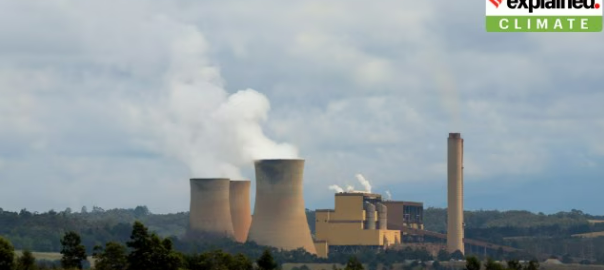
The Oil Change International (OCI) report “Planet Wreckers: Global North Countries Fueling the Fire Since the Paris Agreement” reveals that developed nations like the US, Australia, Canada, and Norway have expanded fossil fuel production despite their climate pledges.
Introduction
- Nearly a decade after the Paris Agreement (2015), which aimed to limit global temperature rise to 1.5°C above pre-industrial levels, the world is drifting away from this goal.
- A new analysis by the advocacy group Oil Change International (OCI), titled “Planet Wreckers: Global North Countries Fueling the Fire Since the Paris Agreement”, exposes how major developed countries continue to expand fossil fuel production while neglecting their climate finance commitments.
(Image Source: New Indian Express)
Key Findings of the Report
- Countries Identified: Australia, Canada, Norway, and the United States.
- Increase in Production: These four nations collectively increased their oil and gas production by 14 million barrels of oil equivalent per day (boe/d) between 2015 and 2024 — a 40% rise since the Paris Agreement.
- Contribution to Global Increase:
- The United States alone accounts for over 90% of the net global increase in oil and gas extraction during this period, with production up by 11 million boe/d.
- Australia’s production rose by 77%, the highest growth rate among the top 15 global producers.
- Meanwhile, production in the rest of the world actually fell by 2% cumulatively over the same period.
Contradiction with Global Commitments
- At COP28 (Dubai, 2023), countries had agreed to “transition away from the fossil fuel era” by 2030.
- However, these four nations—often seen as champions of climate action—have continued expanding oil and gas extraction, contradicting both:
- The scientific consensus on the need for rapid decarbonisation.
- Their moral and legal obligations under the Paris Agreement.
- Romain Ioualalen, Global Policy Lead at OCI, termed this expansion a “blatant mockery of justice and equity”, highlighting that these nations are worsening global warming while the developing world bears its consequences.
The Climate Finance Deficit
Under the Paris Agreement, developed nations (Global North) are legally bound to provide climate finance to developing countries (Global South) to:
- Support their transition to low-carbon economies, and
- Help them adapt to climate impacts and manage loss and damage.
- However:
- Since 2015, the Global North has paid only $280 billion, far below the required $1–5 trillion annually.
- In contrast, they provided $465 billion in fossil fuel subsidies for production and distribution infrastructure (pipelines, etc.).
- Oil and gas companies headquartered in the Global North earned profits five times higher than the total climate finance paid.
- Six oil majors—ExxonMobil, Chevron, Shell, TotalEnergies, BP, and Eni—made over $580 billion in profits since 2015, double the total climate finance provided.
- This financial imbalance underscores a double standard—while the Global North demands emission cuts from developing nations, it continues subsidising and profiting from fossil fuels.
Environmental and Climatic Repercussions
- The relentless fossil fuel expansion by the Global North has shrunk the global carbon budget—the maximum CO₂ that can be emitted while keeping warming below 1.5°C.
- Current Status:
- Scientists warn that at the current rate of emissions, the 1.5°C carbon budget could be exhausted within two years.
- Breaching this threshold would trigger severe climatic disruptions.
- Expected Consequences:
- According to the Intergovernmental Panel on Climate Change (IPCC):
- Increase in frequency and intensity of extreme weather events, including floods and droughts.
- Warmer oceans, leading to stronger and faster-forming hurricanes.
- More intense wildfires and accelerated polar ice melt, contributing to sea-level rise.
- Many of these effects are already visible globally, from record-breaking heatwaves to catastrophic floods and wildfires.
Implications for the Global South
- Developing countries, already vulnerable to climate impacts, require substantial financial and technological support to transition to clean energy systems.
- Without adequate climate finance, the loss and damage from extreme events will further deepen inequality and developmental challenges.
- Failure of the Global North to meet financial and emission-cut commitments risks breaching the 1.5°C target, making adaptation costlier and more difficult.
The Equity Dimension
The crisis exposes the inequity in global climate governance:
- The Global North, which historically contributed most to emissions, continues extracting and profiting from fossil fuels.
- The Global South, least responsible for emissions, faces the brunt of climate disasters with minimal support.
- This undermines the principle of Common but Differentiated Responsibilities (CBDR), a foundational pillar of international climate agreements.
Way Forward
- Phase-out Fossil Fuels: Developed countries must lead the global transition by halting new oil and gas projects and setting timelines for a complete phase-out.
- Fulfil Climate Finance Commitments: Ensure transparent, adequate, and predictable financial transfers to developing nations — moving towards the $1–5 trillion annual requirement.
- Redirect Fossil Subsidies: Redirect subsidies and tax breaks from fossil fuels to renewable energy, green infrastructure, and climate resilience programs.
- Accountability Mechanisms: Strengthen international mechanisms to monitor and enforce commitments under the Paris Agreement.
- Support Just Transition: Climate finance should also fund just transition programs for workers and communities dependent on fossil fuel industries.
Conclusion
- The OCI report underscores a grim paradox: while nations of the Global South are urged to curb emissions, the Global North continues to expand fossil fuel extraction and underfund climate commitments.
- If this trend persists, the world risks crossing the 1.5°C threshold, leading to irreversible climate breakdowns. To restore faith in global climate justice, wealthy nations must align their actions with their words, honouring both emission reduction and finance obligations to ensure a sustainable and equitable future.
CARE MCQ
Q4. According to the “Planet Wreckers” report by Oil Change International (OCI), which of the following statements are correct?
- The United States accounts for over 90% of the global increase in oil and gas extraction since the Paris Agreement.
- Australia recorded the highest growth rate in fossil fuel production among the top 15 global producers.
- The Global North has met its annual climate finance commitment of $1–5 trillion to the Global South.
- The report criticizes developed nations for expanding fossil fuel production while underfunding climate finance.
Select the correct answer using the code below:
a) 1, 2 and 4 only
b) 1 and 3 only
c) 2, 3 and 4 only
d) 1, 2, 3 and 4
Answer 4-A
Explanation
- Statement 1 is Correct The report highlights that the United States alone accounts for over 90% of the net global increase in oil and gas extraction between 2015 and 2024, making it the largest contributor to fossil fuel expansion since the Paris Agreement.
- Statement 2 is Correct Among the top 15 global producers, Australia recorded the highest growth rate (77%) in fossil fuel production, reflecting its continued investment in oil and gas despite global climate commitments.
- Statement 3 is Incorrect: The Global North has not met its climate finance obligations.
Instead of providing the required $1–5 trillion annually, developed nations have contributed only $280 billion since 2015 — far below the agreed target under the Paris Agreement. - Statement 4 is Correct: The OCI report criticizes developed nations such as the US, Australia, Canada, and Norway for expanding fossil fuel production while underfunding climate finance, contradicting their climate pledges and undermining global equity.
- Therefore, option A is the correct answer.
UPSC PYQ
Q. With reference to the Agreement at the UNFCCC Meeting in Paris in 2015, which of the following statements is/are correct? (2016)
- The Agreement was signed by all the member countries of the UN and it will go into effect in 2017.
- The Agreement aims to limit the greenhouse gas emissions so that the rise in average global temperature by the end of this century does not exceed 2°C or even 1.5°C above pre-industrial levels.
- Developed countries acknowledged their historical responsibility in global warming and committed to donate $1000 billion a year from 2020 to help developing countries to cope with climate change.
Select the correct answer using the code given below.
(a) 1 and 3 only
(b) 2 only
(c) 2 and 3 only
(d) 1, 2 and 3
Ans: (b)
Why in News?
India’s graduate employability rate remains low at around 42.6%, highlighting a widening gap between academic training and industry requirements
Background
- India today stands at the intersection of two compelling realities: a rapidly expanding pool of educated youth and an economy that is evolving faster than its workforce preparation systems.
- Despite producing millions of graduates each year, only 42.6% of them are considered employable, according to national employability surveys.
- This statistic is more than a number — it is a mirror reflecting a deep structural disconnection between higher education and labour market requirements. If India’s demographic dividend is to become a true economic advantage, bridging the gap between academia and industry must be a national priority.
Understanding Employability
- Employability goes beyond mere employment. It refers to the capability of an individual to gain and maintain meaningful work — a blend of:
- Knowledge (academic and technical),
- Skills (practical, interpersonal, analytical), and
- Mindset (adaptability, resilience, ethics, and curiosity).
- A graduate is employable when they can learn, unlearn, and relearn, and when organizations perceive value in their contributions beyond academic credentials.
The Employability Paradox
- India produces over 12 million graduates annually, yet industries across sectors — from technology to manufacturing — often report a shortage of “job-ready” talent.
This paradox arises because academia and industry function on parallel tracks. - The education system focuses on credentialing, while industry demands competency. The result: young professionals start their careers unprepared, underconfident, and underproductive.

(Image Source: The Hindu)
Roots of the Divide
A. Academic Challenges
- Outdated Curriculum: Many institutions continue to teach as if the workplace remains static. The curriculum rarely keeps pace with rapid transformations in technology, sustainability, and digital business models.
- Theory-based Learning: Classrooms emphasize lectures, rote assessments, and standardized examinations, with limited exposure to real-world problem-solving or interdisciplinary collaboration.
- Inadequate Soft-skill Training: Communication, teamwork, leadership, and adaptability — crucial for employability — receive minimal attention in academic programs.
- Faculty and Infrastructure Limitations: Faculty often lack contemporary industry experience, and laboratories or innovation hubs remain underdeveloped in most institutions.
B. Industry-side Gaps
- Expectation Mismatch: Employers expect “job-ready” graduates but are unwilling to invest sufficiently in early-career mentoring and skilling.
- Rapid Technological Change: Skills become obsolete quickly; industries need agile learners, but academia rarely trains for adaptability.
- Limited Collaboration: Many firms treat engagement with universities as peripheral, not strategic, missing opportunities to co-create talent pipelines.
What Academia Can Learn from Industry
- Integrate Real-world Relevance: Embedding live business projects, simulations, and case studies into the curriculum fosters problem-solving and decision-making skills.
- Prioritize Adaptability Over Grades: The future workforce must navigate ambiguity. Interdisciplinary projects and experiential learning cultivate flexibility and resilience.
- Continuous Faculty–Industry Exchange: Short sabbaticals, consulting stints, and internships for faculty ensure they remain updated on emerging technologies and workplace practices.
- Redefine Internships: Structured internships with mentors, defined objectives, and reflection sessions enhance professional maturity and confidence.
- Transform Placement Cells: From “job boards” to “career bridges” — placement offices should track alumni progress, analyze industry trends, and adapt student training modules accordingly.
What Industry Can Learn from Academia
- Invest in Early-career Development: Rather than expecting perfection, organizations must design structured onboarding, mentoring, and rotational programs that help new hires integrate and grow.
- Co-design Courses and Curriculum: Industry leaders should participate in syllabus design, lead workshops, and share insights on emerging skill demands.
- Create Collaborative Learning Ecosystems: Sponsored laboratories, innovation challenges, and co-branded certificate programs can make education more responsive to market realities.
- Strengthen Internal Feedback Loops: Recruitment, training, and HR teams must share performance insights with academia to ensure that feedback is continuous and actionable.
The Intersection: Where Change Happens
- Real transformation requires joint ownership of outcomes. Academia and industry can build sustainable bridges through:
- Joint Curriculum Reviews: Regular workshops to align academic content with emerging job profiles.
- Apprenticeship and Work-integrated Learning: Models such as the German dual system or India’s NAPS (National Apprenticeship Promotion Scheme) can combine classroom learning with on-ground experience.
- Outcome-based Evaluation: Universities should track alumni performance and job satisfaction six to twelve months post-placement.
- Regional Collaborations: Context-specific solutions are essential — regional industries can partner with local colleges to design tailored skilling programs.
- Micro-credentials and Modular Learning: Industry-certified short courses in AI, data analytics, sustainability, and communication can supplement degrees with practical skills.
- Soft-skill and Mindset Labs: Jointly managed spaces focusing on emotional intelligence, ethics, and collaboration prepare students for professional environments.
Pitfalls to Avoid
- Avoid Symbolic Partnerships: Industry lectures and MoUs should not be ceremonial; they must integrate into the academic calendar.
- Don’t Teach Technology in Isolation: Courses on AI or blockchain without ethics or critical thinking are hollow.
- Reject One-size-fits-all Models: Rural and urban institutions require differentiated strategies.
- Don’t Equate Employability with Salary: True employability includes growth potential, adaptability, and professional ethics.
What Can Be Done Immediately
- For Academia: Conduct a “skills audit” with local employers — ask what competencies they expect in the first 90 days of employment and redesign one course accordingly.
- For Industry: Adopt a college — mentor faculty, design projects, and interact with students regularly.
- For Policymakers: Incentivize academia–industry partnerships through grants, tax benefits, and performance-linked funding for institutions.
- For Students: Cultivate lifelong learning habits through MOOCs, peer projects, and internships beyond formal degree requirements.
Why This Matters
- India’s demographic dividend can either power its global rise or become a demographic burden. The employability gap not only hampers GDP growth but also erodes youth confidence, contributes to underemployment, and widens inequality.
- However, when academia and industry collaborate meaningfully, they create a virtuous cycle of talent, innovation, and productivity. The goal is not just to produce employees — but purpose-driven professionals equipped for an uncertain future.
Conclusion
- Bridging the employability gap is not about perfection, but progress — one classroom, one internship, one collaborative workshop at a time.
CARE MCQ
Q5. Consider the following statements regarding employability in India:
- Employability refers only to a graduate’s ability to secure employment immediately after completing education.
- India’s current employability rate among graduates is estimated to be around 42.6%.
- Employability includes adaptability, critical thinking, and soft skills, not just technical knowledge.
Which of the statements given above is/are correct?
a) 1 and 2 only
b) 2 and 3 only
c) 1 and 3 only
d) 1, 2 and 3
Answer 5- B
Explanation
- Statement 1 is Incorrect. Employability does not only mean getting a job immediately after graduation. It refers to the set of knowledge, skills, attitudes, and adaptability that enable a person to gain, retain, and succeed in employment. It focuses on long-term career readiness rather than just short-term job acquisition.
- Statement 2 is Correct. As per recent surveys, only about 42.6% of Indian graduates are considered employable. This highlights the structural gap between academic training and industry needs, with many students lacking job-relevant skills.
- Statement 3 is Correct. Employability includes a combination of:
- Technical Knowledge – subject expertise and domain-specific skills,
- Soft Skills – communication, teamwork, leadership, and adaptability,
- Critical Thinking & Problem-solving – ability to apply learning in real contexts.
- Hence, it is a holistic measure of readiness for the modern, evolving workplace.
- Therefore, option B is the correct answer.
UPSC PYQ
Q. Disguised unemployment generally means (2013)
(a) large number of people remain unemployed
(b) alternative employment is not available
(c) marginal productivity of labour is zero
(d) productivity of workers is low
Ans: (c)
Why in News?
According to NITI Aayog’s report “India’s Services Sector: Insights from Employment Trends and State-Level Dynamics” (2025), India’s services sector contributes over half of the national output but employs less than one-third of the workforce.
Introduction
- For decades, India’s services sector has been hailed as the engine of economic growth — driving GDP expansion, exports, and innovation.
- However, a new report by NITI Aayog titled “India’s Services Sector: Insights from Employment Trends and State-Level Dynamics” brings a nuanced perspective to this narrative.
- It reveals that while the services sector contributes over 55% to India’s Gross Value Added (GVA), it employs less than one-third of the workforce, exposing a deep structural imbalance in the country’s development trajectory.

(Image Source: Times of India)
The Structural Paradox: Growth Without Enough Jobs
- The report underscores a familiar paradox in India’s growth story — high output growth with limited employment generation.
- Between 2011–12 and 2023–24, the share of employment in services rose modestly from 26.9% to 29.7%, adding around 40 million jobs. Yet, this remains well below the global average of 50%, reflecting a slower structural transition from agriculture and manufacturing to services.
- While modern services such as information technology, finance, and professional services have propelled India’s GDP growth, their employment absorption remains low. Conversely, the bulk of new jobs have emerged in low-value, informal segments like retail trade, transport, and personal services — sectors that sustain livelihoods but offer little upward mobility.
- This “disconnect between growth and employment”, as highlighted by NITI Aayog, defines the central challenge of India’s services-led development model — a phenomenon often described as “jobless growth.”
Uneven Transitions: Geography and Gender Divide
- India’s services transformation has been uneven across regions and demographic groups.
- Urban-Rural Divide:
- Over 60% of urban workers are engaged in services compared to less than 20% in rural areas. Rural employment continues to rely heavily on agriculture and traditional sectors, limiting productivity and income growth.
- Gender Gaps:
- Only 10.5% of rural women are employed in the services sector, against 60% in urban areas. Moreover, most women workers remain concentrated in informal, low-value roles such as domestic work, education, and retail.
- The report attributes these disparities to barriers in education, mobility, and digital access, along with persistent socio-cultural constraints that hinder women’s participation in modern services.
- Skill Mismatch:
- Despite rising education levels, the quality of available jobs has not kept pace with the aspirations and skills of the labour force. The Aayog points to a “growing mismatch” between education and employability, suggesting that skilling programmes are not aligned with the evolving needs of digital and green economies.
Regional Disparities: Leaders and Laggards
- India’s services sector growth has been regionally concentrated.
- Leading States: Karnataka, Maharashtra, Tamil Nadu, and Telangana have built strong service ecosystems through robust digital infrastructure, institutional capacity, and linkages with manufacturing. These states attract investment, talent, and innovation, creating high-value output hubs such as Bengaluru, Hyderabad, Pune, and Chennai.
- Lagging States: States such as Bihar, Madhya Pradesh, Uttar Pradesh, and Odisha remain dependent on low-productivity traditional sectors, lacking adequate infrastructure and skilled manpower. The widening gap between advanced and lagging regions, if left unaddressed, could deepen inequality and slow India’s shift toward high-value employment.
- However, a companion report — “India’s Services Sector: Insights from GVA Trends and State-Level Dynamics” — notes some positive signs of catch-up among lagging states, indicating early convergence through improved connectivity and digital access.
The Policy Path Ahead
- To bridge these gaps and make the services transformation more inclusive, NITI Aayog outlines a four-part policy framework:
- Formalisation and Social Protection: Extend coverage to gig workers, self-employed individuals, and MSME employees, ensuring social security, health insurance, and pension benefits under schemes like e-Shram and EPFO.
- Targeted Skilling and Digital Inclusion: Focus on women and rural youth, aligning training with emerging sectors like AI, green tech, logistics, and health services. Bridging the digital divide is key to expanding access to new service opportunities.
- Regional Diversification: Promote new service hubs in Tier-2 and Tier-3 cities, enabling balanced regional growth beyond metros. This would also decongest urban centers and stimulate local economies.
- Investment in Emerging Sectors: Encourage public and private investments in green, digital, and creative industries, which hold potential for both high-value output and sustainable employment.
Towards an Inclusive Transformation
- While India’s services sector remains the backbone of economic expansion, it faces a crucial test — how to translate growth into decent work.
- NITI Aayog’s findings emphasize that future success will depend not only on how much the sector contributes to GDP, but how effectively it creates secure, high-quality livelihoods for millions.
- For policymakers, the challenge lies in ensuring that the services-led growth story becomes broad-based, gender-inclusive, regionally balanced, and future-ready.
- As India aspires to become a $5 trillion economy, strengthening the services sector through formalisation, skill enhancement, and digital inclusion will be essential to achieving inclusive and sustainable development.
Conclusion
- The services sector embodies both India’s progress and its paradox — a symbol of economic dynamism yet a reminder of persistent inequality.
CARE MCQ
Q6. With reference to the NITI Aayog report “India’s Services Sector: Insights from Employment Trends and State-Level Dynamics” (2025), consider the following statements:
- The share of employment in India’s services sector increased from 26.9% in 2011–12 to 29.7% in 2023–24, adding about 40 million jobs.
- Modern services such as IT, finance, and professional services account for the majority of employment in rural India.
- The report identifies Karnataka, Maharashtra, Tamil Nadu, and Telangana as leading states in modern service growth.
- It recommends the creation of new service hubs in Tier-2 and Tier-3 cities to promote balanced regional development.
Which of the statements given above are correct?
a) 1, 3, and 4 only
b) 1 and 2 only
c) 2 and 3 only
d) 1, 2, 3, and 4
Answer 5- A
Explanation
- Statement 1 – Correct: The NITI Aayog report notes that employment in the services sector rose from 26.9% in 2011–12 to 29.7% in 2023–24, adding approximately 40 million jobs. However, this share still remains below the global average of 50%.
- Statement 2 – Incorrect: Modern services such as IT, finance, and professional services are concentrated in urban areas like Bengaluru, Hyderabad, and Mumbai, not rural India. Rural services employment is mainly in low-value, informal sectors like trade and transport.
- Statement 3 – Correct: Karnataka, Maharashtra, Tamil Nadu, and Telangana are identified as leaders in modern service growth due to digital infrastructure, institutional strength, and linkages with manufacturing.
- Statement 4 – Correct: The report recommends developing new service hubs in Tier-2 and Tier-3 cities to ensure balanced regional development and reduce dependence on metropolitan centres.
- Therefore, option A is the correct answer.
UPSC PYQ
Q. Among the following who are eligible to benefit from the “Mahatma Gandhi National Rural Employment Guarantee Act”? (2011)
(a) Adult members of only the scheduled caste and scheduled tribe households
(b) Adult members of below poverty line (BPL) households
(c) Adult members of households of all backward communities
(d) Adult members of any household
Ans: (a)