Textile Association Welcomes Union Budget’s Support for MSMEs
Table of Contents
Relevance:
GS Paper III – Indian Economy, MSMEs, Manufacturing, Employment
Important Keywords
For Prelims:
PM MITRA Parks | MSMEs | Textile Clusters | GST Rationalisation | Make in India
For Mains:
Textile-Led Employment Generation | MSME Growth | Cluster-Based Industrialisation | Ease of Doing Business | Export Competitiveness
Why in News?
The Telangana State Federation of Textile Associations has welcomed the Union Budget 2026–27 for its measures aimed at strengthening MSMEs, particularly in the textile and garment sector. The Federation, led by its President Prakash Ammanabolu, highlighted that Budget provisions related to credit access, infrastructure development, and manufacturing support align with the sector’s long-standing demands. However, it also sought targeted fiscal and policy support, including GST rationalisation and subsidies, to address persistent structural challenges.
Significance of the Textile Sector in India’s MSME Economy
The textile and garment sector is one of India’s largest employment-generating industries, second only to agriculture. It plays a critical role in:
- Absorbing low- and semi-skilled labour, especially women
- Supporting millions of MSMEs across spinning, weaving, processing, and trading
- Promoting exports and regional development through clusters and handloom hubs
In states like Telangana, textiles serve as a backbone for rural livelihoods and traditional crafts, making policy support crucial for inclusive growth.
Positive Budget Measures Highlighted by the Textile Federation
The Federation welcomed several Budget announcements that directly benefit the textile ecosystem:
- MSME Credit Support:
Emphasis on easier access to institutional credit and improved ease of doing business is expected to help small textile traders and manufacturers overcome liquidity constraints. - Infrastructure and Cluster Development:
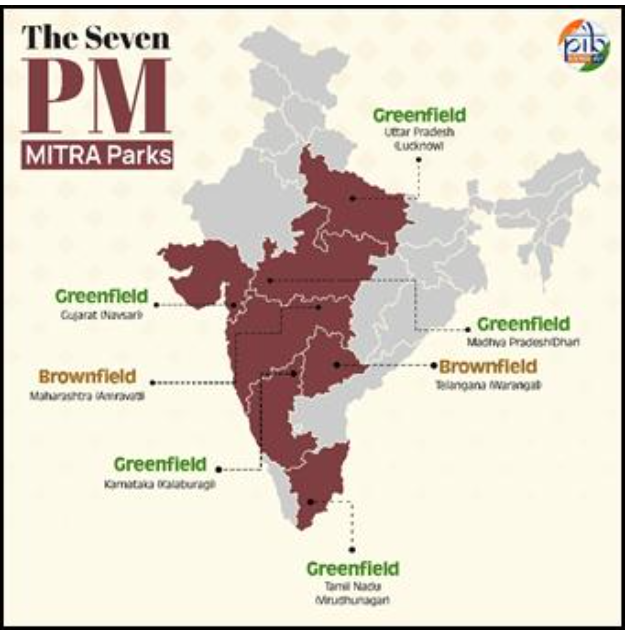
Initiatives such as PM MITRA Parks, textile clusters, and integrated infrastructure aim to create end-to-end textile ecosystems, enhancing productivity and export competitiveness.
- Alignment with National Vision:
The Budget reinforces flagship initiatives like Make in India and Vocal for Local, positioning India as a potential global textile hub.
Key Demands and Sector-Specific Concerns
Despite welcoming the Budget, the Federation flagged several unresolved issues:
GST Rationalisation:
High and uneven GST rates on textiles and garments increase costs for traders and consumers, affecting demand and competitiveness.
Targeted Subsidies:
- Interest subsidy on collateral-based loans
- Subsidised electricity tariffs for textile markets and processing units
- Insurance premium support to protect small traders from unforeseen risks
These measures are seen as essential for MSME resilience in a volatile market environment.
Telangana-Specific Requirements
Highlighting regional priorities, the Federation urged the Centre to:
- Provide financial assistance for Kakatiya Mega Textile Park, Warangal
- Strengthen handloom and textile clusters in Sircilla, Gadwal, Pochampally, and Narayanpet
- Establish common processing centres, dyeing units, and testing laboratories to reduce costs and improve quality
- Support the development of Hyderabad as a textile trading and distribution hub
- Enhance export facilitation, branding, warehousing, and logistics for Telangana’s handloom products
Conclusion
The Union Budget 2026–27 marks a positive step towards strengthening the textile sector through MSME-centric reforms, infrastructure creation, and manufacturing support. However, realising the sector’s full potential requires complementary measures such as GST rationalisation, targeted subsidies, and region-specific interventions. Addressing these gaps can not only revitalise traditional textile clusters but also reinforce textiles as a pillar of employment, exports, and inclusive industrial growth in India
CARE MCQ
Q. With reference to the PM Mega Integrated Textile Region and Apparel (PM MITRA) Scheme, consider the following pairs:
| Pair | Location | State |
| 1 | Virudhunagar | Tamil Nadu |
| 2 | Warangal | Telangana |
| 3 | Navasari | Gujarat |
| 4 | Kalaburagi | Andhra Pradesh |
Which of the pairs given above are correctly matched?
- 1, 2 and 3 only
- 1 and 4 only
- 2 and 3 only
- 1, 2, 3 and 4
Answer: A
Explanation:
- Pair 1 – Correct: Virudhnagar is located in Tamil Nadu.
- Pair 2 – Correct: Warangal is located in Telangana.
- Pair 3 – Correct: Navasari is located in Gujarat.
- Pair 4 – Incorrect: Kalaburagi is in Karnataka, not Andhra Pradesh.