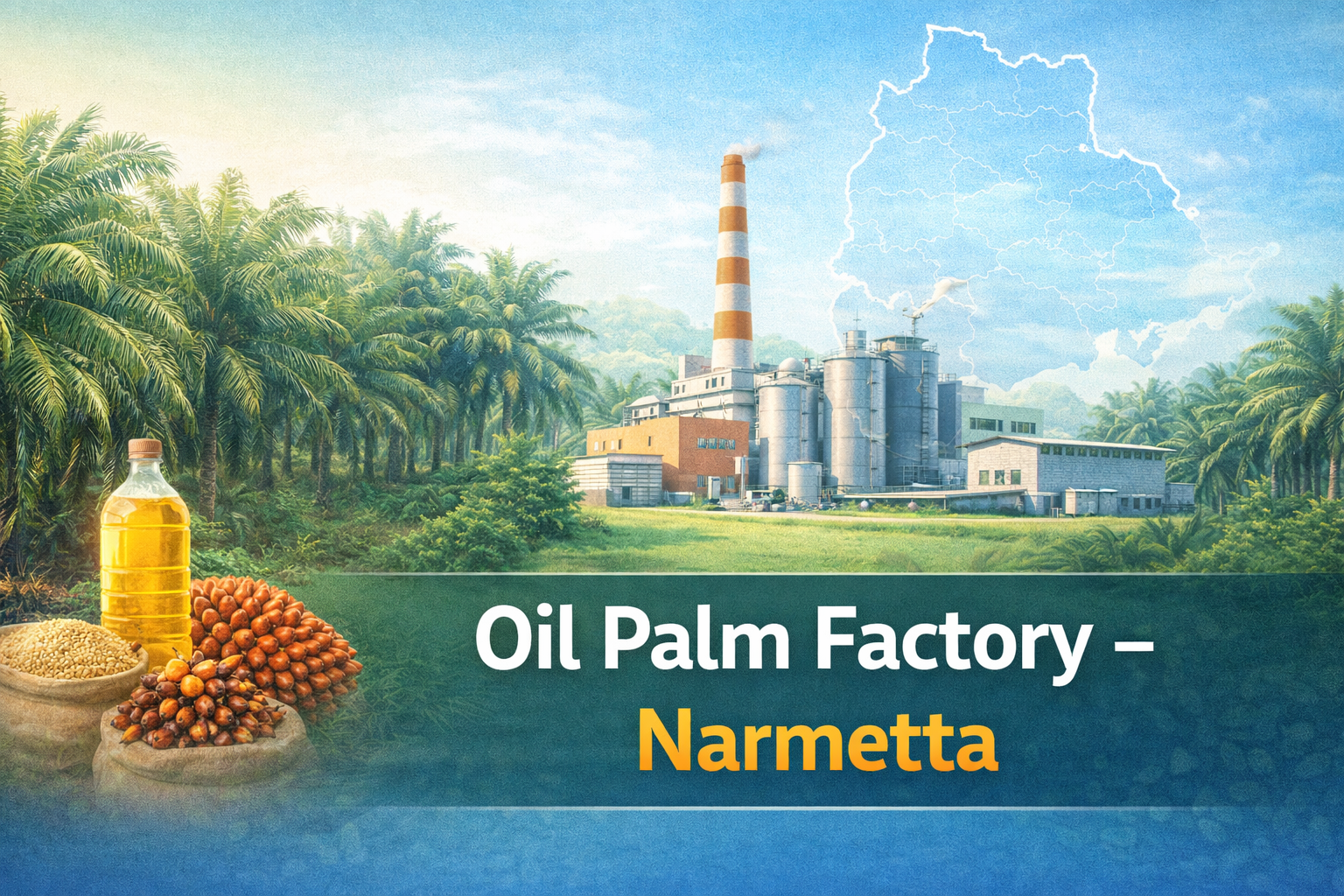
Telangana CM to Inaugurate Oil Palm Factory at Narmetta
Table of Contents
Relevance: TGPSC Paper – IV: Economy and Development
For Prelims:
- Oil Palm Cultivation, Edible Oil Import Dependence, Oil Extraction Ratio, Integrated Oil Palm Processing, Indian Institute of Oil Palm Research (IIPR), Captive Power Plant, Biogas Unit, Agro-Processing Infrastructure, Rythu Mahotsavams
For Mains:
- Agricultural Diversification, Edible Oil Self-Sufficiency, Value Chain Development in Agriculture, Agro-Industrialisation, Farmer Income Enhancement, Import Substitution Strategy, Sustainable Agriculture and Resource Use
Why in News?
The Telangana Chief Minister A. Revanth Reddy is set to inaugurate a major oil palm processing factory at Narmetta (Siddipet district). The project assumes significance in the context of India’s heavy dependence on edible oil imports and the push for self-reliance in oilseed production.

Inauguration and Key Events
- Inaugurate the oil palm factory
- Lay the foundation stone for Telangana’s first integrated oil refinery
Extensive administrative arrangements have been made including security, infrastructure, and emergency services, indicating the project’s importance.
Background and Policy Context
- Project conceptualised during the BRS government
- Foundation laid in April 2022
- Supported by Indian Institute of Oil Palm Research (IIPR) approval
- Investment:
- ₹300 crore (factory)
- ₹40 crore (refinery)
Policy Linkages
- Aligns with:
- National Mission on Edible Oils – Oil Palm (NMEO-OP)
- Atmanirbhar Bharat initiative
Focus on reducing import dependence on edible oils
Oil Palm
1. Origin & Yield
- Native to tropical rainforests of West Africa
- High-yield crop; highest vegetable oil per hectare
- Oil yield ≈ 5 times higher than traditional oilseeds
2. Types of Oil
- Palm Oil: From mesocarp (45–55% oil content)
- Palm Kernel Oil: From kernel (rich in lauric oil)
3. Cultivation in India
- Major States: Andhra Pradesh, Telangana, Kerala (~98% production)
- Other States: Karnataka, Tamil Nadu, Odisha, Gujarat, Mizoram, Arunachal Pradesh, Assam, Manipur, Nagaland
4. Potential
- Total potential area: ~28 lakh hectares
- Area under cultivation: ~3.7 lakh hectares
5. Imports
- India = world’s largest palm oil importer
- Imports (2023–24): ~9.2 million tonnes
- ~60% of edible oil imports = palm oil
- Major sources: Indonesia, Malaysia, Thailand
Rythu Mahotsavams and Extension Services
- Conducted prior to inauguration
- Participation from farmers across districts
Key Features:
- 150+ stalls showcasing:
- Agricultural mechanisation
- Oil palm practices
- Allied sectors (dairy, fisheries, horticulture)
- Scientists provided:
- Technical guidance
- Awareness on modern farming techniques
Strengthens agricultural extension ecosystem
Environmental and Sustainability Concerns
- Oil palm is water-intensive crop
- Risk of:
- Over-extraction of groundwater
- Monoculture expansion
Requires region-specific planning and sustainability safeguards
Challenges in Oil Palm Expansion
- Long gestation period (3–4 years)
- Price volatility in global edible oil markets
- Limited awareness among farmers
- Ecological concerns (land use changes)
- Need for strong processing infrastructure linkage
Way Forward
- Promote sustainable oil palm cultivation practices
- Integrate with:
- Micro-irrigation systems
- Climate-resilient agriculture
- Strengthen:
- Farmer training
- Institutional support (FPOs)
- Ensure environmental safeguards in expansion
- Improve market linkages and price stability mechanisms
Conclusion
The Narmetta oil palm factory marks a significant step in strengthening India’s edible oil ecosystem through value addition, infrastructure development, and farmer-centric growth. By integrating processing, refining, and marketing, the project enhances efficiency and income opportunities.
However, long-term success will depend on ensuring sustainability, resource management, and balanced agricultural diversification, making it a crucial component of India’s journey towards self-reliance in edible oils.
UPSC PYQ
Q. With reference to ‘palm oil’, consider the following statements: (UPSC Prelims 2021)
- The palm oil tree is native to Southeast Asia.
- The palm oil is a raw material for some industries producing lipstick and perfumes.
- The palm oil can be used to produce biodiesel.
Which of the statements given above are correct?
A. 1 and 2 only
B. 2 and 3 only
C. 1 and 3 only
D. 1, 2 and 3
Answer: B
Explanation:
Statement 1: Incorrect
- Oil palm is native to West Africa, not Southeast Asia.
- Southeast Asia (Indonesia, Malaysia) are major producers due to later cultivation expansion.
Statement 2: Correct
- Palm oil is widely used in cosmetics and personal care products like lipsticks, soaps, and perfumes due to its stability and texture-enhancing properties.
Statement 3: Correct
- Palm oil is used as a feedstock for biodiesel production, making it important in biofuel industries.
Additional Info
- India is the largest importer of palm oil.
- Palm oil contributes ~60% of India’s edible oil imports.
- It is the highest oil-yielding crop per hectare.
CARE MCQ
Q. Recently, the Chief Minister of Telangana inaugurated an oil palm factory at Narmetta. Narmetta is located in which of the following districts?
A. Warangal
B. Siddipet
C. Nizamabad
D. Karimnagar
Answer: B
Explanation:
The oil palm factory was inaugurated at Narmetta in Nangunur mandal of Siddipet district in Telangana. The initiative is aimed at promoting oil palm cultivation and agro-based industries in the region.
The event also included Rythu Mahotsavams, where farmers were educated about modern agricultural practices, mechanisation and allied sectors such as horticulture, dairy and fisheries. This reflects the state’s focus on improving agricultural productivity and value addition.