Table of Contents
Relevance: GS Paper III – Internal Security | Defence Technology | Cyber Warfare | Nuclear Deterrence
For Prelims:
Operation Sindoor, calibrated escalation, grey zone warfare, multi-domain warfare, electronic warfare, cyber warfare, nuclear deterrence, No First Use, credible minimum deterrence, Nuclear Command Authority
For Mains:
evolving warfare, hybrid warfare, escalation control, strategic deterrence, India-Pakistan security dynamics, civil-military convergence, cyber security, defence modernization, integrated theatre commands, national resilience
Why in News?
• Operation Sindoor has emerged as an important example of India’s evolving military strategy in dealing with sub-conventional threats under a nuclearized environment.
• The operation demonstrated India’s ability to conduct calibrated and politically controlled military action without allowing escalation into a full-scale conventional war.
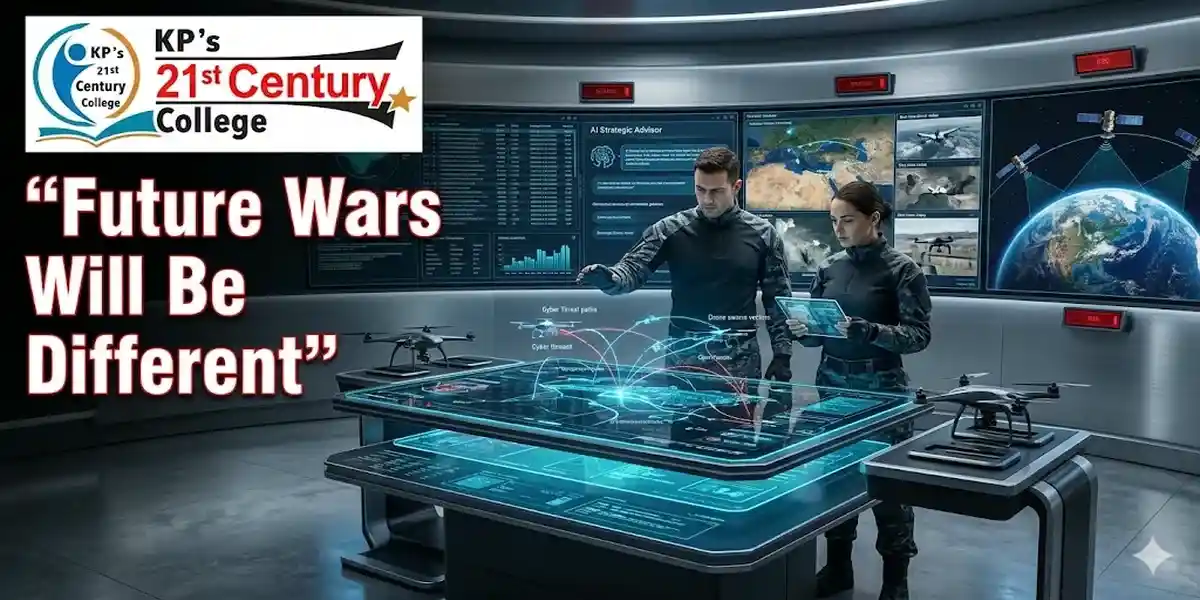
• The developments highlighted how future wars are likely to be shorter, technology-driven, multi-domain, and increasingly fought in the grey zone between peace and war.
• The operation also showed the growing importance of cyber capabilities, electronic warfare, intelligence integration, and civilian resilience in modern conflicts.
Understanding Operation Sindoor and Its Strategic Objectives
• Operation Sindoor represented a calibrated response by India to provocation while maintaining escalation control in a sensitive nuclear environment.
• The operation reflected a doctrine of “aggression with restraint,” where India combined precision strikes, strategic signaling, and limited objectives instead of pursuing large-scale conventional mobilization.
• India deliberately avoided widening the conflict despite military capability, thereby demonstrating strategic confidence and political maturity.
• The operation highlighted that limited military conflict remains possible even between nuclear-armed states if political intent, military objectives, and escalation thresholds are carefully managed.
• Pakistan reportedly struggled to respond coherently because India created uncertainty in the grey zone below the threshold of conventional war.
• The Pahalgam terror attack, which sought to disturb normalcy in Kashmir and trigger instability, failed to achieve its objective as local recruitment into militancy remained limited.
• The operation also reinforced India’s attempt to impose costs on cross-border terrorism without triggering uncontrolled escalation.
Major Military and Technological Lessons from the Operation
• Operation Sindoor demonstrated that future warfare will increasingly depend on integrated multi-domain operations rather than purely land-based military engagements.
• India effectively combined cyber operations, electronic warfare systems, intelligence networks, surveillance capabilities, and precision strike technologies to enhance operational effectiveness.
• Electronic warfare systems were used to disrupt communication systems, interfere with enemy coordination, and create confusion in operational planning.
• Cyber capabilities have emerged as central instruments of warfare because they can target communication systems, financial networks, energy grids, and military infrastructure without direct kinetic attacks.
• Intelligence fusion played a major role in enabling accurate targeting, rapid response, and real-time operational coordination between agencies.
• Future conflicts are expected to involve drones, artificial intelligence, satellite-based surveillance, autonomous systems, and network-centric warfare.
• The operation highlighted that military superiority in the modern era depends not only on troop strength but also on technological dominance, speed of information processing, and interoperability between services.
• Economic continuity during the operation showed that maintaining civilian stability, financial confidence, and public morale is now a strategic objective in warfare.
Grey Zone Warfare, Multi-Domain Conflict and Nuclear Deterrence
• Grey zone warfare refers to hostile activities that remain below the threshold of conventional war and include cyberattacks, information warfare, proxy terrorism, disinformation campaigns, economic coercion, and covert operations.
• Operation Sindoor highlighted how modern states increasingly operate within this grey zone where direct attribution and proportional retaliation become difficult.
• The operation reaffirmed that nuclear deterrence does not eliminate conflict entirely; rather, it pushes conflicts into limited, indirect, and sub-conventional domains.
• Pakistan’s repeated nuclear signaling during crises risks losing credibility if it is not matched with strategic coherence and military preparedness.
• India’s response reflected confidence in its escalation management capabilities and its ability to impose deterrence without crossing nuclear thresholds.
• Future wars are likely to blur distinctions between civilian and military targets because digital infrastructure, communication systems, urban networks, and energy grids are becoming strategic assets.
• Terror financing is also evolving from traditional channels to hybrid mechanisms involving digital payments, cryptocurrencies, hawala systems, and transnational networks.
• The operation emphasized that national resilience now includes cyber resilience, economic resilience, information resilience, and the ability to maintain governance during disruption.
India’s Nuclear Doctrine and Emerging Nature of Warfare
• India officially adopted its Nuclear Doctrine in January 2003 after the Pokhran-II nuclear tests.
• The doctrine is based on the principle of “Credible Minimum Deterrence,” meaning India will maintain only the minimum nuclear capability necessary to deter aggression.
• India follows the policy of “No First Use” (NFU), under which nuclear weapons will only be used in retaliation against a nuclear attack on Indian territory or forces.
• The doctrine states that any nuclear attack on India would invite “massive retaliation” designed to inflict unacceptable damage on the aggressor.
• Nuclear retaliation can only be authorized by the civilian political leadership through the Nuclear Command Authority (NCA), ensuring civilian supremacy over strategic weapons.
• India also maintains that it will not use nuclear weapons against non-nuclear weapon states.
• At the same time, India continues to advocate universal, verifiable, and non-discriminatory nuclear disarmament at the global level.
• Modern warfare, however, is increasingly moving beyond traditional nuclear deterrence toward cyber conflict, information warfare, artificial intelligence, autonomous weapons, and space-based military capabilities.
• This changing security environment requires India to continuously modernize its strategic doctrines, command systems, and defence technologies.
Significance of Operation Sindoor for India
• The operation demonstrated India’s growing capability to conduct precise and politically calibrated military responses under nuclear conditions.
• It strengthened India’s deterrence credibility by showing that sub-conventional attacks can invite proportionate retaliation without escalating into full-scale war.
• The operation highlighted the importance of jointness among the armed forces and coordination between military, intelligence, diplomatic, and political institutions.
• It reflected the increasing importance of indigenous defence technologies, cyber capabilities, surveillance systems, and precision-guided weaponry.
• The operation also demonstrated India’s ability to maintain economic stability and civilian normalcy even during security crises.
• Strategically, it signaled that India is adapting to the realities of hybrid warfare and preparing for future conflicts that combine military and non-military instruments of power.
Way Forward
• India must accelerate military modernization with greater focus on cyber warfare, artificial intelligence, drones, space security, and electronic warfare systems.
• Integrated theatre commands and deeper inter-service coordination should be institutionalized to improve joint operational effectiveness.
• Indigenous defence manufacturing under initiatives like Aatmanirbhar Bharat must be strengthened to reduce external dependence in critical technologies.
• Cybersecurity architecture protecting critical infrastructure, financial systems, and communication networks should be expanded significantly.
• India must improve strategic communication mechanisms to counter misinformation, propaganda, and psychological warfare during conflicts.
• Civil defence preparedness and resilience planning should become an essential component of national security policy.
• Intelligence coordination between civilian and military agencies should be strengthened for faster threat detection and response.
• Diplomatic engagement with global powers and multilateral forums should continue to prevent uncontrolled escalation and maintain regional stability.
Conclusion
Operation Sindoor marks an important transition in India’s strategic and military thinking. The operation demonstrated that future conflicts will not resemble traditional wars fought solely on battlefields. Instead, wars will increasingly involve cyber systems, information networks, economic resilience, space assets, and precision technologies operating simultaneously across multiple domains.
CARE MCQ
Q. With reference to modern warfare and India’s Nuclear Doctrine, consider the following statements:
- India follows a policy of No First Use of nuclear weapons.
- Grey zone warfare includes cyberattacks, proxy warfare, and information operations below the threshold of conventional war.
- India’s Nuclear Doctrine authorizes nuclear retaliation exclusively under civilian political control.
Which of the statements given above are correct?
(a) 1 and 2 only
(b) 2 and 3 only
(c) 1, 2 and 3
(d) 1 and 3 only
Ans: (c)
Explanation
• Statement 1 is correct: India officially follows the No First Use policy under its Nuclear Doctrine.
• Statement 2 is correct: Grey zone warfare refers to hostile actions below the threshold of open conventional conflict, including cyber operations and proxy warfare.
• Statement 3 is correct: Nuclear retaliation in India can only be authorized by the civilian political leadership through the Nuclear Command Authority.
Q.With reference to India’s Nuclear Command Authority (NCA), consider the following statements:
- The Political Council of the Nuclear Command Authority, responsible for authorizing the use of nuclear weapons, is chaired by the President of India.
- The Executive Council, which provides inputs for decision-making and executes the directives of the Political Council, is chaired by the National Security Advisor.
- India’s ‘No First Use’ policy implies that the decision to use nuclear weapons rests solely with the Chiefs of Staff Committee, independent of political oversight.
- 1 and 2 only
- 2 only
- 1 and 3 only
- 1, 2 and 3
Ans: (b)
Explanation:
The Nuclear Command Authority (NCA) is India’s decision-making body for nuclear weapons. It comprises a Political Council and an Executive Council.
Statement 1 is incorrect: The Political Council, which is responsible for authorizing the use of nuclear weapons, is chaired by the Prime Minister of India, not the President.
Statement 2 is correct: The Executive Council provides inputs to the Political Council and is responsible for executing its directives. It is chaired by the National Security Advisor.
Statement 3 is incorrect: India’s ‘No First Use’ (NFU) policy is a core tenet of its nuclear doctrine, but it does not imply that the decision to use nuclear weapons rests solely with the Chiefs of Staff Committee. The ultimate authority for authorizing the use of nuclear weapons resides with the Political Council, chaired by the Prime Minister, ensuring civilian control over the nuclear arsenal.
Q. Regarding India’s Nuclear Command Authority (NCA), which of the following statements is correct?
- The Political Council, chaired by the Prime Minister, is the sole body authorized to sanction the use of nuclear weapons.
- The Executive Council, chaired by the Chief of Defence Staff, holds the final authority for nuclear strike decisions.
- The National Security Advisor is primarily responsible for the development and testing of nuclear warheads under the NCA’s purview.
- The NCA was established by an Act of Parliament to oversee India’s civilian nuclear energy program.
Ans: (a)
Explanation:
India’s Nuclear Command Authority (NCA) consists of a Political Council and an Executive Council. The Political Council, chaired by the Prime Minister, is the ultimate decision-making body that authorizes the use of nuclear weapons.
The Executive Council, chaired by the National Security Advisor, provides inputs for the Political Council and carries out its directives. The NCA was established by a Cabinet Committee on Security decision in 2003, not an Act of Parliament, and its mandate is related to nuclear weapons, not the civilian nuclear energy program.
The development and testing of nuclear warheads are primarily under the domain of scientific agencies like DRDO and DAE, though coordinated by the broader security establishment.
UPSC Mains Practice Question
Q.“Future conflicts will increasingly blur the distinction between war and peace.” Examine this statement in the context of hybrid warfare, cyber operations, and nuclear deterrence.
[250 WORDS]
FAQs
Q1. What is Operation Sindoor?
Ans: Operation Sindoor was a calibrated Indian military response demonstrating the use of limited and controlled force in a nuclearized environment.
Q2. What is grey zone warfare?
Ans: Grey zone warfare involves hostile activities below the threshold of full-scale war, such as cyberattacks, proxy warfare, misinformation campaigns, and economic coercion.
Q3. What is the core principle of India’s Nuclear Doctrine?
Ans: The core principles include Credible Minimum Deterrence and No First Use of nuclear weapons.
Q4. Why are future wars expected to be different?
Ans: Future wars will involve cyber warfare, drones, artificial intelligence, electronic warfare, and attacks on digital infrastructure alongside conventional military operations.
Q5. Why is Operation Sindoor strategically important for India?
Ans: It demonstrated India’s ability to combine military precision, escalation control, technological integration, and political coordination in handling modern security threats.