Musi Riverfront Development Project: Rejuvenating Hyderabad’s Lifeline
Table of Contents
Relevance: Paper-IV – Economy & Development
For Prelims:
- Musi River, Krishna tributary, Musa and Esi rivulets, 1908 Musi floods, Mir Osman Ali Khan, Osman Sagar, Himayat Sagar, Mallanna Sagar Reservoir, 2.5 TMC water diversion, Sewage Treatment Plants (STPs), Gandhi Sarovar, Asian Development Bank (ADB), Detailed Project Report (DPR).
For Mains:
- Urban River Rejuvenation, Sustainable Urban Development, Sewage Management, Ecological Restoration, Riverfront Development, Urban Infrastructure, Environmental Governance, Land Acquisition, Displacement and Rehabilitation, Social Justice, Public Consultation, Heritage Conservation, Inclusive Urban Planning, Environment vs Development.
Why in News?
The Musi Riverfront Development Project proposed by the Government of Telangana aims to rejuvenate the Musi River in Hyderabad and transform it into a year-round flowing urban river with recreational and cultural infrastructure. However, the project has sparked controversy due to concerns about displacement of residents and land acquisition.
About the Musi River
The Musi River flows through Hyderabad and is an important tributary of the Krishna River.
Key Facts:
- Total river length: About 260 km
- Stretch within Hyderabad: Approximately 55 km
- Origin: Ananthagiri Hills in Vikarabad district
- Formed by the confluence of two rivulets: Musa and Esi
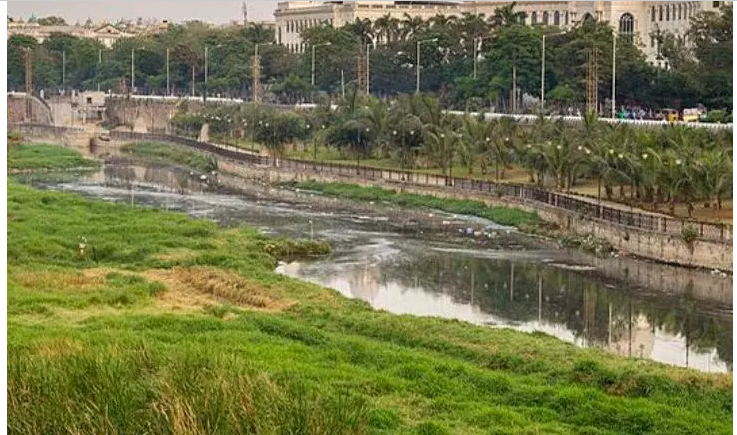
Over time, rapid urbanisation and untreated sewage discharge have turned the river into an open sewage channel for most of the year.
Historical Background
The Musi River gained historical significance after the devastating floods of 1908, which caused massive destruction in Hyderabad.
Following the disaster, the ruler of the Hyderabad princely state, Mir Osman Ali Khan, ordered the construction of two major reservoirs:
- Osman Sagar
- Himayat Sagar
These reservoirs were designed to control flooding and regulate water flow in the Musi River.
What is the Musi Riverfront Development Project?
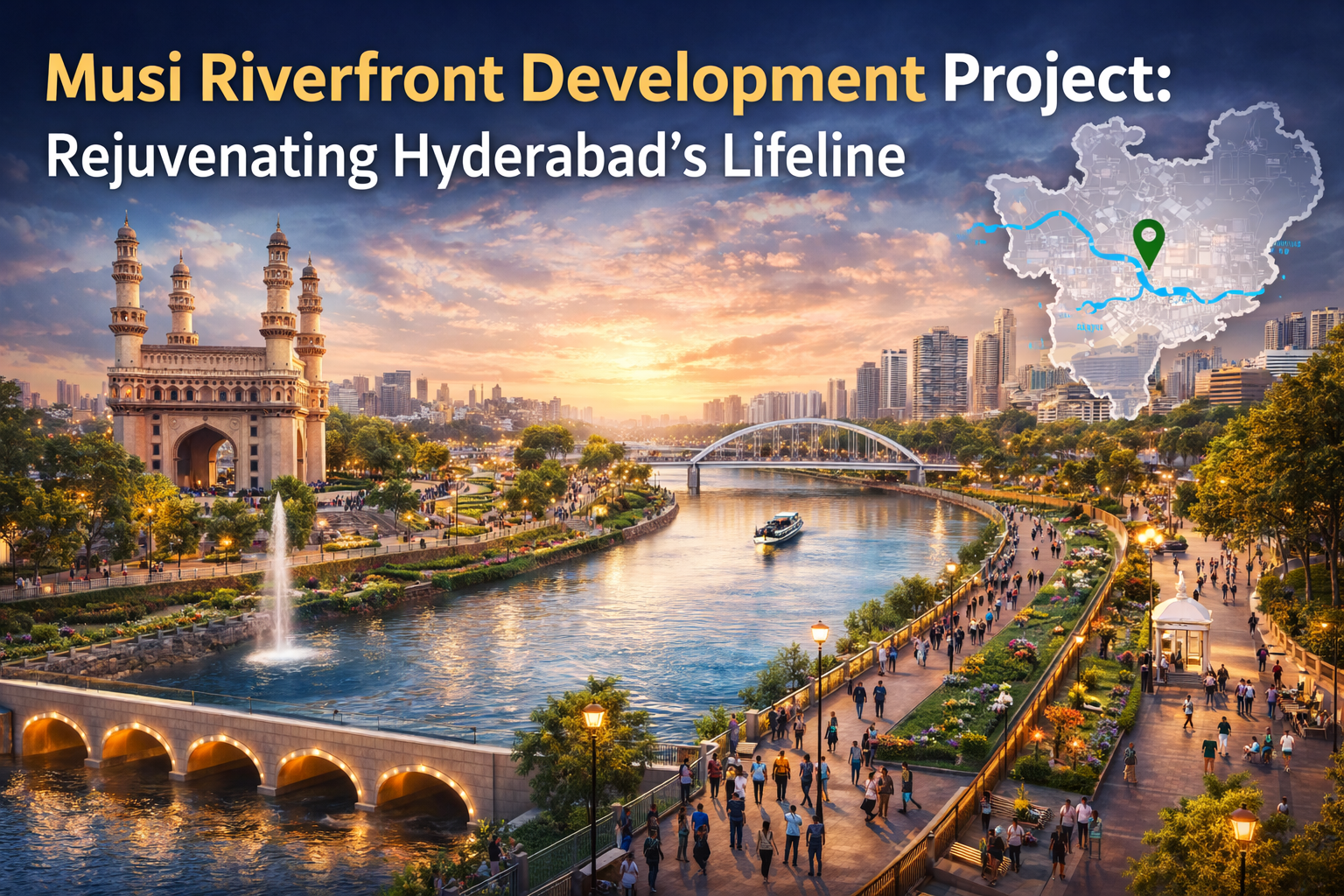
The Musi Riverfront Development Project aims to restore the ecological health of the river while transforming its banks into an urban waterfront corridor.
The plan proposes development along both sides of the 55-km river stretch in Hyderabad, including public infrastructure, tourism facilities, and heritage spaces.
Major Components of the Project
1. River Rejuvenation
The government plans to ensure perennial flow in the Musi River by diverting 2.5 TMC of water from the Godavari River through the Mallanna Sagar Reservoir.
Water will be released gradually into Osman Sagar and Himayat Sagar reservoirs, which will maintain a continuous flow in the Musi River.
2. Sewage Treatment Infrastructure
One of the main causes of pollution in the river is untreated sewage.
To address this, the government plans to:
- Build 39 new Sewage Treatment Plants (STPs)
- Strengthen the existing 31 STPs
- Treat sewage before it enters the river
3. Riverfront Development
The project includes the development of urban waterfront infrastructure such as:
- Parks and leisure spaces
- Cultural and heritage zones
- Shopping areas
- Pedestrian corridors and public spaces
The aim is to create a modern riverfront similar to international urban waterfront models.
4. Gandhi Sarovar Cultural Precinct
A major landmark proposed under the project is “Gandhi Sarovar,” located at the confluence of the Musa and Esi streams.
Key features include:
- A large cultural precinct
- A proposed “world’s tallest statue of Mahatma Gandhi”
- Tourism and recreational facilities
Project Implementation
In October 2024, the Telangana government appointed a consortium of five companies to prepare the Detailed Project Report (DPR).
The project is planned in phases, beginning with relatively less populated stretches of the Musa and Esi rivers covering about 21 km.
The Asian Development Bank (ADB) has provided in-principle approval for funding for the first phase.
Opposition and Controversy
Despite its environmental objectives, the project has triggered strong protests.
1. Eviction of Riverbank Residents
The government began evicting slum dwellers living along the Musi riverbed in 2024.
Many residents claim they have lived there for decades, and fear losing their homes and livelihoods.
2. Musi Jan Andolan
Opposition groups have formed a coalition called “Musi Jan Andolan.”
Their concerns include:
- Forced displacement of residents
- Lack of public consultation
- Absence of a publicly available Detailed Project Report (DPR)
3. Land Acquisition Disputes
The controversy intensified when the government issued three land acquisition notifications related to the project.
Residents of nearby gated communities have also opposed the move after their properties were listed for acquisition for the Gandhi Sarovar project.
Key Issues in the Debate
The Musi Riverfront project raises important urban development questions:
- Environmental restoration vs. displacement of communities
- Urban beautification vs. social justice
- Infrastructure development vs. heritage conservation
Critics argue that river rejuvenation should involve local communities as stakeholders rather than displacing them.
Conclusion
The Musi Riverfront Development Project represents an ambitious attempt to restore Hyderabad’s historic river and transform it into a vibrant urban space. While the project promises environmental rejuvenation, improved infrastructure, and tourism opportunities, concerns about displacement, transparency, and land acquisition remain major challenges.
Balancing ecological restoration, urban development, and social justice will be critical for the long-term success and public acceptance of the project.
CARE MCQ
Q Consider the following statements regarding the Musi River:
- The Musi River originates from the Ananthagiri hills .
- The reservoirs Osman Sagar and Himayat Sagar were constructed after the 1908 floods to control flooding of the Musi River.
Which of the statements given above is/are correct?
a)1 only
b)2 only
c)Both 1 and 2
d)Neither 1 nor 2
Answer: C
Explanation
- Statement 1 is correct: The Musi River originates from Ananthagiri hills in Vikarabad district and is formed by the Musa and Esi rivulets.
- Statement 2 is correct: After the 1908 Hyderabad floods, the reservoirs Osman Sagar and Himayat Sagar were built to control flooding.