

I. Functions of an Ecosystem
Energy Flow in an Ecosystem
Energy is the basic force driving all metabolic activities of living organisms. The flow of energy from producers to top consumers in an ecosystem is called energy flow, and it is always unidirectional — meaning energy flows from producers up the trophic levels and never in reverse.
- The study of trophic level interactions helps explain how energy passes through the ecosystem, linking producers, consumers, and decomposers in a sequence of nutritional relationships.
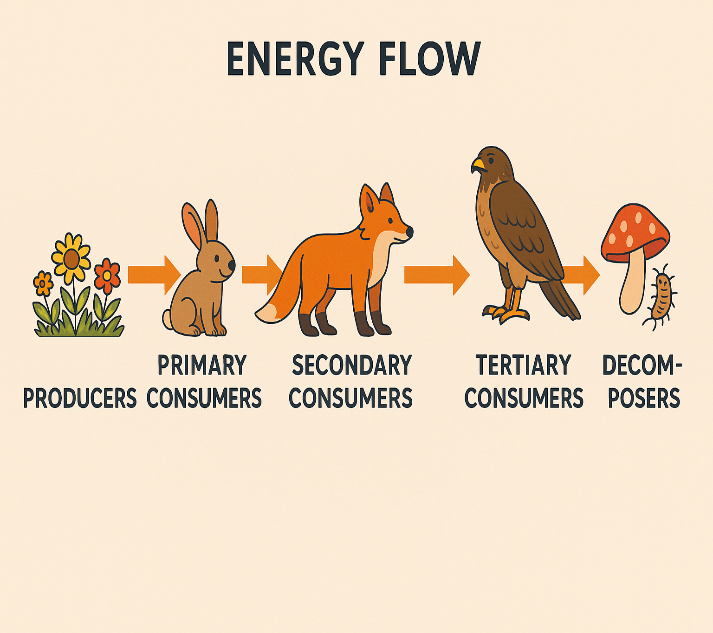
Trophic Level Interactions
Trophic level interaction refers to the connections among organisms based on their nutritional needs.
- Energy always flows from lower trophic levels (producers) to higher trophic levels (herbivores, carnivores, etc.).
- At each trophic level, some energy is lost as unusable heat, leading to a decrease in available energy as we move up the chain.
- This energy loss limits most ecosystems to 4–5 trophic levels, as very little energy remains to support higher levels.
Trophic levels are numbered according to the number of steps an organism is away from the original energy source (solar energy captured by producers).
Energy flow in an ecosystem is studied through three major concepts:
- Food Chain
- Food Web
- Ecological Pyramids
