AIG Launches India’s First H. pylori Breath Test
Table of Contents
Relevance:
GS Paper II: International Relations, International Institutions, Government Policies & Interventions, International Treaties & Agreements, Effect of Foreign Policies on India’s Interests
Important Keywords
For Prelims:
- Helicobacter pylori (H. pylori), Urea Breath Test, PYtest, Non-invasive Diagnostic Test, Gastritis, Peptic Ulcer Disease, Gastric Cancer, MALT Lymphoma, Sensitivity, Specificity
For Mains:
- Preventive Healthcare, Non-Invasive Diagnostics, Gastrointestinal Diseases in India, Early Disease Detection, Antibiotic Resistance in H. pylori, Evidence-Based Medicine, Patient-Centric Healthcare, Public Health Innovation, Clinical Validation, Translational Medical Research
Why in News?
AIG Hospitals has launched PYtest, India’s first clinically validated non-invasive breath test for detecting Helicobacter pylori infection. The test marks a major advance in gastrointestinal diagnostics by enabling early, accurate, and patient-friendly detection of a highly prevalent but often underdiagnosed gastric infection.
What is Helicobacter pylori and Why It Matters?
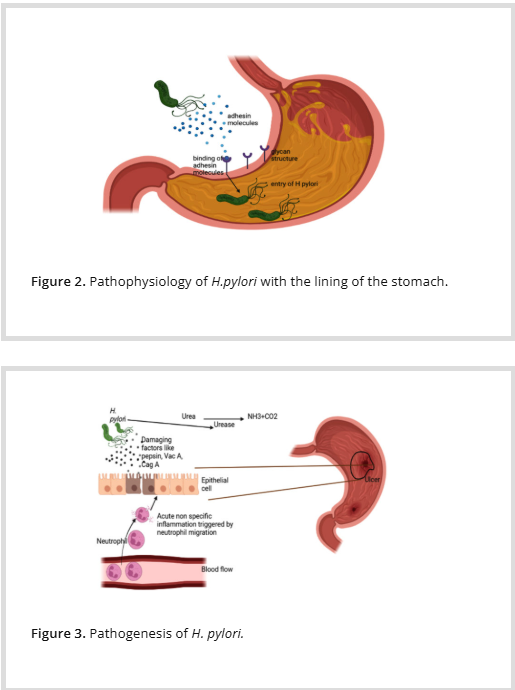
Helicobacter pylori (H. pylori) is among the most common bacterial infections in India and is strongly associated with:
- Chronic gastritis
- Peptic ulcer disease
- Gastric cancer
- MALT lymphoma
Despite its high prevalence, diagnosis in India has largely depended on invasive procedures such as endoscopy and biopsy-based tests, resulting in delayed or missed detection in many patients.
What is PYtest?
PYtest is a urea breath test developed by Nobel Laureate Barry Marshall, who co-discovered H. pylori and its role in gastric diseases.
Key Features of PYtest
- Non-invasive (no endoscopy or anaesthesia)
- Provides results within minutes
- Confirms presence of infection and assesses bacterial activity level
- Cost: ₹4,500
The test is particularly useful for patients experiencing:
- Persistent acidity
- Bloating
- Abdominal pain
- Constipation
- Frequent indigestion and related gastric symptoms
Clinical Validation and Accuracy
PYtest has been clinically validated in Indian patients through a Phase-3 study, demonstrating:
- Sensitivity: 93.8%
- Specificity: 97.8%
- Safety: No serious adverse events reported
These results confirm the test’s high accuracy, safety, and suitability for the Indian population.
How PYtest Improves on Conventional Methods
Traditional diagnostic approaches for H. pylori include:
- Endoscopy
- Biopsy-based rapid urease tests
These methods are:
- Invasive
- Anxiety-inducing for patients
- Time-consuming
PYtest overcomes these limitations by offering a quick, painless, and patient-friendly alternative, encouraging early diagnosis and preventive care.
Expert Views
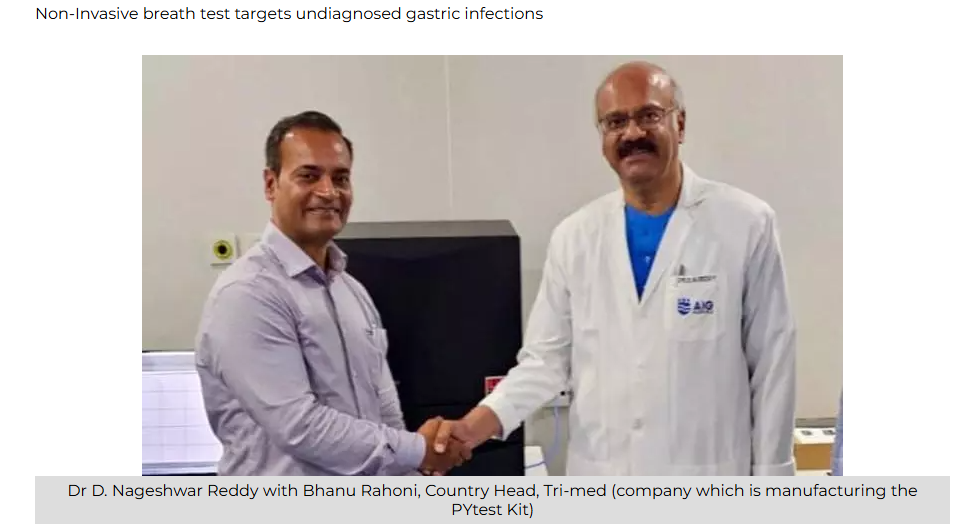
Speaking at the launch, Dr D. Nageshwar Reddy, Chairman of AIG Hospitals, described PYtest as a milestone in gastrointestinal healthcare in India. He emphasised that removing the fear associated with invasive procedures would significantly improve early detection and prevention of serious gastric diseases.
Dr Rakesh Kalapala, Senior Consultant Gastroenterologist and in-charge of the GI Motility Centre, highlighted that Indian trials demonstrated not only diagnostic accuracy but also patient comfort and efficiency, calling PYtest a transformative, evidence-based diagnostic tool.
Research Collaboration and Institutional Strengthening
The launch of PYtest is part of a strategic collaboration between Prof. Barry Marshall and AIG Hospitals to advance H. pylori research in India.
As part of this initiative:
- A Prof. Barry Marshall H. pylori Research Centre has been established at AIG
- Focus areas include:
- Bacterial pathogenesis
- Antibiotic resistance patterns
- Development of India-specific diagnostic tools
A dedicated clinical team of gastroenterologists has been constituted to implement PYtest across AIG Hospitals’ Gachibowli and Banjara Hills branches.
Public Health Significance
Given the high burden of undiagnosed gastric infections in India, PYtest has the potential to:
- Improve early detection
- Reduce complications such as ulcers and gastric cancer
- Enable evidence-based treatment decisions
- Lower dependence on invasive diagnostic procedures
Conclusion
The introduction of PYtest by AIG Hospitals represents a significant leap in India’s gastrointestinal diagnostics landscape. By combining scientific innovation, clinical validation, and patient comfort, the test offers a practical solution to a widespread public health challenge. PYtest not only strengthens India’s diagnostic capabilities but also reinforces the shift towards preventive, non-invasive, and patient-centric healthcare.
CARE MCQ
Q. Consider the following statements regarding PYtest, recently launched by AIG Hospitals:
- PYtest is a non-invasive urea breath test used for detecting Helicobacter pylori infection.
- The test requires endoscopy and biopsy to confirm bacterial presence.
- PYtest has been clinically validated in Indian patients with high sensitivity and specificity.
- Helicobacter pylori infection is associated with conditions such as peptic ulcer disease and gastric cancer.
Which of the statements given above are correct?
- 1, 3 and 4 only
- 1 and 2 only
- 2, 3 and 4 only
- All four
Answer: A
Explanation:
- Statement 1 – Correct
PYtest is a non-invasive urea breath test that detects H. pylori infection. - Statement 2 – Incorrect
PYtest does not require endoscopy or biopsy; it avoids invasive procedures entirely. - Statement 3 – Correct
Indian Phase-3 clinical trials showed high sensitivity (93.8%) and specificity (97.8%), confirming accuracy and safety. - Statement 4 – Correct
H. pylori infection is linked to chronic gastritis, peptic ulcer disease, gastric cancer, and MALT lymphoma.