
India has great potential of wind power. The largest wind farm cluster is located in Tamil Nadu from Nagarcoil to Madurai. Apart from these, Andhra Pradesh, Karnataka, Gujarat, Kerala, Maharashtra and Lakshadweep have important wind farms. Nagarcoil and Jaisalmer are well known for effective use of wind energy in the country.
Understanding wind energy in simple way
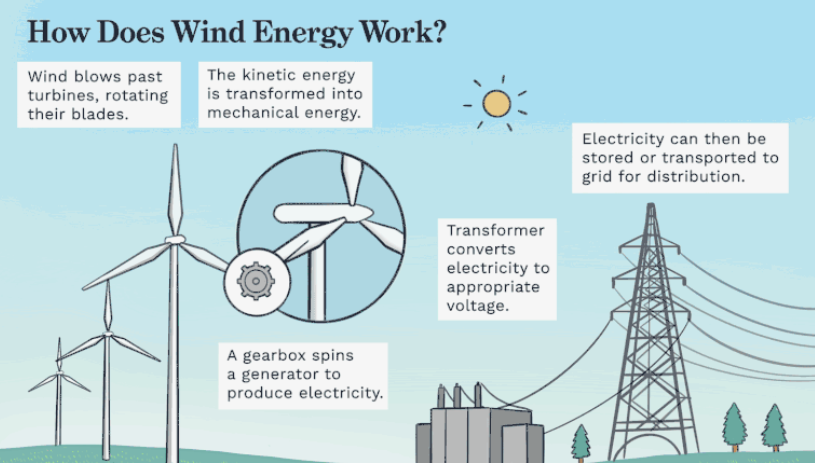
Imagine feeling the wind on your face—it’s air moving. Wind power is about using that moving air to create electricity.
How It Works:
- Wind Turbines: Picture a giant fan, but instead of blowing air, it captures the wind’s energy. These are called wind turbines.
- Blades Turning: When the wind blows, it makes the turbine blades spin. It’s like when you blow on a pinwheel, and it starts to turn.
- Generating Electricity: As the blades spin, they turn a generator inside the turbine. The generator takes that spinning motion and turns it into electricity.
Pros:
- Renewable: Wind is always blowing somewhere, so wind power is considered a renewable energy source.
- Clean Energy: Produces electricity without burning fuel or emitting pollutants, making it environmentally friendly.
- Reduced Greenhouse Gas Emissions: Using wind power helps decrease the amount of greenhouse gases released into the atmosphere, contributing to the fight against climate change.
Cons:
- Weather-Dependent: Wind power depends on the wind, so electricity generation can vary based on how windy it is.
- Space and Aesthetics: Wind farms need a lot of space, and some people find the large turbines visually unappealing.
- Initial Costs: Setting up wind farms can be expensive, although costs have been decreasing over time.
