
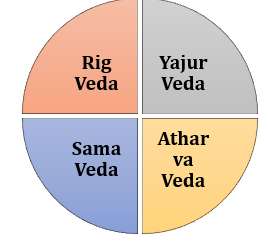
- The word ‘Veda’ is derived from the root ‘vid’, which means to know. In other words, the term ‘Veda’ signifies ‘superior knowledge’. The Vedic literature consists of the four Vedas namely:
- The Rig Veda is the earliest of the four Vedas and it consists of 1028 hymns. The hymns were sung in praise of various gods. The Rig Veda also refers to Saptasindhu or the land of seven rivers. This includes the five rivers of Punjab, namely Jhelum, Chenab, Ravi, Beas and Sutlej along with the Indus and Saraswathi. The political, social and cultural life of the Rig Vedic people can be traced from the hymns of the Rig Veda.
- The Yajur Veda consists of various details of rules to be observed at the time of sacrifice.
- The Sama Veda is set to tune for the purpose of chanting during sacrifice. It is called the book of chants and the origins of Indian music are traced in it.
- The Atharva Veda contains details of rituals.
Besides the Vedas, there are other sacred works like :
- The Brahmanas are the treatises relating to prayer and sacrificial ceremony.
The Upanishads are philosophical texts dealing with topic like the soul, the absolute, the origin of the world and the mysteries of nature.
- The Aranyakas are called forest books and they deal with mysticism, rites, rituals and sacrifices.
