Relevance: GS Paper II – Polity (Representation, Electoral Reforms, Gender Justice, Federalism)
For Prelims:
- 106th Constitutional Amendment Act, 2023, Article 330A, Article 332A, Article 334A, Delimitation Commission, Articles 82 & 170, Proportional Representation
For Mains:
- Gender Representation, Delimitation Freeze, Electoral Reform, FPTP System, Proportional Representation, Democratic Inclusion, Institutional Delay
Why in News?
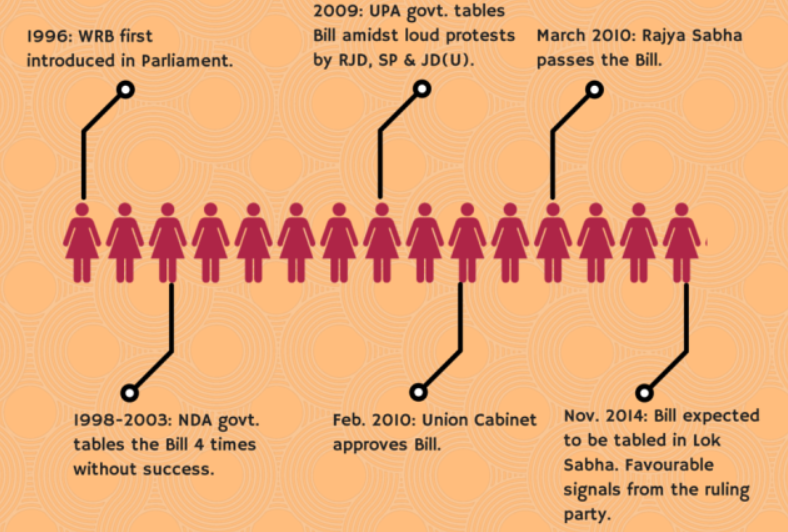
- The government is considering steps to operationalise the Women’s Reservation Act, 2023, amid concerns over delays in its implementation. Experts have proposed a roadmap to implement reservation before delimitation.
- The proposal aims to enable women’s reservation by the 2029 general elections. This has triggered debate on electoral reforms and constitutional flexibility. The issue highlights the gap between legislative intent and execution.
Background and Context
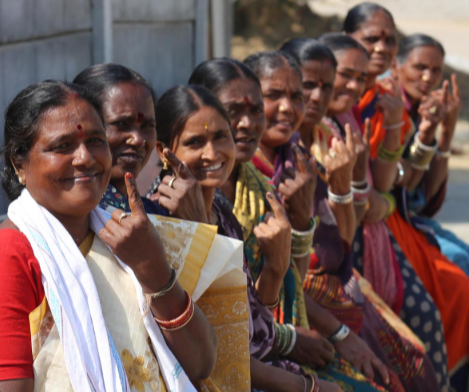
- The Constitution (106th Amendment) Act, 2023 provides one-third reservation for women in the Lok Sabha and State Assemblies.
- However, the Act links implementation to delimitation based on the first Census conducted after 2026.
- Given delays in Census and the complexity of delimitation, implementation is unlikely before 2032–33.
- India currently has low representation of women in Parliament despite improvements at the local level. The delay raises concerns about the effectiveness of the reform.
Women’s Reservation Act: Key Features
- The Act provides 33% reservation in the Lok Sabha and State Assemblies, including sub-reservation for SC/ST women.
- It introduces Articles 330A and 332A, with Article 334A governing commencement and duration.
- The reservation is to be implemented after delimitation and will operate for 15 years.
- It also provides for rotation of reserved constituencies after each delimitation exercise.The key limitation is that implementation is conditional, not immediate.
Delimitation and Constitutional Constraint
- Delimitation is the process of redrawing constituency boundaries to ensure equal representation based on population. It is mandated under Articles 82 and 170 after every Census.
- The Delimitation Commission, appointed by the President, determines boundaries and reserved seats, and its decisions have the force of law.
- However, seat allocation among states is frozen until after the 2026 Census (84th Amendment).
- Since women’s reservation requires identification of reserved constituencies, it cannot be implemented without delimitation. Given that delimitation may only be completed by 2032–33, it becomes the primary bottleneck delaying implementation.
Proposed Mechanism for Early Implementation
- To bypass the delimitation constraint, a temporary solution has been proposed based on limited proportional representation.
- The proposal suggests increasing Lok Sabha strength from 543 to around 816 by adding approximately 273 additional seats reserved for women.
- These seats would be allocated to political parties based on their vote share in the most recent general election. Parties would nominate women candidates from pre-declared lists. This avoids redrawing constituencies and allows immediate implementation.
- The mechanism is designed to be temporary, operating for one or two election cycles, enabling reservation from 2029 without waiting for delimitation.
Nature of the Proposed Reform
- The proposal creates a hybrid electoral system combining the existing First-Past-The-Post system with proportional allocation of additional seats.
- It does not disturb existing constituencies or seat distribution among states.
- It is a transitional arrangement aimed at addressing implementation delays. The model preserves electoral stability while expanding representation.
Implications
- Gender Representation
It enables immediate increase in women’s participation in Parliament without long delays. - Democratic Inclusion
Improves representativeness and aligns institutions with constitutional ideals of equality. - Electoral Reform Debate
Introduces proportional representation elements into India’s electoral discourse. - Policy Impact
Greater women’s representation can influence governance priorities towards social sectors.
Challenges
The proposal may require constitutional amendments, especially regarding seat expansion and allocation. Increasing Lok Sabha strength may raise concerns about federal balance and legislative efficiency. Political consensus may be difficult due to competing interests. The integration of proportional representation into a FPTP system may face institutional resistance. The temporary nature of the mechanism may also create uncertainty.
Way Forward
A phased approach is needed to balance immediate implementation with long-term constitutional processes. The proposed mechanism can be adopted as an interim solution to ensure implementation by 2029. Simultaneously, Census and delimitation should be expedited to enable permanent reservation. Political consensus and legal clarity will be crucial for successful reform. Strengthening women’s participation within political parties can further support the objective.
Conclusion
The Women’s Reservation Act, 2023 is a landmark reform, but its delayed implementation undermines its potential. Delimitation remains the key structural constraint. The proposed mechanism offers a practical solution to operationalise reservation within existing limitations. Timely implementation is essential for achieving meaningful gender representation in India’s democracy.
UPSC PYQ
Q. Increasing women’s participation in politics is essential for inclusive governance. Discuss the challenges and measures required. (GS Paper II)
CARE MCQ
Q.With reference to women’s reservation in Parliament, consider the following statements:
- Its implementation is linked to delimitation based on the next Census.
- One proposed mechanism involves increasing the strength of the Lok Sabha to enable earlier implementation.
- The orders of the Delimitation Commission are subject to judicial review in courts.
Which of the above statements are correct?
A. 1 and 2 only
B. 2 and 3 only
C. 1 and 3 only
D. 1, 2 and 3
Answer: A
Explanation:
Statement 1 – Correct:
The Women’s Reservation Act (106th Constitutional Amendment) provides that reservation will be implemented after delimitation, which is to be carried out based on the next Census.
Statement 2 – Correct:
A proposed approach suggests increasing the number of Lok Sabha seats to implement reservation without waiting for delimitation, thereby avoiding delays.
Statement 3 – Incorrect:
The orders of the Delimitation Commission have the force of law and are not subject to judicial review, ensuring finality and preventing prolonged litigation.
Relevance: GS Paper III – Energy (Nuclear Energy, Energy Security, Clean Energy Transition, Technology)
For Prelims:
- SHANTI Act, 2025, Atomic Energy Act, 1962, Civil Liability for Nuclear Damage Act, 2010, Small Modular Reactors (SMRs), PHWR
For Mains:
- Energy Transition, Nuclear Liability Reform, Private Sector Participation, Baseload Power, SMR Technology, Decarbonisation, Regulatory Reform
Why in News?
- India has announced an ambitious plan to expand nuclear power capacity to 100 GW by 2047 as part of its long-term energy strategy.
- The Sustainable Harnessing and Advancement of Nuclear Energy for Transforming India (SHANTI) Act, 2025 has been enacted to enable this transformation
- . The Act opens the nuclear sector to private participation and overhauls the regulatory and liability framework.
- This marks a major policy shift aimed at accelerating clean energy transition. The move is aligned with India’s goals of achieving Viksit Bharat by 2047 and net-zero emissions by 2070.
Background and Context
- India’s nuclear power capacity remains limited despite growing energy demand.
- As of June 2025, total installed electricity capacity stood at about 476 GW, with around 50% coming from non-fossil sources.
- However, nuclear energy contributes only about 8–9 GW, indicating underutilisation of its potential.
- India’s per capita electricity consumption (1,418 kWh in 2024) is significantly lower than global benchmarks such as China and the United States
- . This highlights the need for expanding reliable and clean baseload power.
- Nuclear energy is increasingly seen as a crucial component of energy diversification and decarbonisation.
India’s Nuclear Energy Targets
The government aims to increase nuclear capacity from about 8,180 MW to 100 GW by 2047. This represents a more than twelvefold increase and requires large-scale infrastructure expansion. Achieving this target will require investment exceeding $200 billion. The expansion is essential for ensuring energy security, reducing dependence on fossil fuels, and supporting economic growth. Nuclear energy is also critical for providing stable baseload power to complement intermittent renewable sources.
SHANTI Act: Key Provisions
- The SHANTI Act, 2025 replaces the Atomic Energy Act, 1962 and the Civil Liability for Nuclear Damage Act, 2010, creating a unified legal framework.
- It allows private companies, joint ventures, and foreign entities to build, own, operate, and decommission nuclear power plants, ending the monopoly of NPCIL.
- The Act introduces a revised liability framework where the operator is solely responsible for compensation, and supplier liability is removed.
- Operator liability is graded based on plant capacity, while government liability is capped at a specified level with access to international compensation mechanisms.
- It grants statutory status to the Atomic Energy Regulatory Board (AERB), enhancing regulatory independence and accountability. The Act also facilitates adoption of advanced technologies such as Small Modular Reactors (SMRs) and improves regulatory clarity, thereby boosting investor confidence.
Technological Shift: Role of SMRs
- Small Modular Reactors (SMRs) represent a major innovation in nuclear energy.
- These reactors typically generate up to 300 MW and are smaller, modular, and faster to deploy compared to conventional large reactors
- Their factory-based manufacturing reduces construction time and cost.
- SMRs incorporate advanced safety features, including passive safety systems, reducing the risk of accidents.
- They are flexible and can be deployed in smaller grids or remote areas.
- Their ability to complement renewable energy sources makes them suitable for India’s energy transition.
- The government has allocated ₹20,000 crore for developing five indigenous SMR models by 2033, highlighting their strategic importance.
Strategy for Capacity Expansion
- India’s nuclear expansion strategy involves three key components. The first is indigenising foreign reactor designs to reduce dependence on imports.
- The second is developing indigenous SMRs to enable flexible and scalable deployment. The third is modularising existing 220 MW Pressurised Heavy Water Reactor (PHWR) designs to improve efficiency and reduce costs.
- This multi-pronged approach aims to balance technological advancement, cost efficiency, and energy security.
Core Issues Involved
- The expansion of nuclear power involves balancing energy security with safety and environmental concerns.
- The need for large-scale investment raises questions about financing and private sector participation. The reform of liability laws is critical for attracting global suppliers.
- Regulatory capacity and oversight remain essential to ensure safety standards. Additionally, integration of nuclear energy within a broader renewable-based system is a key policy challenge.
Implications
Energy Security
Nuclear expansion reduces dependence on fossil fuels and ensures stable baseload power supply.
Climate Commitments
It supports India’s net-zero target by providing low-carbon energy.
Economic Impact
Private sector participation and large-scale investment can boost industrial growth and technological development.
Technological Advancement
Adoption of SMRs and indigenous reactor designs enhances innovation and self-reliance.
Challenges
- High capital costs and long gestation periods remain major constraints. Nuclear waste management and safety concerns continue to be critical issues.
- Public acceptance of nuclear energy is limited due to safety perceptions. Regulatory frameworks need to adapt to new technologies such as SMRs.
- Ensuring cost competitiveness with renewable energy sources is also a challenge.
Way Forward
Strengthening regulatory institutions and ensuring transparency will be essential for public trust. Expanding domestic manufacturing capabilities can reduce costs and dependence on imports. Clear and stable liability frameworks are needed to attract private and foreign investment. Continued investment in research and development, especially for SMRs, will be crucial. Integrating nuclear energy with renewable sources can create a balanced and sustainable energy mix.
Conclusion
India’s nuclear energy expansion marks a significant shift in its energy policy. The SHANTI Act provides the legal and institutional foundation for this transformation. Achieving the 100 GW target will require coordinated efforts in technology, investment, and regulation. Nuclear energy, supported by innovations like SMRs, can play a key role in ensuring energy security and sustainability. Its success will depend on balancing growth with safety and public acceptance.
UPSC PYQ
Q. Discuss the role of nuclear energy in India’s energy security and climate commitments. What are the challenges in its expansion? (GS Paper III)
CARE MCQ
Q.With reference to the SHANTI Act, 2025, consider the following statements:
- It allows private sector participation in nuclear power generation, including ownership and operation of plants.
- It retains supplier liability for nuclear accidents in order to ensure accountability.
- It grants statutory status to the Atomic Energy Regulatory Board (AERB).
Which of the above statements are correct?
A. 1 and 3 only
B. 2 and 3 only
C. 1 and 2 only
D. 1, 2 and 3
Answer: A
Explanation:
Statement 1 – Correct:
The SHANTI Act, 2025 introduces a major reform by allowing private sector participation, including Indian companies, joint ventures, and foreign entities, to build, own, operate, and decommission nuclear power plants. This ends the earlier state monopoly.
Statement 2 – Incorrect:
The Act removes supplier liability and places responsibility solely on the operator (plant owner) for compensation in case of nuclear accidents. This aligns India’s framework with international conventions and reduces risk for suppliers.
Statement 3 – Correct:
The Act grants statutory status to the Atomic Energy Regulatory Board (AERB), enhancing its independence, transparency, and accountability in regulating nuclear safety.
Q.The demand for Special Category Status (SCS) has been a recurring theme in Indian fiscal federalism. Which of the following factors were historically considered under the Gadgil-Mukherjee formula for granting SCS?
- Hilly and difficult terrain.
- Low population density or sizeable share of tribal population.
- Strategic location along international borders.
- High per capita income relative to the national average.
Select the correct answer using the code given below:
A. 1, 2 and 3 only
B. 2, 3 and 4 only
C. 1 and 4 only
D. 1, 2, 3 and 4
Answer: A
Explanation:
Statement 1 – Correct:
Hilly and difficult terrain was an important criterion because such geographical conditions increase the cost of infrastructure development and service delivery, thereby limiting economic growth.
Statement 2 – Correct:
Low population density and a high proportion of tribal population were considered due to challenges in administration, limited resource mobilisation, and the need for targeted developmental interventions.
Statement 3 – Correct:
Strategic location along international borders was included as it involves additional security concerns, infrastructure requirements, and administrative costs, justifying greater central assistance.
Statement 4 – Incorrect:
Special Category Status is granted to economically backward states with low per capita income, not high. A higher per capita income would indicate better economic capacity and thus disqualify a state from SCS benefits.