Table of Contents
Relevance: GS Paper II – Polity, Social Justice
For Prelims:
Constitution (Scheduled Castes) Order, 1950, Article 341, Scheduled Castes, Presidential Notification, Commission of Inquiry
For Mains:
- Substantive equality vs formal equality, caste versus religion debate, affirmative action framework, constitutional morality, social justice jurisprudence, minority rights and reservation policy
Why in News
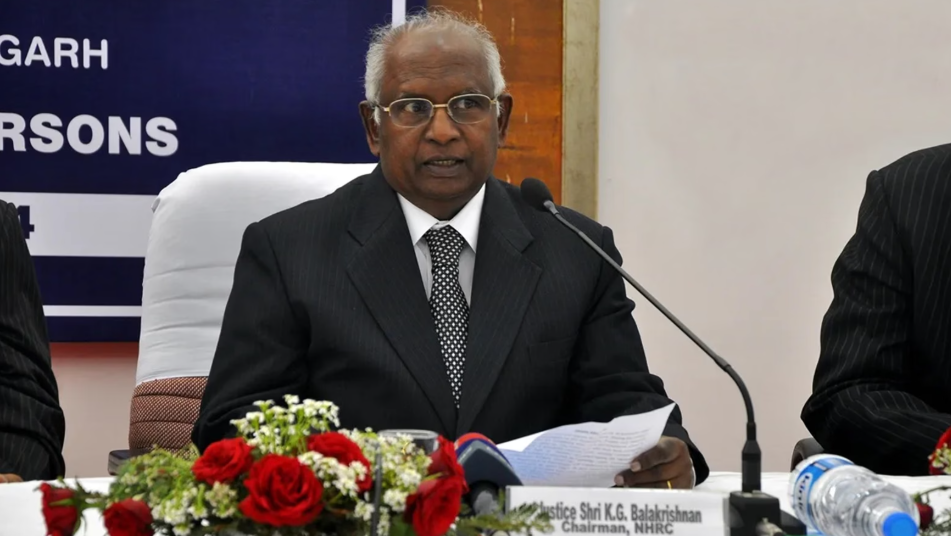
The Union Government has granted a third extension to the Commission of Inquiry headed by former Chief Justice of India K.G. Balakrishnan, extending its tenure till June 2026. The Commission is examining whether Scheduled Caste status should be extended to Dalits who have converted to religions such as Christianity and Islam. The issue has gained prominence due to an ongoing constitutional challenge and judicial scrutiny regarding the validity of the current legal framework.
Background of the Issue
- The concept of Scheduled Castes is historically linked to communities subjected to untouchability and systemic social discrimination within the Hindu social order.
- Over time, similar groups within Sikhism and Buddhism were also recognised as Scheduled Castes through legislative amendments
- However, individuals who convert to Christianity or Islam are currently excluded from Scheduled Caste status, even if they continue to face caste-based discrimination in practice. This has led to long-standing demands from Dalit Christians and Dalit Muslims for inclusion in the Scheduled Caste category
Constitutional Framework
Article 341 of the Constitution of India empowers the President to specify which castes shall be recognised as Scheduled Castes for a particular State or Union Territory
The key constitutional features include
- The President issues the initial list through a notification after consulting the Governor of the State
- Parliament has exclusive authority to include or exclude any caste from this list
The list is State-specific and cannot be modified by executive action alone - This framework establishes that Scheduled Caste status is a constitutional category subject to both executive notification and parliamentary control
1950 Presidential Order and Religious Restriction
The Constitution (Scheduled Castes) Order, 1950 originally restricted Scheduled Caste status only to Hindus
Subsequent amendments expanded the scope
In 1956, Sikhs were included
In 1990, Buddhists were included
- However, the Order continues to exclude persons professing Christianity and Islam
- This religious restriction forms the core of the present controversy, as it links caste-based benefits with religious identity rather than social disadvantage alone
Balakrishnan Commission: Role and Mandate
The Commission of Inquiry was constituted in October 2022 to examine the issue of granting Scheduled Caste status to Dalits who have converted to other religions
Its mandate includes
- Studying whether caste-based discrimination persists after religious conversion
- Evaluating the constitutional, legal, and social implications of extending SC status
Recommending policy changes, if required - The repeated extensions indicate the complexity and sensitivity of the issue, involving constitutional interpretation, social realities, and political considerations
Judicial Dimension
The Supreme Court is currently examining petitions challenging the constitutional validity of the 1950 Order
Arguments presented include
- Petitioners argue that exclusion of Dalit Christians and Muslims violates fundamental rights such as equality and freedom of religion
- The opposing view holds that Scheduled Caste status is historically linked to Hindu social structure and cannot be extended beyond its original context
- The Court’s eventual ruling will have far-reaching implications for reservation policy and constitutional interpretation
Core Debate: Caste vs Religion
- The central issue revolves around whether caste-based discrimination is purely a religious phenomenon or a broader social reality
- One perspective argues that caste is intrinsic to Hindu social structure, and therefore SC status should remain restricted
- Another perspective highlights that caste-based discrimination continues even after conversion, indicating that social identity does not change merely through religious transformation
- This creates a tension between formal classification based on religion and substantive equality based on actual social disadvantage
Implications of Inclusion or Exclusion
- If inclusion is allowed
It would extend affirmative action benefits to a larger group facing social discrimination
It may strengthen the principle of substantive equality
It could also lead to demands for expansion of reservation quotas
- If exclusion continues
It may perpetuate inequality among similarly placed groups
It raises questions about the consistency of secularism and equal protection
It may continue to exclude disadvantaged community from welfare benefit.
Challenges
- Establishing empirical evidence regarding persistence of caste discrimination after conversion
- Balancing constitutional principles of equality, secularism, and affirmative action
- Managing political and social sensitivities associated with reservation policies
- Avoiding excessive expansion of reservation categories that may dilute existing benefits
Way Forward
- A data-driven approach should be adopted to assess the extent of caste-based discrimination across religions
- The focus should shift from religion-based classification to socio-economic and historical disadvantage
- Parliament may consider revisiting the 1950 Order to align it with contemporary realities and constitutional principles
- Judicial clarity is essential to resolve the conflict between formal equality and substantive justice
Conclusion
The debate over extending Scheduled Caste status to Dalits post-conversion reflects a deeper constitutional question regarding the nature of equality and social justice in India. While the existing framework links SC status with religion, evolving social realities challenge this approach. A balanced resolution requires harmonising constitutional principles with ground realities to ensure that affirmative action truly benefits those who continue to face systemic discrimination
CARE MCQ
Q. With reference to Scheduled Castes in India, consider the following statements
- The President can modify the list of Scheduled Castes at any time by notification
- Scheduled Caste status is currently restricted to Hindus, Sikhs, and Buddhists
- Parliament has the power to include or exclude communities from the SC list
Which of the statements given above are correct
- 2 and 3 only
- 1 and 2 only
- 1 and 3 only
- 1, 2 and 3
Ans: (a)
Explanation:
Statement 1 is incorrect because once notified, the SC list can only be modified by Parliament and not by the President alone
Statement 2 is correct because the 1950 Order restricts SC status to Hindus, Sikhs, and Buddhists
Statement 3 is correct because Parliament has exclusive authority to amend the list.
Q.With reference to the constitutional status of Scheduled Castes (Dalits) in India, which of the following statements is correct?
(a) The Constitution provides reservation for Scheduled Castes in both public employment and private sector employment.
(b) The President can notify Scheduled Castes for a State, subject to modification only by Parliament.
(c) The status of Scheduled Castes is determined solely by the State Governments.
(d) Scheduled Castes are entitled to reservation only in educational institutions and not in legislatures.
Ans: (b)
Explanation:
Article 341 of the Constitution empowers the President to specify the list of Scheduled Castes for each State or Union Territory, in consultation with the Governor. Once notified, this list can only be modified by Parliament through law, not by executive action.
The other options are incorrect because reservation does not extend to the private sector, the State Governments do not have final authority in determining SC status, and Scheduled Castes are also provided political reservation in legislatures under Articles 330 and 332.
Q.With reference to political representation of Scheduled Castes, consider the following:
(a) Reservation of seats for Scheduled Castes in Lok Sabha is based on their proportion in total population of India.
(b) Reservation for Scheduled Castes in State Assemblies is fixed permanently by the Constitution.
(c) The reservation of seats for Scheduled Castes in legislatures is subject to periodic extension by constitutional amendments.
(d) Scheduled Castes have reservation only in local bodies, not in Parliament.
Ans: (c)
Explanation:
Reservation of seats for Scheduled Castes in legislatures was initially for 10 years but has been extended periodically through constitutional amendments (latest extension up to 2030). It is not permanent, making this a key conceptual point.
FAQs
Q1 Why are Dalit Christians and Muslims excluded from SC status?
Because the 1950 Presidential Order links SC status to specific religions and excludes others
Q2 What is the role of Article 341?
It empowers the President to specify Scheduled Castes and Parliament to modify the list
Q3 What is the main argument for inclusion?
That caste-based discrimination persists even after conversion and should be recognised
Q4 What is the main concern against inclusion?
That SC status is historically tied to Hindu social structure and expanding it may alter reservation dynamics
Q5 Why is this issue important for UPSC?
It involves constitutional law, social justice, minority rights, and affirmative action policy