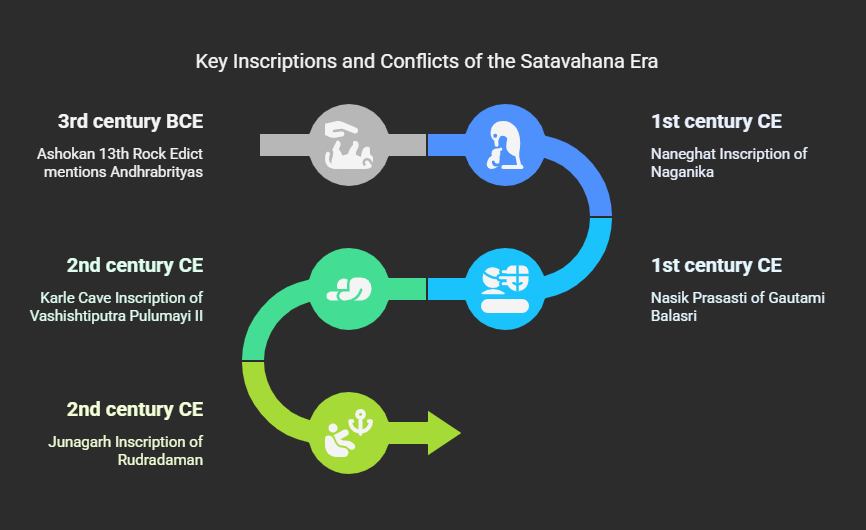
The archaeological sources of the Satavahanas primarily include inscriptions and coins. A large number of inscriptions have been discovered in the Western Ghats, particularly at:
- Nasik
- Kanheri
- Naneghat
These inscriptions are written in the Prakrit language using the Brahmi script.
Royal Inscriptions
About twenty-four stone inscriptions were issued directly by the Satavahana kings and their family members, and these are scattered across the Deccan region. Some of the most significant royal inscriptions include:
- Naneghat Inscription – Issued by Naganika, the wife of Satakarni I.
- Nasik Prashasti – Issued by Gautami Balasri, mother of Gautamiputra Satakarni.
- Karle Cave Inscription – Issued by Vashishtiputra Pulumayi II.
These inscriptions provide valuable information about the contributions of the Satavahana rulers.
Other Important Inscriptions
Apart from the Satavahana inscriptions, other notable inscriptions referring to the Satavahanas include:
- Ashokan 13th Rock Edict – Mentions the Andhrabhrityas (Satavahanas).
- Hatigumpha Inscription (Kalinga) – Issued by Kharavela, the Kalinga ruler, describing the conflict between the Satavahanas and Kalinga rulers over the Godavari basin.
- Junagarh Inscription of Rudradaman (Saka Ruler) – Refers to the Saka-Satavahana conflict.