
Physiography, also known as physical geography, is the branch of geography that deals with the study of natural features and processes on the Earth’s surface. It involves analysing the Earth’s landscapes, topography, climate, soil, and ecosystems.
Stretching from the towering Himalayas in the north to the coastal plains in the south, India’s landscape encompasses a variety of landforms, climates, and ecosystems. The northern region of India is characterized by an extensive area of rugged terrain, comprising multiple mountain ranges with diverse peaks, stunning valleys, and deep gorges. In contrast, the southern part of the country features a stable tableland, marked by extensively eroded plateaus, exposed rocky formations, and well-defined escarpments. Nestled between these two distinct areas lies the expansive North Indian Plain.
This diverse physiography has significant implications for the country’s climate patterns, agriculture, water resources, and biodiversity. Physiography is integral to understanding the spatial distribution of these features, which in turn influences human activity, settlement patterns, and ecological interactions.
THE NORTHERN AND NORTH-EASTERN MOUNTAINS
The Northern and Northeastern Mountains of India encompass the Himalayas and the Northeastern hills, presenting a diverse and complex geographical and cultural landscape. Here’s a detailed breakdown of these regions:
The Himalayas
The Himalayas stand as one of the world’s most prominent mountain ranges, distinguished by a succession of parallel ranges that display diverse orientations and characteristics.They act as a major geographical barrier between the Indian subcontinent and Central and East Asia.
General Orientation and Structure
- Great Himalayan Range: Also known as the central axial range, it stretches approximately 2,500 km from east to west. The width of this range varies between 160-400 km from north to south.
- Orientation:
- Northwestern India: The ranges generally run from northwest to southeast.
- Darjeeling and Sikkim Regions: The ranges are oriented from east to west.
- Arunachal Pradesh: The ranges are aligned from southwest to northwest.
- Nagaland, Manipur, and Mizoram: The mountain ranges are oriented in a north-south direction.
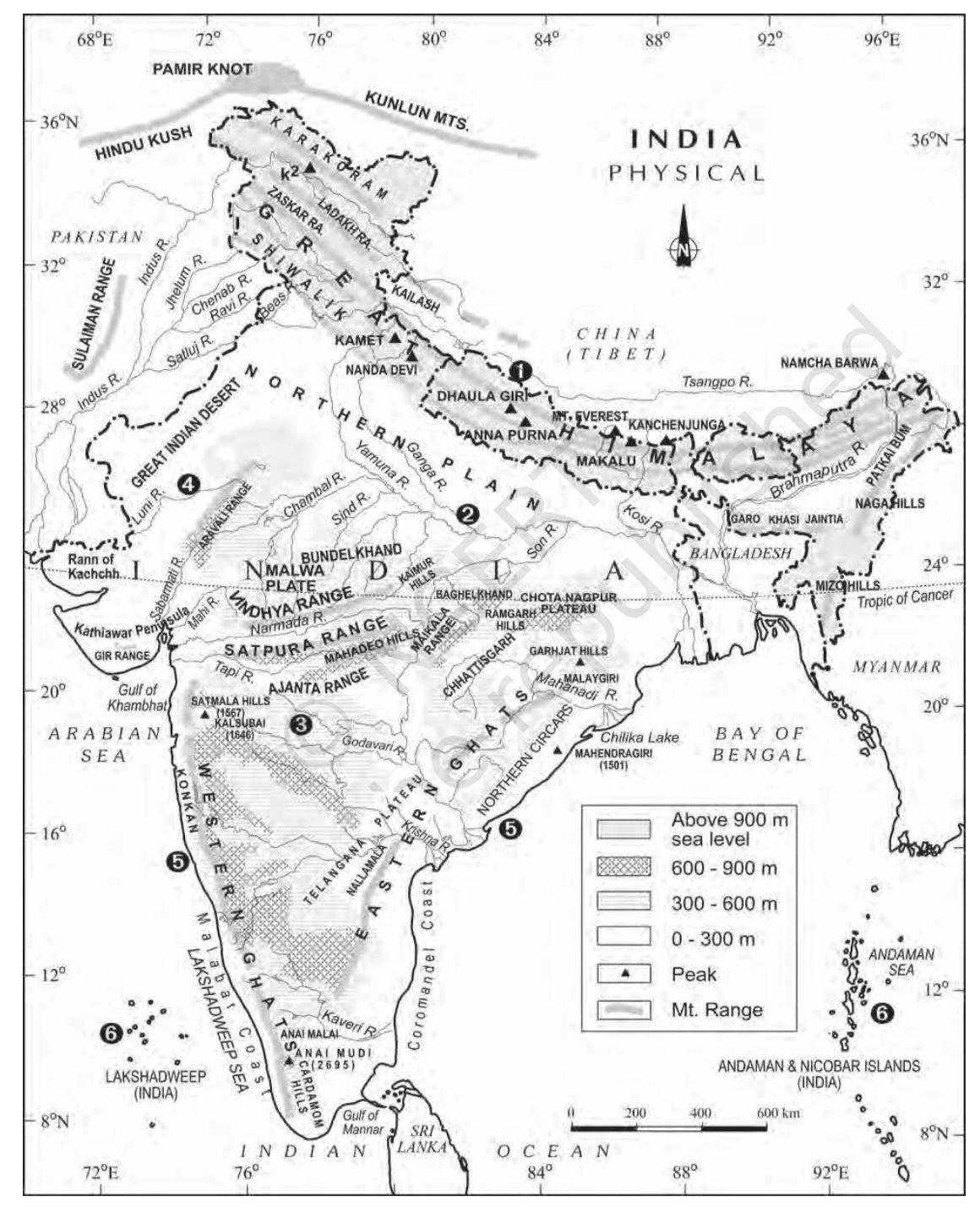
Major Subdivisions of the Himalayas
(i) Kashmir or Northwestern Himalayas:
- Location: Extends through the Kashmir Valley and parts of northern Himachal Pradesh.
- Features: Includes famous peaks like Nanga Parbat and is known for its beautiful valleys and lakes, such as Dal Lake and the Poonch River.
(ii) Himachal and Uttarakhand Himalayas:
- Location: Covers parts of Himachal Pradesh and Uttarakhand.
- Features: Includes notable peaks such as the Nanda Devi and the Great Himalayan National Park. The region is known for its deep valleys and river systems like the Beas and Yamuna.
(iii) Darjeeling and Sikkim Himalayas:
- Location: Situated in the eastern part of the Himalayas, including Darjeeling in West Bengal and Sikkim.
- Features: Home to the Kanchenjunga, the third-highest peak in the world.This area is renowned for its tea plantations and abundant biodiversity.
(iv) Arunachal Himalayas:
- Location: Lies in Arunachal Pradesh.
- Features: This region includes several high peaks and is known for its unique flora and fauna, including the Namdapha National Park and the Mishmi Hills.
(v) Eastern Hills and Mountains:
- Location: Extends through the northeastern states such as Nagaland, Manipur, and Mizoram.
- Features: Includes smaller hills and ranges compared to the central Himalayas, characterized by dense forests and diverse tribal cultures.
Northeastern Hills
The Northeastern hills include a series of mountain ranges and hills that are less prominent than the central Himalayas but are significant for their biodiversity and unique cultural aspects.
- Key Areas: Includes the Khasi, Jaintia, and Naga Hills in Meghalaya; the Mizo Hills in Mizoram; and parts of the Karbi Anglong region in Assam.
 Features: Known for their rich biodiversity, including numerous endemic species of plants and animals. The region is also home to various indigenous tribes with distinct cultural practices.
