

Firdausia Order
- The Firdausia Order was a branch of the Suhrawardi order and its activites were confined to Bihar. It was popularised by Shaikh Harf-ud-din Yahya who was a disciple of Khwaja Nizamud-din Firdausi.
Qadiri Order
- The Qadiri Order was founded by Shaikh Abdul Qadir Jilani (1077–1166) of Baghdad. This Order reached India in the 15th century A.D. It was popularized in India by Shah Niamatullah Makhdum Jilani.
- The followers of this order were opposed to music and singing. They wore green turbans. Dara Shikoh, the eldest son of Shah Jahan, was a follower of this Order
Nakshabandi Order
- This Order was founded in India by the followers of Khwaja Pir Muhammad. It was popularised in India by Khwaja Baqi Billah (1563–1603) who came to Delhi from Kabul in the last years of the Reign of Akbar. Of all the Sufi Orders, it was nearest to orthodoxy and it tried to counteract the liberal religious policies of Akbar who was considered by them as a heretic.
The Shattari Order
- It during the Lodi Dynasty that Shah Abdullah brought the Shattari Order to India. This Order produced a number of saints and Muhammad Ghauth (1485-1562) of Gwalior was the most important. He was a disciple of Haji Hamid Husur. He was the author of two well-known books ‘Jawahir-i-Khamsah’ and ‘Khalid-i-Makhazin’.
- The Sufi movement made a valuable contribution to Indian society. Like the Bhakti saints who were engaged in breaking down the barriers within Hinduism, the Sufis too infused a new liberal outlook within Islam. The interaction between early Bhakti and Sufi ideas laid the foundation for more liberal movements of the fifteenth century.
- A notable contribution of the Sufis was their service to the poor and downtrodden sections of society.The Sufi saints maintained close contact with the common people.
- The Sufi movement encouraged equality and brotherhood.
- Like the Bhakti saints, the Sufi saints contributed greatly to the growth of a rich regional literature.
UPSC PYQS
Ques.1: With reference to Sufism in Indian history, consider the following statements:
1. Shaikh Ahmad Sarhandi was a contemporary of Ibrahim Lodi
2. Shaikh Nasiruddin Chirag-i-Dehlavi was a disciple of Shaikh Nizamuddin Auliya
3. Aurangzeb was contemporary of Shaikh Salim Chisti
4. The Qadiri order of Sufis was first introduced in India by Shaikh Niamtullah and Makhdum Muhammad Jilani
Which of these statements are correct?
(a) 1 and 2 (b) 1 and 3
(c) 2 and 3 (d) 2 and 4
Ques.2: Who among the following was the first Bhakti saint to use Hindi for the propagation of his message? (2002)
(a) Dadu (b) Kabir
(c) Ramananda (d) Tulsidas
Ques.3: Which one of the following sequences indicates the correct chronological order?
(a) Shankaracharya – Ramanuja – Chaitanya
(b) Ramanuja – Shankaracharya – Chaitanya
(c) Ramanuja – Chaitanya – Shankaracharya
(d) Shankaracharya – Chaitanya – Ramanuja
Ques.4: Among the following, who was not a proponent of bhakti cult?
(a) Nagarjuna (b) Tukaram
(c) Tyagaraja (d) Vallabhacharya
Ques.5: Consider the following Bhakti Saints:
1. Dadu Dayal 2. Guru Nanak
3. Tyagaraja
Who among the above was/were preaching when the Lodi dynasty fell and Babur took over?
(a) 1 and 3 (b) 2 only
(c) 2 and 3 (d) 1 and 2
Ques.6: The great philosopher Shankara advocated
(a) Dvaita (b) Advaita
(c) Hinduism (d) Altruism
Ques.7: Ramanujacharya gave stress on
(a) Bhakti (b) Moksha
(c) Dharma (d) None of these
Ques.8: Which of the following statements is correct for Guru Nanak?
(a) He preached punishment for wicked
(b) He preached against Muslims
(c) He preached a war society
(d) He preached that “God is one’
Ques.9: Consider the following statements: (2014)
1. ‘Bijak’ is a composition of the teachings of Saint Dadu Dayal.
2. The philosophy of Pushti Marg was propounded by Madhvacharya.
Which of the statements given above is/are correct?
(a) 1 only (b) 2 only
(c) Both 1 and 2 (d) Neither 1 nor 2
Ques.10: With reference to the cultural history of medieval India, consider the following statements: (2016)
1. Siddhas (Sittars) of Tamil region were monotheistic and condemned idolatry.
2. Lingayats of Kannada region questioned the theory of rebirth and rejected caste hierarchy.
Which of the statements given above is/are correct?
(a) 1 only (b) 2 only
(c) Both 1 and 2 (d) Neither 1 nor 2
Ques.11: The world’s second tallest statue in sitting pose of Ramanuja was inaugurated by the Prime Minsiter of India at Hyderabad recently. Which one of the following statements correctly represents the teachings of Ramanuja? (2022)
(a) The best means of salvation was devotion
(b) Vedas are eternal, self-existent and wholly authoritative
(c) Logical arguments were essential means for the highest bliss
(d) Salvation was to be obtained through meditation
Previous Year Questions – 10
Ques.1: Among the following who was the proponent of the ‘Bhakti Cult’ from West Bengal? (1979)
(a) Chaitanya Prabhu (b) Ramanujacharyulu
(c) Ramanand (d) Kabir
Ques.2: “Sufi Sect” originated and developed in (1979)
(a) Christianity (b) Islam
(c) Hinduism (d) Zoroastrianism
Ques.3: “Bhakti Cult” laid emphasis on (1984)
(a) Idol worship (b) Universal brother hood
(c) Devotion to god (d) None of these
Ques.4: Who among the following Bhakti leaders used the medium of dance and songs (Kirtans) to make one feel the personal presence of god near him?
(a) Shankaradeva (b) Chandidasa
(c) Jnanadeva (d) Chaitanya Mahaprabhu
Ques.5: Most popular Sufis were the (1989)
(a) Rabia (b) Hallaj
(c) Ghazali (d) All of the above
Ques.6: Consider the following pairs: (1990)
Vaisnava Saints Regions of strong following
1. Ramanujacharya South India
2. Chaitanya Central India
3. Vallabhacharya Gujarat and Braj area
4. Ramanand North India
Of these pairs:
(a) 1, 2 and 3 are correct (b) 2, 3 and 4 are correct
(c) 1 and 4 are correct (d) 1, 3 and 4 are correct
Ques.7: Who among the following, was known as a “Nirguna” reformer? (1990)
(a) Chaitanya (b) Kabir
(c) Surdas (d) Tulsidas
Ques.8:The Sufi saint who maintained that devotional music was one way of coming close to God was (1996)
(a) Muin-ud-din Chisti (b) Baba Farid
(c) Saiyyid Muhammad Gesudaraz (d) Shah Alam Bukhari
Ques.9: Assertion (A): The sponsor and the most prominent figure of the Chisti order of Sufis in India is Khwaja Moinuddin Chisti
Reason (R): The Chisti order takes its name from a village Chisti in Ajmer.
In the context of the above two statements, which one of the following is correct?
(a) Both A and R are true and R is the correct explanation of A
(b) Both A and R are true, but R is not a correct explanation of A
(c) A is true, but R is false
(d) A is false, but R is true
Ques.10: Match List 1 with List 2 and select the correct answer using the codes given below the lists (2001)
List 1 List 2
(Bhakti Saint) (Profession)
A. Namdev 1. Barber
B. Kabir 2. Weaver
C. Ravidas 3. Tailor
D. Sena 4. Cobbler
Codes:
A B C D
(a) 2 3 1 4
(b) 3 2 4 1
(c) 3 2 1 4
(d) 2 3 4 1
Ques.11: With reference to Sufism in Indian history, consider the following statements:
1. Shaikh Ahmad Sarhandi was a contemporary of Ibrahim Lodi
2. Shaikh Nasiruddin Chirag-i-Dehlavi was a disciple of Shaikh NizamuddinAuliya
3. Aurangzeb was contemporary of Shaikh Salim Chisti
4. The Qadiri order of Sufis was first introduced in India by Shaikh Niamtullah and Makhdum Muhammad Jilani
Which of these statements are correct?
(a) 1 and 2 (b) 1 and 3
(c) 2 and 3 (d) 2 and 4
Ques.12: Who among the following was the first Bhakti saint to use Hindi for the propagation of his message? (2002)
(a) Dadu (b) Kabir
(c) Ramananda (d) Tulsidas
Ques.13: Which one of the following sequences indicates the correct chronological order?
(a) Shankaracharya – Ramanuja – Chaitanya
(b) Ramanuja – Shankaracharya – Chaitanya
(c) Ramanuja – Chaitanya – Shankaracharya
(d) Shankaracharya – Chaitanya – Ramanuja
Ques.14: Among the following who was not a proponent of bhakti cult?
(a) Nagarjuna (b) Tukaram
(c) Tyagaraja (d) Vallabhacharya
Ques.15: Consider the following Bhakti Saints:
1. Dadu Dayal 2. Guru Nanak
3. Tyagaraja
Who among the above was/were preaching when the Lodi dynasty fell and Babur took over?
(a) 1 and 3 (b) 2 only
(c) 2 and 3 (d) 1 and 2
Ques.16: The great philosopher Shankara advocated
(a) Dvaita (b) Advaita
(c) Hinduism (d) Altruism
Ques.17: Ramanujacharya gave stress on
(a) Bhakti (b) Moksha
(c) Dharma (d) None of these
Ques.18: Which of the following statements is correct for Guru Nanak?
(a) He preached punishment for wicked
(b) He preached against Muslims
(c) He preached a war society
(d) He preached that “God is one’
Ques.19: Ramanujacharya advocated
(a) Dvaita (b) Advaita
(c) Bhakti cult (d) Vaishnavism
Ques.20: Who established four ‘Maths’ in four corners of India?
(a) Shankaracharya (b) Bhaskara
(c) Ramanujacharya (d) None of these
Ques.21: Which of the following statements regarding Adi Shankaracharya is/are correct?
1. He was one of the greatest Hindu scholars
2. He was born in Kerala
3. First ever Indian feature film in Sanskrit was made after his name
4. The above feature film was adjudged the best film for the year 1983
5. He wrote a commentary on the Upanishads
Of these statements:
(a) All are correct (b) Only 1, 2 and 3 are correct
(c) Only 1, 3 and 5 are correct (d) All except 2 are correct
Ques.22: Match the columns:
A. Namdeva 1. West Bengal
B. Chaitanaya 2. Uttar Pradesh
C. Surdas 3. Maharashtra
D. Nanak 4. Punjab
Select the correct answer using the codes given below
A B C D
(a) 3 1 2 4
(b) 2 3 1 4
(c) 4 2 1 3
(d) 1 4 3 2
Ques.23: Ramanuja, the Vaishnava Saint, was born at
(a) Srirangam (b) Srivilliputtur
(c) Udipi (d) None of the above
Ques.24: Consider the following statements: (2014)
1. ‘Bijak’ is a composition of the teachings of Saint Dadu Dayal.
2. The philosophy of Pushti Marg was propounded by Madhvacharya.
Which of the statements given above is/are correct?
(a) 1 only (b) 2 only
(c) Both 1 and 2 (d) Neither 1 nor 2
Ques.25: With reference to the cultural history of medieval India, consider the following statements: (2016)
1. Siddhas (Sittars) of Tamil region were monotheistic and condemned idolatry.
2. Lingayats of Kannada region questioned the theory of rebirth and rejected caste hierarchy.
Which of the statements given above is/are correct?
(a) 1 only (b) 2 only
(c) Both 1 and 2 (d) Neither 1 nor 2
Ques.26: The world’s second tallest statue in sitting pose of Ramanuja was inaugurated by the Prime Minsiter of India at Hyderabad recently. Which one of the following statements correctly represents the teachings of Ramanuja? (2022)
(a) The best means of salvation was devotion
(b) Vedas are eternal, self-existent and wholly authoritative
(c) Logical arguments were essential means for the highest bliss
(d) Salvation was to be obtained through meditation
Ques.27: Bijak was written by (1981)
(a) Tulsidas (b) Ramdas
(c) Guru Nanak (d) Kabirdas
Ques.28: Match the following: (1985)
A. Amir Kusro 1. 14th Century
B. Kabir 2. 13th Century
C. AbulFazal 3. 15th Century
D. Tukaram 4. 16th Century
5. 17th Century
Codes:
A B C D
(a) 3 4 2 4
(b) 5 2 1 4
(c) 2 3 4 5
(d) 1 3 5 4
❒❒❒
Hint & Solution
UPSC
1. (b)
2. (c)
3. (a)
4. (a)
5. (b)
6. (b)
7. (a)
8. (d)
9. (d)
10. (c)
11. (a)
Previous Year
1. (a)
- Chaitanya Prabhu, also known as Chaitanya Mahaprabhu, was a 16th-century saint and spiritual leader from West Bengal, India. He is considered one of the most significant proponents of the Bhakti movement, which emphasized intense devotion and love for God as the path to spiritual enlightenment.
- Chaitanya Prabhu propagated the practice of congregational chanting of the holy names of God, specifically the chanting of the Hare Krishna mantra. He emphasized the significance of devotional love (bhakti) and advocated that anyone, regardless of social or religious background, could attain spiritual liberation through sincere devotion to God.
- Ramanujacharyulu was a prominent philosopher and theologian associated with the Sri Vaishnavism tradition in South India. Ramanand was a 14th-century saint and teacher from North India who played a significant role in the spread of Bhakti movement. Kabir was a mystic poet and saint who lived in the 15th century and is revered by both Hindu and Muslim communities.
2. (b)
- Sufism is described as Islamic mysticism or asceticism, which through belief and practice helps Muslims attain close proximity to Allah by way of direct personal experience of God.
- In the Hadith the philosophy is rightly explained elaborately saying “That you worship God as if you see Him, for if you don’t see Him then truly He sees you.”
- The chief aim of all Sufis is to seek the pleasing of God by working to restore within themselves the primordial state of fitra or the state of purity and innocence Muslims believe all humans to be born with.
- Sufism exists in both Sunni and Shia Islam, and is not actually a distinct sect, as is sometimes unwittingly assumed, but a method of approaching or a way of understanding the religion directing followers’ attention inward. Sufi practice focuses on the renunciation of worldly things, purification of the soul and the mystical contemplation of God’s nature.
- Sufism has deeply influenced literature and art for centuries which even includes the works of the famous Rumi. Sufi expression is manifested in written form, with biographies and accounts of saints and mystics, poetry, and extensive works of instructional and descriptive literature to help guide and coach readers in reaching their ascetic objectives.
3. (c)
- Bhakti movement in Hinduism refers to ideas and engagement that emerged in the medieval era on love and devotion to religious concepts built around one or more gods and goddesses. Bhakti movement preached against the caste system using the local languages so that the message reached the masses.
4. (d)
- The Bhakti leader who used the medium of dance and songs (Kirtans) to make one feel the personal presence of God near them was (d) Chaitanya Mahaprabhu.
- Chaitanya Mahaprabhu, also known as Gauranga, was a 16th-century Bhakti saint and the founder of Gaudiya Vaishnavism. He propagated the path of devotion (Bhakti) to Lord Krishna and emphasized the chanting of the holy names of God, particularly through the practice of sankirtan or congregational chanting of the Hare Krishna mantra.
- Chaitanya Mahaprabhu himself engaged in ecstatic dancing and chanting of the holy names of Krishna, which created an atmosphere of intense devotion and spiritual ecstasy. His devotees would join him in these ecstatic Kirtan sessions, singing and dancing in devotion to Lord Krishna.
- Through the medium of dance and songs (Kirtans), Chaitanya Mahaprabhu aimed to invoke the personal presence of God and to create a deeply experiential and ecstatic connection with the divine. He believed that through such devotional practices, one could directly experience the presence and love of God in their lives.
5. (d)
- Rabia al-Adawiyya al-Qaysiyya was a Muslim saint and Sufi mystic. She is known in some parts of the world as, Hazrat Bibi Rabia Basri, Rabia Al Basri or simply Rabia Basri.
- Mansur al-Hallaj was a Persian mystic, poet and teacher of Sufism. He is best known for his saying: “I am the Truth”, which many saw as a claim to divinity, while others interpreted it as an instance of annihilation of the ego which allows God to speak through the individual.
- Al-Ghazali was one of the most prominent and influential philosophers, theologians, jurists, and sufi mystics of Sunni Islam. He was of Persian origin. Some Muslims consider him to be a Mujaddid, a renewer of the faith who, according to the prophetic hadith, appears once every century to restore the faith of the ummah.
6. (c)
- Chaitanya was also known as Sri Gauranga. He was a popular Vaishnava saint and reformer from Bengal.
- Vallabhacharya was also known as Vallabha. He was an Indian Telugu philosopher who founded the Krishna-centered Pushti sect of Vaishnavism only in the Braj region of India, and the philosophy of Shuddha advaita.
7. (b)
- He was born near Benaras to a Brahmin widow who abandoned him after his birth and raised him in the home of a Muslim weaver, according to legend
- Kabir was raised by a Muslim family after being born into a Hindu family. He was a Ramananda disciple
- He is one of the most revered Bhakti saints, and his teachings have influenced people from all walks of life.
- Through his views and conceptions about God, he sparked a massive reform movement.
- He was a Nirguna saint who publicly criticized major religions such as Hinduism and Islam for their traditional teachings.
- He had an inquisitive mind and learned a lot about Hinduism in Benaras.
- Ramananda initiated him into the deeper knowledge of Hindu and Muslim religious and philosophical principles, and he became conversant with Islamic teachings.
- He severely condemned idol worship, pilgrimages, ceremonies, and the caste system, particularly the practice of untouchability, and emphasized man’s equality before God.
- Kabir’s purpose was to preach a religion of love that would bring people of all castes and creeds together.
- He was well-versed in yogic techniques and believed that devotion to God was a powerful method of salvation. He exhorted his disciples to have a clean heart, free of harshness, deceit, dishonesty, and insincerity, in order to be saved.
- For actual understanding, he did not consider asceticism or book knowledge to be important. He also did not believe it was necessary to give up a householder’s life in order to live a saintly life.
- Kabir’s goal was to bring Hindus and Muslims together and promote peace between them.
- He described Hindus and Muslims as “pots of the same clay,” emphasizing the intrinsic oneness of all religions. Rama and Allah, temple and mosque, were all the same to him.
- Kabir is the greatest mystic saint, and his devotees are known as Kabirpanthis.
- Some of his most significant students included Raidas (a tanner), Guru Nanak (a Khatri trader), and Dhanna (a Jat peasant).
- His writings are collected in the well-known book Bijak.
8. (a)
- The Sufi saint who maintained that devotional music was one way of coming close to God was Muin-ud-din Chishti. He was born in Afghanistan in 1156.He began his religious career at the age of 13. He distributed his inheritance among the poor and adopted the simple life of an itinerant Sufi fakir.
- Khwaja Sahib and his disciples settled in Ajmer at the beginning of the thirteenth century. Withdrawing into a life of meditation and fasting, he preached a message of renunciation, affirming that personal experience of God was attainable to anyone who relinquished their ties to the world.
9. (c)
- The Chishti order is a Sufi order within the mystic branches of Islam which was founded in Chisht, a small town near Herat, Afghanistan about 930 CE. The order was founded by Abu Ishaq Shami (“the Syrian”). The most famous of the Chishti saints is Moinuddin Chishti popularly known as Gharib Nawaz meaning “Benefactor of the Poor” who settled in Ajmer, India.
10. (b)
- These Bhakti saints were disciples of Saint Ramananda. Thus, among Ramananda’s disciples was Ravidas, who was a cobbler by caste; Kabir, who was a weaver; Sena, who was a barber; and Sadhana, who was a butcher.
- Namadeva – He was an Indian poet and saint from Narsi, Hingoli, Maharashtra, India. In the 16th Century, Namadeva preached the gospel of love. He opposed idol worship and the dominance of priests. He criticized the Caste System.
- Kabir – Kabir was the most famous disciple of Ramananda. He was brought up by a Muslim couple who were weavers by profession. His birthplace is Varanasi. He had a curious mind in learning new things,, and he learned much about Hinduism in Benares. Kabir aimed to reunite Hindus and Muslims and form harmony between them. He is regarded as the greatest of the mystic saints.
11. (d)
- (d) Sheikh Ahmad Sarhandi of Naqshbandi order was a contemporary of Akbar and Jahangir. The Qadiri order of Sufis was first introduced in India by Sheikh Nizamatullah (He died in 1430 AD) and Makhdum (or Nasiruddin) Muhammad Jilani (died in 1517).
- Shaikh Ahmad Sirhindi, also known as Mujaddid Alif Sani, was a prominent Islamic scholar and Sufi saint who lived during the late 16th and early 17th centuries in the Indian subcontinent. He is known for his significant contributions to Islamic theology and Sufism. Here are some key points about Shaikh Ahmad Sirhindi:
1. Reformist Figure: Shaikh Ahmad Sirhindi is often regarded as a reformer within Sufism and Islamic thought. He advocated for a return to the original teachings of Islam and sought to purify Sufi practices from what he saw as undesirable innovations.
2. Naqshbandi Order: He was a leading figure in the Naqshbandi Sufi order and played a pivotal role in revitalizing the Naqshbandi tradition in India. His efforts contributed to the spread of the Naqshbandi order in the Indian subcontinent.
3. Opposition to Syncretism: Shaikh Ahmad Sirhindi was critical of syncretic practices and beliefs that had emerged within some Sufi circles. He emphasized strict adherence to orthodox Islamic teachings and rejected syncretism with non-Islamic elements.
4. Influence on Aurangzeb: His ideas and teachings had a significant impact on the Mughal Emperor Aurangzeb, who was known for his conservative and orthodox policies. Aurangzeb sought guidance from Shaikh Ahmad Sirhindi and implemented some of his recommendations.
5. Writings: He wrote many letters and treatises, addressing various theological and Sufi topics. His writings often reflect his concerns about maintaining the purity of Islamic faith and Sufi practices.
6. Legacy: Shaikh Ahmad Sirhindi’s legacy endures in the form of his writings and his influence on Islamic thought and Sufism in South Asia. He is considered an important figure in the history of Islamic revivalism in the Indian subcontinent.
- It’s important to note that Shaikh Ahmad Sirhindi was not a contemporary of Ibrahim Lodi, as indicated in the initial statement you provided. Ibrahim Lodi ruled during the 16th century, while Shaikh Ahmad Sirhindi lived during the late 16th and early 17th centuries.
- Shaikh Nasiruddin Chirag Dehlavi, also known simply as Nasiruddin Chirag or Nasiruddin Chiragh-i-Delhi, was a revered Sufi saint and spiritual leader who lived in Delhi, India, during the 14th century. Here are some key points about Shaikh Nasiruddin Chirag Dehlavi:
1. Sufi Saint: Shaikh Nasiruddin Chirag Dehlavi was a prominent figure in the Chishti Sufi order, which is one of the most widely followed Sufi orders in India. He is known for his deep spirituality and his commitment to the Sufi path.
2. Disciple of Shaikh Nizamuddin Auliya: One of the significant aspects of Nasiruddin Chirag’s life is that he was a devoted disciple of the renowned Sufi saint Shaikh Nizamuddin Auliya, who was a central figure in the Chishti Sufi order and lived in Delhi. Nasiruddin Chirag received spiritual guidance and training from Shaikh Nizamuddin Auliya.
3. Spiritual Teachings: Nasiruddin Chirag Dehlavi’s teachings emphasized love and devotion to God, as is typical of Chishti Sufi tradition. His poetry and sayings (shayari and qawwali) often conveyed the themes of love for the Divine and the importance of self-purification.
4. Tomb in Delhi: His tomb, known as the “Dargah of Nasiruddin Chirag Dehlavi,” is located in the Chirag Delhi area of Delhi, India. It remains a place of pilgrimage and veneration for devotees and visitors.
5. Contribution to Sufi Literature: While Nasiruddin Chirag Dehlavi is primarily remembered for his spiritual teachings and influence as a Sufi saint, his writings and poetry have also contributed to the rich tapestry of Sufi literature in India.
6. Historical Significance: Nasiruddin Chirag Dehlavi’s life and teachings are significant in the context of the Sufi tradition’s evolution in India. His association with Shaikh Nizamuddin Auliya and his role as a spiritual leader in his own right have left a lasting impact on the spiritual and cultural heritage of Delhi and the wider region.
Overall, Shaikh Nasiruddin Chirag Dehlavi holds a revered place in the history of Sufism in India, and his teachings continue to inspire and guide spiritual seekers to this day.
- Shaikh Nizamuddin Auliya, often referred to simply as Nizamuddin Auliya or Hazrat Nizamuddin Auliya, was one of the most prominent and revered Sufi saints in India. He lived during the 13th and 14th centuries and is known for his profound spiritual teachings, his role in the Chishti Sufi order, and his impact on the cultural and spiritual landscape of Delhi and the Indian subcontinent. Here are some key points about Shaikh Nizamuddin Auliya:
1. Sufi Saint: Nizamuddin Auliya belonged to the Chishti Sufi order, which emphasized simplicity, love for God, and service to humanity. He is considered one of the greatest Chishti saints and a leading figure in the Sufi tradition.
2. Spiritual Legacy: His teachings emphasized the importance of love (Ishq) and devotion to God (Ibadat). He believed in the power of love as a means of connecting with the Divine and often expressed his deep love for God through poetry and music.
3. Spiritual Practices: Nizamuddin Auliya’s Sufi practices included devotional music and poetry. He was known for his association with Qawwali, a form of Sufi devotional music, which continues to be an integral part of Sufi gatherings and shrines in the Indian subcontinent.
4. Compassion and Service: He was renowned for his compassion and care for the poor and destitute. His khanqah (Sufi hospice) in Delhi became a center for spiritual gatherings, where people from all walks of life were welcomed and fed. He believed in serving humanity as a means of serving God.
5. Disciples: Nizamuddin Auliya had many devoted disciples, some of whom became prominent Sufi saints and leaders in their own right. Among them was Shaikh Nasiruddin Chirag Dehlavi, as mentioned earlier.
6. Historical Significance: His influence extended beyond his lifetime, and his spiritual lineage continues to be revered by countless followers. His teachings and the traditions associated with his shrine have left an enduring mark on the cultural and spiritual heritage of Delhi and India.
7. Dargah: The shrine of Hazrat Nizamuddin Auliya, known as the Nizamuddin Dargah, is located in the Nizamuddin West area of Delhi. It remains a place of pilgrimage and spiritual significance, attracting devotees and visitors from around the world.
Overall, Shaikh Nizamuddin Auliya is remembered as a spiritual luminary who exemplified the ideals of love, compassion, and devotion in Sufism. His teachings continue to inspire and guide seekers on the path of spirituality and service to humanity.
- Shaikh Salim Chishti, also known as Shaikh Salimuddin Chishti, was a revered Sufi saint who lived during the Mughal era in India. He is particularly known for his association with the Mughal Emperor Akbar and the famous dargah (shrine) in Fatehpur Sikri, near Agra. Here are some key points about Shaikh Salim Chishti:
1. Sufi Saint: Shaikh Salim Chishti was a prominent Sufi saint, belonging to the Chishti order of Sufism. The Chishti Sufi order emphasized love, simplicity, and devotion to God.
2. Influence on Akbar: One of the most significant aspects of Shaikh Salim Chishti’s life is his association with Emperor Akbar, one of the greatest Mughal rulers. Akbar held the saint in high regard and sought his blessings.
3. Predicting Akbar’s Heir: According to historical accounts, Shaikh Salim Chishti is believed to have predicted the birth of Akbar’s heir, who would later become Emperor Jahangir. This prophecy contributed to the close relationship between the saint and the emperor.
4. Dargah in Fatehpur Sikri: Shaikh Salim Chishti’s tomb and dargah are located in Fatehpur Sikri, a historical city near Agra. The construction of the shrine was initiated by Akbar as an expression of his gratitude and devotion to the saint.
5. Architectural Significance: The dargah of Shaikh Salim Chishti is renowned for its architectural beauty and is considered a masterpiece of Mughal architecture. The white marble structure features intricate designs and is a prominent historical and religious site.
6. Pilgrimage Site: The dargah remains a popular pilgrimage site for devotees and visitors from around the world. People visit to pay their respects, seek blessings, and offer prayers at the shrine.
7. Symbol of Religious Harmony: Shaikh Salim Chishti’s association with Akbar highlights the emperor’s interest in religious tolerance and syncretism. Akbar’s policy of Sulh-i-Kul, which promoted religious harmony, was influenced by his interactions with Sufi saints like Shaikh Salim Chishti.
Overall, Shaikh Salim Chishti is remembered not only for his spiritual significance but also for his role in the history of the Mughal Empire and his influence on Emperor Akbar. His dargah in Fatehpur Sikri remains a symbol of religious harmony and architectural excellence.
- The Qadiri order, also known as the Qadiriyya or Qadiri Sufi order, is one of the prominent and widely followed Sufi orders in Islam. It takes its name from its founder, Sheikh Abdul Qadir Gilani (also spelled as Abd al-Qadir al-Jilani), who lived during the 12th century in Baghdad, Iraq. Here are some key points about the Qadiri order of Sufis:
1. Founder: The Qadiri order was founded by Sheikh Abdul Qadir Gilani, who is often referred to as “Ghous-ul-Azam” or “the great helper.” He was a renowned Islamic scholar and mystic who played a significant role in the development of Sufism.
2. Spiritual Teachings: The Qadiri order emphasizes the purification of the heart (Tazkiyah) and the attainment of spiritual closeness to God (Tasfiyah). Its teachings revolve around strict adherence to Islamic principles, devotion to God, and the importance of a Sufi guide (sheikh) for spiritual guidance.
3. Universal Appeal: The Qadiri order has a universal and inclusive approach, welcoming followers from various cultural and ethnic backgrounds. It has a strong presence in many parts of the Islamic world, including South Asia, the Middle East, and North Africa.
4. Sufi Practices: Followers of the Qadiri order engage in various Sufi practices, such as Dhikr (remembrance of God), recitation of Sufi poetry and hymns, meditation, and acts of service to humanity. They also adhere to the principles of humility, compassion, and selflessness.
5. Sufi Silsila: Like other Sufi orders, the Qadiri order follows a spiritual lineage or chain of transmission (silsila) that traces its authority and teachings back to Sheikh Abdul Qadir Gilani. The silsila is an important aspect of Sufi identity and authentication.
6. Historical Influence: The Qadiri order has had a significant historical impact, and its teachings and practices continue to resonate with Sufi communities worldwide. Its sheikhs and followers have contributed to the spread of Islamic spirituality and scholarship.
7. Modern Presence: In contemporary times, the Qadiri order remains active, with numerous branches and followers. It plays a vital role in preserving Sufi traditions and promoting the spiritual aspects of Islam.
It’s important to note that the Qadiri order is just one of many Sufi orders within Islam, each with its unique emphasis on spiritual practices and teachings. Sufi orders have been instrumental in the development of Islamic mysticism and have contributed to the spiritual and cultural heritage of the Muslim world.
Sufism has a rich and diverse history in India, and it has given rise to various Sufi orders or tariqas over the centuries. These Sufi orders have played a significant role in shaping the spiritual, cultural, and social landscape of India. Here are some notable Sufi orders and their branches in India:
1. Chisti Order: The Chishti order is one of the most influential Sufi orders in India. It was founded by Khwaja Moinuddin Chishti in the 12th century. The Chishti order is known for its emphasis on love, devotion, and service to humanity. Some prominent branches within the Chishti order include the Nizamuddin Chishti branch in Delhi and the Ajmer Sharif branch in Rajasthan.
2. Qadiri Order: The Qadiri order, founded by Sheikh Abdul Qadir Gilani, has a significant presence in India. It emphasizes spiritual purification and adherence to Islamic principles. The Qadiri order has followers and branches in various regions of India.
3. Suhrawardi Order: The Suhrawardi order, founded by Sheikh Shihabuddin Suhrawardi, has had a historical presence in India. This order emphasizes both spiritual and intellectual pursuits. It had followers and centers of learning in different parts of India.
4. Naqshbandi Order: The Naqshbandi order, founded by Baha-ud-Din Naqshband Bukhari, is known for its focus on silent dhikr (remembrance of God) and spiritual discipline. It has a presence in India with followers in regions like Kashmir.
5. Mevlevi Order (Whirling Dervishes): Although originally associated with Rumi and his followers, the Mevlevi order, known for its distinctive whirling dance (Sama), has a presence in some parts of India.
6. Shattari Order: The Shattari order is a unique Sufi order that combines elements of both the Chishti and Suhrawardi orders. It has followers and centers in India, particularly in the Deccan region.
7. Firdausi Order: This is a lesser-known Sufi order with its origins in India. It is influenced by Persian and Indian Sufi traditions.
8. Azeemia Order: Founded by Sheikh Azeem, this order has gained followers in India. It combines elements of various Sufi orders and emphasizes self-purification and spiritual development.
- These are just a few examples of Sufi orders and their branches in India. Each order has its unique teachings, practices, and spiritual lineages, but they all share a common goal of seeking closeness to God through love, devotion, and spiritual discipline. Sufism continues to thrive in India, and Sufi shrines and gatherings remain an integral part of the country’s cultural and religious fabric.
12. (c)
- The bhakti saints rejected the hereditary caste system in the society and its emphasis on prescribed rituals, instead of stressing the importance of morality, purity of heart, and an attitude of selfless service in a person. They preferred and supported the spirit of the law rather than its letter which enabled many followers of apparently lower birth who were generally neglected by society to participate. These include a number of famous women saints. The influence of the bhakti saints prevails even up to the present time.
- Ramananda was a Bhakti saint who used the Hindi language for the propagation of his principles .
- Note Ramananda accepted disciples without discrimination among anyone based on their gender, class, caste, or religion. Many of his disciples were Muslims as well. Traditional scholarship tells that his disciples included the poet-saints involved in the later Bhakti movement namely, Kabir, Ravidas, Bhagat Pipa, and many others. However, some modern scholars question some of his spiritual lineages while others support this lineage with historical evidence. His verses are also mentioned in the Sikh scripture Adi Granth.
- Ramananda was generally known for composing his works and discussing the spiritual themes of vernacular Hindi, thus, as a result, making his knowledge accessible to a larger number of people.
Certainly, here is more information about the options:
(a) Dadu:
- Dadu Dayal was a prominent Bhakti saint and poet in medieval India.
- He is associated with the Sant Mat tradition and emphasized devotion to God and inner spiritual experiences.
- Dadu Dayal primarily used Rajasthani and Braj Bhasha (a medieval form of Hindi) for his devotional poetry.
(b) Kabir:
- Kabir was one of the most well-known Bhakti saints in India.
- He composed devotional poetry that is highly regarded for its spiritual and social commentary.
- Kabir’s poetry was primarily in the form of Hindi and a blend of dialects known as “Khariboli.”
(c) Ramananda:
- Ramananda is considered a pioneer of the Bhakti movement in North India.
- He was known for propagating his teachings in vernacular languages, including Hindi.
- Ramananda’s efforts in spreading the message of devotion (bhakti) in the local language had a significant impact on the Bhakti movement.
(d) Tulsidas:
- Tulsidas was a prominent poet-saint in medieval India, known for his devotion to Lord Rama.
- He is best known for his epic work, the “Ramcharitmanas,” which is written in Awadhi, a dialect of Hindi.
- While Tulsidas made significant contributions to Hindi literature, he was not the first Bhakti saint to use Hindi for the propagation of his message.
- So, in the context of the question, Ramananda is considered the first Bhakti saint to use Hindi for the propagation of his message.
13. (a)
- Sankaracharya propounded the Kewal Advaita Vedanta philosophy.In the year 788 A. D., he was born in Kalady, Kerala. Around 1137 A. D.,Ramanujacharya was born in the Tamil Nadu town of Sriperumbudur. The Visistadvaita Siddhanta was founded by him. Chaitanya is thought to have been born about 1485 A. D.
- Shankaracharya is the most commonly used theme of the heads of palaces called mathas in the Advaita Vedanta tradition of the Hindu Dharma. The title is based on Adi Shankara; teachers from the next line of teachers from him are known as Shankaracharyas.
- Ramanuja or Ramanujacharya was a Hindu theologian, social activist, and philosopher from India one of the most influential figures in the process of Sri Vaishnavism within Hinduism. His philosophical foundations of devotion contributed to Bhakti’s organization.
- Shri Krishna Chaitanya Mahaprabhu was a 15th century Indian saint and a combined avatar of Radha and Krishna. Chaitanya Mahaprabhu’s mode of worshiping Krishna with beautiful song and dance has had a profound effect on Vaishnavism in Bengal. He was a great master of the Vedantic philosophy of Achintya Bheda Abheda Tattva.
14. (a)
Among the options provided, Nagarjuna was not a proponent of the bhakti cult.
(a) Nagarjuna:
- Nagarjuna was a prominent Indian Buddhist philosopher and scholar who lived around the 2nd century CE.
- He is best known for his contributions to the development of Mahayana Buddhism and his writings on the philosophy of emptiness (Sunyata).
- While Nagarjuna made significant contributions to Buddhist philosophy, he was not associated with the bhakti cult, which is more closely related to devotional practices within Hinduism.
(b) Tukaram:
- Sant Tukaram was a Marathi saint and poet who lived in the 17th century.
- He is celebrated as one of the most prominent proponents of the Bhakti movement in Maharashtra, particularly within the Varkari sect. Tukaram’s devotional poetry is well-known for its devotion to Lord Vithoba (a form of Lord Krishna).
(c) Tyagaraja:
- Tyagaraja was a South Indian composer and Carnatic music composer-saint who lived in the 18th century.
- He is renowned for his devotion to Lord Rama and is considered one of the foremost composers of Carnatic classical music with a strong devotional and bhakti-oriented approach.
(d) Vallabhacharya:
- Vallabhacharya, also known as Shri Vallabha, was a prominent theologian and philosopher who lived in the 15th century.
- He is associated with the Pushti Marg sect and is known for his devotion to Lord Krishna. Vallabhacharya’s teachings and the Pushti Marg emphasize the path of loving devotion (bhakti) to Krishna.
- So, among the options, Nagarjuna stands out as he was not a proponent of the bhakti cult; instead, he was a Buddhist philosopher.
15. (b)
- Guru Nanak was/was preaching when the Lodi dynasty fell and Babur took over. Guru Nanak was the bhakti saint who witnessed the fall of the Lodi dynasty. He was born on 29th November 1469 and died on 22nd September 1539. He was raised in a Hindu family and belonged to the Bhakti Sant tradition. He was the founder of Sikhism and the first of the ten Sikh Gurus. His parents were Kalyan Chand Das Bedi and Mata Tripta. Founder of Sikhism religion Opposes idol worship and caste system, and taught the worship of one God through prayer and meditation. Hence, option 2 is correct.
- Dadu Dayal : Dadu Dayal was a poet-saint from Gujarat, India, a religious reformer who spoke against formalism and priestcraft. Disciple of Kabir Books: Dadu, the compassionate mystic, Sakhi Khand. He was a supporter of Hindu-Muslim unity. His followers were called Dadu Panthers.
- Tulsidas : Tulsidas, also known as Goswami Tulsidas, was a Ramanandi Vaishnava saint and poet, renowned for his devotion to the deity Rama. He wrote several popular works in Sanskrit and Awadhi but is best known as the author of the epic Ramcharitmanas, a retelling of the Sanskrit Ramayana based on Rama’s life in the vernacular Awadhi.
16. (b)
- Shankaracharya’s works in Sanskrit discuss the unity of the Ātman and Nirguna Brahman “brahman without attributes”. He wrote ample commentaries in support of his thesis, over the Vedic canon which includes topics on Brahma Sutras, Principal Upanishads and Bhagavad Gita.
- Adi Shankara’s works are the pillars of Advaita Vedanta school of Hinduism. Amazingly more than 300 texts are allocated to his name. Some of it includes commentaries (Bhāṣya), original philosophical expositions (Prakaraṇa grantha) and poetry (Stotra). Shankara is best known for his valuable work on systematic reviews and commentaries (Bhasyas) on ancient Indian texts. Shankara’s masterpiece of commentary is the Brahmasutrabhasya.
- Knowledge of Brahman: According to Shankara, Brahman is an unchanging entity which alone is real, while changing entities do not have absolute existence.
- Adi Shankaracharya was the great Indian philosopher who consolidated the doctrine of Advaita Vedanta.
17. (a)
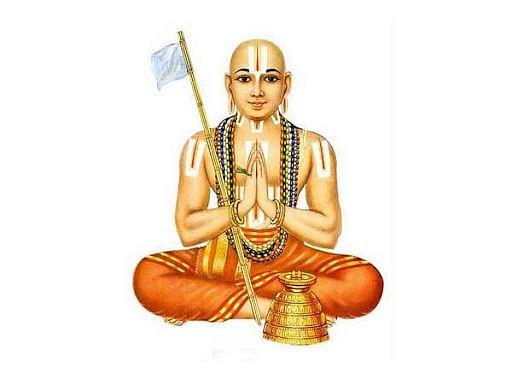
- Ramanuja was an Indian theologian, philosopher and one of the most important exponents of the Sri Vaishnavism tradition within Hinduism. His philosophical foundations for devotionalism were influential to the Bhakti movement.
- Ramanuja, who was born in Sriperumbudur, near modern-day Chennai, preached Vishishta Advaita Vada in the 12th century.
- He believes that God is Saguna Brahman and that the creative process, encompassing all of creation’s things, is genuine and not illusory, as Shankaracharya believed.
- As a result, Ramanuja believes that God, soul, and matter are all real. The inner substance, on the other hand, is God, and the rest are his qualities.
- As in dualism, the universe and Brahman are considered two equally real entities in Vishishta Advaita Vada, but the universe is generated out of Brahman rather than being separate from it.
- The Brahman is regarded as a personal god with omniscience who created the universe from himself.
- As a result, the world bears the relation of the portion to the whole or the relation of a ‘qualified consequence’ to the base to Brahman.
- Brahman is the sea, and the objects of the world, both living and nonliving, are the waves upon this sea, according to the famous analogy.
- Brahman, according to Ramanuja, is a completely personal god who is thought to be Vishnu or one of his avatars. Vishnu, he believed, created the universe out of his love for people, and he also ruled over it at every turn.
- He also believed that Vishnu possesses all of the characteristics of a personal god, such as omniscience and omnipotence.
- The difference between Dualism and Vishishta Advaita is that “mankind has a greater rank and is closer to God than in pure dualistic worship.”
- Both the universe and Brahman are equally existent in Vishishta Advaita, they have not considered two independent realities as they are in Dualism.
- Ramanuja was a proponent of prabattimarga or self-surrender to God. He preached Bhakti redemption and welcomed underprivileged people to Vaishnavism.
- Sribhashya, Vedanta Dipa, Gita Bhasya, and Vedantasara are some of his works.
18. (d)
- Guru Nanak was born to a Hindu household in Nankana Sahib, Punjab, Pakistan, on April 15, 1469. His father worked as a revenue accountant for the agricultural industry. Sikhs all across the world commemorate Guru Nanak’s birthday as Guru Nanak Gurpurab.
- He studied Hinduism as well as Islam. Many people regard Sikhism as a link between Hinduism and Islam.
- He claimed that he was neither a divine incarnation nor even a prophet, but that anyone could directly communicate with God. The concept of God is referred to as ‘Vahiguru,’ a shapeless, timeless, omnipresent, and invisible being. In the Sikh faith, God is also known as Akaal Purkh and Nirankar.
- He placed a strong emphasis on the purity of one’s character and conduct.
- Charity and selfless service are also highly valued in Sikhism.
- Many Hindu principles, such as Maya, Kali Yuga, Jivanmukta (salvation), rebirth, and karma, are also found in Sikhism.
Guru Nanak’s three primary teachings –
- God’s equality. Only one eternal deity exists.
- Humans are the offspring of only one God.
- All people should be treated with respect and kindness.
- Guru Nanak’s most famous teachings are that there is only one God and that all humans have direct access to God without the need for rituals or priests. His most extreme social teachings condemned the caste system and preached equality for all people, regardless of caste or gender.
19. (c)
- Ramanujacharya advised that Jeeva (life) and Prakruthi (Nature) are under the control of Brahma. Both Atma and Parmathma cannot become one simultaneously. He said that world is the expressed manifestation of Brahma and world is a reality. In order to achieve Mukthi (salvation) Bhakti and Prapathi (complete surrendrance to God) are important.
- Sri Ramanujacharya is one of the greatest philosopher lighted the path of equality, bhakti & world peace. Ramanujacharya’s school of thought is called Monoism, which in Hindu religion translates into Vishishtadvaita Vedanta. Upnishadas formed the basis of his philosophy. They are also known as Vedantas, forming the concluding parts of the Vedas.
20. (a)
- Adi Shankara set up four monasteries knows Mathas, in the North, South, East and West of India, to be held by realised men who would be known as Shankaracharyas.
The four Mathas are-
- Govardhana Matha, Odisha – Rig Veda.
- Sharada Peetham, Karnataka – Yajur Veda.
- Dwaraka Pitha, Gujarat – Sama Veda.
- Jyotir Math, Uttarakhand – Atharva Veda
21. (a)
- Adi Shankaracharya was an Indian philosopher and theologian whose works had a significant influence on Advaita Vedanta theology.
- He established mathas, which are thought to have aided in the historical growth, renewal, and dissemination of his philosophy.
- The account told today was rebuilt from many Shankara Vijayam (Shankara Conquests) written over the years.
- He is said to have been born in 788AD in the village of Kaladi on the banks of the Periyar, Kerala’s greatest river.
- He is thought to have attained samadhi at Kedarnath, while Kanchi and Thrissur are also mentioned as places where Adi Shankara spent his final days.
- One of the mystic Bhakti poet-saint leaders who gave Hinduism a new direction.
- He advanced the Advaita (Monism) philosophy as well as the concept of Nirgunabrahman (god without attributes).
- The world’s actuality is denied in Advaita, and Brahman is regarded as the only reality. Only Brahman, at its core, gives it its reality.
- Among his most famous lines are ‘Brahma Satyam Jagat Mithya Jivo Brahmatra Naparaha,’ which means “The Absolute Spirit is the reality, the world of appearance is Maya,” and ‘Ekameva Adviteeyam Brahma,’ which means “The absolute is one alone, not two.”
- He emphasized knowledge (Gyan) as the only way to salvation.
- Shankaracharya wrote works such as Upadesasahasri, Vivekachudamani, and Bhaja Govindum Stotra.
- He also contributed commentary to the Bhagavad Gita, the Brahma Sutra, and the Upanishads.
- He established mathas in Dwarka, Puri, Sringeri, and Badrinath.
- Advaita impacted and was influenced by a variety of Hindu philosophies and scriptures, including Samkhya, Yoga, Nyaya, other Vedanta sub-schools, Vaishnavism, Shaivism, the Puranas, and the Agamas.
22. (a)
A. Namdeva:
- Namdeva, also known as Sant Namdev, was a prominent saint and poet from Maharashtra, India.
- He is celebrated as a Bhakti saint and is known for his devotional hymns and abhangas (devotional songs) dedicated to Lord Vithoba, a form of Lord Krishna.
- Namdeva’s devotional compositions are an integral part of the Bhakti movement, and he is highly regarded in the state of Maharashtra.
B. Chaitanya:
- Chaitanya Mahaprabhu, also known as Chaitanya, was a 16th-century Indian saint and the founder of the Gaudiya Vaishnavism tradition.
- He was born in Navadvipa, West Bengal, and is known for his profound devotion to Lord Krishna.
- Chaitanya’s teachings emphasized the path of devotion (bhakti) and the chanting of the Hare Krishna mantra.
C. Surdas:
- Surdas was a North Indian saint and poet who lived in the 15th-16th centuries.
- He is celebrated as a devotee of Lord Krishna and is one of the leading figures of the Bhakti movement in North India.
- Surdas is renowned for his devotional songs, poems, and compositions dedicated to Lord Krishna’s life and Leelas (divine plays).
D. Nanak:
- Guru Nanak Dev Ji, often referred to as Guru Nanak, was the founder of Sikhism and the first of the ten Sikh Gurus.
- He was born in the Punjab region and emphasized monotheism, equality, and social justice.
- Guru Nanak’s teachings and hymns are recorded in the Guru Granth Sahib, the holy scripture of Sikhism.
- So, in the context of the matching, Namdeva is associated with Maharashtra, Chaitanya with West Bengal, Surdas with Uttar Pradesh, and Nanak with Punjab.
23. (d)
- Ramanuja was born to mother Kanthimathi and father Asuri Kesava Somayaji, in Sriperumbudur, near modern Chennai, Tamil Nadu. He is believed to have been born in the month of Chaitra under the star Tiruvadhirai.
24. (d)
- Bijak: – Bijak is a composition of the teachings of Saint Kabir, not Saint Dadu Dayal. – It is a collection of poems that promote the idea of oneness of God, and the rejection of caste and creed. – It is considered as one of the most important texts of the Bhakti movement that originated in medieval India.
- Philosophy of Pushti Marg: – Pushti Marg is a Vaishnavite sect that originated in North India in the 16th century. – The philosophy of Pushti Marg was propounded by Vallabhacharya, not Madhvacharya. – The main tenets of Pushti Marg include the worship of Lord Krishna as Shrinathji and the concept of Shuddha-advaita, which emphasizes the indivisibility of the individual soul and the supreme soul.
- Conclusion: Therefore, option D is the correct answer as both statements 1 and 2 are incorrect.
25. (c)
- The Siddhas or Sittars were a religious group of Tamil region who believed in monotheism and rejected idolatry. They believed in the ultimate reality of the one God and practiced yoga and meditation to attain spiritual liberation.
- The Lingayats were a religious group of Kannada region who rejected the caste system and questioned the theory of rebirth. They believed in the worship of Lord Shiva through the Linga, which they considered as the symbol of the divine.
- Both Siddhas and Lingayats played a significant role in the cultural history of medieval India. They challenged the orthodox practices of the dominant religious groups and introduced new ideas and practices that were based on the principles of monotheism and spiritual liberation.
- The Siddhas and Lingayats were part of the larger Bhakti movement that emerged in medieval India. This movement emphasized devotion to a personal God and rejected the ritualistic practices of the dominant religious groups.
- The Bhakti movement was a significant cultural and social phenomenon that contributed to the growth of vernacular literature, art, and music in medieval India. It also played a crucial role in the formation of regional identities and the spread of new ideas and practices.
- In conclusion, the Siddhas and Lingayats were important religious groups that challenged the dominant religious practices of medieval India. They introduced new ideas and practices that contributed to the growth of the Bhakti movement and the cultural and social transformation of medieval India.
26. (a)
- Ramanuja was a great Hindu philosopher and theologian who lived in the 11th and 12th centuries AD. He was a follower of the Vishishtadvaita school of Vedanta, which emphasizes the idea of qualified non-dualism, i.e., the ultimate reality (Brahman) is non-dual, but also has qualities (Vishishtas) that are inseparable from it.
- Ramanuja believed that the best means of attaining salvation was through devotion to God, which he called Bhakti. According to him, devotion was not just an emotional state, but a disciplined and structured practice that involved surrendering oneself to God and performing service to Him. Ramanuja also believed in the authority of the Vedas, which he considered to be the eternal and self-existent Sourceof knowledge. However, he also emphasized the need for logical arguments and reasoning, and believed that the use of intellect was essential for attaining the highest bliss.
27. (d)
- Certainly, here’s more information about each of the options:
(a) Tulsidas:
- Tulsidas was a 16th-century Indian poet and saint, best known for his epic work, the “Ramcharitmanas.” This text is a retelling of the Ramayana, focusing on the life and exploits of Lord Rama.
(b) Ramdas:
- Ramdas, also known as Samarth Ramdas, was a 17th-century Marathi saint and poet. He is primarily known for his devotional and philosophical writings, including “Dasbodh,” a spiritual text.
(c) Guru Nanak:
- Guru Nanak was the founder of Sikhism and the first of the ten Sikh Gurus. He lived in the 15th century and composed hymns and verses known as “Gurbani,” which are collected in the Guru Granth Sahib, the central religious scripture of Sikhism.
(d) Kabirdas:
- Kabir, often referred to as Sant Kabir or Kabirdas, was a 15th-century Indian mystic poet and saint. He is known for his bhakti (devotional) poetry and teachings that emphasized the oneness of God and transcended religious boundaries. Bijak is the best known of the compilations of the Kabir,who was the most popular saint of North India. It is also known as the holy scripture for followers of the Kabirpanthi religion.It also includes a number of folk songs which were composed by Kabir mainly included his thoughts and ideas which he used to propagate during his life. The Bijak is one of the earliest of the major texts in modern Bagheli.
- In the context of the question, “Bijak” is a work attributed to Kabirdas, and it contains his philosophical and spiritual teachings in the form of verses and hymns. Kabir’s writings are highly regarded for their spiritual wisdom and universality.
28. (c)
1. Amir Khusrau (14th Century):
- Born in 1253 CE in Patiyali, India.
- Amir Khusrau Dehlavi, commonly known as Amir Khusrau, was a prominent Sufi mystic, poet, and scholar during the 14th century.
- He is considered one of the most important figures in the history of Persian and Urdu literature.
- Amir Khusrau was associated with the Delhi Sultanate and served under several rulers, including Alauddin Khilji and Muhammad bin Tughlaq.
- He is known for his ghazals, qawwalis, and various poetic works that blend Persian and Indian cultural influences.
2. Kabir (15th Century):
- Believed to have been born in the 15th century, around 1440 CE.
- Sant Kabir, or simply Kabir, was a 15th-century Indian mystic poet and saint.
- He is known for his devotional and philosophical poetry, which emphasizes the oneness of God and the futility of religious divisions.
- Kabir’s verses are an integral part of the Bhakti movement in India, and his teachings had a profound influence on the development of Sikhism and the Sant Mat tradition.
3. Abul Fazl (16th Century):
- Born on January 14, 1551 CE, in Agra, India.
- Abul Fazl ibn Mubarak was a 16th-century Persian historian, scholar, and courtier in the Mughal Empire.
- He is best known for his monumental work, the “Akbarnama,” which is a biography of Emperor Akbar and a comprehensive account of Akbar’s reign and policies.
- Abul Fazl was one of the “Nine Jewels” (Navaratnas) in Akbar’s court and played a key role in the administration and cultural life of the Mughal Empire.
4. Tukaram (17th Century):
- Born in 1608 CE in Dehu, near Pune, Maharashtra, India
- Sant Tukaram was a 17th-century Marathi saint, poet, and devotee of Lord Vithoba (an avatar of Lord Krishna).
- He is one of the most revered saints in the Bhakti movement of Maharashtra, India.
- Tukaram’s devotional poetry, known as “Abhanga” or “Bhajan,” is characterized by its simplicity and deep spiritual themes.
- His teachings emphasized the importance of devotion and surrender to God.
- These historical figures made significant contributions to literature, spirituality, and the cultural heritage of India.
- Their works continue to be celebrated and studied for their enduring wisdom and influence.
