
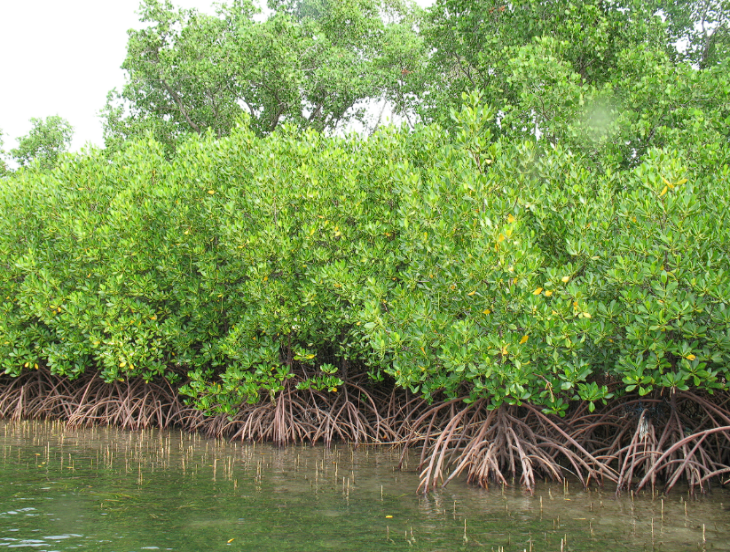
Mangrove Forests
Introduction
The mangrove tidal forests are found in the areas of coasts influenced by tides. These areas are characterised by mud, silt and water accumulated on the surface. Roots and branches of the trees are submerged under water for a specific period of time. They are also called mangrove forests. Mangroves are practically evergreen with thick leathery leaves. Such types of forests are found in the deltas of Sundarbans, Mahanadi, the Godavari, Krishna, Kaveri rivers and in the Andaman and Nicobar Islands. Mangrove or Sundari is the common tree in Sundarbans while palm, coconut, keora, and agar are other important species of tidal forest. Mangrove spread over 6,740 sq. km accounting for 7 percent of world’s mangrove forests. It is interesting to know that this type of forest has remained away from large -scale commercial exploitation. These forests are located along the coasts. They provide protection against cyclones.
Palm, coconut, keora, agar, etc., also grow in some parts of the delta. Royal Bengal Tiger is the famous animal in these forests. Turtles, crocodiles, gharials and snakes are also found in these forests.
Characteristics of Mangroves
- Mangroves are evergreen land plants that grow in sheltered coastal areas such as tidal flats, estuaries, deltas, creeks, bays, barrier islands, and backshores of sandy beaches rich in silt.
- They are highly adapted to:
- Salinity stress of seawater.
- Anaerobic (oxygen-poor) muddy soils.
- Absorbing freshwater from saline/brackish water.
- Thriving in high solar radiation.
- They develop specialized roots to adapt:
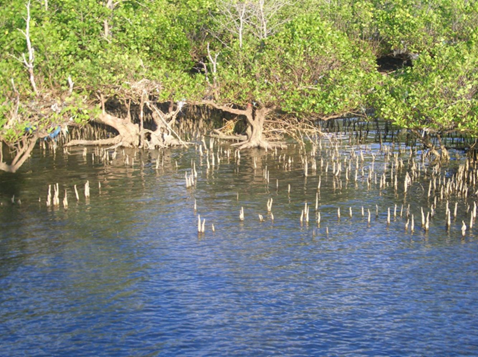
- Pneumatophores (breathing roots): grow upward to allow respiration in anaerobic soil.
Pneumatophores Pneumatophores are the specialized erect roots (a modification of root) which facilitate the exchange of gases in plants growing in marshy areas. So, the pneumatophores are also called, breathing roots as these roots possess pores known as breathing pores or pneumatophores for gaseous exchange. |
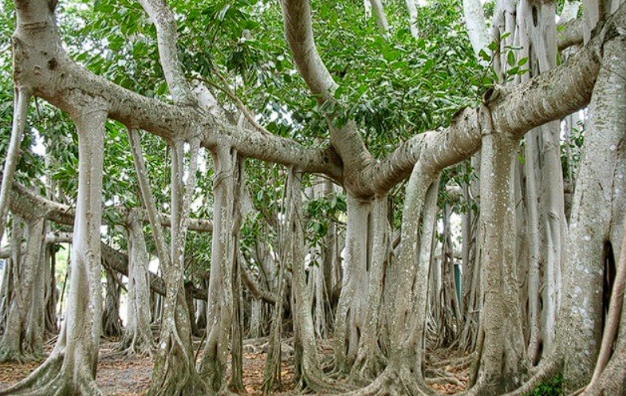
- Prop roots (e.g., Rhizophora): arch into the water providing support and stability.
Prop roots Prop roots are a type of aerial root that grows from the branches of a plant downwards towards the soil, providing additional support to the plant. They are often found in trees with heavy branches, like the banyan tree, and help to anchor the tree and prevent it from toppling over. |
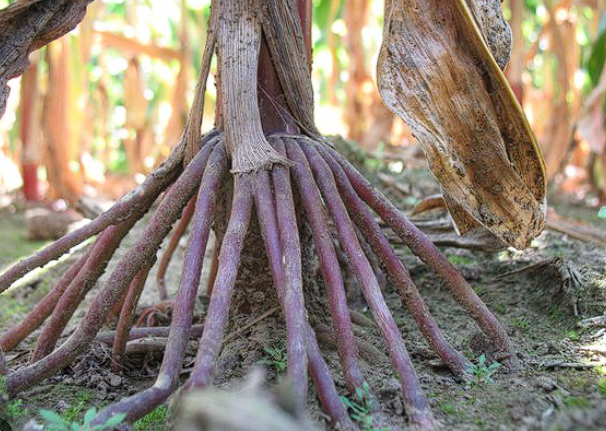
- Stilt roots: emerge from the trunk for additional support.
Stilt roots Stilt roots are a type of modified, aerial root that grows downwards from the lower nodes of a plant’s stem, providing additional support. They are typically found in plants with weak or tall stems, helping them stand upright, especially in areas prone to flooding or unstable ground. |
- Leaves are thick, with salt-secreting glands; some species block salt absorption at roots.
- They exhibit viviparity: seeds germinate while still attached to the parent tree before falling, enabling survival in saline conditions.
Role & Ecological Importance of Mangroves
- Act as natural barriers, protecting coastal lands from:
- Tsunamis, cyclones, hurricanes, and tidal floods.
- Coastal soil erosion by stabilizing shores and trapping sediments.
- Provide breeding, spawning, and nursery grounds for fish and other marine species.
- Support rich biodiversity, including endangered species like the Royal Bengal Tiger and crocodiles (Sundarbans).
- Enhance nutrient recycling and water purification.
- Regulate monsoonal tidal floods and maintain coastal hydrology.
- Supply wood, firewood, medicinal and edible plants to local communities.
- Provide livelihood opportunities through fishing, honey collection, ecotourism, and sustainable harvesting.
Threats to Mangroves
- Conversion of mangrove land for:
- Agriculture, aquaculture (shrimp farming), and salt pans.
- Fuel, fodder, grazing, and human settlements.
- Mining and industrial expansion.
- Pollution: oil spills, chemical pesticides, fertilizers.
- Climate change: sea-level rise, salinization, and extreme weather events.
Mangrove Profile in India
- Sundarbans (West Bengal):
- Largest contiguous mangrove forest in the world.
- Dominant species: Heritiera fomes, Rhizophora spp., Bruguiera spp., Avicennia spp., Sonneratia spp., and Nypa fruticans.
- Famous for Royal Bengal Tiger and crocodiles.
- Bhitarkanika (Odisha): second largest in India, high genetic diversity.
- Godavari–Krishna delta (Andhra Pradesh): extensive swamps.
- Pichavaram and Vedaranyam (Tamil Nadu): degraded due to aquaculture and salt pans.
- West coast (Maharashtra, Goa, Karnataka): mostly scrubby and degraded.
- Kerala: sparse mangrove vegetation.
- Gujarat (Gulf of Kachchh & Kori Creek): scrubby, stunted mangroves, with recent improvements in Kori Creek.
- Andaman & Nicobar Islands: dense and undisturbed mangroves.
International and National Initiatives
Mangroves for the Future (MFF)
- A regional partnership promoting sustainable management of coastal ecosystems.
- Mission: promote healthy coastal ecosystems through people-focused, policy-relevant, and investment-oriented approaches.
- Member countries: India, Indonesia, Sri Lanka, Maldives, Pakistan, Thailand, Vietnam, Seychelles.
- Outreach: Bangladesh, Myanmar, Cambodia, Timor-Leste.
- Recognized mangroves’ role in protecting lives during the 2004 tsunami.
MISHTI Scheme (India)
- Mangrove Initiative for Shoreline Habitats and Tangible Incomes (MISHTI).
- Announced in 2023–24 Budget.
- Aims to:
- Expand mangrove plantations along coastlines and saltpans.
- Provide employment opportunities through MGNREGA and CAMPA funds.
- Strengthen climate resilience of coastal communities.


