
- Ramananda, Kabir, and Nanak became the major exponents of the Bhakti cult in the 14th and 15th centuries. They assisted the common people in letting go of long-held superstitions and achieving salvation through Bhakti, or unadulterated devotion. They were not affiliated with any one theological faith, in contrast to the early reformers, and they vehemently opposed to rites and ceremonies. They rejected polytheism, held to the doctrine of the one true God, and opposed idolatry. They also emphasized the universality of all religions at their core.Thus Kabir, Namdev and Guru Nanak had preached devotion toward a nirankar form of God.
Ramananda (1400-1470)
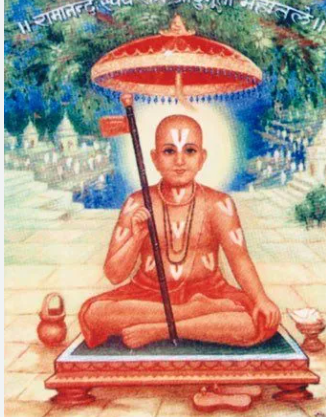 Ramananda belonged to Ramanuja’s philosophical school of thought. Ramananda introduced radical changes in Vaishnavism by founding his own sect based on the doctrine of love and devotion to Rama and Sita. He preached equality before God. He rejected caste system, particularly the supremacy of Brahmins as the sole custodians of Hindu religion. The people from the lower strata of the society became his followers. His twelve disciples included Ravidas, Kabir. Ramananda was the first to preach his doctrine of devotion in Hindi, the vernacular language. It gained him a good deal of popularity among the people of all classes.
Kabir
- Kabir was undoubtedly the greatest of the religious reformers who followed the trail of Ramananda and made the Bhakti Movement more meaningful and responsive to the needs of the people. His iconoclastic poetry which ridiculed ostentatiousness and ritual, and emphasized the universality of god .
- According to the popular Tazkirah-i-Auliya-i-Hind (Lives of Muslim Saints), he was a disciple of the Muslim Sufi, Shaikh Taqi. Kabir was a religious radical who denounced with equal zest the narrowness of sectarianism, both Hindu and Islam. His message appealed to the lower classes of Hindu community. The most salient features of his teachings is denunciation of polytheism, idolatry, and caste. He was equally unsparing in his condemnation of Muslim formalism. He was a true seeker after God, and did his best to break the barriers that separated Hindus from Muslims.
Guru Nanak (1469–1539)
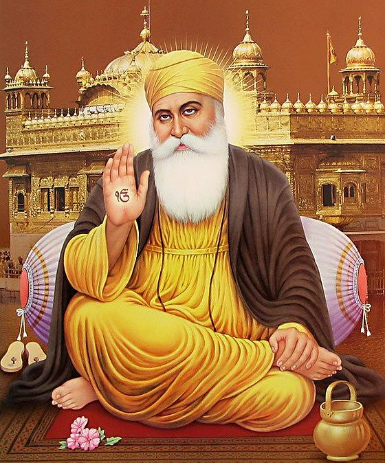 The saint with the biggest institutional influence was Guru Nanak who founded the Sikh religion which shows undoubted syncretic influence. He was a disciple of Kabir. He was born at Talwandi (Nakana Sahib). From an early age, he showed leanings towards a spiritual life. He was helpful to the poor and needy. His disciples called themselves Sikhs (derived from Sanskrit sisya, disciple or Pali sikkha, instruction).
- As a monotheistic religion Sikhism emphasized the oneness of god and adherence to a strict morality. Nanak laid emphasis on the oneness or unity of God. His concept of God was Nirguna (attributeless) and Nirankar (formless). He used the names of Hari, Ram, Allah and Khuda for God. Guru Nanak’s objective was to remove the existing corruption and degrading practices in society. He showed a new path for the establishment of an egalitarian social order.
Tuka Ram
- Tuka Ram was born in 1608 in a village near Poona, Maharashtra. He was a contemporary of Maratha Shivaji and saints like Eknath and Ramdas. After his early life as a trader he started spending his time singing devotional songs in praise of his favourite deity Lord Vithoba of Pandarpur.
- Tuka Ram believed in a formless God. According to him, it was not possible to enjoin spiritual joy with worldly activities. He stressed the all-pervasiveness of God. He rejected Vedic sacrifices, ceremonies, pilgrimages, idol worship, etc. He also preached the virtue of piety, forgiveness and peace of mind. He spread the message of equality and brotherhood.
Dadu Dayal (1554-1603)
- Dadu Dayal was a weaver from Ahmedabad. He made an important contribution to the Bhakti Movement. In his teachings, he put emphasis on the promotion of love, union, sentiments of brotherhood and toleration among the people of various faiths.
- Dadu Dayal was against idol worship, caste distinctions, the “theory of Avtars” (reincarnation of God), external formalities of religion and the practice of worship at the shrines of the departed saints. He insisted upon the unity of God. He regarded Him in his two-fold aspect of transcendence and immanence. To him, he is one immortal, incomprehensible being.
