

- A lithium-ion (Li-ion) battery is a type of rechargeable battery that uses lithium ions to move between the positive and negative electrodes to generate electrical energy. It’s a popular choice for various electronic devices, such as smartphones, laptops, and electric vehicles, due to its high energy density, lightweight design, and the ability to hold a charge for a long time.
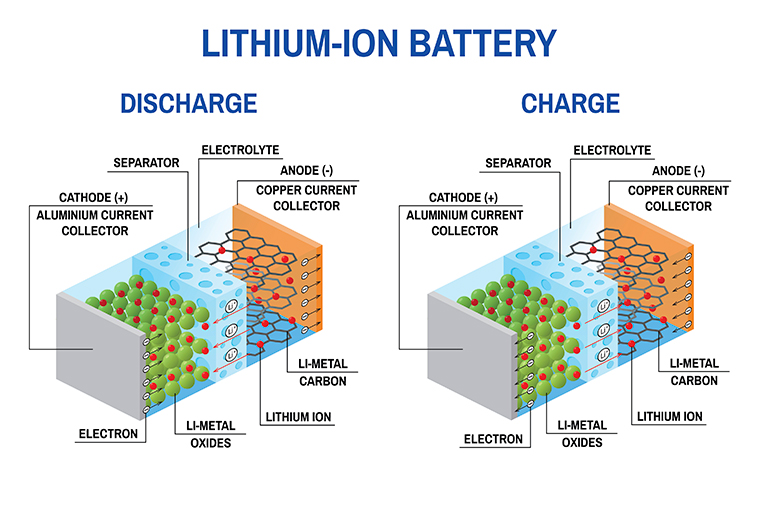
How It Works:
- Positive and Negative Electrodes: The battery has two electrodes—a positive electrode (cathode) and a negative electrode (anode).
- Lithium Ions: When the battery is charging, lithium ions move from the positive electrode to the negative electrode through an electrolyte.
- Release of Energy: When the battery is discharging (providing power to a device), the lithium ions move back to the positive electrode, releasing electrical energy that can be used to power electronic devices.
Advantages:
- High Energy Density: Lithium-ion batteries provide a high amount of energy in a lightweight package.
- Rechargeable: They can be recharged multiple times.
- Long Battery Life: They have a relatively long lifespan compared to other types of batteries.
- Versatility: They are used in a wide range of applications, from small gadgets to electric vehicles.
Applications
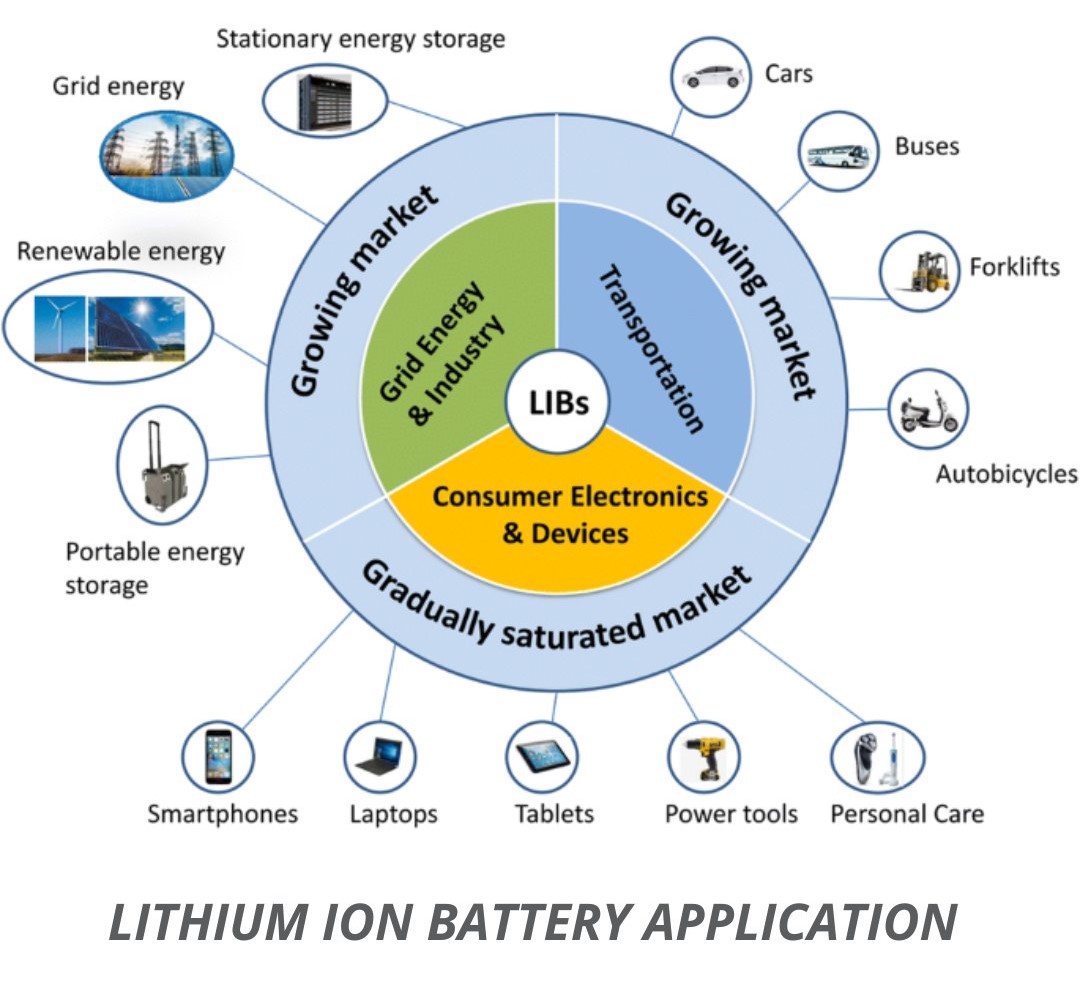
- Consumer Electronics: Lithium-ion batteries power a variety of consumer devices, including smartphones, laptops, tablets, cameras, and wearable devices, due to their compact size, lightweight design, and long-lasting power.
- Electric Vehicles (EVs): Lithium-ion batteries are a key component in electric vehicles, providing the necessary energy storage to power the electric motor and propel the vehicle. They are preferred for their high energy density and ability to store large amounts of energy for longer driving ranges.
- Power Tools: Cordless power tools, such as drills and electric screwdrivers, often use lithium-ion batteries for their combination of power and portability.
- Renewable Energy Storage: Lithium-ion batteries are used to store excess energy generated by renewable sources like solar panels and wind turbines. This stored energy can be released when the renewable source is not generating power, ensuring a consistent energy supply.
- Medical Devices: Portable medical devices, like portable defibrillators and insulin pumps, often rely on lithium-ion batteries for their reliable and long-lasting power supply.
- Aerospace: Lithium-ion batteries are used in aerospace applications, including satellites and unmanned aerial vehicles (UAVs), due to their high energy density and lightweight nature.
- Backup Power Systems: They are used in uninterruptible power supply (UPS) systems to provide backup power in case of a grid outage, ensuring a continuous power supply to critical systems.
- Smart Grids: Lithium-ion batteries are employed in smart grid systems to store excess energy during low-demand periods and release it during peak demand, helping to balance the energy grid.
- Electric Bicycles: E-bikes utilize lithium-ion batteries to power the electric motor, providing assistance to the rider and extending the range of the bicycle.
- Military Applications: Lithium-ion batteries are used in various military applications, including portable electronics, communication devices, and unmanned vehicles.
