
Kuiper Belt: The Outer Frontier of the Solar System
The Kuiper Belt lies beyond Neptune, marking the outermost zone of our solar system. Often referred
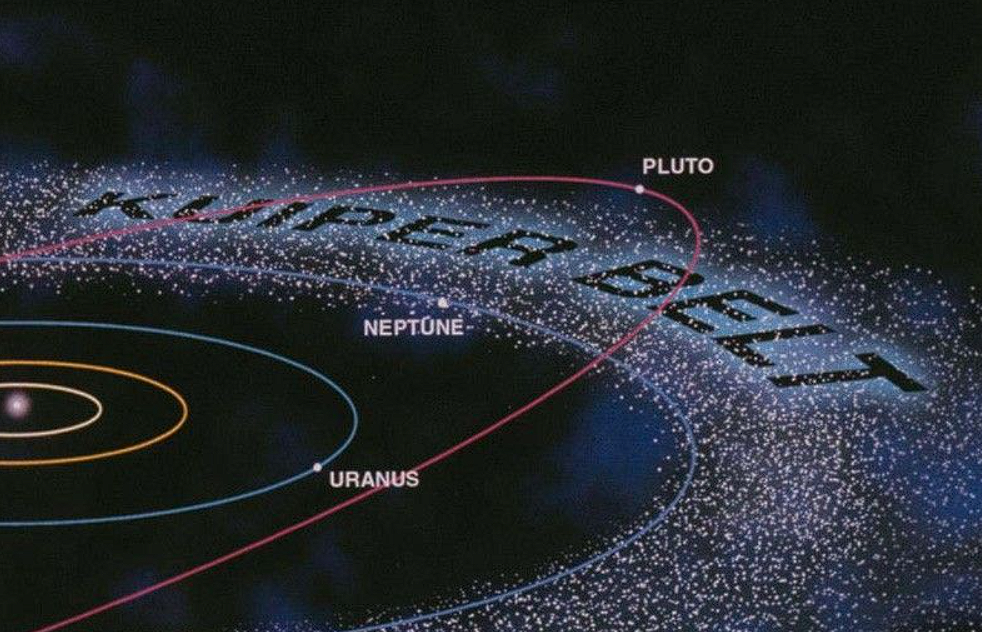
to as the “third zone,” this vast region contains millions of icy objects, some over 600 miles (1,000 km) wide, including Pluto. These celestial bodies are composed of rock, water ice, ammonia, and methane, remnants from the early solar system.
Unlike the asteroid belt, which is shaped by Jupiter’s gravity, the Kuiper Belt forms a thicker, doughnut-like disk influenced by Neptune. It is distinct from the Oort Cloud, a distant sphere of icy bodies that serves as a source of long-period comets.
Exploration of the Kuiper Belt is still in its early stages, making it one of the most intriguing frontiers in planetary science.
The Habitable Zone: The “Goldilocks Zone” of Life
The habitable zone is the region around a star where conditions are just right—neither too hot nor too cold—for liquid water to exist on a planet’s surface.
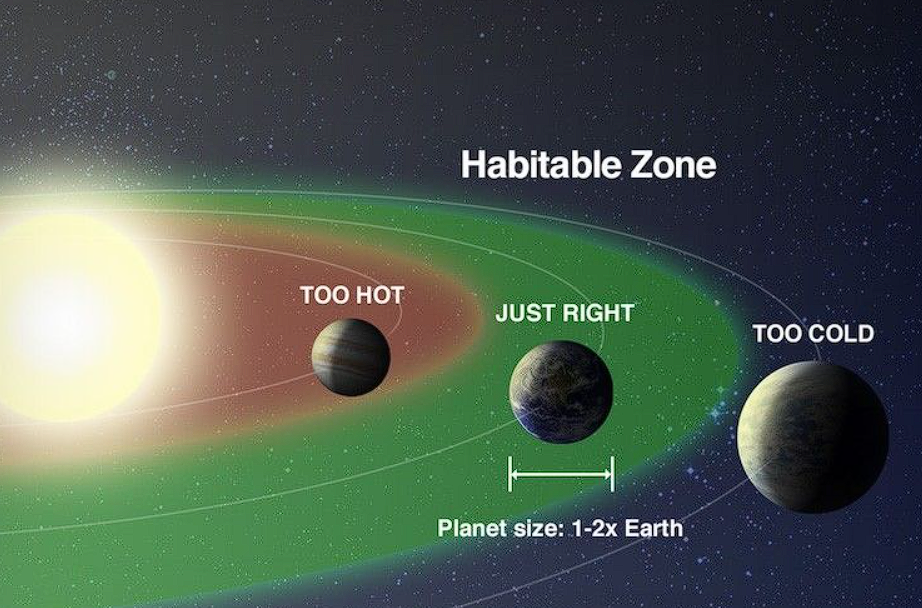 Too Far? – If Earth were in Pluto’s orbit, sunlight would be too weak, causing its oceans and atmosphere to freeze.
- Too Close? – If Earth swapped places with Mercury, intense heat would boil away its water, turning the planet into a scorched wasteland.
- Just Right – Earth’s position allows water to remain liquid, creating an ideal environment for life to thrive.
However, factors such as planet size, atmospheric composition, and the type of star play crucial roles in determining their true potential.
