
The Himachal and Uttarakhand Himalayas
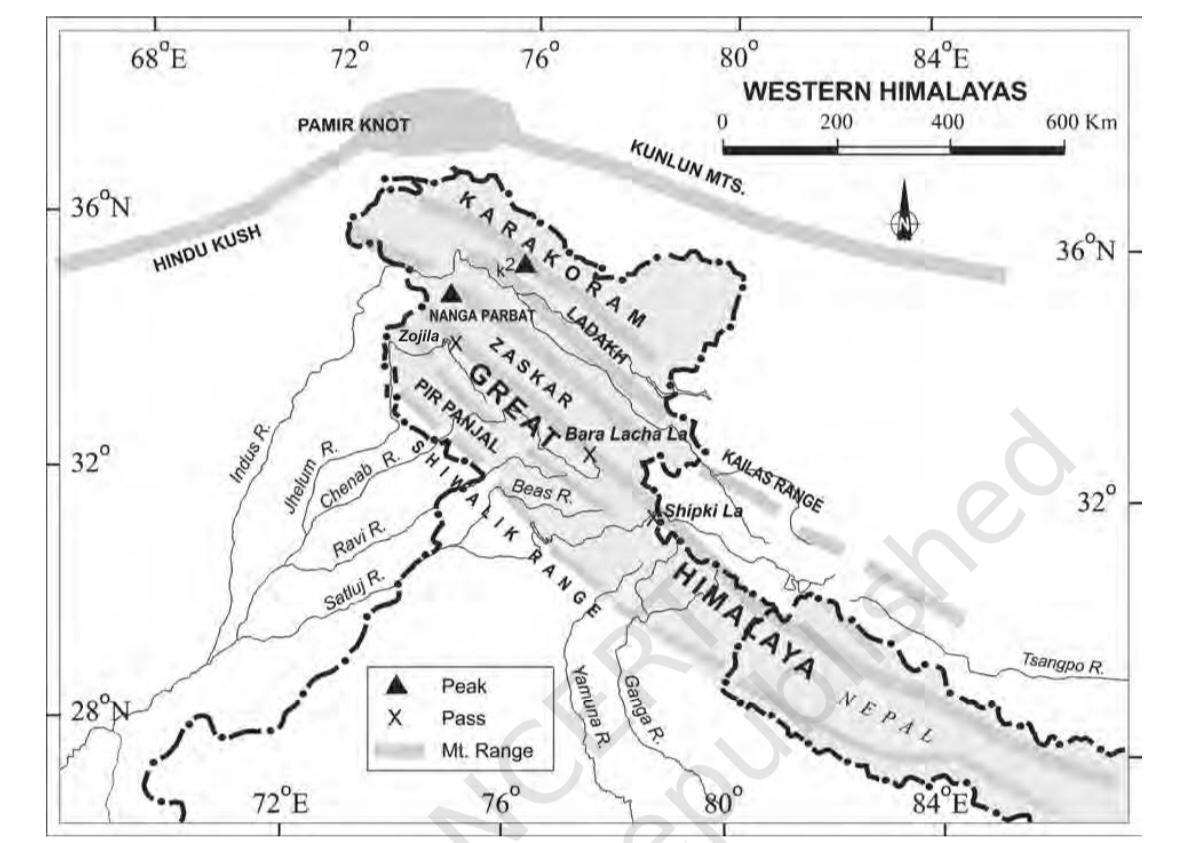 This region, lying between the Ravi River in the west and the Kali River in the east, showcases a remarkable array of geographical features and is pivotal in understanding the Himalayan range’s diverse physiography. It is distinguished by its varied topography, significant river systems, and important hill stations.
Major River Systems
- Indus River System:
- Ravi River: Originates in the Chamba region and flows into Pakistan.
- Beas River: Flows from the Himalayas through Himachal Pradesh and Punjab.
- Satluj River: Rising in Tibet, it flows through Himachal Pradesh before joining the Indus River in Pakistan.
- Ganga River System:
- Yamuna River: Originates from the Yamunotri Glacier in Uttarakhand and flows into the Ganges.
- Ghaghara River: Also known as the Karnali, it originates in Tibet and flows through Nepal and India before joining the Ganges.
Major Mountain Ranges
- Greater Himalaya (also known as the Himadri): This is the highest and most continuous range, characterized by towering peaks, including some of the world’s highest mountains like Mount Everest and Kanchenjunga. It serves as a formidable climatic and physical barrier.
- Lesser Himalaya (also known as the Himachal): Located south of the Greater Himalaya, this range consists of rugged terrain with moderate elevations. It features prominent hill stations and valleys, such as Shimla and Kangra.
- Shiwalik (also known as the Outer Himalaya): This is the southernmost and lowest range of the Himalayas, consisting of relatively young hills formed by the deposition of sediments from the rivers flowing down from the higher ranges. The Shiwalik region is prone to erosion and often features broad valleys called ‘Duns,’ such as the Dehradun Valley.
Physiographic Features
- Shivalik Formations: Includes the foothills and lower ranges of the Himalayas, characterized by gentle slopes and river valleys.
- Dun Formations:
- Chandigarh-Kalka Dun: An important dun located between the Shiwaliks and the lower ranges.
- Nalagarh Dun: Another significant dun known for its fertile plains.
- DehraDun: This is the largest dun in the area, spanning approximately 35-45 km in length and 22-25 km in width.
Inhabitants and Cultural Aspect
- BhotiaCommunities:Inhabit the valleys of the Great Himalayan range.Nomadic, migrating to higher elevations during summer (Bugyals) and returning to the valleys in winter.
- Valley of Flowers:A UNESCO World Heritage Site Situated in Uttarakhand. It is known for its rich flora and high-altitude meadows.
- Pilgrimage Sites: Gangotri, Yamunotri, Kedarnath, Badrinath, Hemkund Sahib: Major religious destinations located in this region, significant for Hindu pilgrimage.
