Eutrophication

Eutrophication

Eutrophication

Eutrophication

Eutrophication

Eutrophication

Eutrophication

Eutrophication

Eutrophication

Eutrophication

Eutrophication

Eutrophication

Eutrophication

Eutrophication

Eutrophication

Meaning

Eutrophication • ‘Eu’ means well or healthy and ‘trophy’ means nutrition. The enrichment of water bodies with nutrients causes eutrophication of the water body.

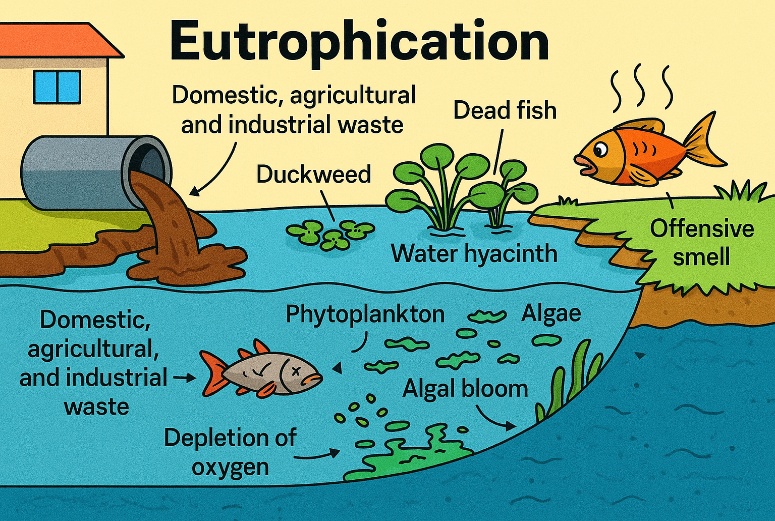
  • Discharge of domestic waste, agricultural surface runoff, land drainage and industrial effluents in a water body leads to rapid nutrients enrichment in a water body. The excessive nutrient enrichment in a water body encourages the growth of algae duckweed, water hyacinth, phytoplankton and other aquatic plants.
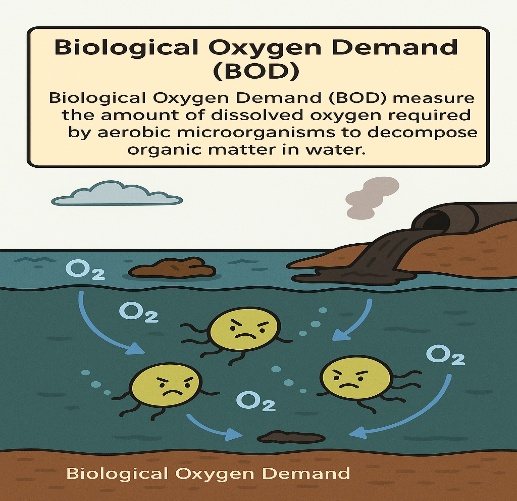
  • The biological demand for oxygen (BOD) increases with the increase in aquatic organisms. As more plants grow and die, the dead and decaying plants and organic matter acted upon by heterotrophic protozoans and bacteria, deplete the water of dissolved oxygen (DO). Decrease in DO result in sudden death of large population of fish and other aquatic organisms including plants, releasing offensive smell and makes the water unfit for human use.

Biological Oxygen Demand (BOD)

Biological Oxygen Demand (BOD) is a crucial measure of water quality, specifically indicating the amount of dissolved oxygen needed by aerobic microorganisms to break down organic matter in a water sample. Essentially, it reflects the level of organic pollution in water. Higher BOD values signify greater organic pollution and a higher demand for oxygen, potentially harming aquatic life.

  • The sudden and explosive growth of phytoplankton and algae impart green colour to the water is known as water bloom, or “algal blooms”. These phytoplankton release toxic substances in water that causes sudden death of large population of fishes. This phenomenon of nutrient enrichment of a water body is called eutrophication. Human activities are mainly responsible for the eutrophication of a growing number of lakes and water bodies in the country.

Types of Eutrophication

  1. .Natural Eutrophication
  • It occurs due to natural deposition of nutrients in water bodies over long geological time scales.
  • Nutrients enter the water system periodically through natural processes like seasonal flooding, weathering of rocks, and runoff from catchments.
  • Happens very slowly — over centuries.
  • Example: Seasonally inundated tropical flood plains, where rivers bring sediments and nutrients during monsoon floods, enriching the water bodies naturally.
  1. Man-made (Cultural) Eutrophication
  • Caused by human activities, leading to rapid nutrient enrichment of water bodies.
  • Takes place much faster — within decades.
  • Sources of excess nutrients:
    • Untreated sewage discharges
    • Fertilizer runoff from agricultural fields, golf courses, and parks
    • Animal wastes
    • Combustion of fossil fuels, which release nitrogen oxides into the atmosphere
    • Expanding urban populations, especially in coastal areas, increasing nutrient load on estuaries and seas.
Scroll to Top