
Bt Cotton and Bacillus thuringiensis (Bt):
- Bacillus thuringiensis (Bt):
- Bt is a bacterium that naturally produces proteins toxic to certain insects.
- These proteins are crystallized during a specific phase of bacterial growth.
- Toxin Production and Activation:
- Bt toxins are produced as inactive protoxins, ensuring they do not harm the bacterium itself.
- When an insect ingests the inactive toxin, it encounters the alkaline pH in the insect’s gut during digestion.
- The alkaline environment solubilizes the protein crystals, converting the protoxins into an active form of toxin.
- Mode of Action in Insects:
- The activated toxin binds to specific receptors on the surface of the insect’s midgut epithelial cells.
- This binding creates pores in the cell membrane, leading to cell swelling, lysis (rupture), and eventual death of the insect.
- Incorporation into Crop Plants – Bt Cotton:
- Specific Bt toxin genes, such as those coded by the cry genes, were isolated from Bacillus thuringiensis.
- These genes were then incorporated into the genomes of several crop plants, a prominent example being cotton.
- Targeted Pest Control:
- The choice of cry genes depends on the targeted pest species. Different cry genes produce proteins toxic to specific groups of insects.
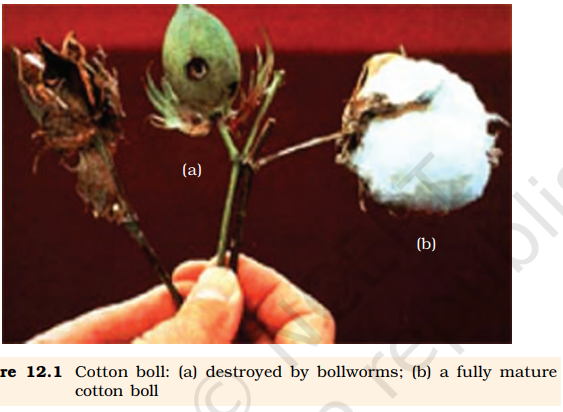
- For example, genes like cryIAc and cryIIAb are effective against cotton bollworms, while cryIAb may target corn borers.
- Advantages of Bt Cotton:
- Bt cotton, with its built-in insecticidal properties, reduces the need for external chemical insecticides.
- It provides a more targeted and environmentally friendly approach to pest control in agriculture.
- Crop Protection:
- By incorporating Bt genes, crop plants can resist damage from specific insect pests, leading to increased crop yields and reduced economic losses.
