
Adi Hindu Dalit Movement- role of Bhagya Reddy Varma 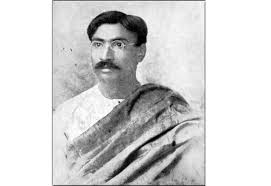
- Adi Hindu movement was started in 196 in Hyderabad state against the atrocities on Dalits and questioning caste discrimination.
- Bhagyareddy Varma was born to Rangamamba and Madari Venkaiah on 22 May 1888 at hyderabad.
- His parents named him Bhagayya and their family master renamed him Bhagyareddy.
- His original name – Madari Bhagayya
- In 1912 he joined the Electrical Department. In 1906 itself he founded Jagan Mitra mandali. The important aim of Mandali was to impart education to Dalits.
- Bhagya Reddy Varnma became a pioneer of Dalit self-respect movement in Andhra Desa Panchama conference at Vijaywada in 1917.
- On the first day itself he condemned the word Panchama and stated that thís word was not there in Vedas and Puranas and it is a creation of dominant castes to exercise their selfish motto of dominance.
- The main aim of Adi Hindu Dalit Movement was to encourage and awaken the social consciousness among Dalit.
- He invoked Hindu Puranic tradition to eradicate caste.
- He set up schools and also persuaded the Nizam to allocate special funds for the education of dalits.
- He also made it clear that Dalits were original inhabitants and hence replaced Panchama with Adi Andhra.
- He founded Devadasi Nirmoqlgha Sangham for the eradication of social evils. He also established a publishing house namely Vaidika Dharma Pracharana Sabha in 1910 associated with Jagan Mitra Mandali.
- It published small books and pamphlets to bring awareness to Hindus and other castes.
- The Humanitarian League was founded by Bhagyareddy Varma and Roy Balmukund in 1913. Later, it became Jeeva Raksha Gnana Praçhara Mandali.
- In 1914, Bhagyareddy Varma founded Brahmạ Samaj at Hanuman Tekdi at Residency Bazar in Hyderabad. He established Vishwa Gruha Paricharika Sammelanam in 1915. This institution worked for the welfare of house maids.
Note:
- In 1913, a member of Arya Samaj Balaji Krishna Rao conferred the title Varma to Bhagyareddy and gave the membership of Arya Samaj.
- In 1915, Bhagyareddy Varma established Sangha Samskara Nataka Mandali and made Harijans perform dramas.
- In1912, he established the Swastik Dal & Voluntary Health service Force.
Budda Jayanti- Bhagya Reddy Varma
- In the year 1913 he organized Buddha Jayanthi for the first time. Padmaja Naidu, Adipudi Somanatha Rao, Chandravarak etc participated in these celebrations. He continued this activity every year till his death.
- The last Budha Jayanthi he celebrated was on 25th May 1937 under the chairmanship of Raja Bahadur Rai Bisweswaranath, member Nizam Government Judicial committee.
- In this speech, Varma stressed to follow the panchsheel which is the basis of Buddhist Morality, rationality and non-violence.
- Bhagyareddy Varma: The term panchama should be deleted.
- Bhagya Reddy strongly believed that Dalits were not part of Hinduism.
- Due to the consistent efforts of Bhagaya Reddy, The Madras Government issued a Government Order (GO) 817 on January 24th 1922.
- The Madras Legislative Council adopted a resolution stating that the council recommends to the Government that ‘the term Panchama or Paraya which used to designate the ancient Dravidian community in the Southern India should be deleted from the Government records and the term Adi Dravida in the Tamil Nadu and Adi Andhra in the Telugu districts to be substituted instead’
- In Hyderabad state also due to his efforts the term Adi Hindu was accepted by the Nizam Government and referred to all the Dalits (Mala, Madiga, Dekkali, Dhed, Chamar etc) as Adi Hindu in 1931 census report. Adi Hindu Samajika Seva Samkhya.
- The year 1922 is very crucial in the history of Hyderabad state. The Manya Sangam started by Bhagaya Reddy in 1911 was renamed as Adi Hindu Social Service League. The first conference was convened under the presidency of OTAJ. Papanna, at Hyderabad.
- Dalit representatives from Bombay, Pune, Karachi, Akola, Amaravathi, Nagpur, Madras and coastal regions participated in this conference. The Spirit of Social Service League attracted several caste Hindus of the state and they were actively associated with the League.
- Prominent among them were justice C. Bal Mukund, Pandit Keshav Rao Koratker, Set Lalji Meghji, Professor Wellinker and R.E. Repouku. The discussions took place in Hindi andTelugu languages.
- On the second day 900 people of different castes participated in the ‘Shapankatí Bhojanam’ Program. Kusuma Dharmanna sang the song ‘Makdee Nallaratnam’. In order to solve the internal feuds among Dalits Bhagya Reddy took several resolutions.
- Bhagya Reddy Varma was conferred with a title ‘Siva Sresti’ in a meeting organized by Dharam Veer Naik. He was conferred with ‘Sangha Manya’ in an Adi Andhra conference held in March 1921.
- Bhagya Reddy Varma made an attempt to bring solidarity among Dalits and Bahujans. He founded Yadava Sangam under Singam Sitaram; Sabari Sangam, with Durgaiah, and Pardhi Sangam with Hanuman Singh.
- In 1925 he organized Adi Hindu Sabha under the leadership of Arundhati leader Subedar Sayanna. In 1925 itself he organized Matanga Janasabha under the leadership of Guntimalla Ramappa. Bhagya Reddy founded the Matangi Sabha in 1927 at Mallepalli.
- The Sabha passed resolutions against liquor and toddy consumption. Along with Mala’s, a movement under the leadership of N.R. Babaiah took place demanding rights of the Madigas.
- He made Secunderabad the center and toured extensively to Karimnagar, Warangal, Khammam and Nizamabad demanding rights to the Madigas.
- Mudigonda Laxmaiah, an industrialist, extensively supported this movement and offered monetary help in giving scholarships to poor Madiga Scholars.
- In the year 1937, Jambavarna Seva Samithi made efforts to create awareness among Arundhati Yas. Matanga Mahasabha leader Guntimalla Ramappa strived hard to bring unity among Dalits during 1932.
- The Adi Hindu and other Dalit movements not only brought awareness among urban Dalits but also Dalits in the rural areas, for example is one of the villages called Jogilepadu in Madhira taluk, a Dalit family Bulusupati Luci and Devasahayam refused to perform vetti. This was reported in Golkonda Patrika on 28h February 1931.
- In this context, the role of Peesari Veeramani who revolted against the Vetti system is worth mentioning. He organized Dalits not to perform vetti and also questioned Gandhi by opposing the word Harijan.
- Bhagya Reddy Varma requested the social reformer Dhanrajgir to lay the foundation of the office build- ing of Adi Hindu Social Service League.
- On July 10h 1931 in the Adi Hindu Dharmik Sabha, Bhagya Reddy gave a call to bring unity among different sub castes of Dalits.
National Conferences attended by Bhagyareddy Varma
- He attended the AIl India Depressed Classes Conference held at Allahabad as a representative of South India. He presided over the Adi Hindu Conference held at Lucknow in 1931.
- In this meeting, some representatives raised objections against the word Varma. So Bhagyareddy Varma immediately relinquished it.Dr Ambedkar was elected as the sole representative of Dalits to the Round table conference. They demanded separate electorates for Dalits.
- Bhagyareddy attended the Adi Hindu Conference held at Nagpur in 1933. It was his last meeting. Andhra Maha Sabha – Bhagya Reddy Varma
- Bhagya Reddy participated in the meetings of Andhra Maha Sabha and made them adopt several resolutions to bring reforms in the society. In its first meeting held at Jogipet on 3d, 4th and 5th March 1930.
- Suravaram Pratap Reddy presided over and proposed resolutions on Educational facilities to Adi-Hindus. whereas Bhagya Reddy gave a call to remove untouchability. Varma also spoke in the second meeting at Hyderabad.
- In 1934 Khammam conference, Varma in his message mentioned that ‘Those upper castes who love the pet animals, ants and also snakes but ask their fellow human beings to step out their way, what kind of Justice is it?
- ‘He cited several instances of Dalit sages in Epics and Puranas.
- Bhagya Reddy also conducted Adi Hindu gymnastic competitions under the presidentship of Kodi Ramamurthy. In 1925, to encourage youth, he conducted painting, drawing and craft exhibitions at Prem theater, Hyderabad.
- The idea behind organizing the exhibition was to expose the skills and fine arts of Dalits. They also staged a drama on the theme Aryan and Non Aryan conflict to create awareness among Dalit Youth. This program was inaugurated by Goswami, and Dhanrajgirji Narasimha.
Adi Hindu Mahasabha
- After returning from Lucknow on 7th November, 1931, a conference was organized at Bollaram presided over by Bhagya Reddy. Bandela Chittarayya as Chairman and Vemula Kurmaiah as the president of Indepen- dent Adijana Conference of Andhra inaugurated the sessions.
- It was held at Bollaram, part of British ruled Secunderabad, as Nizam did not give permission to hold the conference in Hyderabad. The conference unanimously took resolutions accepting Dr. B.R. Ambedkar, as their leader, demanded for abolition of Vetti, reservations for Adi Hindu, in police and other military posts.
- Bhagya Reddy in his speech directly targeted the upper castes. He stated that You cannot make us slaves for long. How many years will you oppress us? The dawn of freedom arises, our strength in number in 7 crores. We are more powerful now. I am very sure that we will reach our goal. We don’t want to eat along with you. We want you to do away with the evil of untouchability’.
- On 6″ April, 1935 Bhagya Reddy during Ugadi celebrations thanked the Government for choosing Ariga Ramaswamy as representative of Hyderabad Municipal Corporation and also demanded for two Adi Hindu representations in the labor department. Bhagya Reddy also participated in the Adi Hindu conference and several other meetings in 1936 at Vijayanagaram and in 1938 February at Kakinada.
- On 22nd September 1937, the Nizam government constituted a committee for reforms. In the same year, Bhagya Reddy conducted a meeting and requested the government to allocate ten seats to Adi Hindus.
- Bhagya Reddy’s relentless activities and frequent travels affected his health. Krishna Swamy Mudiraj mentioned in one of his books that Bhagya Reddy, gave 3348 public speeches. Bhagya Reddy’s life is synonymous with the Adi Hindu movement. He strived hard to create awareness among Railway employees, Military soldiers, cloth merchants, contractors, workers and laborers.
- He breathed his last on 18th February, 1939. His death was a major setback to the Adi Hindu Movement and also to the Dalits of Hyderabad. From 1921 to 1924 it was Hindu mahasabha under Bhagyareddy varma.
- They are:
Gandhi – Bhagyareddy Varma
- Bhagya Reddy attended several meetings and conferences in other parts of Indía. One such meeting he participated was in the Divyagnana Samajam meeting held on 15th December 1917 at Calcutta and spoke how Brahmanism caused the degradation of Dalits.Mahatma Gandhi was present in the conference and praised him for his interest in the up-liftment of the downtrodden. Later Gandhi visited Adi Hindu Social Service League and Adi Hindu School in the year 1929.
- In 1920 several identity movements took place in Northern India. All India Adi Hindu (Depressed classes) conferences were organized in places like Delhi, Alahabad, Lucknow and Nagpur. Varma attended all these conferences as a delegate from Hyderabad state and Andhra. He also attended the Adi Hindu special confer- ence held at Delhi on 24th February 1928.
- In the year 1930, on 16h November Varma participated in the 8th session of All India Adi Hindu (De- pressed Class) conference held in Mayo Hall at Allahabad. The conference demanded for a representative from Adi Hindu background in the Central as well as State provincial Legislatures.
- He also demanded separate electorates to ameliorate their social and political status. Further the confer- ence also asked for free and compulsory education to Dalits. The conference also expressed gratitude to the viceroy for nominating Dr. B.R.Ambedkar and R. Srinivasan as representatives of depressed classes to the Round Table
