
Air transport is a crucial component of modern transportation, contributing significantly to trade, commerce, and regional connectivity. It is known for its rapid speed, with aircraft capable of reaching speeds of up to 500 km/h and even supersonic speeds in some cases. Indian civil aviation is ranked 9th in the world and is one of the fastest-growing aviation sectors globally. By 2024, India is expected to become the third-largest domestic aviation market, surpassing the United Kingdom.
Historical Background
The evolution of civil aviation in India can be traced back to several key milestones:
- Early Beginnings:
- 1911: India’s civil aviation industry began with the world’s first airmail service, launched during the Kumbh Mela in Allahabad on February 18, 1911.
- 1929: JRD Tata received the first pilot license from Aeronautique International on behalf of the Aero Club of India and Burma, marking a significant milestone in Indian aviation.
- Foundation of Indian Airlines:
- 1932: Tata Air Services, the first airline in India, commenced operations with its inaugural flight from Karachi to Mumbai.
- 1933-34: Several other airlines were established, including Indian Trans-Continental Airways, Madras Air Taxi Services, and Indian National Airlines.
- Expansion and Internationalization:
- 1938: Indian airlines expanded their network to include international destinations, with routes extending to Colombo, Sri Lanka.
- 1948: Air India International Ltd. was established to operate international flights, marking the beginning of India’s global aviation presence. Air India began its international service on June 8, 1948, with a route connecting Bombay to London via Cairo and Geneva.
- Modernization and Growth:
- 1995: The merger of the International Airport Authority of India and the National Airports Authority resulted in the formation of the Airport Authority of India (AAI). The AAI is responsible for managing 125 airports and ensuring safe and efficient air traffic and aeronautical communication services in Indian airspace.
Need for Airways in India
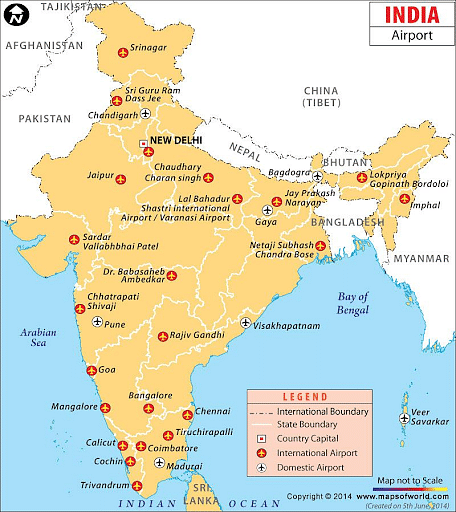 The aviation sector is vital for India for several reasons:
- Geographical Accessibility:
- India’s vast and diverse geography makes air travel essential for faster and more efficient communication. Aircraft can reach locations that are otherwise inaccessible due to physical barriers such as mountains and deserts.
- Access to Remote and Isolated Regions:
- Air transport provides connectivity to remote and isolated areas where other modes of transport are impractical. Examples include:
- Rajasthan’s Deserts: Airplanes offer a crucial link to the desert regions of Rajasthan.
- Leh and High Altitude Areas: The high-altitude regions of Leh require air connectivity due to challenging terrain.
- North East India: The forested and hilly terrain of North East India is better served by air transport.
Recent Developments and Initiatives
- Growth of the Aviation Industry: India’s aviation industry has become one of the fastest-growing sectors in the country, reflecting the increasing demand for air travel and the expansion of both domestic and international routes.
- Infrastructure Improvements: Ongoing efforts to improve airport infrastructure, enhance passenger services, and expand airport capacity are key to supporting the growing aviation market.
- Expansion of Air Connectivity: New routes and services are continuously being introduced to connect more destinations, both within India and internationally.
Favorable Factors for Indian Air Transport
- India’s weather is generally favorable for air travel.
- While poor visibility from clouds, fog, and mist can hinder air travel, India enjoys clear weather for most of the year, except during the brief rainy season.
- India’s central location between Europe, West Asia, Southeast Asia, and East Asia enhances its strategic position.
- The expansive plains across India offer ideal landing sites.
- The country’s large size creates a strong demand for air travel.
Market Size of the Indian Aviation Industry
- India’s aviation sector has grown to become the third-largest domestic aviation market globally in terms of handling domestic traffic.
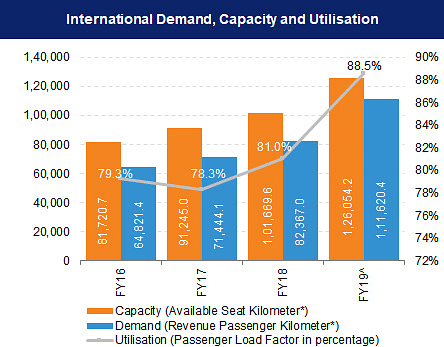 According to the International Air Transport Association (IATA), India is expected to surpass China and the United States to become the world’s third-largest air passenger market by 2030.
- In FY21, India recorded passenger traffic of 115.37 million, with over 2,300 daily domestic flight departures in October 2021 and an average of more than 283,000 daily domestic passengers.
- India’s airport freight traffic is projected to reach 17 MT by FY40, and Indian travelers’ spending is anticipated to rise to Rs. 9.5 lakh crore.
- The Indian government has been working to expand the number of airports to accommodate the increasing aviation traffic.
- As of 2020, India had 153 operational airports, with plans to increase this number to 190-200 by FY40.
- Additionally, the rising demand in the sector has led to an increase in the number of aircraft in operation.
Role of Airways in Regional Development
The aviation sector plays a pivotal role in regional development, offering a range of economic, social, and infrastructural benefits. Here’s an overview of its significant impacts:
- Economic Multipliers: According to the International Civil Aviation Organisation (ICAO), investing one dollar in aviation can yield a three-dollar return on the regional economy. This is due to the economic activity generated by air travel, including tourism, business, and logistics.
- Growth Poles: Airports act as growth poles for their regions, stimulating local economies through direct and indirect effects. They create hubs of economic activity that lead to further development and infrastructure improvements.
- Tourism Enhancement: Air services significantly boost tourism by connecting remote and previously inaccessible regions. The influx of tourists leads to the development of local amenities such as markets, hotels, restaurants, and shops to cater to their needs.
- Local Skills and Knowledge Transfer: Tourism and increased interaction with outsiders help disseminate local knowledge and skills. This interaction encourages the exchange of ideas and innovation, benefiting local economies and cultural heritage.
- Promotion of Local Handicrafts: Increased tourism helps promote local handicrafts and preserves cultural heritage by creating markets for these products, which supports the local economy.
- Awareness of Regional Issues: Enhanced connectivity allows local issues to gain attention at the national level, reducing regionalism and fostering balanced regional development.
Challenges of the Aviation Sector
Despite its benefits, the aviation sector faces several challenges:
- Cost Factors: Airline rates and fares are generally higher than those of railways and highways. Aviation is often considered a premium mode of transport rather than a mass transportation option.
- Last-Mile Connectivity: Air transport faces difficulties in providing last-mile connectivity. Railways and highways are better suited for delivering goods and passengers to their final destinations from airports.
- Limitations with Cargo: Heavier goods are not well-suited for air transport. Railways, roads, and shipping are preferred for moving bulky and heavy items.
- Weather Dependence: Aircraft operations can be severely affected by weather conditions such as storms, rain, and fog, which limit flying capabilities and increase the risk of delays.
- Accident Risks: Aviation accidents, while rare, often have high fatality rates, posing significant safety concerns.
- Geographical Constraints: Not all locations are suitable for airport construction due to geographical constraints. Terrain and environmental factors can limit where airports can be built.
India-Specific Challenges
India’s aviation sector faces unique challenges:
- Dependence on Imports: India lacks a domestic manufacturing base for carrier aircraft, leading to heavy reliance on imports.
- High Taxes: The taxes on aviation turbine fuel in India are extremely high, affecting the cost of air travel and operational expenses for airlines.
- Underdeveloped MRO Industry: The Maintenance, Repair, and Overhaul (MRO) sector in India is underdeveloped, leading to higher costs and delays in aircraft maintenance.
- Lower Popularity: Air travel in India is less popular compared to other modes of transport, affecting overall demand.
- High Capital Requirements: The aviation industry is capital-intensive, with significant investments required for airport expansion and fleet acquisition.
- Impact of Low-Cost Carriers (LCCs): The rise of low-cost carriers has led to increased competition and a pricing war, affecting the financial stability of premium airlines.
- Financial Losses: Despite rapid growth, many Indian airlines face financial losses. The Centre for Asia Pacific Aviation has projected significant losses for the industry in the coming years.
Prospects in the Indian Aviation Sector
- Increasing Air Traffic: There is a need for increased air traffic density to meet growing demand and improve connectivity.
- Economic Growth: Rising GDP and per capita income are expected to boost the aviation sector, driven by an expanding middle class and increasing urban population.
- Government Initiatives: Various government schemes and initiatives are expected to enhance the prospects of India’s aviation sector.
- Affordability: Air travel has become more affordable compared to luxury classes on trains, contributing to increased accessibility.
- Airport Modernization: The modernization of airports, often through public-private partnerships (PPP), is improving infrastructure and service quality. Examples include the GMR Group’s management of Delhi Airport.
- Greenfield Projects: New airports and expansion projects in cities like Hyderabad and Bangalore are contributing to the development of world-class aviation infrastructure.
Aviation Sector Under Make in India
The Make in India initiative aims to enhance the aviation sector’s growth and development. Key highlights include:
- Freight Traffic Growth: Freight traffic at Indian airports is projected to reach 11.4 million tonnes by 2032, with passenger numbers expected to hit 520 million by 2037.
- Foreign Direct Investment (FDI):Aviation sector projects, including both greenfield and brownfield, are eligible for 100% FDI through the automatic route, promoting investment and growth.
Fleet Expansion: Indian carriers are expected to increase their fleet size significantly, with plans for around 1,200 aircraft by 2020. - Regional Hub Development: The AAI is promoting Guwahati as a regional hub and developing intra-regional centers in Agartala, Imphal, and Dibrugarh to enhance connectivity in the North-East.
- Aerotropolis Model:Airports are increasingly adopting the Special Economic Zone (SEZ) Aerotropolis model, emphasizing revenue generation from retail, advertising, parking, and services to enhance profitability.
Government Initiatives in Indian Aviation
India’s government has launched several initiatives to enhance the aviation sector, improve connectivity, and streamline processes. Here’s an overview of key initiatives:
- Regional Connectivity Scheme (UDAN)
- Objective: The UDAN (Ude Desh Ka Aam Nagrik) scheme seeks to improve air connectivity to India’s remote and underserved areas, with an emphasis on making air travel more affordable and accessible for the general population.
- Launch: Initiated in June 2017 as part of the National Civil Aviation Policy (NCAP) and launched by Prime Minister Narendra Modi on April 27, 2017.
- Funding: Jointly funded by the central and state governments.Participating airlines are provided with viability gap funding (VGF) to help maintain routes connecting tier-2 and tier-3 cities.
- Key Features:
- Subsidies: Nearly 50% of the seats on UDAN flights are subsidized.
- Revitalization: Focuses on revitalizing unused and underused airports.
- Policy Coverage: The National Civil Aviation Policy 2016 encompasses various aspects, including regional connectivity, safety, and sustainable air transport.
- GPS-Aided Geo Augmented Navigation (GAGAN)
- Objective: To enhance the accuracy of satellite-based navigation systems for civil aviation in India, improving safety and operational efficiency.
- Features:
- First of Its Kind: India’s first regional satellite-based augmentation system.
- Expansion Potential: Can be expanded to provide seamless navigation services across various geographies.
- No Objection Certificate Application System (NOCAS)
- Objective: To streamline the process of obtaining height clearance for buildings and structures near airports.
- Implementation: Launched by the Airports Authority of India (AAI) on April 1, 2011.
- Features: Online System: Allows online submission and processing of NOC applications, enhancing efficiency.
- e-Directorate General of Civil Aviation (DGCA)
- Objective: To improve service delivery and regulatory control in civil aviation.
- Launch: The e-GCA platform was launched on May 14, 2019, with the first module on pilot licensing released in November 2019.
- Features: Online Processes: Moves regulatory functions and processes to an online platform for faster and more efficient services.
- DigiSky
- Objective: To manage and regulate civil drone operations.
- Features:
- No Permission No Takeoff (NPNT): The platform follows NPNT standards to ensure compliance.
- Functions: Includes drone and pilot registration, flight path approval, and post-flight analysis.
- Applications: Supports aerial monitoring for various purposes like Earth observation, emergency response, and surveillance.
- e-Sahaj
- Objective: To streamline the process of granting security clearances in the aviation sector.
- Launch: Introduced by the Ministry of Civil Aviation.
- Features:
- Online Portal: Processes 100% of the Ministry’s security clearances online.
- Permissions: Facilitates permissions in 24 categories, improving efficiency and transparency.
Significance of Aviation Sector
- Aviation plays a crucial role in international travel and transportation.
- The significance of airways increases significantly during conflicts, disaster relief efforts, and natural calamities.
- The aviation industry is a primary provider of cargo (freight) services.
- A region’s level of modernization is often gauged by the development of its airways. • Airways are a natural resource, requiring no expenditure for their creation or maintenance.
- The aviation sector provides direct and indirect employment to 7 million people.
- Air services contribute to the growth of tourism and stimulate the development of essential infrastructure like roads and transportation to accommodate tourists.International travel and transportation rely heavily on aviation.
