

Abiotic Components
The abiotic components of an ecosystem include the non-living physical and chemical elements like air, water, soil, temperature, sunlight, and minerals. These factors determine the kind of organisms that can exist in a particular environment. Though all these factors interact, even one limiting factor can control the distribution and abundance of organisms.
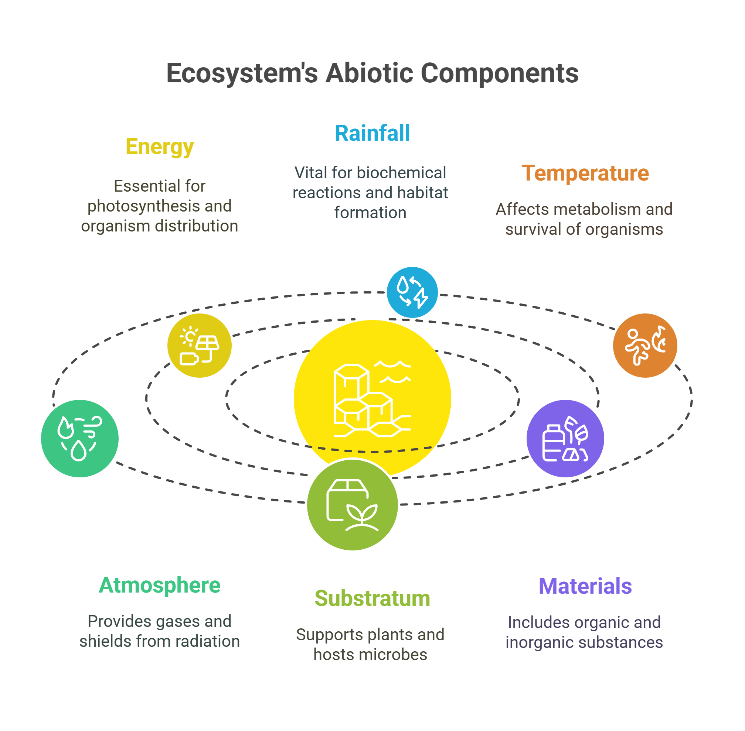
a) Energy
- Energy from the sun is the most essential requirement for life on Earth. Green plants capture solar energy through photosynthesis, while animals obtain it indirectly by consuming plants or other animals. The availability of energy influences the productivity and distribution of organisms.
b) Rainfall (Water)
- Water is a vital resource for all life forms. It serves as a medium for biochemical reactions, regulates body temperature, and forms habitats for aquatic species. The amount and availability of water in an area directly determine which plants and animals can survive there.
c) Temperature
- Temperature affects the metabolism, reproduction, and survival of organisms. Every species can tolerate only a specific range of temperature and humidity. Extreme temperatures beyond their tolerance levels can be lethal.
d) Atmosphere
- The atmosphere maintains a favourable climate, provides oxygen for respiration, carbon dioxide for photosynthesis, and shields the Earth from harmful solar radiation. It plays a key role in supporting a balanced biosphere.
e) Substratum (Land and Soil)
- Soil supports plants by providing water, minerals, and physical anchorage. It also hosts microbes, fungi, and invertebrates, which contribute to nutrient cycling. Organisms may live on land (terrestrial) or in water (aquatic), and some microbes can even survive in extreme environments like hydrothermal vents.
f) Materials
Materials essential for life are of two types:
- Organic materials: Proteins, carbohydrates, lipids, and humic substances, formed by the decomposition of organic matter.
- Inorganic materials: Carbon dioxide, water, sulphur, nitrates, phosphates, and metal ions, which are necessary for basic life processes.
g) Latitude and Altitude
- Latitude influences climate, creating polar, temperate, and tropical zones, each with distinct ecosystems. Altitude affects temperature and humidity — as elevation increases, air becomes colder and drier, limiting the diversity of plants and animals.
