Menu

UPSC Current Affairs 29 September 2026 on polymetallic nodules and lottery regulation

Relevance: GS Paper III: Critical Minerals, Blue Economy, Energy Security, Science and Technology and Environmental Conservation

Important Keywords for Prelims and Mains

Prelims Keywords

  • Polymetallic Nodules | Polymetallic Sulphides | Composite Licence | UNCLOS | International Seabed Authority | EEZ | NCPOR | Deep Ocean Mission | Samudra Manthan | Sagar Manthan ORV

Mains Keywords

  • Critical-mineral Security | Blue Economy | Deep-ocean Exploration | Common Heritage of Mankind | Underwater Domain Awareness | Marine Biodiversity | Energy Security

Why in News?

The Ministry of Mines has notified two offshore mineral blocks near Great Nicobar Island for granting composite licences to explore polymetallic nodules and crusts. The development has brought India’s critical-mineral security, blue economy, deep-ocean research and marine environmental protection into focus.

Newly Notified Offshore Blocks

West Sewell Ridge-01

  • It is located off Great Nicobar Island in the Andaman Sea and covers 1,000 square kilometres.

Sewell Rise-01

  • It is located in the southern part of Sewell Rise near Great Nicobar Island and covers 632 square kilometres.

Combined Area

  • The two blocks together cover 1,632 square kilometres and have been notified for composite licences covering polymetallic nodules and crusts.

What is a Composite Licence?

  • A composite licence does not immediately permit mining.
  • The successful bidder must undertake further exploration and establish the mineral potential of the block before proceeding towards mining operations.

Great Nicobar Island

  • Great Nicobar is situated at the southern end of the Andaman and Nicobar Island group in the Bay of Bengal.
  • It is also the site of a proposed ₹72,000-crore infrastructure project comprising a transshipment port, airport, gas-and-solar power plant and two greenfield coastal cities.
  • The project has faced criticism over its possible impact on coral reefs, leatherback turtle nesting sites, Nicobar megapode nesting mounds and the ancestral lands of the Great Nicobarese Scheduled Tribe community.

What are Polymetallic Nodules?

  • Polymetallic nodules are mineral deposits found on the deep-ocean floor.
  • They contain several valuable metals, including nickel, cobalt, manganese, copper and rare-earth elements.
  • They develop through autogenetic crystallisation around a crystalline nucleus on the deep seabed.
  • Their economic value arises from the concentration of multiple critical minerals within a single deposit.

Distribution of Polymetallic Nodules

The International Seabed Authority identifies three major areas with abundant polymetallic nodules:

  • Clarion–Clipperton Fracture Zone: Located off the west coast of Mexico in the Pacific Ocean.
  • Central Indian Ocean Basin: An important area for India’s deep-sea mineral interests.
  • Peru Basin: Located in the south-eastern Pacific Ocean.

Why are Polymetallic Nodules Important?

Electric Mobility

  • Nickel, cobalt and manganese are important for batteries used in electric vehicles.

Renewable Energy

  • Critical minerals are required for renewable-energy systems and energy-storage technologies.

Advanced Manufacturing

  • Copper, rare-earth elements and other metals are used in electronics and high-technology manufacturing.

Supply Diversification

  • Deep-sea deposits can provide an additional source of critical minerals and reduce dependence on limited land-based sources.

Polymetallic Sulphides

  • Polymetallic sulphides are another category of deep-seabed mineral deposits.
  • They contain metals such as copper, zinc, lead, iron, silver and gold.
  • Although both are sources of valuable minerals, polymetallic sulphides are distinct from polymetallic nodules.

India’s ISA Exploration Contracts

2025 Contract

  • India signed a contract with the International Seabed Authority (ISA) in September 2025 for exclusive polymetallic sulphide exploration rights in an Indian Ocean ridge area.

2016 Contract

  • India’s earlier contract, signed in 2016, covers the Central Indian Ridge and Southwest Indian Ridge.
  • It covers the largest area allocated in the international seabed for polymetallic sulphide exploration.

India’s Position

  • India became the first country to possess two ISA contracts for polymetallic sulphide exploration.
  • These contracts have scientific, economic and strategic importance.

Role of NCPOR

  • The Goa-based National Centre for Polar and Ocean Research is responsible for India’s polymetallic sulphide exploration.
  • It begins with geophysical and hydrographic surveys in the licensed areas.

Importance of Deep-ocean Exploration

Blue Economy

  • India has an 11,098-km coastline, giving it significant potential to use ocean resources for economic growth.
  • Deep-ocean exploration can support fisheries, aquaculture, tourism, coastal livelihoods and blue trade.

Mineral Resources

  • The deep ocean contains deposits of minerals required for clean-energy and high-technology industries.

Food and Biological Resources

  • The oceans contain fisheries and biodiversity resources that may support food security and nutraceutical development.

Fuel and Gas Hydrates

  • Deep-ocean regions contain fuels, hydrocarbons and gas hydrates with potential importance for energy security.

Undersea Cables

  • Undersea cables laid on the ocean floor form a critical part of global telecommunications.
  • Mapping the seabed and maintaining awareness of underwater infrastructure are important for communication security.

Maritime Security

  • Deep-sea mapping and underwater domain awareness strengthen India’s maritime and strategic interests.

Scientific Research

  • Ocean exploration improves understanding of marine biodiversity, seabed geology and ocean processes.

UN Ocean Science Decade

  • The United Nations has declared 2021–2030 as the Decade of Ocean Science for Sustainable Development.
  • It promotes scientific knowledge for the conservation and sustainable use of oceans.

Regulatory Framework

Offshore Areas within India

  • Domestic offshore mineral development is governed by the Offshore Areas Mineral (Development and Regulation) Act, 2002.
  • The government maintains that the law contains safeguards for ecological balance, biodiversity and the interests of fishermen.

Exclusive Economic Zone

  • Under the United Nations Convention on the Law of the Sea (UNCLOS), a country’s Exclusive Economic Zone extends up to 200 nautical miles, or approximately 370 km, from its coastal baseline.
  • A coastal country has exclusive rights over living and non-living resources in the waters and seabed within its EEZ.

International Seabed

  • UNCLOS governs the high seas and the international ocean floor beyond national jurisdiction.
  • The seabed and its mineral resources beyond national jurisdiction are treated as the common heritage of mankind.
  • These resources must be managed through economic benefit-sharing, support for scientific research and protection of the marine environment.

International Seabed Authority

  • The ISA regulates mineral-related activities on the international seabed.
  • India’s polymetallic sulphide exploration rights in international waters operate through contracts with the ISA.

India’s Deep-ocean Initiatives

Deep Ocean Mission

  • The Ministry of Earth Sciences launched the Deep Ocean Mission in 2021 with an outlay of ₹4,077 crore.
  • It seeks to strengthen India’s capabilities in deep-ocean research and exploration.

Samudra Manthan Scheme

  • The Union Cabinet approved the Samudra Manthan Scheme, or National Offshore Exploration Scheme, in August 2026.
  • It is a Central Sector Scheme of the Ministry of Petroleum and Natural Gas.
  • It has an outlay of ₹84,084 crore for implementation up to 2030-31.
  • It focuses specifically on offshore oil and gas exploration and should not be confused with deep-seabed mineral exploration.

Objectives

  • Support exploratory drilling in deep-sea and ultra-deep-sea areas.
  • Fund offshore seismic-data acquisition.
  • Create common infrastructure for producing discovered hydrocarbons.
  • Establish oil-and-gas manufacturing and services zones.
  • Reduce dependence on imported energy.

Expected Outcomes

  • The scheme is expected to support reserve accretion of more than 600 million tonnes of oil and oil-equivalent gas.
  • Subject to successful exploration, it aims to increase domestic oil and gas production from around 62 mtoe to 80 mtoe annually.
  • It also aims to expand India’s hydrocarbon-resource base from 1,600 mtoe to 2,200 mtoe.

Financial Support

  • The government will provide support of up to 50% of the drilling cost or ₹675 crore per well, whichever is lower.

Components of the Samudra Manthan Scheme

Offshore Seismic Data

  • ₹28,534 crore has been allocated for acquiring and processing modern offshore seismic data.

Deepwater Exploration Wells

  • ₹43,200 crore has been allocated for drilling 60 deepwater exploration wells.
  • Government support can cover up to 50% of the eligible drilling cost or ₹675 crore per well, whichever is lower.

Common Offshore Infrastructure

  • ₹10,000 crore has been allocated for common offshore infrastructure hubs to facilitate commercialisation of discoveries.

Manufacturing and Services Zones

  • ₹2,000 crore has been allocated for oil-and-gas manufacturing and services zones to promote domestic manufacturing and localisation of critical equipment.

Sagar Manthan Ocean Research Vessel

  • Garden Reach Shipbuilders and Engineers Limited launched the indigenous Sagar Manthan Ocean Research Vessel on September 9.
  • It is being constructed for NCPOR under the Ministry of Earth Sciences.

Technical Features

Length: 89.5 metres | Width: 18.8 metres | Gross tonnage: 5,900 tonnes | Speed: Up to 14 knots at 90% maximum continuous rating

Significance

  • Critical-Mineral Security: Diversifies access to minerals needed for batteries, renewable energy and advanced manufacturing.
  • Energy Security: Increases domestic offshore oil and gas production and reduces import dependence.
  • Scientific Capability: Strengthens deep-ocean research through ISA contracts, NCPOR surveys, the Deep Ocean Mission and Sagar Manthan.
  • Blue Economy: Supports fisheries, aquaculture, tourism, livelihoods and blue trade.
  • Maritime Security: Improves seabed mapping and underwater domain awareness.
  • Domestic Manufacturing: Promotes localisation of offshore equipment, technology and services.

Challenges

  • Environmental Uncertainty: Limited knowledge makes the long-term impact on deep-sea ecosystems difficult to predict.
  • Biodiversity Loss: Exploration and mining may disturb seabed habitats and marine organisms.
  • Sensitive Ecosystems: Activities near Great Nicobar may affect coral reefs, turtles and Nicobar megapode nesting sites.
  • Community Concerns: Projects may affect fishermen and the ancestral lands of the Great Nicobarese community.
  • Technological and Financial Constraints: Operations require specialised technology, skilled personnel and substantial investment.
  • Regulatory Compliance: Exploration beyond national jurisdiction must comply with UNCLOS and ISA rules.
  • Commercial Uncertainty: Exploration may not result in commercially viable discoveries.

Way Forward

  • Precautionary Approach: Conduct detailed environmental assessments before exploration or mining.
  • Scientific Research: Expand seabed mapping, biodiversity studies and long-term monitoring.
  • Community Participation: Consult fishing communities and the Great Nicobarese Scheduled Tribe.
  • Indigenous Technology: Develop domestic research vessels, sensors and offshore equipment.
  • Regulatory Compliance: Follow domestic laws, UNCLOS and ISA regulations.
  • Exploration–Mining Separation: Establish mineral potential and complete regulatory requirements before mining.
  • Benefit-Sharing: Manage international seabed resources according to the common heritage of mankind principle.
  • Skill Development: Train marine scientists, engineers, environmental experts and technicians.

Conclusion

Deep-ocean exploration can strengthen India’s critical-mineral, energy, scientific and maritime capabilities. However, it must advance through rigorous research, transparent regulation, environmental safeguards and protection of coastal and indigenous communities.

CARE MCQ

Q. Consider the following statements regarding polymetallic nodules:

  1. They contain nickel, cobalt, manganese and copper.
  2. They are formed around a crystalline nucleus on the deep-ocean floor.
  3. The Central Indian Ocean Basin is an important area of their occurrence.
  4. They occur only within the Exclusive Economic Zones of coastal States.

Which of the statements given above are correct?

(a) 1 and 2 only
(b) 1, 2 and 3 only
(c) 2, 3 and 4 only
(d) 1, 2, 3 and 4

Answer: (b) 1, 2 and 3 only

Explanation

  • Statement 1 is correct: Polymetallic nodules contain nickel, cobalt, manganese, copper and rare-earth elements.
  • Statement 2 is correct: They form through crystallisation around a nucleus on the deep seabed.
  • Statement 3 is correct: The Central Indian Ocean Basin is an important nodule-bearing region.
  • Statement 4 is incorrect: Nodules are also found on the international seabed beyond national jurisdiction.

FAQs

1. What are polymetallic nodules?

  • They are deep-seabed deposits containing nickel, cobalt, manganese, copper and rare-earth elements.

2. Why are they important?

  • Their metals are required for electric vehicles, renewable-energy systems, batteries and high-technology manufacturing.

3. What is a composite licence?

  • It requires a successful bidder to explore a block and establish its mineral potential before proceeding towards mining.

4. What is the International Seabed Authority?

  • It regulates mineral-related activities on the international seabed beyond national jurisdiction.

5. What is the Samudra Manthan Scheme?

  • It is a Central Sector Scheme for expanding offshore oil and gas exploration and production.

6. What is the difference between Samudra Manthan and Sagar Manthan?

  • Samudra Manthan is an offshore oil-and-gas exploration scheme, while Sagar Manthan is an indigenous ocean research vessel being built for NCPOR.

Relevance: GS Paper II: Government policies and interventions | Centre–State relations | Federalism

Important Keywords for Prelims and Mains

Prelims: Entry 40 | Entry 34 | Lotteries (Regulation) Act, 1998 | Lotteries (Regulation) Rules, 2010 | Actionable Claim | Res Extra Commercium | Section 115BB

Mains: Accountable Regulation | Harm Reduction | Regressive Burden | Destination-State Consent | Public-Operator Model | Shadow Economy | Cooperative Federalism | Regulatory Autonomy

Why in News?

The debate over lottery regulation has gained attention amid concerns that blanket prohibition may redirect demand towards illegal lotteries, matka, satta and offshore betting platforms. The issue is whether strict regulation can reduce lottery-related harm while ensuring consumer protection, fiscal accountability and control over illegal markets.
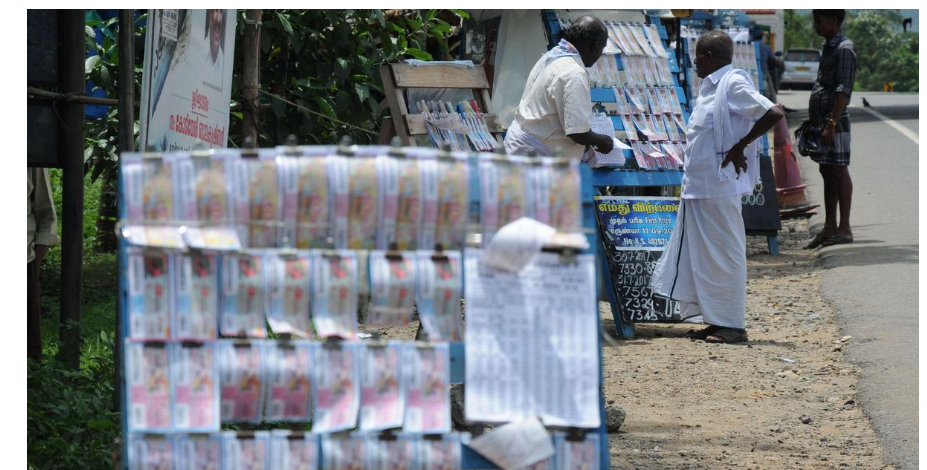
Constitutional and Statutory Framework Governing Lotteries?

Constitutional Distribution of Powers

  • Union List—Entry 40: Gives Parliament legislative competence over lotteries organised by the Union or State governments.
  • State List—Entry 34: Gives State legislatures power over betting and gambling.
  • Entry 62 after GST: Before the 101st Constitutional Amendment, Entry 62 gave States wider taxation powers over betting, gambling and lotteries. Lottery taxation is now largely governed through GST.

Lotteries (Regulation) Act, 1998

The Act defines a lottery as a scheme in which prizes are distributed by chance among persons purchasing tickets.

  • Section 3—General Prohibition: Prohibits lotteries unless they are organised by a State government according to the Act.
  • Section 4—Conditions for State Lotteries: Requires State responsibility over ticket printing, draw procedures, prize structures and authorised distribution. Tickets may be sold directly or through authorised distributors and agents.
  • Section 5—Power of States: Allows a State to prohibit the sale of lotteries organised by other States, subject to the Supreme Court’s interpretation.
  • Section 6—Union Government’s Power: Authorises the Union Government to prohibit lotteries that violate the Act.

Lotteries (Regulation) Rules, 2010

  • Online Lottery Regulation: The Rules prescribe secure software, authorised distribution and proper maintenance of records.
  • Prohibited Practices: They restrict unauthorised sales and improper mixing of paper and online lottery systems.
  • State-Level Restrictions: Punjab and Nagaland have also restricted unauthorised online and WhatsApp-based lottery sales

Taxation of Lotteries

  • GST Treatment: Lotteries are classified as specified actionable claims. An actionable claim is a legally recognised claim to a benefit, such as a conditional claim to prize money.
  • GST Rate: From September 22, 2025, lottery, betting, gambling, casinos, horse racing and online money gaming attract 40% GST
  • Income Tax: Lottery winnings are taxed at 30% under Section 115BB of the Income-tax Act, 1961, along with the applicable cess.
  • Tax Deduction at Source: TDS is deducted under Section 194B before the prize is paid. Such winnings are reported under “Income from Other Sources”, without ordinary deductions.

What is the Judicial Position on Lotteries?

State of Bombay v. R.M.D. Chamarbaugwala, 1957

  • Res Extra Commercium Doctrine: The Supreme Court treated gambling as an activity outside ordinary trade and commerce.
  • Constitutional Effect: Lottery and gambling operators cannot claim complete protection under Article 19(1)(g), dealing with freedom of trade, or Article 301, dealing with freedom of trade and commerce across India.

B.R. Enterprises v. State of Uttar Pradesh, 1999

  • All-or-Nothing Rule: The Supreme Court held that a State cannot operate its own lottery while prohibiting lotteries organised by other States.
  • Complete Withdrawal Required: A State can exclude outside lotteries only after abandoning its own lottery and becoming completely lottery-free.
  • Regulatory Consequence: Tamil Nadu in 2003 and Karnataka in 2007 chose total prohibition, thereby giving up the possibility of operating their own accountable public lotteries.

Skill Lotto Solutions v. Union of India, 2020

  • Actionable Claims as Goods: The Supreme Court held that lotteries, betting and gambling are actionable claims that legally qualify as goods under GST law.
  • Taxation Validity: The judgment upheld the taxation of lottery supplies under the GST framework.

What Does the Experience of Prohibition Show?

Historical Experience in the United States

The United States imposed alcohol prohibition through the Eighteenth Amendment and the Volstead Act between 1920 and 1933.

  • Demand Remained Intact: The ban suppressed legal supply but failed to eliminate public demand.
  • Expansion of Organised Crime: Bootlegging created a profitable black market controlled by violent syndicates.
  • Institutional Corruption: Illegal supply networks corrupted enforcement agencies and public institutions.
  • Fiscal Loss: Governments lost excise revenue while enforcement costs increased.

The Twenty-First Amendment repealed prohibition, recognising that a regulated and taxed market could create fewer harms than an unenforceable ban.

Relevance for India

  • Administrative Limitations: Indian States experimenting with prohibition have also faced smuggling, illegal markets and enforcement difficulties.
  • Policy Lesson: Prohibition may appear morally desirable but can become counterproductive when persistent demand shifts towards criminal networks.

What are the Key Concerns Regarding Lotteries?

Harms Caused by Lotteries

  • Regressive Socio-Economic Burden: Lotteries disproportionately attract low-income households, encouraging them to spend scarce income on highly uncertain rewards.
  • Compulsive Gambling: Rapid draws and instant-win games can encourage repeated participation and addictive behaviour.
  • Loss-Chasing: Participants may continue buying tickets to recover previous losses, leading to debt and family distress.
  • Distorted Risk Perception: Large jackpots receive extensive publicity, while the extremely low probability of winning receives less attention.
  • Credit-Based Sales: Buying tickets with borrowed money can deepen household indebtedness.
  • Opaque Odds: Participants may not receive clear information about winning probabilities, total ticket numbers, prize distribution and unclaimed prizes.
  • Manipulative Advertising: Promotional campaigns may present lotteries as an easy solution to poverty or financial insecurity.

Problems Created by Blanket Prohibition

  • Expansion of the Shadow Economy: Bans may push participants towards smuggled tickets, matka, satta, single-digit rackets and offshore portals.
  • Absence of Consumer Protection: Illegal operators function without age checks, financial audits, secure prize funds or effective fraud remedies.
  • Use of Mule Accounts: Cash agents, proxy identities and mule bank accounts make illegal transactions and criminal proceeds difficult to trace.
  • Loss of Public Revenue: Governments lose lottery surplus and GST revenue while spending more on enforcement.
  • Destruction of Livelihoods: Bans affect small vendors, persons with disabilities, widows, women’s self-help groups and low-income sellers.

Class Asymmetry in State Paternalism

  • Unequal Treatment of Financial Risk: Affluent citizens can legally participate in intraday trading, leveraged derivatives and crypto-assets under disclosure-based regulation.
  • SEBI Findings: A large majority of individual futures-and-options traders incur losses, yet financial-market participation is regulated rather than prohibited.
  • Relevant Difference: Securities markets involve skill, investment, hedging and price discovery, while lotteries depend mainly on chance.
  • Policy Question: The comparison raises the issue of whether the State should regulate risk and punish fraud rather than impose selective prohibition.

Advertising Regulation Gap

  • Non-Statutory Oversight: The Advertising Standards Council of India is a self-regulatory body rather than a statutory regulator.
  • Enforcement Limitation: Its advertising code does not possess the same legal force as statutory restrictions, creating accountability gaps.

What Models of Lottery Regulation are Followed Globally?

Controlled Legality

  • International Norm: Nearly four-fifths of countries permit lotteries under regulated conditions rather than imposing complete prohibition.
  • Limited Prohibition: Blanket bans mainly exist in strict Sharia-based jurisdictions such as Saudi Arabia, Iran and Brunei, and in closed ideological regimes such as Cuba.
  • Welfare Allocation: Lottery surplus is commonly directed towards education, health care, sports, welfare and infrastructure.

Public-Operator Model

Nearly 70% of lottery jurisdictions reportedly follow this model.

  • Public Control: A government department, statutory authority or State-owned company operates the lottery.
  • Limited Private Role: Private companies provide technology, printing or retail services.
  • Public Accountability: The government remains responsible for draws, prize funds and financial management.
  • Reduced Intermediary Capture: Direct public operation limits the ability of marketing agents to retain excessive profits.

Concession Model

  • Private Operation: A private concessionaire manages the lottery under a government licence.
  • State Regulation: The State retains regulatory authority and specifies revenue-sharing and operational conditions.
  • Principal Risk: Weak oversight may lead to concessionaire capture, where private operators gain excessive control over profits and policy.

Multi-Jurisdictional Pooling

Federal countries allow constituent units to cooperate voluntarily while retaining regulatory autonomy.

Examples include:

Powerball—United States | Lotto 6/49—Canada | Australian Lottery Blocs | DLTB—Germany

These arrangements allow participating jurisdictions to pool players, prizes, technology and costs.

Destination-Jurisdiction Consent

Authorisation in one jurisdiction does not automatically give an operator the right to sell tickets in another.

Cross-border sales require:

  • consent of the destination jurisdiction; or
  • participation in a cooperative agreement.

What is the Position of State Lotteries in India?

  • A Lok Sabha reply of March 14, 2023 identified nine States operating lotteries:
  • Arunachal Pradesh | Goa | Kerala | Maharashtra | Mizoram | Nagaland | Punjab | Sikkim | West Bengal

Regulatory Disparity

  • Direct Control over Domestic Lotteries: A State can supervise its own ticket printing, draws, prize funds, agents and accounts.
  • Indirect Control over Outside Lotteries: It has limited authority to audit another State’s draw procedures, private agents and technology.
  • Local Enforcement Burden: Despite limited control, the destination State must handle fraud, complaints and illegal sales within its territory.

How Does Kerala’s Public-Operator Model Work?

  • Departmental Operation: Kerala directly supervises lottery design, distribution, draws and prize payments.
  • Revenue Generation: In 2023-24, Kerala earned ₹2,883.80 crore—₹1,129.71 crore as net lottery revenue or surplus and ₹1,754.09 crore as State GST.
  • Welfare Allocation: Lottery surplus supports health care and welfare, including healthcare assistance through the Karunya framework.
  • Livelihood Distribution: The system supports registered small vendors, persons with disabilities, self-help groups and cooperatives.
  • Policy Relevance: Kerala provides a useful, though not universally applicable, model of publicly operated lotteries.

What are the Challenges in Establishing Accountable Regulation?

  • Conflict of Interest: The government may simultaneously act as operator, regulator and revenue beneficiary.
  • Fiscal Dependence: States may avoid restrictions that could reduce lottery revenue.
  • Weak Regulatory Capacity: Some States may lack technical auditors, trained personnel and secure digital systems.
  • Problem Gambling: Legal operation does not automatically prevent addiction, indebtedness or loss-chasing.
  • Digital Jurisdiction: Offshore applications can operate beyond the effective control of individual States.
  • Money Laundering: Cash transactions, proxy purchases and mule accounts may conceal illegal proceeds.
  • Inter-State Disputes: Different State policies may create disagreements over online sales, taxation and enforcement.
  • Intermediary Capture: Large private marketing agents may influence distribution, retain excessive profits or weaken State control.

What Measures are Needed for Accountable Lottery Regulation?

End the All-or-Nothing Rule

  • Amend Section 5: Parliament should allow a State to exclude outside lotteries regardless of whether it operates its own lottery.
  • Uniform Treatment: A State must either permit all legally compliant outside lotteries or exclude all of them.

Introduce a New Section 4A

  • Cooperative Lotteries: Two or more States should be allowed to establish a common lottery through mutual agreement.
  • Resource Pooling: Participating States could share players, prizes, technology, regulation and operational costs.
  • Protection of Smaller States: This would provide smaller States access to larger markets without imposing compulsory access on other States.

Separate Operation from Regulation

  • Independent Statutory Authority: The department operating a lottery should not act as its own regulator and auditor.
  • Independent Oversight: The authority should supervise agents, prize funds, advertisements, draw procedures and consumer complaints.

Mandate Technical Audits

  • Third-Party Examination: Lottery software, Random Number Generators and draw machines should undergo regular independent audits.
  • System Integrity: Audits should verify that outcomes cannot be manipulated and that draw records remain secure.

Introduce Consumer Safeguards

  • Purchase Limits: Daily or monthly limits can reduce compulsive participation and loss-chasing.
  • Credit-Sale Prohibition: Tickets should not be sold on credit.
  • Product Restrictions: Rapid-draw and instant scratch games that encourage repeated participation should be restricted.
  • Self-Exclusion: Participants should be allowed to voluntarily block themselves from future purchases.

Strengthen Advertising Regulation

  • Mandatory Disclosure: Advertisements should clearly communicate the low probability of winning.
  • Prohibited Claims: Lotteries should not be promoted as a guaranteed route out of poverty.
  • Protection of Vulnerable Groups: Advertisements should not target children or financially distressed households.

Establish Unified Digital Enforcement

  • Inter-Agency Coordination: MeitY, FIU-IND and State authorities should jointly act against illegal offshore platforms.
  • Financial Enforcement: Authorities should block unauthorised payment gateways, trace mule accounts and freeze funds connected with illegal gambling.

Ensure Revenue Transparency

Annual public reports should disclose:

Ticket Sales | Prizes Paid | Unclaimed Prizes | Agent Commissions | GST | Operating Costs | Net Surplus | Welfare Expenditure

Dedicate Revenue to Welfare

  • Revenue Hypothecation: A defined share of lottery surplus should be reserved for health care, education, welfare, sports and gambling-addiction rehabilitation.
  • Public Accountability: Welfare allocation should be independently audited and publicly disclosed.

Conclusion

India must move beyond the binary choice between blanket prohibition and unrestricted gambling. Lotteries create genuine social and financial risks, particularly for poorer households, but prohibition may strengthen criminal and unregulated markets. A system based on destination-State consent, independent oversight, consumer safeguards, responsible advertising, digital enforcement and transparent welfare use of revenue can reduce harm while preserving accountability.

CARE MCQ

Q. Consider the following statements regarding lotteries in India:

  1. Government-organised lotteries fall under the Union List.
  2. Betting and gambling fall under the State List.
  3. The Union Government may prohibit lotteries violating the Lotteries (Regulation) Act, 1998.

Which of the statements given above are correct?

(a) 1 and 2 only
(b) 2 and 3 only
(c) 1 and 3 only
(d) 1, 2 and 3

Answer: (d)

Explanation:

  • Statement 1 is correct: Entry 40 of the Union List covers lotteries organised by the Union or State governments.
  • Statement 2 is correct: Entry 34 of the State List covers betting and gambling.
  • Statement 3 is correct: Section 6 empowers the Union Government to prohibit lotteries violating statutory conditions.

FAQs

1. What is an actionable claim?

It is a legally recognised claim to a benefit. A lottery ticket creates a conditional claim to prize money if the ticket wins.

2. What is the all-or-nothing rule?

It means that a State can prohibit other States’ lotteries only by discontinuing its own lottery.

3. What is destination-State consent?

It means that a lottery organised in one State can be sold in another only with the permission of the destination State.

4. What is the public-operator model?

Under this model, a government department, statutory body or State-owned company operates the lottery while private firms provide limited support services.

5. Why may prohibition be ineffective?

It may shift demand towards illegal gambling networks and offshore platforms that operate without audits, age restrictions or consumer safeguards.

6. Why is Kerala’s model relevant?

It combines departmental operation, welfare-linked revenue and livelihood opportunities for small and vulnerable vendors.

UPSC Current Affairs September 30th 2026
UPSC Current Affairs September 28th 2026

Enroll Now for Unlimited UPSC Utsav

Start Date

20/09/2026

Timings

08 AM – 4 PM

    Courses

    Scroll to Top