Why in News?
- A rare collection of Peston Shahi coins has highlighted the contribution of Parsi banker brothers Pestonjee Meherjee and Viccajee Meherjee to Hyderabad’s financial history.
- The coins illustrate the relationship between the Nizam’s administration, private bankers and nineteenth-century coinage.
Historical Background
- The coins belong to the reign of Nasir-ud-Daula, the fourth Nizam or Asaf Jah IV, who ruled Hyderabad from 1829 to 1857.
- During this period, merchant-bankers played an important role in providing financial assistance to princely governments.
- The coins are important numismatic sources for understanding the economic and political history of Hyderabad State.
The Meherjee Brothers
- Pestonjee Meherjee and Viccajee Meherjee were Parsi bankers originally from Bombay.
- They reportedly established links with the Nizam’s government through Raja Chandulal, the influential Diwan and Prime Minister.
- In return for their financial assistance to the State, they were reportedly granted the right to mint coins.
- They are remembered as possibly the only Parsi traders to have received such a privilege.
Features of Peston Shahi Coins
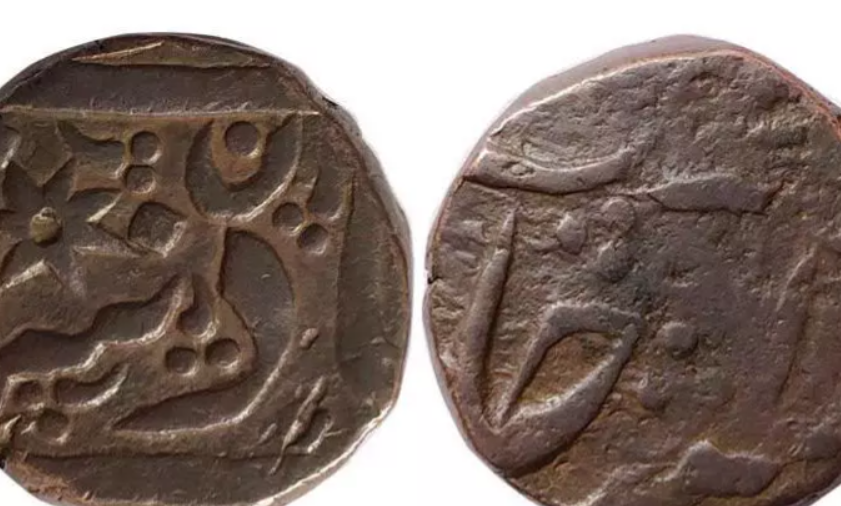
- The coinage is popularly known as the Peston Shahi Sicca.
- Examples of the Peston Shahi silver rupee belong to the period of Nasir-ud-Daula.
- They were associated with the Aurangabad Mint.
- The coins were issued in the name of the last Mughal emperor, Bahadur Shah II.
- They carried the distinctive “Resplendent Sun” symbol.
The use of the Mughal emperor’s name suggests the continuing symbolic importance of Mughal authority, even while Hyderabad functioned as a largely autonomous princely State.
Religious and Cultural Legacy
The brothers’ contribution extended beyond banking and trade. They founded the Seth Viccajee Meherjee–Seth Pestonjee Meherjee Dar-e-Meher at Secunderabad.
A Dar-e-Meher is a Parsi or Zoroastrian fire temple. This institution is regarded as one of the oldest Parsi fire temples in the region and reflects the community’s long-standing presence in Hyderabad.
Conclusion
The Peston Shahi coins are more than monetary objects. They record the intersection of the Nizam’s court, Hyderabad’s banking system and Parsi merchant capital. Their study highlights how minority trading communities contributed to the economic and cultural development of princely India. Protecting such numismatic heritage is essential for reconstructing Telangana’s diverse history.